Description
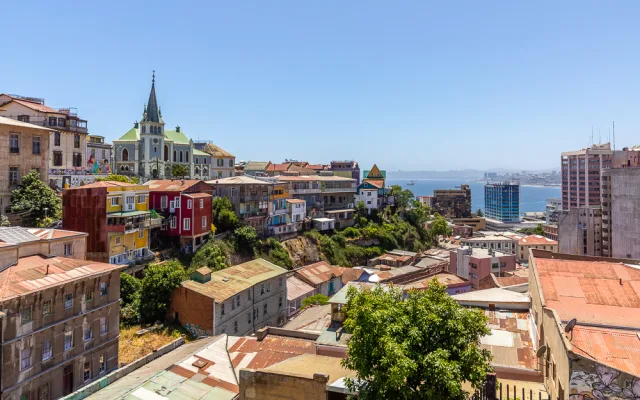
A labyrinth of hillside barrios covered in street art, vintage funiculars (ascensores) and bohemian bars above the Pacific — Chile's most picturesque port city.
Wiki
A port city labyrinth where the streets climb the hills and the walls have been turned into an open-air gallery. Valparaíso is not about museums and must-see lists — people come here to wander on foot, get lost in alleyways and watch rust-streaked funiculars haul passengers uphill as they have since the 19th century.
Why Go and How Long to Stay
Two days is plenty. The main "activity" is wandering the hills of Cerro Alegre and Cerro Concepción without a plan — that's how you find the best graffiti, courtyards and viewpoints. Day one: those two hills plus the Neruda house; day two: the port, the market and a trip to Viña del Mar. Coming from Santiago, you can fit Valparaíso into a packed day trip, but you'll miss the evening atmosphere — and the bohemian bars above the ocean are half the point.
Getting There and Getting Around
Valparaíso has no airport of its own — fly into Santiago (SCL). From there, Turbus and Pullman buses leave from the Alameda terminal roughly every 15–20 minutes; the journey takes about 1.5–2 hours. Tickets are cheap and available on the spot, though on weekends it's worth booking ahead. The Valparaíso bus terminal sits at the foot of the hills — a couple of minutes by taxi or a short walk uphill to the tourist area.
Within the city:
- On foot — the main way to get around, but be ready for steep staircases and gradients. Comfortable shoes matter more than you'd think.
- Ascensores (funiculars) — not just a tourist attraction but a working form of transport: they save your knees on the climbs. Not all are running at any given time; some are perpetually under repair — check on the spot which are open.
- Uber — available and useful in the evening or to reach a more distant hill.
- Renting a car makes no sense — narrow streets, steep gradients, nowhere to park.
Where to Stay
Aim for Cerro Alegre or Cerro Concepción, without question — these hills concentrate the boutique hotels, hostels, cafés and street art; everything is within walking distance and it's relatively safe. Down below, near the port and the bus terminal (Barrio Puerto, El Almendral), is cheaper but noticeably rougher and uncomfortable after dark. The premium for a hillside location is worth it: you're literally living inside the main attraction.
What's Actually Worth Seeing
- La Sebastiana — Pablo Neruda's house-museum on Cerro Bellavista. Worth the visit less for the poet than for the panorama of the bay and the quirky maritime-themed interior. Come at sunset.
- Street art on Alegre and Concepción — don't hunt for the "best" murals on a map, just walk the side streets. Graffiti tours exist, but wandering on your own works just as well.
- Plaza Sotomayor with its monumental Navy building and the monument to the Heroes of Iquique — the city's grand maritime frontage, right down at the waterfront.
- Mercado Cardonal — a working market selling fish, seafood and fruit; come for the atmosphere and a cheap lunch, not for souvenirs.
- Viña del Mar — a resort town 10 km away, easily reached on the local metro (Metro Valparaíso runs along the coast). The contrast is total: manicured beaches, a promenade and a casino instead of peeling bohemia. Half a day is enough.
Food and Drink
The food is port-city straightforward. Try chorrillana (a pile of fries topped with meat, onion and egg — easily shared between two), empanadas filled with cheese or seafood, paila marina (a thick fish soup), fresh congrio (cusk eel) and, of course, a pisco sour.
Prices are middling for the region: lunch at a local picada is inexpensive, dinner with a bay view is noticeably pricier but still manageable. Chilean wine — carménère, cabernet — offers outstanding value for money; buy it freely. The thrifty approach: eat lunch at the market or in family-run spots away from the viewpoints, and save the "restaurant with a view" for one evening.
Safety and Common Mistakes
Valparaíso is a working port, not a postcard resort, and you'll feel the difference. Practical rules:
- Stick to the tourist hills and busy streets; Barrio Puerto and the lower neighbourhoods after dark are better navigated by Uber.
- Don't flash your phone or camera in empty alleyways — petty theft is a real risk.
- The main routes are calm during the day; paranoia is unnecessary, but don't switch your guard off completely.
Common mistakes: allowing too little time and rushing through a checklist instead of strolling; underestimating the hills and burning out in the first hour; expecting a pretty, clean city — Valparaíso is weathered and worn, and that's the whole point.
When to Go
The best time is the Chilean summer and shoulder season, roughly November to March: dry, warm and with long daylight hours for hill-walking. Winter (June–August) is cool, damp and often overcast with ocean mist. Keep the Pacific in mind — even in summer a cold wind comes off the water, so a light jacket for the evening is never wasted.