 Города и дороги
Description
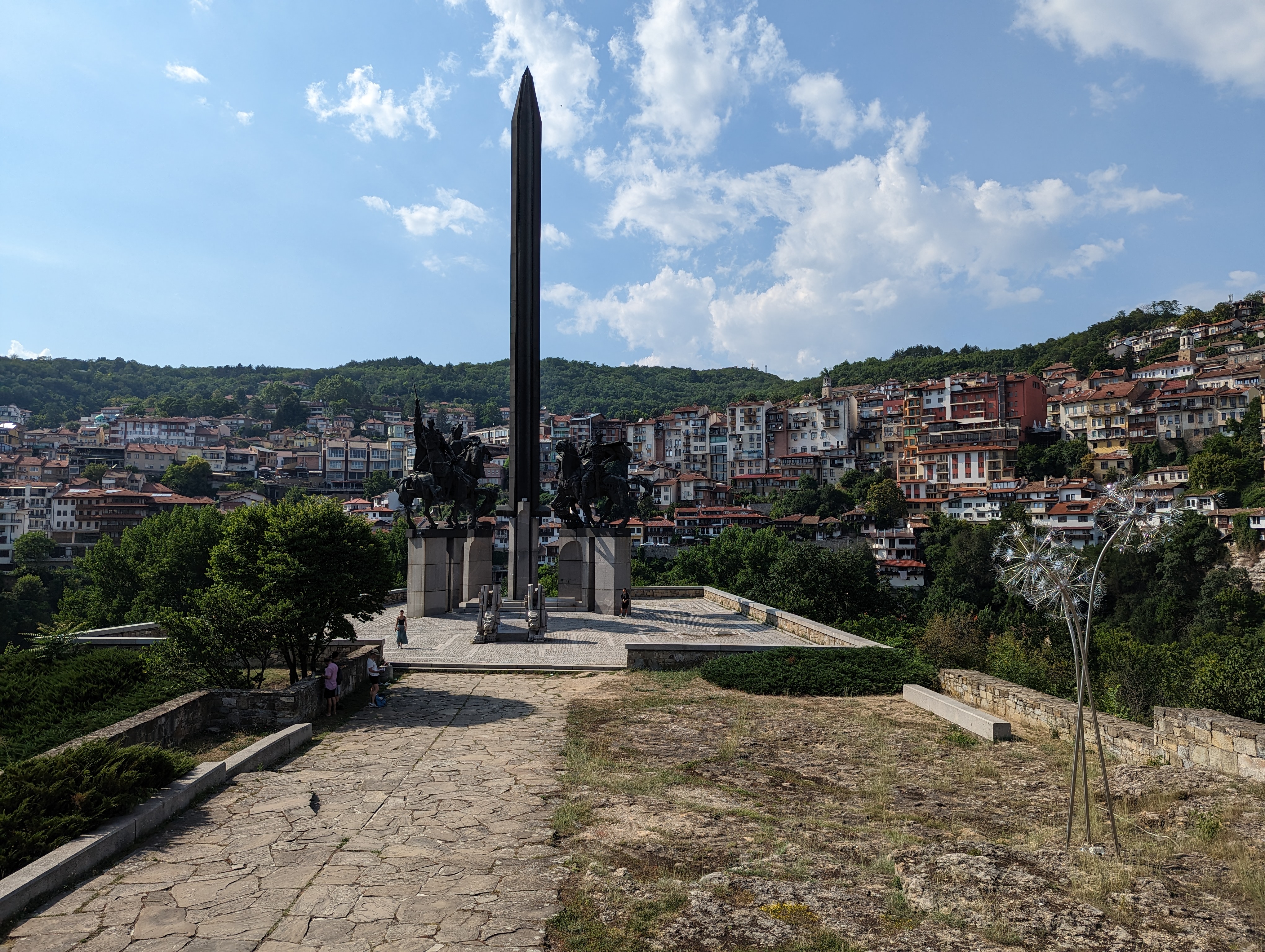
Veliko Tarnovo — a city where you can see Tsarevets Fortress rising above a bend in the Yantra River, and the historic craftsmen's quarter alongside the village of Arbanasi.
Wiki
The medieval capital of the Second Bulgarian Empire has survived not as a museum-piece but as a living city on steep hillsides: lanes climb upward, houses overhang one another, and below them the Yantra River makes an almost complete loop around the fortress hill. For the independent traveller it makes a convenient base for one or two days to experience authentic inland Bulgaria without the beach-resort bustle.
What is genuinely worth seeing
Tsarevets Fortress is the essential stop and the main reason to come. The hill is surrounded by the river on almost all sides; at the top stands the restored Patriarchal Cathedral with its modern frescoes (the interior painting is not medieval but a 20th-century work — controversial, yet striking) and panoramic views over the whole city. Allow 1.5–2 hours for the climb and circuit: the grounds are large and the path goes uphill. There is an admission charge, but it is modest.
The Sound and Light laser show at Tsarevets does not run every evening — usually on weekends, public holidays, or for booked groups. Check the schedule in advance at the local tourist office or your accommodation, because turning up and hoping for the best can easily result in a wasted trip. The best vantage points are the viewing terraces opposite the hill — free of charge.
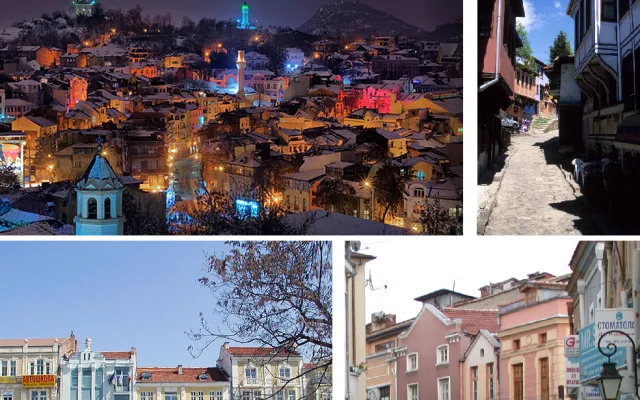
Samovodska Charshia (Samovodska Market Street) is a restored 19th-century craftsmen's row. This is more than souvenirs: genuine workshops are still operating — potters, coppersmiths, weavers, and bakeries. A good place to buy something handmade rather than a mass-produced magnet.
The Asenova Quarter at the foot of the fortress is the oldest part of the city. Small medieval churches — the Church of the Forty Holy Martyrs, where Bulgarian tsars were crowned, and the Church of Saints Peter and Paul — stand right on the bank of the Yantra. It is quiet, atmospheric, and noticeably less crowded than Tsarevets.
The modern shopping streets in the new part of town can be skipped entirely — there is nothing of interest there.
Day trips
- Arbanasi (4 km) — a village of prosperous merchants from the 16th–17th centuries. The houses are built like small fortresses with solid stone outer walls and interior courtyards, and inside the unassuming Church of the Nativity of Christ, frescoes cover literally every wall and the entire ceiling. The contrast is striking: from the outside it looks like a barn; inside it is a treasury. Half a day is enough.
- Transfiguration Monastery (about 7 km) — a working monastery built into the rock face above the road towards Ruse. Worth the trip for the views and the silence.
The easiest way to reach Arbanasi is by taxi; walking or cycling is possible but the road climbs steadily uphill.
How many days and how to plan your route
Two days is enough. Day 1: the old town — Tsarevets, the Asenova Quarter, Samovodska Charshia, and in the evening the light show or a sunset view of the fortress. Day 2: Arbanasi and/or Transfiguration Monastery. If you have only one full day, skip the monastery but not Tsarevets and Arbanasi.
Getting there and getting around
The nearby Gorna Oryahovitsa airport (GOZ) has virtually no scheduled services. The practical approach is to fly into Sofia (SOF) or Varna (VAR) and continue by surface transport. From Sofia, the bus is faster than the train (roughly 3 hours versus 4–5), while the train is more scenic but slow. From Varna, the bus is again the better option.
A car is unnecessary inside the old town and actually gets in the way: the streets are narrow, steep, and parking is difficult. Everything of importance is within roughly a kilometre and is walkable, but be prepared for constant gradients — wear comfortable shoes. For trips out of town, take a taxi (short city rides are cheap) or hire a car for the day.
Where to stay
Stay in the old town, close to Samovodska Charshia or Gurko Street — everything is walkable from there, and the views from the windows are part of the experience. Gurko Street is the postcard-perfect one, with houses clinging to the hillside. The newer districts are cheaper, but you lose the whole point: you will need to walk or take transport into the centre every time.
Food and money
The cuisine is hearty and inexpensive: shopska salad, moussaka, kavarma (meat stew in a clay pot), banitsa for breakfast, local wine (look for the red Mavrud grape) and rakia. Eat in mehanas (traditional taverns) — the food is better and the prices are lower than at the tourist-facing restaurants. Lunch in a mehana costs noticeably less than at comparable places in coastal Bulgaria. Keep some cash on you: small craft workshops and village churches may not accept cards.
When to go and what to watch out for
The best time is April through October. May and June bring lush greenery and blossoms; September is warm with fewer visitors. In high summer the midday heat is intense, and the exposed climb up Tsarevets is draining without shade — bring water and a hat, and plan the fortress for morning or evening. In winter it is cold and some shows and routes do not operate.
Safety is not a concern — the city is quiet and unhurried. The main practical mistakes here are everyday ones: arriving without checking the laser show schedule, staying in the new part of town to save money and then having to travel into the centre each time, and underestimating the terrain by wearing the wrong shoes.