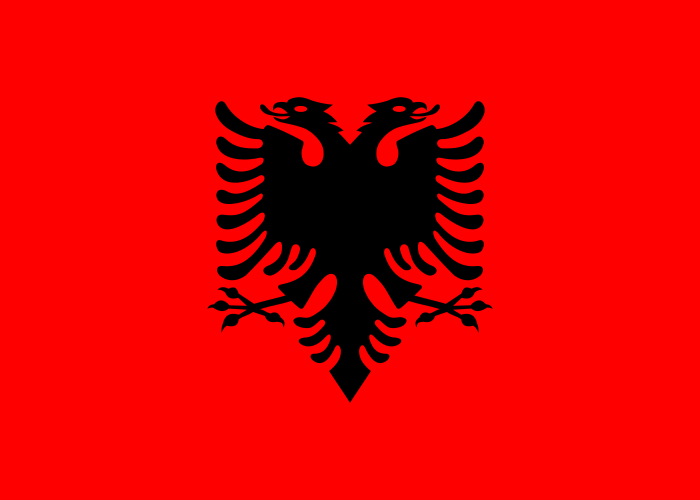
Albania
ALThe Mediterranean's last secret — turquoise beaches the equal of Greece's, Ottoman museum-towns under UNESCO protection, mountains made for trekking and startling hospitality. Albania is catching on fast but remains one of the cheapest countries in Europe. Hoxha's bunkers, ancient Butrint and the Albanian Riviera: this is where the Balkans meet the Mediterranean.
Where to go #
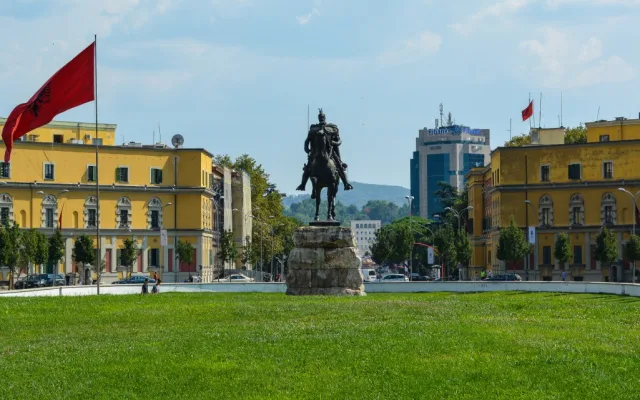
Tirana
The capital of Albania: colourful facades, an arts scene housed in old bunkers, the legacy of the Hoxha years and a lively restaurant culture at Europe's lowest prices.
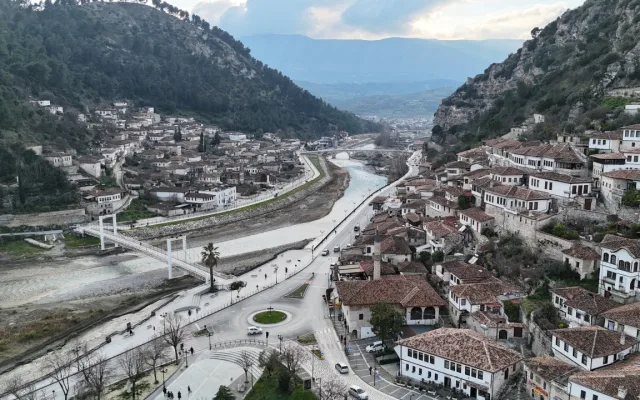
Berat
Berat is a city of white Ottoman houses cascading down a hillside around a majestic citadel above the Osum River.
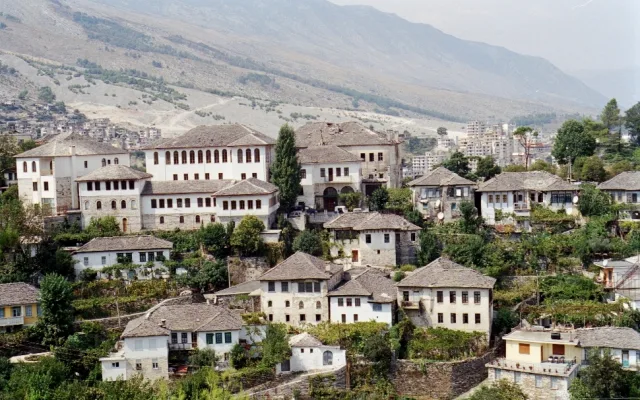
Gjirokaster
Gjirokastër is a UNESCO-listed city with a rich historical heritage, featuring outstanding examples of Ottoman architecture and a great citadel. It is also the birthplace of the writer Ismail Kadare.
What to see #
Butrint: The ancient city in the far south is unmissable for anyone with an interest in archaeology.
Roman theatres and Venetian towers sit half-swallowed by thick forest on a green peninsula between lagoon and sea.
The Blue Eye: The karst spring called Syri i Kaltër draws people for its improbable turquoise colour.
The water stays ice cold through the worst of the summer heat, and the exact depth of the vent has never been officially established.
Bunk'Art 1 and 2: In Tirana, Hoxha's vast underground shelters have been turned into two powerful art museums.
They lay out the grim history of the secret police and daily life under decades of communist isolation, and two hours disappear fast.
Mount Dajti: The longest cable car in the Balkans lifts you above the capital in about fifteen minutes.
It is always cooler at the top, and the panorama at sunset is the single best photograph you will take in Tirana.
Llogara Pass: The compulsory stop on the drive down to the southern beaches.
The road corkscrews at over a kilometre of altitude with a view straight down to where the two seas meet.
Valbona to Theth: The country's signature trek, for anyone who likes mountains and long days.
The crossing through the Accursed Mountains takes a full day, demands proper boots, and pays out with the best views in the Balkans.
Prices #
Currency: The lek (ALL) is the local money, trading around 83 to the dollar through 2026, and prices are quoted in lek almost everywhere except a few coastal hotels.
Cash: This is still a cash economy at heart. In the provinces, at markets and on buses a card is useless, so keep a stack of notes on you.
Changing money: Bring dollars or euros and use the small Exchange booths rather than the big banks. Their rates are better and they almost never charge commission.
Cards and ATMs: Visa and Mastercard work in Tirana restaurants, supermarkets and larger hotels, Amex much less often. Machines commonly levy a flat withdrawal fee of five to eight euros, so take out larger amounts at a bank branch, and a Wise or Revolut card will spare you the double conversion.
Tipping: Around ten percent in restaurants, or simply round the bill up when you pay.
| Item | Price (USD) |
|---|---|
| Street burek | 1.80 |
| Macchiato | 0.90 |
| Lunch in a tavern | 7.00 |
| Glass of beer | 2.20 |
| Butrint entry | 12.00 |
| Bunker museum ticket | 6.00 |
| Taxi across Tirana | 5.50 |
| Bus to the coast | 18.00 |
| Litre of petrol | 2.10 |
| Fridge magnet | 2.50 |
| Raki, half litre | 4.00 |
| Plate of mussels | 8.50 |
| Dinner with wine | 15.00 |
| Bottle of water | 0.70 |
Getting around #
Getting in: Tirana's Rinas airport is served by budget carriers from across Europe, so London, Milan, Vienna and Frankfurt are all a single hop away, and travellers from North America usually connect in Istanbul or Rome. Ferries also run from Bari in Italy to Durrës, and from Corfu across to Saranda in under an hour.
Furgons: Minibuses are the everyday way to move between towns. They leave when full, and posted timetables are more of a suggestion than a promise.
Coaches: Full-size intercity buses link the bigger centres. You pay the driver or conductor on board, in cash, in lek.
Car hire: A car buys you the Riviera and the mountain switchbacks on your own terms. In 2026 the booking sites make it easy to find deposit-free deals.
Taxis: In the capital use the Speed Taxi or Lux Taxi apps. That gets you a metered fare and saves the negotiation.
Trains: Effectively finished. The surviving network is in deep decline, so leave it out of your planning entirely.
Ferries: The boat across Lake Koman is rated one of the most beautiful crossings anywhere. Book ahead, especially if you are bringing a car.
Roads: Intercity routes are being rebuilt fast, but the mountains are still full of narrow sections, and local driving is assertive to put it kindly.
Where to stay #
Guesthouses: The most characterful option in the country by a distance. Family homes in Berat or the northern mountains give you a warm room and an enormous breakfast of farm produce.
Apartments: On the coast in Saranda or Vlora, renting a flat beats a hotel on price. A good one by the sea runs about fifty dollars a night in 2026.
Hotels: In Tirana pick Blloku if you want the nightlife on your doorstep. In smaller towns the advertised star rating is often optimistic, so read the recent reviews.
Hostels: The capital and Shkoder both have decent budget beds. They are also the easiest place to find people to trek the Albanian Alps with.
Season: July and August double the price of anything near the water. Book far ahead or shift your trip to June or September, which are calmer and just as warm.
Booking: Nearly everything is online now, though deep in the provinces you may still be arranging a room with the owner in person and paying in cash.
What matters: Working air conditioning is not a luxury in summer. Without it, forty-degree afternoons turn a holiday into an endurance test.
What to eat #
Tave kosi: Lamb baked with yoghurt and rice in a clay dish, soft enough to eat with a spoon. It is the national dish and almost every tavern makes its own version.
Byrek: Flaky pastry filled with salty cheese, spinach or meat. Cheap, filling and sold in bakeries on every corner, which makes it the default breakfast.
Seafood: In the south the fish and mussels are always fresh and rarely expensive. A plate of grilled octopus in Ksamil will be the best thing you eat all week.
Fergese: A thick pan of fried peppers, tomato and curd cheese, served hot and meant for dunking bread into. Order it as a starter to share.
Coffee: Albanians are obsessed with coffee and drink it by the litre. The macchiato is genuinely excellent, and sitting in a cafe for an hour is a daily social obligation rather than a pastime.
Raki: Strong fruit brandy, often distilled at home from grapes or plums. Treat the homemade stuff with respect, because nobody measures the strength.
Trilece: The dessert everyone orders, a sponge soaked in three kinds of milk and drowned in caramel. Sweet, soft and impossible to finish alone.
Safety #
Crime: Levels are very low and you are safer here than in most European capitals. Albanians genuinely value visitors and tend to look out for them.
Roads: The biggest single danger is the driving. Local drivers overtake blind, ignore lane markings and change direction without warning.
Dogs: Cities have plenty of strays. Most are chipped and entirely uninterested in you, but in rural areas keep a sensible distance.
Water: Do not drink from the tap. Buy bottled water, and use it for brushing your teeth too, unless you want to lose a day.
Mountains: In the northern ranges stick to marked trails. There is wildlife in the forests and the weather on the passes can turn within minutes.
Scams: Minor overcharging happens occasionally in unmetered taxis. Agree the fare before you get in and the problem disappears.
Solo women: Travelling alone is comfortable and low-stress here. Unwanted attention rarely goes past staring and is easy enough to ignore, and check your own government's travel advisory if you want the official line.
Etiquette and culture #
Besa: An ancient code of honour under which a guest falls entirely under the host's protection. It is the reason hospitality here can feel almost overwhelming.
Gestures: Watch out for this one: a nod often means no in Albania and a side-to-side shake means yes. It catches out newcomers constantly, especially when bargaining.
Religion: Muslims and Christians live side by side without friction. Mosques and churches sit on the same street and personal belief is treated as a private matter.
Xhiro: The evening ritual of the whole family strolling the main street. People dress up, walk and talk once the punishing heat of the day has broken.
Bunkers: Concrete mushrooms are scattered across the entire country. Locals see a monument to old paranoia, visitors see an unusual backdrop for a photo.
Family: The family cult runs deep. In cafes you will regularly see three generations at one table settling in for several hours.
Pace: Nobody is in a hurry. Expect to wait a long while for food while the cook finishes catching up on the news with his neighbour over a strong coffee.
Connectivity #
Mobile: The main operators are Vodafone and One. A tourist bundle with a generous data allowance costs around fifteen euros.
eSIM: In 2026 this is the easiest option. Airalo, Yesim and similar services have you online the moment you land in Tirana.
Roaming: Albania is not in the EU, so EU roaming rules do not apply and your home bundle will not carry over. Get a local SIM or an eSIM rather than paying by the megabyte.
Wi-Fi: Available in almost every cafe and hotel, and usually fast enough for video calls. In the mountains, assume nothing, because the cell signal drops out for long stretches.
Language: Younger people in the cities speak good English, and menus and signs in tourist areas are usually bilingual. Older Albanians often speak Italian instead, and in the deep provinces you may be down to gestures.
Navigation: Download offline maps in advance. Google Maps has a habit of failing on mountain switchbacks and in the tangled lanes of the old towns.
Apps: Speed Taxi for a ride in the capital, and Busbud for checking intercity bus schedules between the main tourist towns.
Phrasebook #
| English | Albanian | Pronunciation |
|---|---|---|
| Good day | Mirëdita | Meer-uh-DEE-tah |
| Hi (slang) | Çkemi | CHKEH-mee |
| Thank you | Faleminderit | Fah-leh-min-DEH-rit |
| Please | Ju lutem | Yoo LOO-tem |
| Yes | Po | Poh |
| No | Jo | Yoh |
| How much is it? | Sa kushton? | Sah koosh-TOHN? |
| That's expensive | Është shtrenjtë | UHSH-tuh SHTREN-yt |
| Where is the toilet? | Ku është tualeti? | Koo UHSH-tuh too-ah-LEH-tee? |
| Water | Ujë | OO-yuh |
| Beer | Birrë | BEE-ruh |
| The bill, please | Llogarinë, ju lutem | Lloh-gah-REE-nuh, yoo LOO-tem |
| Very tasty | Shumë e mirë | SHOO-muh eh MEE-ruh |
| Fine / OK | Mirë | MEE-ruh |
| Friend | Mik | Meek |
| Help | Ndihmë | N-DEE-muh |
| Goodbye | Mirupafshim | Mee-roo-PAHF-shim |
| Cheers! | Gëzuar | Guh-ZOO-ar |
| How are you? | Si jeni? | See YEH-nee? |
| Beautiful | Bukur | BOO-koor |
| Coffee with milk | Kafe me qumësht | KAH-feh meh CHOO-musht |
| No problem | S'ka problem | Skah proh-BLEM |
Good to know #
Airport: Rinas, seventeen kilometres from Tirana, is the country's only international airport. A bus runs into the city centre every hour and costs a fraction of a taxi.
Rental: For a car, local agencies generally undercut the international chains and many take a cash deposit. Book ahead in July and August, when the fleet sells out.
What's on: The tourism portals visit-tirana.com and albania.al carry current listings for festivals, concerts and exhibitions.
Maps: Maps.me is invaluable for the long walks around Valbona and Theth, since it works offline and shows even the goat tracks.
Health: Pharmacies are signed Farmaci. There are almost none in the mountains, so assemble a basic kit before you leave the coastal towns.
In an emergency: 112 covers everything, and the police can also be reached directly on 129. Note them down before you set off into the north.
Paperwork: Keep your passport with you rather than in the hotel safe, since police occasionally ask for it, and carry your driving licence if you have hired a car.