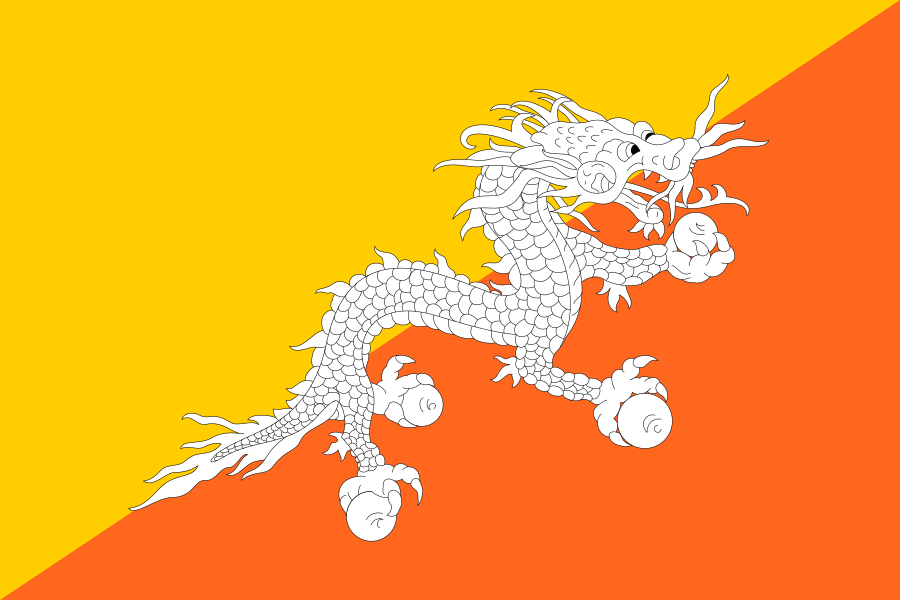
Bhutan
BTThe last Buddhist kingdom of the Himalaya, where Gross National Happiness outranks GDP. Bhutan opened to tourists only in 1974 and still limits the flow with a fee of $100 a night. In return: untouched mountain country, imposing dzong fortresses, the Tiger's Nest monastery on its sheer cliff and a culture barely changed in centuries. It is one of the few countries where forest covers more than 70% of the land and plastic bags are banned.
Where to go #
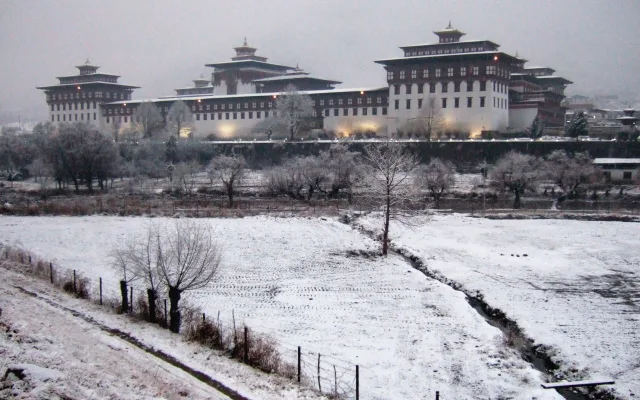
Thimphu
The capital of Bhutan and a city without a single traffic light — Tashichho Dzong, the 54-metre Buddha Dordenma and the memorial chorten.
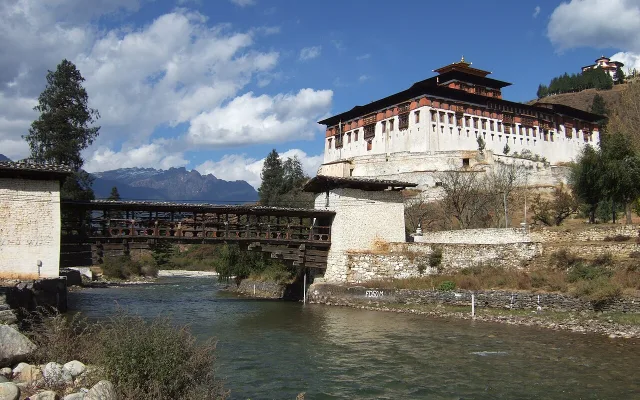
Paro
Bhutan's gateway town and its only international airport — the Tiger's Nest monastery, Paro Dzong and the valley views.
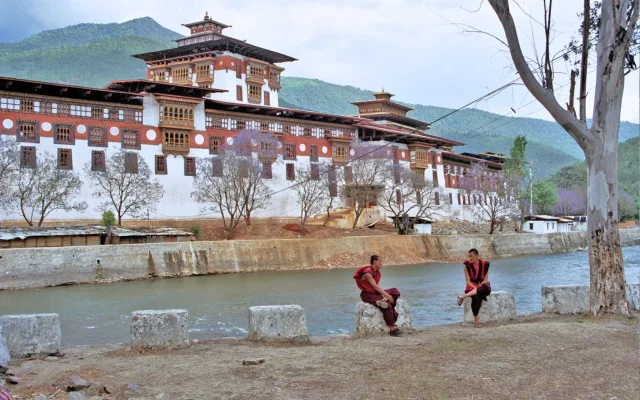
Punakha
Bhutan's former winter capital — a 17th-century dzong on the spit between the Pho Chhu and the Mo Chhu, in the warmest of the tourist valleys.
What to see #
Taktsang Lhakhang: the Tiger's Nest, the national symbol, glued to a cliff nine hundred metres above the valley floor. The climb through pine forest takes three hours and the views repay every cent of the trip.
Punakha Dzong: a majestic fortress at the meeting of the male and female rivers. Civil servants work inside and monks live there, so keep your voice down and your shoulders covered.
Dochula Pass: the point on the road to the central valleys where a hundred and eight stupas stand together. In clear weather the Himalayan giants line up behind them, and dawn is when to see it.
Buddha Dordenma: the huge gilded statue looking down on Thimphu. Thousands of miniature statues are hidden inside, and the terrace gives you the whole capital at once.
The crane valley: the protected Phobjikha area hosts the rare birds from October to March. Locals guard their peace so carefully that the valley has no overhead power lines at all.
The National Museum: housed in a former watchtower in Paro. An excellent place to spend a day working out the history behind the masks and the traditional dress.
Archery: the national sport, staged as a whole show with dancing and singing. Contests happen at every town ground and spectators normally walk in free.
Prices #
Currency: the ngultrum is pegged one to one with the Indian rupee, and rupees are accepted almost everywhere except the largest denomination notes.
Cash country: forget paying by phone for anything. Changing dollars is easiest at banks in Thimphu or Paro, and old or creased notes are frequently refused.
Cards: terminals are rare and often reject foreign cards outright. ATM withdrawals carry fees and the machines themselves break down regularly, so never rely on one.
What to bring: carry enough US dollars or euros in clean notes to cover the trip, and treat any card as a backup rather than a plan.
Tipping: restaurants often include service, but guides and drivers expect something. Five to ten dollars a day per person is the usual figure for good work.
| Item | Price (USD) |
|---|---|
| Lunch in a cafe | 6.00 |
| Restaurant dinner | 15.00 |
| Coffee in the capital | 2.50 |
| Red Panda beer | 3.50 |
| Bottle of water | 0.80 |
| Fridge magnet | 3.00 |
| Taxi across town | 4.00 |
| Street momos | 2.00 |
| Museum ticket | 12.00 |
| Kilo of apples | 1.50 |
| Bottle of wine | 18.00 |
| SIM card | 5.00 |
| 10 GB of data | 8.00 |
| Woollen scarf | 25.00 |
| Horse hire | 15.00 |
Getting around #
Getting there. Only Drukair and Bhutan Airlines fly into the country, connecting Paro with Delhi, Kathmandu, Bangkok and Singapore, so most travellers reach one of those hubs from Europe or North America first. Book the Bhutan leg early on the airlines' own sites, since seats are limited and sell out in the high seasons.
Landing at Paro. The approach counts as one of the most demanding in commercial aviation, with pilots hand-flying between mountainsides. Take a window seat.
Buses. Scheduled intercity services cost very little but move slowly. They are old vehicles without air conditioning, generally packed with locals and their luggage.
Taxis. Thimphu and Paro have plenty of cars but no meters. Agree the fare before getting in, and for longer trips simply hire the car for the day.
Roads. These are continuous switchbacks with sharp drops and very little barrier. Average speed rarely exceeds forty kilometres an hour, so allow generous time for every transfer.
Self-drive. Renting a car without a driver is not legally possible for foreigners. Traffic drives on the left, and in the capital a policeman directs it by hand, because residents rejected traffic lights.
On foot. Town centres are small and pleasant to explore walking. Always pass stupas and temples clockwise, which is the unwritten rule of pedestrian movement here.
Where to stay #
Book in advance. Accommodation must be confirmed before your entry permit is issued. Not everything appears on the aggregators, so expect to email hotels directly.
Categories. The government star system does not always match reality on the ground. Thimphu has genuinely modern hotels, while the provinces offer comfortable family-run houses.
Guesthouses. The cheapest option for anyone economising on rooms. They are clean and simple, but heating in winter is a real problem, so pack warm things for sleeping.
Farmhouses. A unique chance to live with a Bhutanese family. This is not about comfort but experience: mattresses on the floor and dinner beside the hearth with your hosts.
Facilities. Sockets are mostly British or Indian type, so an adapter is essential. Hot water in cheaper hotels often runs to a schedule or is heated per room.
Location. In Paro, stay near the trailhead for the Tiger's Nest so you can start early. In Thimphu pick a hotel on Norzin Lam, where the city's life and food are concentrated.
Language. English is spoken throughout the hospitality sector, so booking, checking in and asking for anything present no difficulty at all.
What to eat #
Heat. Prepare for fire, because chilli is treated as a vegetable here rather than a spice. If you cannot take heat, say so when ordering or the dish will be unmanageable.
Ema datshi. The national treasure, made of chillies and melted cheese. It always comes with a mound of red rice, which soaks up the sauce and takes the edge off the burn.
Momos. Juicy Himalayan dumplings filled with yak meat or vegetables. They are the safest option for a Western stomach and sold at street stalls on every corner.
Red rice. The local variety has a faint nutty flavour and plenty of nutritional virtue. It underpins every meal and arrives in large wooden bowls with whatever you ordered.
Drinks. Try suja, tea churned with salt and yak butter. It tastes more like thin soup, and it warms you and helps the body cope with altitude.
Alcohol. The local beer is genuinely good, especially the unfiltered one from Bumthang. Ara, the home-distilled rice or maize spirit, is often served warm with a fried egg in it.
Where to eat. The plain eating houses full of Bhutanese beat the polished tourist restaurants on both price and honesty of cooking.
Safety #
The general picture. One of the calmest countries in Asia, with no hostility towards visitors at all. The real dangers are altitude sickness and the mountain roads, not people.
Altitude. Thimphu sits at two thousand metres and the monasteries are higher again. Do not charge uphill on day one; give your body time and drink plenty of water.
Dogs. Streets have many strays, which Buddhists feed but do not neuter. They doze through the day and gather into loud packs at night, which can wreck your sleep.
Leeches. In the forests and on the trekking trails they are active during the rainy season. Wear high socks and closed shoes, and check your clothing after any walk through grass.
Tobacco. Selling tobacco is illegal and carries a prison sentence. Smoking is confined to designated areas, and any cigarettes you bring must be declared and taxed at customs.
Medical care. State clinics treat visitors free in emergencies, but the equipment is basic. Serious injuries mean a complicated evacuation to India, so insure accordingly.
Advisories. Check your own government's travel advice before booking, and make sure your policy covers high-altitude trekking if the Tiger's Nest or longer routes are on the plan.
Etiquette and culture #
Happiness. Gross National Happiness matters more than money here, and you feel it in the unhurried pace. People are sincerely proud of their king, whose portrait hangs in every home and shop.
Dress code. Entering any dzong or monastery requires proper clothing. Shorts, sleeveless tops and hats are forbidden and the guard on the gate will simply turn you away.
Religion. Bhutan is deeply Buddhist and ritual is built into daily life. Do not photograph inside temples and never point at a statue; use an open palm instead.
Etiquette. Walk around every religious structure clockwise. The same goes for prayer wheels, which you turn with the right hand in the direction of the sun.
Ecology. Plastic bags are banned, so carry a cloth one. Care for the environment is written into the constitution, and leaving litter is taken seriously.
Architecture. Every building, including modern hotels, is constructed in the national style with carved window frames. It can feel like a film set, but real life goes on behind the facades.
Photography of people. Ask first, particularly with monks and in villages, and accept a refusal gracefully.
Connectivity #
Language. Dzongkha is the state language, but in the towns nearly everyone speaks fluent English, which is the language of school instruction. A visitor rarely meets a language barrier.
Operators. There are two, TashiCell and B-Mobile. Buy a SIM at the airport or in a Thimphu shop; you need a copy of your passport and nothing else.
Internet. Mobile 4G is stable in the valleys but vanishes on the passes and in the mountains. Hotel Wi-Fi at the cheaper end handles messaging but not work.
eSIM. Coverage from international eSIM providers is patchy here, so a local SIM remains the reliable choice for data.
Messaging. WhatsApp is what guides and hotels use, and Bhutanese are active on social media, so details can be settled online before you arrive.
Navigation. Download offline maps in advance, since street names are often not displayed on buildings. Locals navigate by landmarks, so learn the route visually.
Going off-grid. Tell people at home you will be unreachable before heading into the mountains. Deep valleys and trekking routes can have no signal for days.
Phrasebook #
| English | Dzongkha | Pronunciation |
|---|---|---|
| Hello | ཀུ་ཟུ་ཟང་པོ་ལགས | kuzuzangpo la |
| Thank you | ཀ་དིན་ཆེ | kadrin che |
| How are you? | ག་དེ་སྦེ་ཡོད? | gade be yoe? |
| Yes / No | ཨིན / མེན | in / men |
| Good | ལེགས་ཤོམ | lekshom |
| How much is it? | གོང་ག་དེམ་ཅི? | gong gadem chi? |
| Too expensive | གོང་ཆེ་དྲགས་པས | gong che dra pa |
| Beautiful | བཟང་མས | zang ma |
| Water | ཆུ | chhu |
| Tea | ཇ | ja |
| Rice, a meal | བཞེས་སྒོ | zhego |
| Spicy | ཁ་ཚ་བ | kha tsa wa |
| I don't understand | ང་མ་ཤེས | nga ma shey |
| Sorry | དགོངས་དག | gongda |
| Help | རོགས | rog |
| Goodbye | ལོག་ཤོག | log shog |
| Mate, friend | གྲོགས་པ | drokpa (slang) |
| Great, blissful | སྐྱིད་པོ | kipo (slang) |
| Temple | ལྷ་ཁང | lhakhang |
| Mountain pass | ལ | la |
Good to know #
Entry rules. Bhutan issues permits only after the stay is paid for in advance, including the Sustainable Development Fee of one hundred dollars per night. Children under six are exempt and under-twelves pay half, and the permit normally takes two to five working days once payment clears.
Guides. You may walk around the towns on your own, but moving between valleys requires a licensed guide by law. Print the permit, because airline staff ask for it at the transit airport.
When to go. Spring and autumn are the best seasons. Winter is bitterly cold in the mountains and the summer monsoon brings rain and cloud that hides the peaks entirely.
Shopping. Take home hand-woven textiles and natural soap. Exporting antiques more than a hundred years old is strictly forbidden and customs inspect anything that looks old.
Sockets. Hotels have a zoo of types D, F and G. Buy a universal adapter before you fly, because finding one in Thimphu is a quest in itself.
Power cuts. The provinces see rolling blackouts, so keep a power bank charged. A torch is worth having, since street lighting outside the capital is thin.
Clothing. Bring a down jacket or fleece even in summer. Mountain weather turns instantly: hot in the sun, ten degrees colder the moment a cloud arrives.