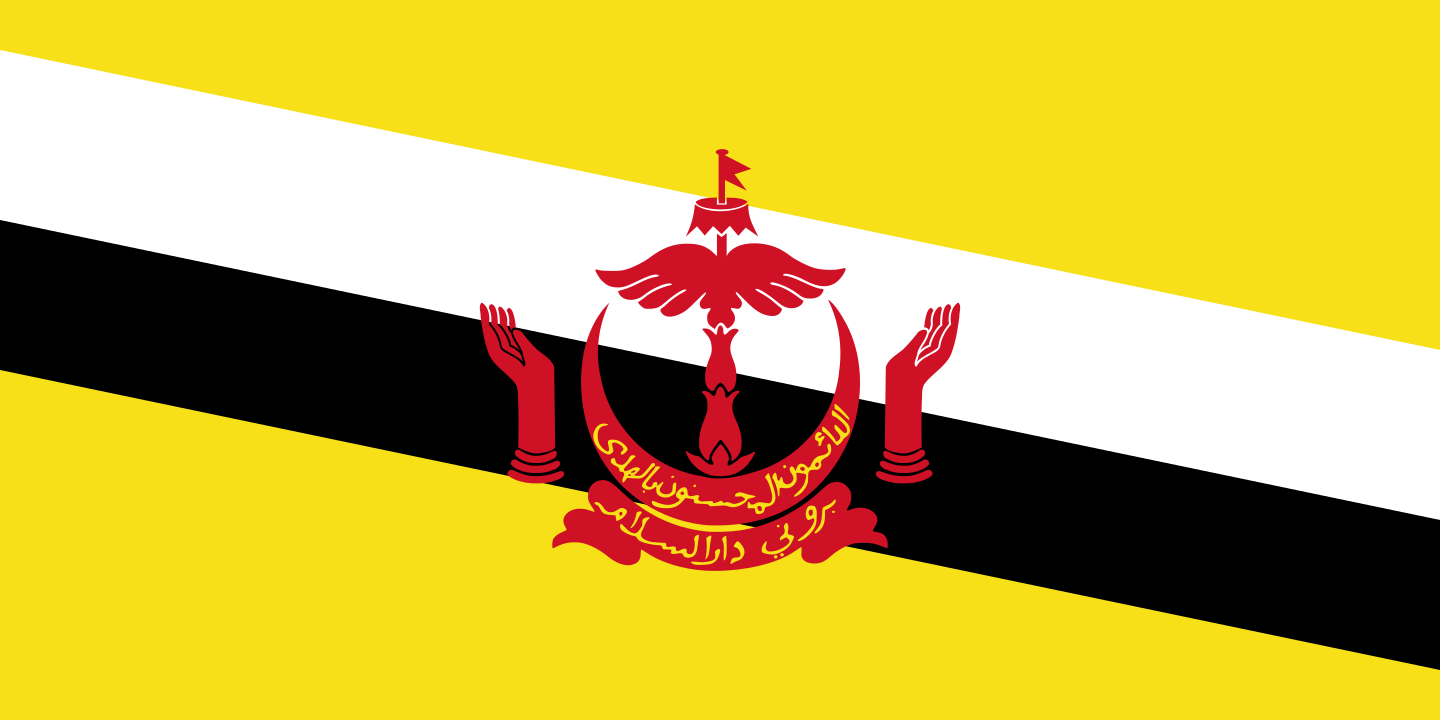
Brunei
BNA tiny oil sultanate on Borneo, one of the richest and least visited countries in South-East Asia. Golden mosque domes, Kampong Ayer — the largest water village in the world — the pristine rainforest of Ulu Temburong and the sultan's residence, the biggest inhabited palace on the planet. Yet night-market food starts at $1 and the country feels as safe as Japan. It is the only one in the region with a total ban on alcohol.
Where to go #
What to see #
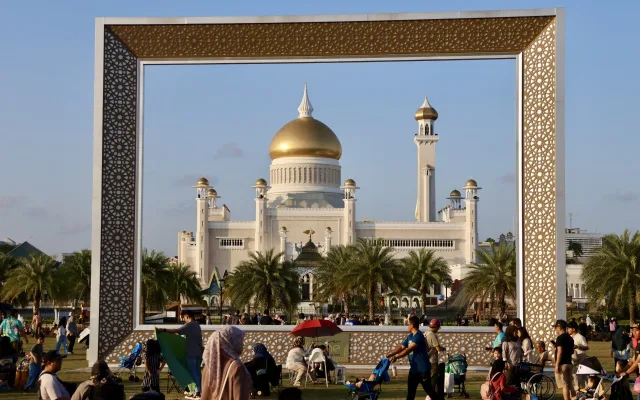
Omar Ali Saifuddien Mosque: a masterpiece with a golden dome and a stone ceremonial barge sitting in its lagoon, best seen at dusk. Entry is free, though non-Muslims are admitted only during set hours between prayers.
Kampong Ayer: the ancient stilt village they call the Venice of the East. You can do it in a day by hiring a boatman on the waterfront and walking the wooden causeways between houses and schools.
Jame'Asr Hassanil Bolkiah Mosque: the largest in the country, crowned with 29 golden domes. Worth the trip for the Italian marble interiors and the enormous crystal chandeliers.
Royal Regalia Museum: a free treasure house displaying the golden chariot and gifts to the sultan from world leaders. No photography inside, and shoes come off at the door.
Ulu Temburong: the national park with canopy walkways 60 metres up. Where to go for adrenaline and untouched jungle, provided steep staircases do not put you off.
Istana Nurul Iman: the sultan's official residence, larger than the Vatican. Visitors normally photograph the golden gates from outside, since the doors open to the public only three days a year.
Gadong night market: a loud, cheerful place to eat your way through the local specialities for very little. The perfect way to end an evening and feel the real rhythm of Bandar.
Prices #
Currency: the Brunei dollar is pegged one to one with the Singapore dollar, and both are accepted everywhere at no charge.
Cards: Visa and Mastercard work in shopping centres, hotels and larger restaurants, while boats, markets and the smallest shops are cash only.
ATMs: plentiful in Bandar, and BIBD machines are the ones to look for. Withdrawal limits are generally generous, though your home bank's fee still applies.
Haggling: it is appropriate only when hiring a boat. In shops and cafes prices are fixed and pushing on them reads as rude.
Budgeting: food and fuel are absurdly cheap while accommodation is not, so most of your daily spend goes on the room and on getting around.
| Item | Price (USD) |
|---|---|
| Water taxi crossing | 0.75 |
| Nasi katok | 0.75 |
| Bus fare | 0.75 |
| Dart taxi across town | 5.00 |
| Dinner at the market | 4.00 |
| Regalia museum | 0.00 |
| Jungle tour | 80.00 |
| Coffee in a cafe | 3.50 |
| Litre of petrol | 0.40 |
| SIM card | 8.00 |
| Souvenir magnet | 3.00 |
| Taxi to the airport | 11.00 |
| Car hire per day | 60.00 |
| Ferry to Labuan | 13.00 |
Getting around #
Getting there. Royal Brunei flies nonstop from London and connects the sultanate to Singapore, Kuala Lumpur, Hong Kong and Melbourne, which is how most long-haul travellers arrive. Fares are steadiest outside the school holidays in the region, and many people fold Brunei into a wider Borneo trip rather than flying in and out.
The Dart app. This is your realistic way of getting around unless you enjoy waiting hours for a bus. It is the local equivalent of Uber, with the fare shown before you accept.
Water taxis. Nimble wooden motorboats criss-cross the river constantly. To reach the water village, wave at a boatman from the waterfront; the standard fare is one dollar.
City buses. Bright minibuses that cost almost nothing. The catch is that there is no fixed timetable and services stop entirely after six in the evening.
Car hire. A strong option for independent travellers, since fuel costs pennies and the roads are immaculate. Note that driving is on the left and that mosque car parks are always free.
By sea. Fast boats to Labuan and on to Kota Kinabalu leave from the Serasa terminal at Muara. Crossing a border by sea is an unusually pleasant way to do it.
On foot. The centre of the capital is compact and the main mosques are walkable. Heat and humidity wear you down quickly though, so plan any long walk for early morning.
Where to stay #
Where to base yourself. Stay central in Bandar Seri Begawan, within walking distance of the waterfront and the food. It saves a great deal on taxis, which are not cheap here.
City hotels. Budget options are few and several look tired. They are always clean, though, with air conditioning and a kettle, which matters more than anything in tropical humidity.
Guesthouses. A rare format, but a few family-run places exist in the centre. You get the most genuine service and tips from locals on where the best nasi katok in the area is hiding.
Luxury. If the budget allows, spend a night at the Empire. It is less a hotel than a marble palace with grounds you could get lost in and the best sunsets on the coast.
Booking. Reserve ahead through the international platforms. Demand is modest but the number of decent places is limited, and rooms vanish entirely around public holidays.
What to expect. There is no minibar with beer, since alcohol is completely prohibited. On the other hand, most places will run you to the airport free if you arrange it in advance.
Language. English is used throughout the hospitality industry, so booking, checking in and asking for anything are all straightforward.
What to eat #
Nasi katok. The cheapest meal in Brunei: rice, fried chicken and hot sambal. That filling paper parcel still costs about a dollar in 2026 and is a national institution.
Ambuyat. The national dish, made from sago starch, is worth ordering for the experience alone. You wind the glutinous paste onto bamboo sticks and dip it into sharp thick sauces.
Gadong market. The culinary heart of the capital, opening after five in the afternoon. Huge choice of satay skewers, grilled fish and local sweets at low prices, and hundreds of residents come for it.
Drinks. Order teh tarik, strong tea with condensed milk, pulled between two jugs until it foams. In the heat, fresh pandan juice or cold coconut water are the other rescues.
Alcohol. None is sold in shops, cafes or restaurants anywhere in the country. Do not ask a waiter for it, which causes real offence. Non-Muslim visitors may bring in a personal allowance, declared at customs, and drink it only in private.
Kedai kopi. Look for that sign for a quick meal. They serve excellent laksa and Hainanese chicken rice, and the atmosphere lets you watch Bruneian life go by at its own pace.
Halal only. Every kitchen in the country is halal, and pork appears only in a few Chinese-run establishments licensed for it. Vegetarian options exist but are not always labelled, so ask.
Safety #
The general picture. Brunei is one of the safest countries in the world for an independent traveller. Street crime is essentially absent and evening walks are entirely comfortable.
Sharia law. The rules are strict and apply to visitors as well. Public displays of affection or disrespect towards religion can bring fines or immediate deportation.
Traffic. Drivers are courteous and actually stop for pedestrians, which is unusual for the region. The hazard is the absence of pavements in many places, leaving you walking on the verge.
Wildlife. Snakes and crocodiles live in the jungle and the mangroves. On boat trips keep your hands out of the water and follow the guide's instructions exactly.
Heat. The tropical sun is fierce, so sunscreen and a hat are not optional. Drink far more bottled water than feels necessary to stay ahead of dehydration.
Police. Patrols are rare because public order simply holds. If you need help, Bruneians are exceptionally willing and will often offer it before you ask.
Before you travel. Check your own government's advisory for the current legal position, particularly on conduct and prohibited items, and take out insurance that covers jungle excursions.
Etiquette and culture #
Religious norms. Islam shapes everything, so modest dress is expected. Shoulders and knees stay covered even in the heat, and women are handed a black robe at mosque entrances.
Friday pause. Every Friday from 12:00 to 14:00 the country stops for prayers. Shops, restaurants and even the border crossings close, so plan the day around it.
Pointing. Never point at a person with your index finger, which is taken as an insult. Bruneians use the thumb pressed against a closed fist instead.
The left hand. In Malay culture it is considered unclean. Pass money, gifts and food with the right hand only, as a sign of respect.
The sultan. The royal family commands boundless public respect. Criticising the monarch in public is against the law and will cause a visitor real problems.
Ramadan. During the fasting month the rules tighten. Non-Muslims must not eat, drink or smoke in public during daylight, and most restaurants operate takeaway only.
Greetings. A light handshake followed by touching your own chest is the local gesture, and many people prefer not to shake hands with the opposite sex, so follow their lead.
Connectivity #
Language. Malay is official but nearly everyone speaks English, which is the language of instruction in schools. You will have no difficulty in hotels, shops or taxis.
Signage. You will see both Latin script and Arabic Jawi. Most signs in the capital carry English as well, which makes independent navigation easy.
The Chinese community. A sizeable ethnic Chinese population speaks Mandarin, and the cafes and shops they run often have picture menus and a familiar feel.
Local slang. Bruneian Malay has its own flavour, but a handful of polite words earns real warmth. A smile does more work than any dictionary here.
SIM and data. Buy a local SIM at the airport so the taxi app and maps work from the start. 4G coverage is excellent everywhere and free Wi-Fi is in nearly every city cafe.
eSIM. If you would rather not queue, an eSIM from Airalo or a similar provider covers Brunei and works the moment you land, which is convenient on a two- or three-day visit.
Conversation. Bruneians happily talk football and food, but steer clear of politics and religious doctrine. Polite curiosity about the culture is always met with warmth.
Phrasebook #
| English | Malay | Pronunciation |
|---|---|---|
| Hello | Helo | heh-LOH |
| How are you? | Apa khabar? | AH-pa KHA-bar? |
| I'm fine | Khabar baik | KHA-bar BUY-ee |
| Thank you | Terima kasih | teh-ree-ma KA-see |
| You're welcome | Sama-sama | SA-ma SA-ma |
| Yes | Ya | ya |
| No | Tidak | tee-DAK |
| Sorry, excuse me | Maaf | ma-AF |
| How much is it? | Berapa harga? | beh-RA-pa HAR-ga? |
| Expensive | Mahal | ma-HAL |
| Where is the toilet? | Dimana tandas? | dee-MA-na TAN-das? |
| Help | Tolong | toh-LONG |
| Water | Air | AH-eer |
| Rice | Nasi | NA-see |
| Chicken | Ayam | ah-YAM |
| Delicious | Sedap | seh-DAP |
| Mate, buddy | Ngam | ngam (slang) |
| Let's go eat | Makan-makan | MA-kan MA-kan (slang) |
| Cool, great | Bisai | bee-SIGH (slang) |
| Finished, all done | Habis | HA-bees |
Good to know #
Arrival card. Every visitor must complete the E-Arrival Card on the official immigration portal before travelling. Without the digital confirmation you may not be allowed to board the flight or the ferry.
Plugs and power. Brunei uses the British type G socket with three flat pins at 240 volts. Bring an adapter or buy one on arrival.
Opening hours. Most museums and government offices close early, around 16:30. Plan the main sights for the morning, before the sun is directly overhead.
Mosque dress code. If your clothing is too revealing, a black robe is handed to you free at the entrance. Shoes always go on the racks before the prayer hall.
Healthcare. State clinics are of a high standard but foreigners pay for everything. Arrange insurance before departure, because a consultation can be expensive.
Water. Do not drink from the tap; buy bottled, which is cheap and sold on every corner. You lose a great deal of fluid here without noticing.
Souvenirs. The best buys are silverwork, traditional cloth woven with gold thread, and spices. The Arts and Handicraft Centre on the waterfront guarantees quality and fair prices.