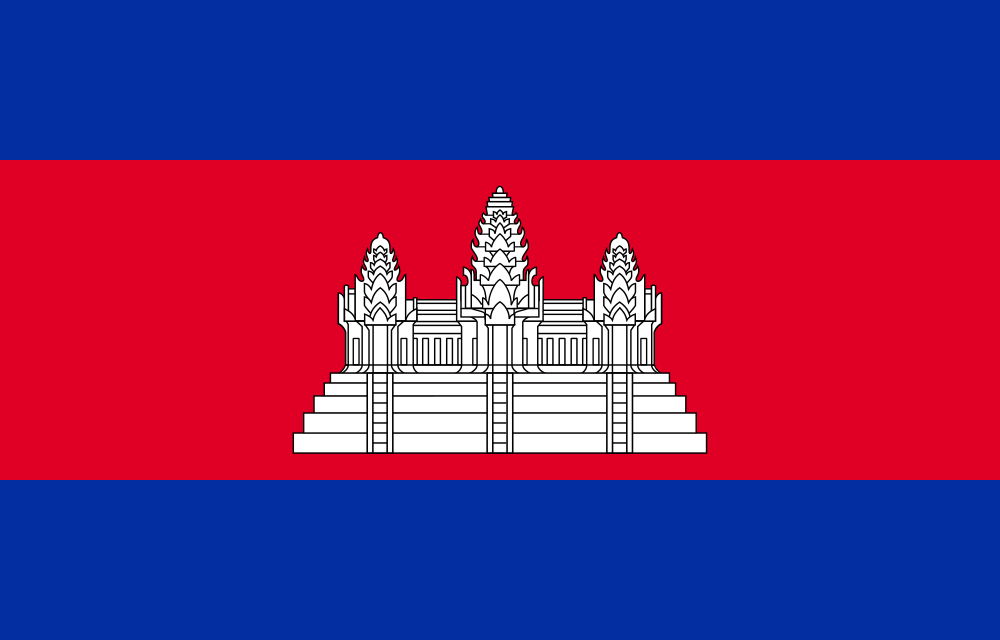
Cambodia
KHA country of ancient temples, where Angkor Wat — the largest religious monument on earth — greets the sunrise as it did a thousand years ago. Cambodia is a tragic and joyful nation at once, survivor of the Khmer Rouge genocide and reborn since. Smiling people, rock-bottom prices, superb fish amok and undeveloped islands, all in one of the most affordable corners of South-East Asia. The US dollar is the de facto main currency.
Where to go #
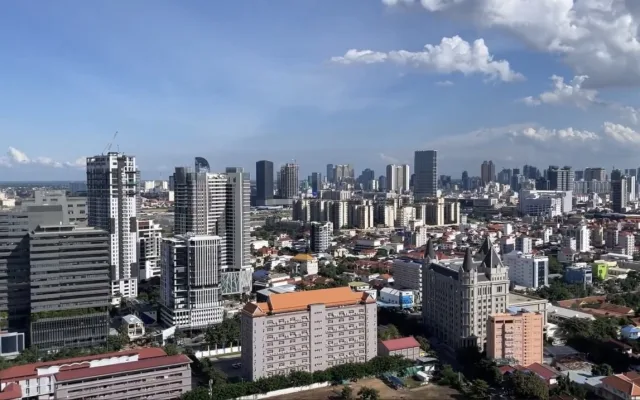
Phnom Penh
Cambodia's capital at the meeting of the Mekong and Tonlé Sap — the Royal Palace, the Silver Pagoda and the genocide memorials.
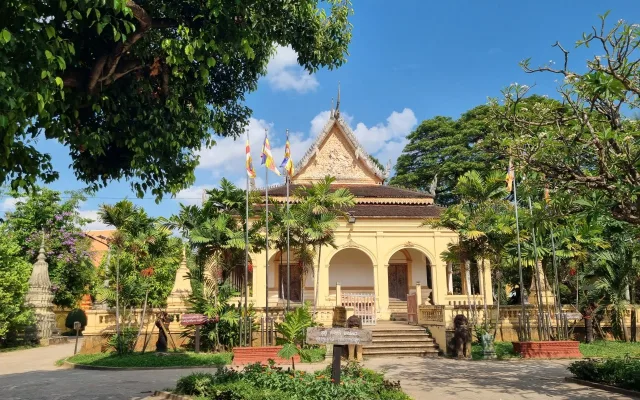
Siem Reap
The gateway town to the Angkor Archaeological Park — temples, floating villages on the Tonlé Sap, and Pub Street after dark.
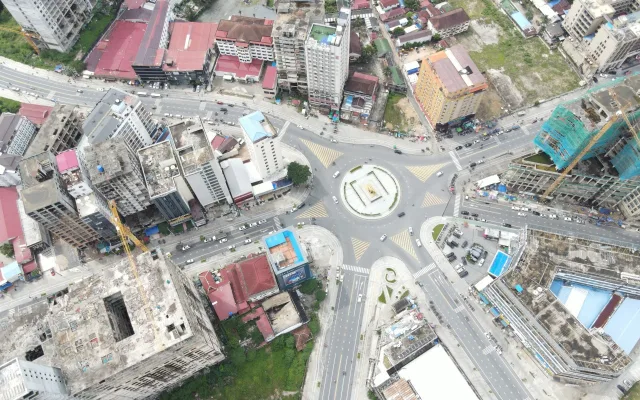
Sihanoukville
Cambodia's coastal city and the ferry gateway to Koh Rong and Koh Rong Sanloem.
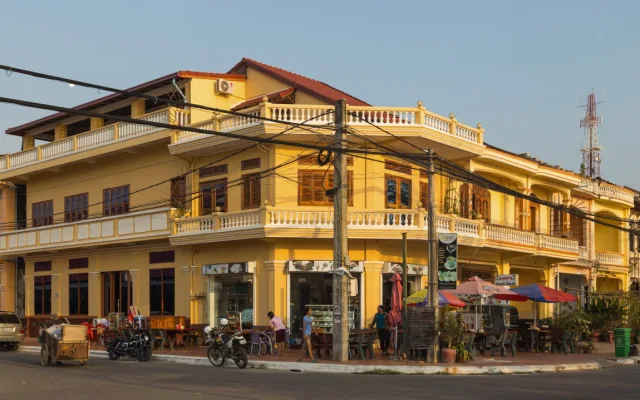
Kampot
A sleepy riverside town in southern Cambodia — French colonial shophouses, world-famous pepper farms and the Bokor plateau.
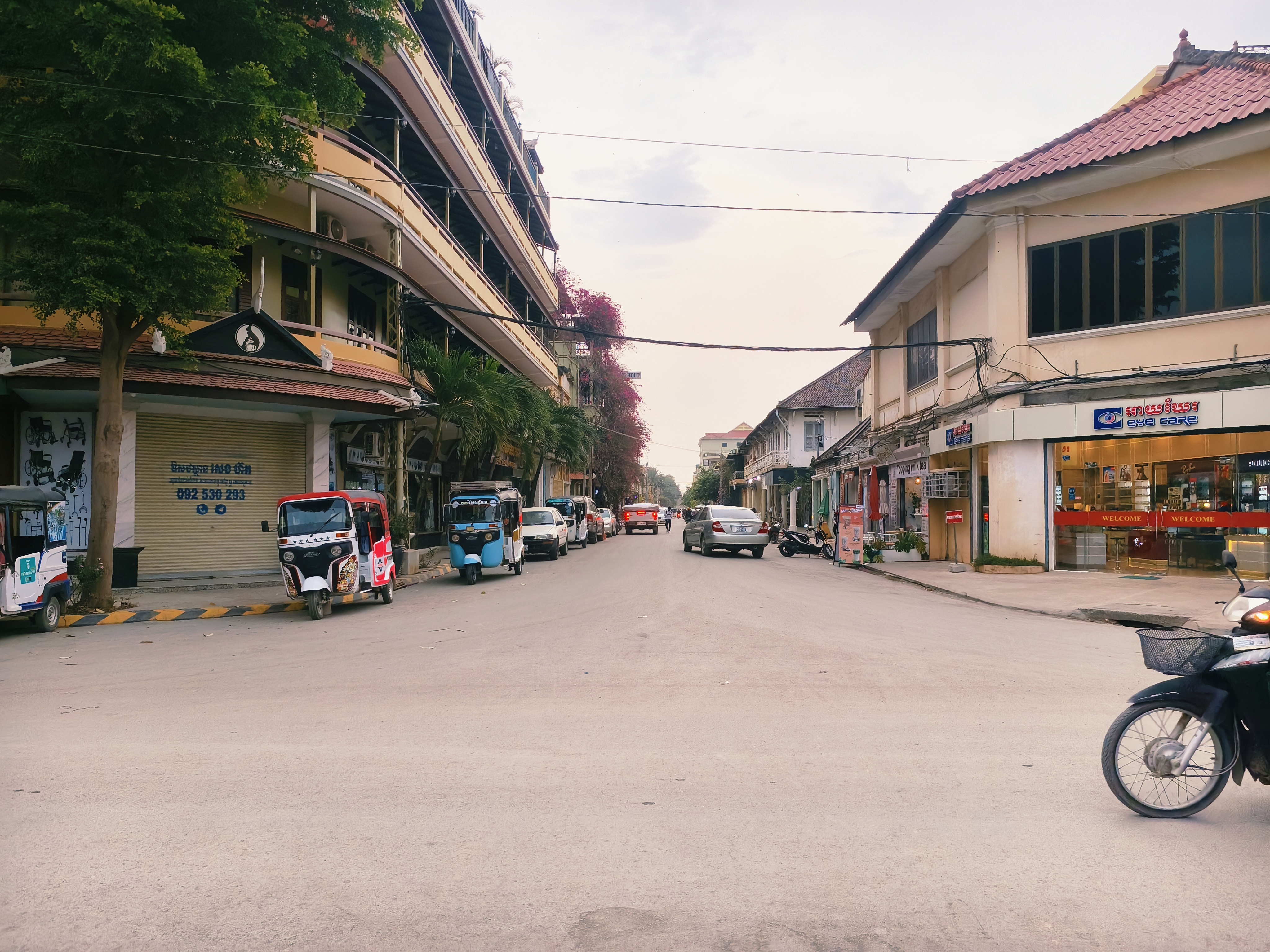
Battambang
Cambodia's slow colonial provincial town — the Phare circus, the bamboo train, hilltop temples and rice-field bike rides.
What to see #
What to see: Angkor Wat is a whole temple city, and dawn by the lotus pond is the moment everyone comes for. Once the crowd at the main entrance thins, you can do Bayon with its stone faces and jungle-swallowed Ta Prohm in the same day.
Where to go next: With a spare day, head out to Banteay Srei, known as the citadel of women for its impossibly fine pink carving. If you prefer solitude, make the trip to Beng Mealea, where the ruins simply lie as they fell and the crowds never arrive.
Worth a trip: The Phare circus in Siem Reap is a powerful acrobatic show that tells the country's story. To understand the tragedy of the Khmer people, visit the S-21 prison and the Killing Fields in the capital, a heavy but necessary few hours.
Can you do it in a day: On Tonle Sap lake you can see floating villages where everything happens on the water. Choose a community away from the tourist route to see how fishing families actually live in high-water season.
Pepper and the mountain: Around Kampot the pepper farms welcome visitors, and the tasting explains why the green peppercorns end up in every good kitchen in the region. Pair it with the drive up Bokor, where mist and abandoned colonial buildings make an odd, memorable afternoon.
Evening plans: In Phnom Penh the riverfront fills with food stalls and families at sunset. In Kampot the best way to close a day is a cheap river cruise with fireflies in the trees and the mountains going dark behind them.
Prices #
Currency: The country effectively runs on US dollars. Cash machines dispense them and every shop takes them. The Cambodian riel exists mostly as small change for anything under a dollar.
Note quality: People here are extraordinarily fussy about the state of your money. A tiny hole, a stain or a small tear turns a dollar bill into worthless paper that nobody will accept.
ATMs: Every withdrawal carries a flat fee of four to six dollars. Take out larger amounts at once to avoid paying that repeatedly, and always decline the machine's own currency conversion offer.
Cards: Visa and Mastercard work in chain hotels, upmarket restaurants and big supermarkets, and Amex almost nowhere. For markets, tuk-tuks and street food, keep a supply of small notes on you at all times.
Tipping: Tipping is not obligatory, but a spare dollar to a driver after a long ride is received warmly. A Wise or Revolut card is useful for loading dollars cheaply before you fly rather than for spending on the ground.
| Item | Price (USD) |
|---|---|
| Dorm bed | 5-7 |
| Guesthouse with air con | 12-18 |
| Dinner at a market | 2-4 |
| Fish amok in a cafe | 5-8 |
| Bottled water 1.5l | 0.8 |
| Angkor beer in a bar | 0.5-1 |
| Tuk-tuk ride | 2-3 |
| Scooter rental per day | 7-10 |
| Litre of petrol | 1.2 |
| Intercity bus ticket | 10-15 |
| Foot massage, one hour | 5-7 |
| SIM card with data | 5 |
| Angkor pass, three days | 62 |
| Speedboat to the islands | 12-14 |
| Fruit shake | 1 |
Getting around #
Getting in: Phnom Penh and Siem Reap both take international flights, almost always via Bangkok, Singapore, Kuala Lumpur, Doha or Seoul, which connect onward to London, Frankfurt, Paris and the major US gateways. Overland crossings from Thailand and Vietnam are cheap, busy and entirely normal for independent travellers.
Between cities: The main way to move is the big comfortable coaches run by Giant Ibis or Mekong Express. They are more reliable and safer than the cramped minivans, whose drivers tend to treat the road as a racetrack.
Tickets: The easiest booking route is 12Go, which pulls together every operator, train and island boat in one place. Book a couple of days ahead, especially for the popular morning departures.
Around town: Skip haggling on the street and install Grab or PassApp instead. You get a fair metered price and you no longer have to explain the route to a tuk-tuk driver who has never heard of your hotel.
The railway: A slow but genuinely scenic train links the capital with Kampot and the coast. It is a fine choice for anyone in no hurry who wants to see the rural interior at walking pace.
Boats: Fast catamarans run to Koh Rong from Sihanoukville. Buy a return with an open date so you are not hostage to seat availability at the pier on the day you want to leave.
Scooters: Rental is available almost everywhere, but the traffic is chaotic and genuinely dangerous. Always wear a helmet, and never hand over your passport as a deposit; a photocopy and a small cash deposit is enough.
Where to stay #
Where to look: Booking works best for city hotels and small boutique places. If you want a cheap bunk in a social hostel, Hostelworld carries more honest reviews of the party ones.
Siem Reap: Stay within walking distance of the Old Market or the river. You are then close to food and evening life but off the central bar street, where the music goes until dawn.
Phnom Penh: The best areas to base yourself are the Sisowath riverfront and the BKK1 district. Both have Western-style cafes, galleries and good guesthouses, and mornings by the river are pleasantly quiet.
The islands: On Koh Rong the range runs from simple bamboo huts to expensive villas. In the cheap huts the electricity may run to a schedule and a fan takes the place of air conditioning.
Booking direct: With small family-run guesthouses it is sometimes cheaper to message the owners directly. You save a couple of dollars and the money goes entirely to the family rather than a platform.
What to check: Before you commit, look for mosquito nets and check that the sockets work. Hot water is not guaranteed at the budget end, though in this heat a cold shower usually feels like a reward rather than a punishment.
What to eat #
The main flavours: Khmer cooking is gentler than Thai, with less chilli but plenty of herbs and aromatics. Fish amok is the dish to try first, delicate fish in coconut curry steamed inside a banana leaf.
Meat dishes: Beef eaters will get on well with lok lak, seared meat with black pepper and a lime dipping sauce, served with rice and a fried egg. It is simple, filling everyday food.
Breakfast: Early in the morning, look for nom banh chok at the markets. Rice noodles with green fish gravy and a mountain of fresh herbs is the Khmer morning ritual and costs a couple of dollars.
Seafood: In Kep the crab market is the whole point of coming. Pick your crab from the fresh catch and have it cooked in front of you with green Kampot pepper, which is one of the region's great meals.
Drinks: Mango and passionfruit shakes are made on every corner for a dollar. Angkor beer costs almost nothing and refreshes properly, and in Kampot you should order the local coffee with condensed milk over ice.
Hygiene: Market food is delicious, but pick the stalls where local people are actually eating. Watch that meat has not been sitting in the sun, drink bottled water only, and skip the ice in places that look questionable.
Safety #
Street theft: Bag snatching by motorbike is common in the capital and in Sihanoukville. Do not walk along the road with your phone in your hand, and wear your backpack on both straps so you are not an easy target.
Traffic: This is the biggest real risk to your health. Rules are loosely observed, helmets are ignored and a whole family may share one scooter. Take crossing the road and riding seriously.
Drugs: Some menus openly list dishes with marijuana, but police regularly use this to set travellers up and extract very large bribes. Anything harder carries severe prison sentences.
Landmines: In remote areas near the border there is still unexploded ordnance in the ground. Never leave the beaten path in the forest and pay attention to the warning signs and red markers.
Scams: Only pay at official ticket counters. Never buy Angkor passes from someone on the street, and ignore drivers who tell you your hotel has closed so they can take you somewhere that pays them commission.
Wildlife: In budget jungle bungalows you will certainly meet geckos and spiders. They are harmless, but mosquitoes here carry dengue, so use a repellent with DEET and check your government's travel advisory for current health notices.
Etiquette and culture #
Dress code: Shoulders and knees must be covered at any temple and at the Royal Palace. Guards enforce this strictly, so carry a light scarf or a sarong in your day bag.
Respect for faith: Never touch a monk, and if you are a woman, do not initiate conversation with one. Keep quiet inside temples, never point your feet at a Buddha image, and do not touch anyone's head.
Greeting: The local sampeah is palms together at the chest with a slight bow. The higher the hands, the greater the respect shown. Use it for elders and as thanks for help.
History: The Khmer Rouge period is a wound in every family. Avoid jokes about it and behave with restraint at the memorials rather than treating a site of mass killing as a selfie backdrop.
Emotions: Keeping face matters enormously in Khmer culture. Shouting, aggression and public anger will only ensure that nobody helps you further. A smile and a calm voice resolve problems far faster.
The right hand: Give and receive objects, and hand over money, with your right hand. The left is considered unclean, and using it in those moments reads as poor upbringing.
Connectivity #
SIM cards: Local Smart or Cellcard SIMs are cheap and give excellent data. Buy one at the airport with your passport, or at any phone shop, where they will set up the package for you on the spot.
eSIM: For short trips an eSIM is more convenient. Install the profile at home from Airalo or a similar provider and you have signal the moment you land, with no queue at an airport counter.
Coverage: 4G is solid in the cities and along the main highways. On the remote islands and in the jungle the signal can vanish for days, so download maps and booking confirmations in advance.
Messaging: Telegram is the standard way to reach hotels and tuk-tuk drivers here. It is how you confirm a transfer, agree a price or reserve a table, and replies come faster than by phone.
English in practice: English is widely spoken in Siem Reap, Phnom Penh and anywhere tourists go, with menus and signs commonly bilingual. In small towns and villages it thins out quickly, so a translation app earns its space.
Useful apps: Install 12Go for tickets, Grab for rides and Google Maps for everything else. Between them they save hours and keep you clear of the pushier street guides.
Phrasebook #
| English | Khmer | Pronunciation |
|---|---|---|
| Hello | សួស្ដី | suo-SDAY |
| Thank you | អរគុណ | or-KUN |
| Yes (male) / Yes (female) | បាទ / ចាស | baat / chaa |
| No | ទេ | tey |
| How much is it? | ថ្លៃប៉ុន្មាន? | tlay pon-MAAN |
| Expensive | ថ្លៃណាស់ | tlay NAH |
| Cheap | ថោក | tha-OK |
| Delicious! | ឆ្ងាញ់! | chnganh |
| Where is the toilet? | បន្ទប់ទឹកនៅឯណា? | ban-TOP tuk nov ay-NAA |
| Water | ទឹក | tuk |
| Rice | បាយ | bai |
| Help! | ជួយផង! | chuoy PONG |
| Sorry | សុំទោស | som TOH |
| Beautiful! | ស្អាត! | sa-AAT |
| I don't understand | ខ្ញុំមិនយល់ | knyom min YUL |
| No meat | អត់សាច់ | ot SACH |
| Cold beer | បៀរត្រជាក់ | bia tro-CHEAK |
| Mate, older sibling (slang) | បង | bong |
| No ice (slang) | អត់ទឹកកក | ot tuk KOK |
| Buddy, youngest (slang) | ពៅ | pov |
| Good, fine | ល្អ | la-OR |
| Goodbye | លាហើយ | lia HAOY |
Good to know #
Health: Drink bottled water only and use sunscreen seriously. Your kit should include something for food poisoning, plasters and an antiseptic for the small cuts and insect bites that are inevitable here.
Electricity: Sockets are types A, C and G, so a universal adapter is worth packing. Rural areas and the islands get power cuts, which makes a decent power bank a real convenience.
What to wear: For the Angkor temples you want closed shoes with proper grip, because the stone gets slippery. Light natural fabrics are the only way to survive the humidity without overheating.
If something goes wrong: Most countries have an embassy or consulate in Phnom Penh, and the rest cover Cambodia from Bangkok. Look up which mission handles your passport, save the emergency number, and keep a photo of your passport in the cloud.
Insurance: Choose a policy with genuinely good cover, and check that it includes riding a scooter if you plan to rent one. Treatment for foreigners is expensive and the decent clinics exist only in the capital and Siem Reap.
Climate: November to February is the best window, dry and not unbearably hot. March and April bring peak heat, and from May the rains turn provincial roads to soup.