Czech Republic
CZFairytale Prague, with its Gothic spires and Charles Bridge, is one of the loveliest capitals in Europe and came through the Second World War almost untouched. But the Czech Republic is more than Prague: medieval Český Krumlov, the spa town of Karlovy Vary, castles on every other hill. The beer is the best in the world and the cheapest in Europe — from 40 CZK (about $2) for a pint of Pilsner Urquell. A day here costs what dinner costs in Paris.
Where to go #
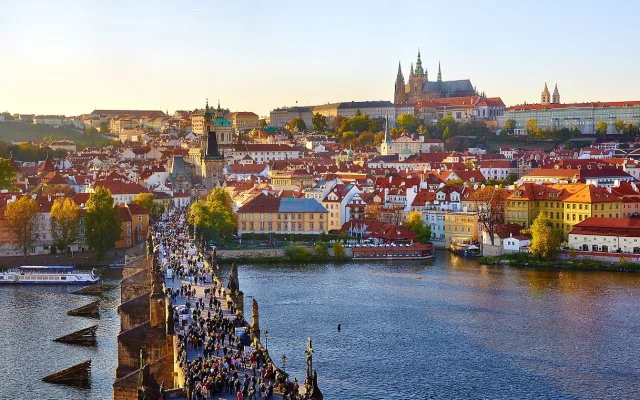
Prague
Fairy-tale "Golden Prague" — Charles Bridge, Prague Castle and the best beer in the world.
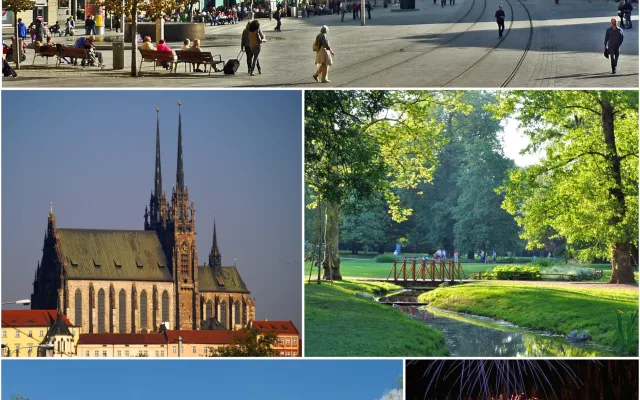
Brno
The Czech Republic's second city, home to the UNESCO-listed Villa Tugendhat, the Brno Ossuary, and a thriving student scene.
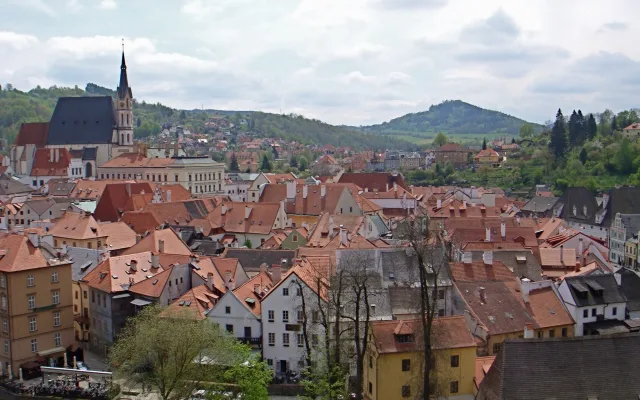
Český Krumlov
A fairy-tale pocket town curled inside a loop of the Vltava river, with a vast castle, a Baroque theatre, and medieval quiet far from the crowds.
What to see #
Prague Castle: The largest castle complex in the world, and a full day if you let it be. See St Vitus Cathedral and the Golden Lane, and catch the ceremonial changing of the guard at noon.
Charles Bridge: Best at dawn, before the crowds arrive. Rub the figure on the St John of Nepomuk relief and, according to everyone here, your wish comes true.
Old Town Square: Home to the astronomical clock. Every hour from 9:00 to 23:00 the tower puts on its show with the figures of the twelve apostles.
Karlštejn Castle: A fortress on a crag built to house the crown jewels. Worth a trip for the interior of the Chapel of the Holy Cross, studded with semi-precious stones.
Bohemian Switzerland: A national park containing the enormous natural arch of Pravčická brána. This is where to go if you want canyons and forest instead of cobblestones.
Sedlec Ossuary: Not for everyone, but the scale of the decoration, assembled from the remains of forty thousand people, is genuinely startling. One of the most visited sights outside the capital.
Prices #
Currency: Everything is priced in Czech crowns (CZK). Paying in euros is possible in tourist spots but always at a bad rate, so use crowns.
Exchange scams: Avoid any booth advertising "0% commission" in the city centre, and avoid Euronet ATMs entirely. Hidden losses run to 20%. Always decline the machine's own currency conversion.
Cards: Visa and Mastercard work almost everywhere, including small pubs and tram ticket machines. Amex is less widely taken. Bank ATMs from KB, ČSOB or Česká spořitelna give fair rates.
Wise and Revolut: Worth having, since the crown is a separate currency and a fintech card avoids the conversion markup your home bank will otherwise add.
Tipping: Five to fifteen per cent in restaurants. Czechs usually just state the rounded total to the server when paying rather than leaving coins on the table.
| Item | Price (USD) |
|---|---|
| Beer 0.5l in a pub | 2.50 |
| Lunch menu of the day | 8.00 |
| Dinner for two | 45.00 |
| Cappuccino | 3.50 |
| Trdelník | 4.50 |
| 30-minute transport ticket | 1.70 |
| 24-hour travel pass | 6.50 |
| Train to Český Krumlov | 10.00 |
| Prague Castle entry | 18.00 |
| Litre of petrol | 1.80 |
| Water 0.5l | 1.00 |
| Taxi from the airport | 25.00 |
| Hostel dorm bed | 18.00 |
| 3-star hotel per night | 80.00 |
Getting around #
City transport: Prague runs a single integrated system of metro, trams and buses. From January 2026 the city counts as three zones under the new tariff structure.
Tickets: Electronic tickets in the PID Lítačka app are cheaper. A paper 30-minute ticket costs 39 crowns, 90 minutes costs 50.
Passes: For a busy few days, take the 24-hour pass at 150 crowns or the 72-hour at 350. Validate a paper ticket the first time you board, not before.
Airport: The cheapest route in is trolleybus 59 to the Nádraží Veleslavín metro station. The Airport Express bus to the main railway station costs 200 crowns.
Trains: České dráhy covers the country well. Buy on cd.cz in advance and the fare is often half the walk-up price.
Coaches: The yellow RegioJet buses are frequently more comfortable and cheaper than trains, with free Wi-Fi, coffee and newspapers thrown in.
Inspectors: Prague has plenty of plain-clothes ticket inspectors. The on-the-spot fine for travelling without a valid ticket is 1,200 crowns.
Getting there: Prague has direct flights from across Europe including London, Paris, Frankfurt and Amsterdam, with Ryanair and Wizz Air on many routes, plus seasonal long-haul from New York. From further afield, connect through a European hub.
Where to stay #
Neighbourhoods: Staré Město is the dead centre, but it is loud and expensive. For something more genuine, look at Vinohrady or Žižkov, where the restaurants are better and locals actually live.
Malá Strana: The most romantic district, right under the castle walls. Full of small guesthouses in buildings several centuries old, and priced accordingly.
Apartments: Flats work well for families or longer stays. A kitchen saves a serious amount on breakfasts and evening meals over a week.
Hostels: Prague and Brno both have a strong hostel scene, with dorm beds around 18 dollars and private rooms not much more than a cheap hotel.
Watch for stairs: Historic buildings frequently have no lift and the staircases are steep and narrow. Check this before booking if you are carrying heavy luggage.
Season: Christmas and high summer sell out six months ahead. In February and November you can find real discounts even in the centre.
What to eat #
The style: Czech cooking is about meat and about volume. Try svíčková, beef in a cream sauce, or the pork knuckle, which is better ordered as one between two.
Lunch menus: From 11:00 to 14:00 nearly every place offers a polední menu. Soup and a main for 160-220 crowns is the cheapest good meal in the country.
Beer: Look for the word tankové, meaning fresh unfiltered beer served from tanks rather than kegs. Pilsner Urquell and Kozel never disappoint in an ordinary hospoda.
Table traps: In tourist restaurants they place bread, pretzels or sauces on your table unasked. Touch any of it and each item appears separately on your bill.
Beer snacks: Order utopenci, pickled sausages, or hermelín, a soft cheese marinated in oil with garlic and spices. Both exist purely to make you order another beer.
Trdelník: The sweet spiral pastries sold on every corner are essentially a tourist attraction. Locals rarely buy them and consider the price absurd.
Safety #
Overall: The country is very safe and you can walk through cities late at night without concern. Serious incidents involving visitors are rare.
Pickpockets: The one real risk. Stay alert on tram 22, on the Charles Bridge and in the crush around the astronomical clock.
Taxis: Never take a car hailed off the street, especially near the stations. Use Uber or Bolt, where the price is set before you get in.
Tap water: Drinkable everywhere, though it can taste of chlorine. Plenty of travellers buy bottled out of habit rather than necessity.
Documents: By law you should carry identification. Police checks are uncommon, but not having the original can create paperwork.
Driving: Czechia has zero tolerance for alcohol at the wheel. Fines are enormous and the narrow old streets are unforgiving.
Before you go: Check your own government's travel advisory, though for Czechia this rarely amounts to more than standard pickpocket warnings.
Etiquette and culture #
Beer as religion: Czechia leads the world in beer consumption per head. Do not criticise the local product in a pub, because this is national pride, not a beverage.
Shoes off: Entering a private home, always take your shoes off. Your host will produce slippers, and this is a real element of hospitality rather than a formality.
Quiet hours: After 22:00 both streets and apartment buildings are expected to be quiet. Loud groups attract police attention quickly.
Christmas: On 24 December the country stops. Shops and restaurants close and Czechs stay home eating carp. Plan your food shopping the day before.
Dressing up: For an opera or a classical concert, leave the trainers behind. Formal dress codes are still observed for these events.
Free castle days: On 30 August and 27 September 2026, entry to state castles and fortresses is free. A good chance to see Konopiště or Křivoklát at no cost.
English: Younger Czechs speak it well and tourist areas present no difficulty at all. In small villages, a translation app is worth having offline.
Connectivity #
eSIM: The simplest option is an eSIM from Airalo or a similar provider, activated before you fly. A local Vodafone or T-Mobile SIM is also easy to buy in any phone shop with your passport.
Language: Czech pronunciation is brutal, but you will rarely need it. Younger people speak excellent English and the tourist zones present no barrier.
Mapy.cz: Download this Czech mapping app. It knows every forest trail and reads transport timetables more accurately than Google does.
Wi-Fi: Free networks are in almost every café and shopping centre. The Prague metro has signal at most stations and inside the carriages.
PID Lítačka: The essential app for the capital. It plans routes and sells tickets for every mode of transport, which saves fumbling with machines.
Coverage: 4G and 5G blanket the country including the national parks, so navigation in Bohemian Switzerland or South Moravia is not a problem.
Phrasebook #
| English | Czech | Pronunciation |
|---|---|---|
| Good day | Dobrý den | DOB-ree den |
| Thank you | Děkuji | DYE-ku-yi |
| Please | Prosím | PRO-seem |
| Yes / No | Ano / Ne | A-no / neh |
| Sorry | Promiňte | PRO-min-teh |
| How much is it? | Kolik to stojí? | KO-lik to STO-yee |
| I don't understand | Nerozumím | NE-ro-zu-meem |
| A beer, please | Pivo, prosím | PI-vo PRO-seem |
| The bill, please | Účet, prosím | OO-chet PRO-seem |
| Delicious! | Výborné! | VEE-bor-neh |
| Toilet | Toaleta | to-a-LE-ta |
| Help! | Pomoc! | PO-mots |
| Goodbye | Na shledanou | na SKHLE-da-noh |
| Cheers! | Na zdraví! | na ZDRA-vee |
| One / Two | Jeden / Dva | YE-den / dva |
| Water | Voda | VO-da |
| Awesome! (slang) | Paráda! | pa-RA-da |
| Bloke, guy (slang) | Týpek | TEE-pek |
| Nonsense (slang) | Blbost | BLB-ost |
| Where is the tram? | Kde je tramvaj? | g-deh yeh TRAM-vai |
| Another one, please | Ještě jedno | YESH-tye YED-no |
Good to know #
Dialling for help: 112 reaches every service. Police are on 158, ambulance 155 and fire 150, and operators speak English.
Your embassy: Most diplomatic missions are in Prague. Note down your own country's contact details and the out-of-hours number before you travel.
Transport info: Train times are on cd.cz, coaches on regiojet.cz, and pid.cz is the reference for anything in Prague itself.
Tourism: The official visitczechia.com portal lists festivals and events, which is worth a look because the country programmes a great deal in summer.
Pharmacies: Look for the sign reading Lékárna. Prescription drugs need documentation from a doctor, while basic remedies are freely available.
Mapy.cz again: For planning walks and cycle routes, this Czech app beats everything else and works offline, which matters in the national parks.