Hungary
HUBudapest is one of the loveliest cities in Europe, split by the Danube into hilly Buda and flat Pest. Hungary is known for its thermal baths, its ruin bars, its hearty paprika-heavy cooking and prices that are strikingly low for the EU. A country of deep history, splendid architecture and long winemaking traditions, with something for every traveller.
Where to go #
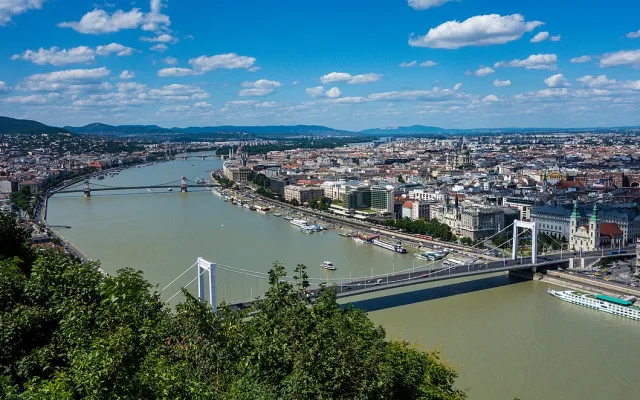
Budapest
Budapest is a capital known for historic landmarks such as the Fisherman's Bastion, the Széchenyi thermal baths and the atmosphere of its ruin bars.
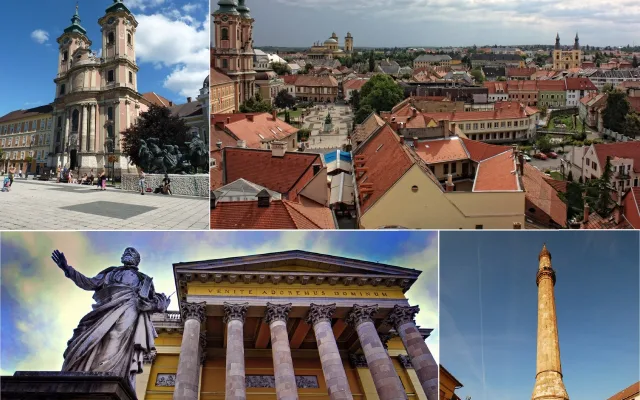
Eger
Eger is a city in northern Hungary, set at the foot of the mountains. It is known for its castle that withstood a Turkish siege, the red wine Egri Bikavér ("Bull's Blood"), and its thermal baths.
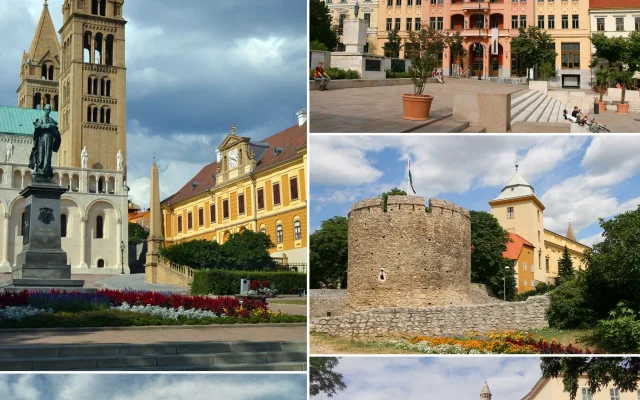
Pécs
Pécs is a southern Hungarian city known for its late Roman catacombs, the Mosque of Gazi Kasim Pasha, and a lively student quarter.
What to see #
The Parliament building: The enormous structure on the Danube is best photographed from the opposite bank at sunset. You can only go inside with a guide, so buy tickets online a couple of weeks ahead or you will not get in.
The thermal baths: Széchenyi is the neo-baroque classic but is frequently packed with tourists. For something more authentic, choose Rudas with its rooftop panoramic pool, or Király, which has kept the spirit of the Ottoman era.
Tihany: The Balaton peninsula is famous for its abbey and the lavender fields that flower in June. What to see here is the Paprika House and the old cottages with thatched roofs.
Lake Hévíz: The largest thermal lake in the world, where you can swim among water lilies even in winter. Worth seeing for the therapeutic effect, though be ready for the distinct smell of sulphur.
Fisherman's Bastion: The best viewpoint in Budapest, looking over Pest. The upper terraces charge admission in summer, but early morning or late evening you can walk up free and get perfect shots without the crowds.
Ruin bars: A Budapest phenomenon where derelict buildings became art spaces. The most overrated is Szimpla Kert, which is thick with tourists, so hunt for the less publicised places deeper in the seventh district.
Prices #
The forint: The national currency is the forint, and euros are accepted reluctantly at a punishing rate. Change money at official exchange offices in the centre, avoiding the airport and railway stations where the commission is beyond reason.
Cards: Visa and Mastercard are accepted virtually everywhere including small cafés, and contactless is standard, while Amex is patchier. Still keep some forint cash, because markets and a handful of tiny eateries take nothing else.
ATMs: Steer well clear of the bright blue Euronet machines that stand on every corner. They levy enormous fixed fees and offer terrible conversion, so look for Raiffeisen, Erste or OTP machines and always decline their offer to convert into your home currency.
Tipping: Most restaurants already include a service charge of 10 to 15 percent, so read the bill carefully. If it is absent, around ten percent is normal, handed to the waiter by stating the total rather than left on the table.
| Item | Price (USD) |
|---|---|
| Lunch at a kifőzde | 8 |
| Beer in a bar | 4 |
| Lángos at a market | 5 |
| 100E airport bus ticket | 7 |
| 24-hour travel pass | 8 |
| Coffee in the centre | 3 |
| Széchenyi entry | 40 |
| Parliament tour | 18 |
| Train to Eger | 7 |
| Restaurant dinner | 20 |
| Kürtőskalács | 4 |
| Litre of petrol | 1.8 |
| Taxi to the centre | 35 |
| Bottle of Tokaji Aszú | 15 |
Getting around #
Getting there: Budapest airport is a major Wizz Air and Ryanair base with cheap connections from across Europe, plus full-service flights from the big hubs and seasonal routes from North America. Trains and coaches from Vienna and Bratislava are also quick and inexpensive.
City transport: Budapest runs a well-designed ticket system across metro, trams and buses. The best value is the 24 or 72-hour pass, which spares you hunting for machines and validating paper tickets.
The app: Install BudapestGO for electronic tickets and route planning. Boarding a surface vehicle or entering the metro, you must scan the QR code at the validator with your phone camera.
Trains: Comfortable MÁV services link the cities with free wifi on board. Tickets are cheaper booked ahead through the site or app, and regional routes often carry youth discounts.
Coaches: The Volánbusz network fills the gaps left by rail, reaching remote villages and wineries. If you plan to move around a lot, look at the Hungary Pass for unlimited travel.
From the airport: The 100E bus is the fastest way into the centre and needs its own specific ticket. For taxis, order through the Bolt app rather than negotiating with the drivers waiting outside the terminal.
Where to stay #
Pest districts: The fifth district is the most expensive and formal, with everything within reach but noisy. The seventh suits anyone here for the nightlife, though choose a room facing the courtyard or the ruin bars will keep you awake.
Buda: The calm hilly side is ideal for a family stay in small pensions. There are fewer tourists and plenty of greenery, but you will be taking a tram or the metro to most of the attractions.
Guesthouses: In the provinces and around Balaton these are the best choice for an independent traveller. Look for places marked Fizetővendéglátás, private rooms where hosts often pour you homemade wine and share good advice.
Short-term lets: Budapest's sixth district introduced a full ban on short-term apartment rentals from 2026. Bear that in mind when planning, as older listings may be cancelled or operating illegally.
Booking: Use the established international platforms. For high season on the lake or in Eger, book three or four months ahead, since Hungarians themselves take the best places.
Quirks: Older Budapest buildings often have very high ceilings and windows opening onto internal light wells. That keeps them cool in summer but can feel gloomy, and sound carries in the stairwells.
What to eat #
Goulash: The national pride, which in Hungary means a thick soup rather than a main course. It comes in a small cauldron, rich with paprika and homemade dumplings, and it deals with hunger after a long walk.
Lángos: The most popular street food, a deep-fried yeast dough flatbread. Take the classic with sour cream, garlic and grated cheese, a calorie bomb that easily replaces lunch.
Paprika: Hungarian cooking is heavy and often hot, which can be a shock to the stomach. Always ask how spicy a dish is and keep yoghurt or bread to hand to take the edge off the red pepper.
Unicum: The legendary herbal bitter with a medicinal edge that Hungarians drink to aid digestion. The recipe is a secret, and the best place to try it is Esztergom, where it is particularly popular.
Sweets: Kürtőskalács is a hollow chimney of dough baked over coals and rolled in cinnamon or nuts. A real one is hot and crisp, so skip the supermarket versions and find a kiosk with a queue.
Eating cheaply: On weekdays, look for the napi menü, a set lunch of soup and a main at a fixed price. It is the simplest way to eat well without paying tourist-trap prices in the centre.
Safety #
Overall: The country is very calm and even a night walk through the middle of the capital raises no concern. Do not switch off entirely in crowds though, particularly on the busy tourist routes like tram 2.
Pickpockets: Professional thieves work Váci utca and the metro, using crushes to lift wallets. Keep your bag in front of you and never put valuables in a back pocket.
Money changing: Avoid street touts offering "the best rate, no commission". You will typically be handed old notes withdrawn from circulation, or simply short-changed because you do not yet recognise forint denominations.
Taxis: Never get into an unmarked car waiting at a station. Use the official apps only, or a short trip can cost five times what it should thanks to a doctored meter.
Restaurant bills: Sometimes menu prices are per hundred grams rather than per portion, which you discover only when the bill arrives. Always check the total and the line items in busy tourist areas.
At the baths: Watch your belongings and never leave a phone by the pool. Use the lockers or safes, which are opened by an electronic wristband, and do not hand that band to anyone.
Etiquette and culture #
Bath etiquette: Shower with soap before entering the pools, which is a strict hygiene rule. Some areas require a swimming cap, and in saunas you put a towel under yourself rather than sitting on the wood.
Sundays: Most large shops and supermarkets close on Sunday. Only small private shops in the tourist quarters stay open, so buy what you need on Saturday.
Shoes indoors: If you are invited into a Hungarian home, take your outdoor shoes off at the door. Your hosts will offer slippers, and refusing can read as disrespect for the house.
Language: Hungarian is extraordinarily difficult and unlike any of its neighbours. Hungarians are proud of that distinctiveness, so even a couple of learned words like "thank you" will immediately warm a conversation.
Rhythm: The country wakes early, with markets and many museums opening by seven. In smaller towns life winds down in the evening, so do not plan late dinners in the provinces, where kitchens close early.
Tipping etiquette: Do not leave money on the table, since the waiter may assume you forgot it. State the total including the tip when you pay, or say thank you as you hand over the money to indicate you want no change.
Connectivity #
SIM cards: Buy a local card at any Yettel or Telekom shop with your passport. Data packages are not the cheapest in Europe, but the network is solid even in forests and along the Balaton shore.
eSIM: For a short trip, a virtual card through Airalo or Yesim is simpler. You are connected the moment you land, without hunting for a shop at the airport or in town.
Free wifi: In Budapest there is wifi in almost every café and ruin bar, with the password on the menu or a board by the door. Squares and the metro have hotspots too, though the speed is unimpressive.
Apps: Download MÁV for train tickets and Bolt for taxis. For navigation, Google Maps works well and knows the timetables of the whole country's public transport.
English: In tourist areas younger people speak decent English, but in the countryside or at markets you may need help. Download the offline Hungarian pack in Google Translate so you can manage with text.
Messaging: Everything works without restriction, so video calls over any app are fine. Hotel internet is normally included, though thick walls in older buildings can block the signal.
Phrasebook #
| English | Hungarian | Pronunciation |
|---|---|---|
| Good day | Jó napot | yoh NA-pot |
| Hi | Szia | SEE-ya |
| Thank you | Köszönöm | KUH-suh-nuhm |
| Please | Kérem | KAY-rem |
| Yes / No | Igen / Nem | EE-gen / nem |
| Sorry | Elnézést | EL-nay-zaysht |
| How much is it? | Mennyibe kerül? | MEN-nyi-be KE-rool |
| That's expensive | Ez drága | ez DRAA-ga |
| Where is the toilet? | Hol van a mosdó? | hol van a MOSH-doh |
| I don't understand | Nem értem | nem AYR-tem |
| Do you speak English? | Beszél angolul? | BE-sayl AN-go-lool |
| Water | Víz | veez |
| Beer | Sör | shur |
| Wine | Bor | bor |
| Delicious! | Finom! | FI-nom |
| The bill, please | Számlát kérek | SAAM-laat KAY-rek |
| Help! | Segítség! | SHE-geet-shayg |
| To drink (slang) | Inni | IN-ni |
| Mate (slang) | Haver | HA-ver |
| Cool! (slang) | Király! | KI-rye |
| Goodbye | Viszontlátásra | VI-sont-laa-taash-ra |
Good to know #
Consular help: Most countries keep an embassy in Budapest. Note the address and the out-of-hours number before you travel, in case you lose your documents or run into trouble with the authorities.
Official sites: Train timetables are on mavcsoport.hu and all capital transport routes on bkk.hu. Both carry the current information on metro line works and changes to bus schedules.
Emergencies: The single number for all rescue services is 112, and operators generally speak English. For police directly dial 107, ambulance 104 and fire 105.
At the baths: Bring flip-flops, a towel and a swimming cap, or expect to rent all three at inflated prices. Lockers work on an electronic wristband, and most complexes sell tickets online more cheaply than at the door.
Weather: Check the forecast before heading out on Balaton, since strong wind whips up high waves in the shallows. Summer sun is fierce, so use sunscreen and drink water even in town.
Museums: Many galleries close on Mondays, so plan around it. On public holidays entry is often free, but the queues are enormous because locals turn out in force.