Mali
MLMali holds one of the richest cultural inheritances in Africa: the mud-brick mosques of Timbuktu and Djenné, the cliff villages of the Dogon, and music that became a global inheritance in its own right. Since 2012, however, much of the country has been caught in armed conflict, and travel beyond Bamako carries serious danger. This is a destination for very experienced travellers who accept the risk. Check the current situation and register with your embassy before you go.
Where to go #
Bamako
The capital and the only relatively calm city in the country. Visit the best museum in West Africa and walk through the Maison des Artisans craft centre. At night the city comes alive in its music clubs, though you keep an eye on your belongings.
Segou
The former capital of the Bambara empire, worth a trip for the pottery workshops and colonial architecture. The Niger waterfront is lovely at sunset. Check the dates of the Festival sur le Niger if you care about African music.
Djenne
The main draw for anyone who wants to see the Great Mosque built entirely of mud. The Monday market here is the most vivid in the region. Security conditions change constantly, so confirm the town is reachable before setting out.
Timbuktu
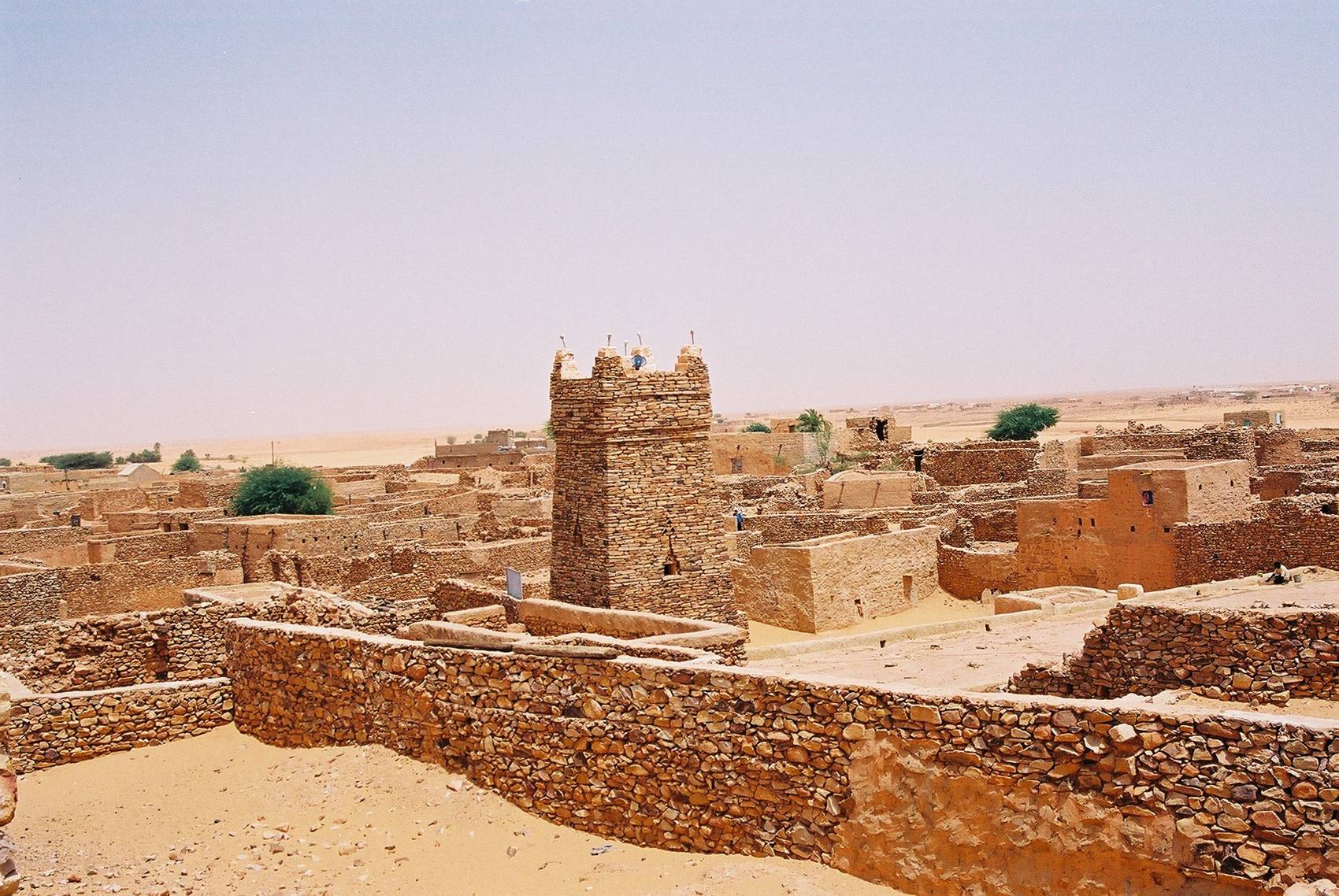
The legendary Saharan city wrapped in myths of gold and scholarship. It is now a high-risk zone reachable only on small aircraft. The Djinguereber and Sankore mosques remain genuinely extraordinary.
Siby
A hill region near the capital, worth the trip for the trek to the Kamandjan arch. The best mangoes ripen here and the ritual masked dances survive. One of the few places to escape the urban chaos.
What to see #
The Great Mosque of Djenne: a mud masterpiece that the whole town replasters together once a year. Non-Muslims cannot go inside, but you can climb onto neighbouring rooftops for the panorama.
Dogon country: cliff villages with a cosmology unlike anywhere else. Travel to the Dogon heartland is currently dangerous, but Dogon troupes often perform their masked dances in Bamako itself.
The National Museum: the essential stop in Bamako for understanding the region's culture. Inside are masks, ancient textiles and instruments. Photography is strictly forbidden.
The Niger river: a pirogue trip is the surest way to see life in the fishing villages. Sunsets on the water are extraordinary; negotiate with boatmen at the landings in Bamako or Segou.
The Kamandjan arch: a powerful natural formation in the Siby hills. The trek up is straightforward and the valley view is remarkable. Sacred cave-mosques are hidden nearby.
Bamako's music: live concerts in the clubs justify an evening on their own. The city is regarded as the musical heart of the continent. Look out for the puppet festival posters too.
Prices #
Currency: the CFA franc (XOF) is pegged to the euro, with the dollar buying about 560 francs. Bring euros, which change at a fixed rate at BICIM or Ecobank branches.
Cards: plastic is nearly useless here, accepted only in a couple of hotels such as the Radisson. Do not try to pay by card in a market, and expect the few working ATMs to be temperamental.
Exchange: do not trust street changers or promises of zero commission. Airport rates are poor, so get into central Bamako and use a proper bank.
Budget: thirty dollars a day is enough if you sleep in auberges and eat in local maquis. Restaurants take about 10%, and in markets you haggle.
Mobile money: Orange Money is widely used for small payments and top-ups, but cash francs remain what everything actually runs on.
| Item | Price (USD) |
|---|---|
| Street food | 1.00 |
| Lunch in a maquis | 4.00 |
| Dinner in Bamako | 12.00 |
| Water 1.5 l | 0.50 |
| Castel beer | 1.30 |
| Mangoes (1 kg) | 0.80 |
| Simple room | 25.00 |
| Good hotel room | 60.00 |
| Taxi across town | 2.50 |
| Sotrama minibus fare | 0.30 |
| Ticket to Segou | 9.00 |
| Shea butter | 3.00 |
| SIM card | 1.00 |
| Mobile data (5 GB) | 4.50 |
| Museum entry | 5.00 |
Getting around #
Getting there. Bamako is reached through Paris, Istanbul, Casablanca or Addis Ababa, which covers most routings from Europe and North America with a single stop. Book well ahead, because seat availability on the few carriers serving the country is thin.
Intercity buses. The usual way to move between towns. Bani and Bitar are the dependable companies, with morning departures. Buy at the counter in advance; Segou takes about four hours.
Sotrama. Overcrowded minibuses buzzing around Bamako. Cheap and full of character, but stifling. There are no stops: wave one down and shout to the driver when you want out.
Taxis. Look for green or yellow cars. There are no meters, so always negotiate before getting in. A ride across the capital costs 1,500-2,500 francs, noticeably more at night.
Roads. Only about 20% of the network is surfaced; the rest is dust. Because of armed group activity, movement is daylight only. Night journeys between towns are genuinely lethal.
Boats. On the Niger, motorised pinasses are a real part of the logistics. Arrange them at the Kalaban Koro landings, and be ready for heat and no shade.
Car with driver. Expect 130-150 dollars a day, which is the most dependable option for reaching Siby. Always check that there is a spare wheel, because the roads destroy tyres.
Where to stay #
What exists. Decent accommodation is confined to Bamako. Outside the capital you get simple guesthouses with minimal facilities. Book Bamako hotels online and provincial places by phone.
Districts. In the capital choose ACI 2000, a modern quarter with security. Quartier du Fleuve gives you river views. Hamdallaye is cheaper with less around it.
Budget. A room with a fan runs 20-30 dollars. The long-standing backpacker fixture is the Sleeping Camel. Air conditioning and breakfast pushes it past 50.
Power and nets. Blackouts are frequent, so a power bank is essential. Always check the mosquito net over the bed, which is the only reliable malaria protection at the cheap end.
Siby huts. In the hills you can sleep in simple huts. Nights are a comfortable 26 degrees, but do not expect hot water. A good experience if you accept spartan conditions.
Service. Even at the top end, service can be slow. Nobody here operates in a hurry, so bring patience to the reception desk.
Language. Everything runs in French, including booking confirmations and hotel paperwork, so have a translation app or basic French ready.
What to eat #
Tigadegena. The national dish, meat in a thick peanut sauce. Very filling, and a portion in a maquis costs about three dollars. The flavour is unusual and it underpins Malian cooking.
Fish. Never eat fish from the Niger unless it has been thoroughly cooked through. Order grilled capitaine, the Nile perch, done with spices and served with onions.
Rice. The base of every lunch. Jollof rice is stewed with tomato, and the millet porridge called to is eaten with okra sauce. Street vendors sell rice in bags, but the hygiene is questionable.
Drinks. Try cold hibiscus bissap or ginger juice. The ataya tea ceremony is a serious ritual of hospitality: you are offered three glasses and refusing is impolite.
Fruit. In season the markets overflow with mangoes and avocados for almost nothing. Wash them with bottled water and peel them yourself, which makes the cheapest and safest breakfast going.
Maquis. These roadside cafes cook fast. Chicken yassa or fish with attieke runs five to eight dollars. Choose the ones full of locals, where the ingredients turn over quickly.
Vegetarians. Difficult but not impossible: rice, peanut sauce, okra and fried plantain carry you, though stock is usually meat-based, so ask directly.
Safety #
The overall situation is severe. Armed groups including JNIM and ISGS operate across much of the country and the kidnapping of foreigners is a real threat. Most Western governments advise against all travel to Mali, and only Bamako is relatively secure, with caveats. Read your own government's advisory before you book anything, and check that your insurance is valid at all, since many policies void cover for countries under a no-travel warning.
Regions. Avoid the north and centre entirely, including Timbuktu and Mopti. Roads there are mined. Keep your movement around any city to a minimum and stay away from crowds.
At night. There is no reason to be on the street after dark. Bamako is poorly lit and armed robbery is a genuine risk. Take a taxi even between a hotel and a restaurant nearby.
Prohibitions. Photographing soldiers, police and any government building can lead to arrest. Be ready for fuel shortages, which periodically paralyse transport.
Health. Malaria here kills, so prophylaxis is not optional. Drink only sealed bottled water and never swim in rivers or lakes because of parasites.
Staying contactable. Carry a local SIM and a charged phone, note your embassy's details, and tell someone at home your movements. Have a plan for leaving quickly if conditions change.
Etiquette and culture #
Greetings. A Malian greeting is a long exchange about health and family. Do not rush it; the patience reads as respect and opens every subsequent conversation.
Religion. The overwhelming majority are Muslim. Dress modestly, covering shoulders and knees. Men in shorts in town are read as disrespectful.
Music. The heart of Malian culture. The griot caste keeps history in song, and a live kora or ngoni concert in a Bamako club is what makes the heat and chaos worth enduring.
Bogolan. The legendary mud-dyed cloth, whose patterns carry esoteric meaning. It is an expensive and prestigious gift, valued by musicians and artists.
Ataya. The tea ceremony runs to three brews: the first bitter as death, the second gentle as life, the third sweet as love. It is a social obligation you should not skip.
Etiquette. Eat and pass objects with the right hand only, since the left is considered unclean. Take your shoes off entering a home. Malians are hospitable to anyone who respects the traditions.
Bambara. Learning a few words of Bambara rather than only French marks you out immediately and changes how people deal with you.
Connectivity #
Languages. French is the working language, but daily life happens in Bambara. English is barely spoken, so learn a few local phrases to win people over.
SIM cards. Buy an Orange Mali SIM at any kiosk with your passport. A couple of weeks of data costs around ten dollars. 4G reaches the cities, and outside them there is often nothing.
Mobile money. Orange Money handles small payments conveniently, but cash CFA francs remain the primary means of payment and cards are not accepted in shops or cafes.
Internet. Hotel Wi-Fi cuts out or crawls. An eSIM is a reasonable backup for navigation, and social platforms are occasionally restricted during unrest.
Sockets. Types C and E as in continental Europe, at 220 volts. Surges are constant, so charge a laptop through a surge protector.
Power. Charge everything to full before leaving the hotel. Interruptions are a fact of life, particularly outside the capital, and a large power bank earns its weight.
Offline first. Save your hotel's address in French, download offline maps and keep screenshots of bookings; assume you will be without data at some point every day.
Phrasebook #
| English | French / Bambara | Pronunciation |
|---|---|---|
| Good day | Bonjour | bon-ZHOOR |
| How's it going? | Ça va? | sa VA? |
| Thank you | Merci | mer-SEE |
| Thank you (Bambara) | I ni ce | ee nee CHEH |
| Good morning (Bambara) | I ni sogoma | ee nee so-go-MA |
| Please | S'il vous plaît | seel voo PLEH |
| How much is it? | C'est combien? | say kom-BYAN? |
| That's expensive | C'est cher | say SHER |
| Yes / No | Oui / Non | wee / nohn |
| I don't understand | Je ne comprends pas | zhuh nuh kom-PRON pa |
| Help me | Aidez-moi | ay-day MWA |
| Water | L'eau | loh |
| Food | La nourriture | la noo-ree-TOOR |
| Friend | Ami | a-MEE |
| Foreigner, white person | Toubab | too-BAB (slang) |
| That's good | C'est bon | say BON |
| Goodbye | Au revoir | oh ruh-VWAR |
| Sorry | Pardon | par-DON |
| Where are the toilets? | Où sont les toilettes? | oo son lay twa-LET? |
| Market | Marché | mar-SHAY |
| Money | Argent | ar-ZHON |
| What's your name? | Comment tu t'appelles? | ko-MON tu ta-PEL? |
Good to know #
Entry paperwork. Most nationalities need a visa arranged in advance at a Malian embassy before travelling, since visa on arrival is not generally available. Allow about a week for processing and make sure your passport has six months of validity left.
Vaccinations. Without a yellow fever certificate you will not be allowed to board. Get the injection a month before departure. Malaria tablets are compulsory in practice, because the disease is severe here.
What to pack. A torch, hand sanitiser and closed shoes. The Sahel sun burns everything, so SPF 50 and a hat are basic equipment, and cotton clothing is the only comfortable option.
Photography. Be extremely careful. Bridges, checkpoints and airports are off limits, cameras are banned in the National Museum, and you always ask people first.
Water. Buy bottled water with an intact seal only. Use it for brushing your teeth and washing fruit, and skip iced drinks from street stalls.
Navigation. Offline Google Maps or Maps.me will save you in the maze of Bamako. Save your hotel's address in French for taxi drivers, who do not read English.
Haggling. Expected in markets and taxis, where you cut the opening price by half or more. It is not meanness but a way of establishing contact, and the first price quoted to a foreigner is always higher.