
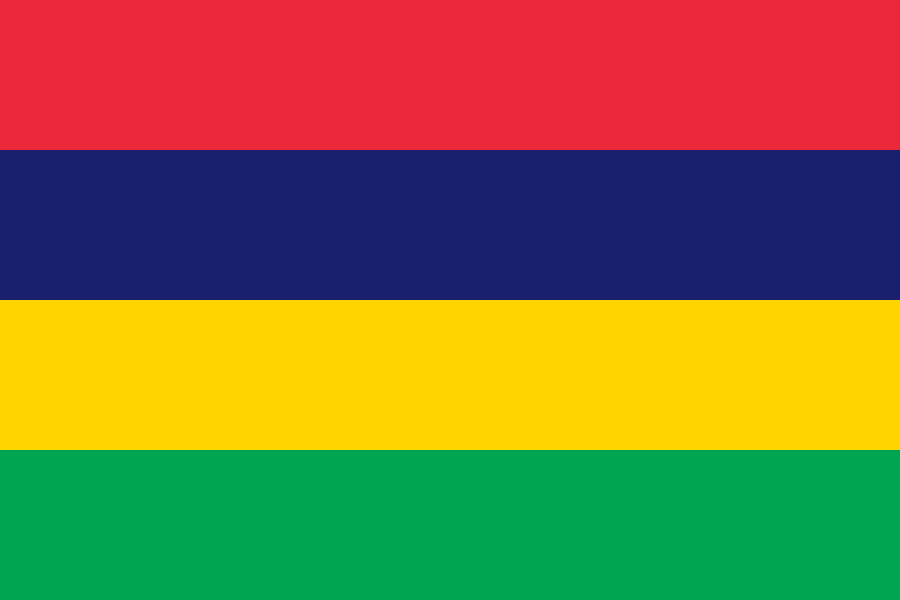
Safety in Mauritius
A rating built from four independent indices, plus scams, laws and what to do when something happens
Rating calculated from the indices below
Indices checked on 10.08.2026
Position in global indices
Save these before you fly
The general picture
Overall: Mauritius is an unusually calm place to travel. The main risk is petty theft, so never leave a wallet or phone unattended on the beach while you swim.
Sun: Tropical sun here is fierce and will burn you through cloud cover. Use factor fifty and reapply after every swim, particularly on boat trips where there is no shade.
The ocean: Inside the reef the water is safe and calm; beyond it currents are strong. Watch the flags on managed beaches and avoid swimming far out at wild ones where nobody is watching.
Marine life: Sea urchins and sharp coral are common on the seabed. Reef shoes are not a luxury item here, they are basic equipment.
Driving: Get used to looking right first, because traffic drives on the left. The mountain roads are narrow with blind bends, so keep speeds down and expect buses to take their half out of the middle.
Cyclones: Between January and March storms and heavy rain are possible, occasionally severe. Local forecasts are accurate and warnings are taken seriously; follow them and check your own government's travel advisory before you fly.
How tourists get scammed
Mauritius is a calm island with low violent crime. The schemes here are gentle and beach-based.
Beach vendors. Fabrics, jewellery, excursions, massage. Persistent but not aggressive. The opening price is triple and haggling is compulsory and expected.
The "free" excursion. An invitation to an apartment or holiday club presentation in exchange for a transfer and lunch. The scheme is lawful and exhausting.
Taxis. No meters; prices are agreed before you get in. Your hotel will give a benchmark and it is usually honest. Drivers at hotels readily offer "their" excursion, which is often fine — but check the operator's insurance.
Currency exchange. Change at banks. Hotel rates are noticeably worse.
Car hire. Scratch claims on return. Record the condition.
Boat trips. Dolphins at Tamarin, catamarans, snorkelling: some boats are overloaded and short of life jackets. Ask for the licence.
What gets you fined or jailed
Drugs are the island's harshest subject. Mauritius applies very strict measures: prison terms are imposed for small quantities, and the airport uses dogs and thorough searches. Foreigners are jailed. Never carry anyone else's bags.
Importing plants and food. Biosecurity applies: fresh fruit, vegetables, seeds, meat and dairy must be declared and some are prohibited. Fines are substantial.
Drones. Civil aviation permission is required, and flights over beaches and hotels without clearance are prohibited.
Topless and nudity. Prohibited on public beaches. Hotel grounds are more relaxed, but that is an exception rather than the rule.
Driving on the left. A legacy of the British period. The roads are narrow and winding, Mauritian drivers are energetic, and pedestrian crossings are not always observed.
Marine life. Collecting coral, shells and starfish is prohibited and fineable.
Respect for religions. The island is multi-faith: Hindu, Christian and Muslim. Temples require covered clothing and removed shoes.
Health: vaccines, medicines, care
Vaccinations. None mandatory, but a yellow fever certificate is required from arrivals out of endemic African countries, transit included.
There is no malaria. An important difference from mainland Africa: the island is malaria-free and prophylaxis is unnecessary.
Dengue and chikungunya. Outbreaks occur and the mosquito bites by day. Repellent is needed, especially in the November-to-April rains.
Water. Tap water is treated, but visitors are better off with bottled: the mineral content is unfamiliar and often causes upset.
The sea. The lagoons inside the reef are calm and safe — the island's main asset. Beyond the reef the currents are strong and nobody swims out there. A separate hazard is the stonefish in shallow water, along with sea urchins: reef shoes are essential, and a stonefish sting requires immediate medical attention.
Sun. Tropical UV burns you in an hour, especially on the water.
Cyclones. The season runs November to April. The warning system works in classes, and at class three and four the island stops.
Healthcare. The Wellkin and Apollo Bramwell private clinics are good; public facilities are basic. Insurance is needed.
Emergency numbers: 999 and 112 for police, 114 for ambulance.
Police: how to handle them
Mauritius is among Africa's better performers on the Corruption Perceptions Index, and police behave correctly with tourists.
Tourist police. Patrols work the main beaches and tourist areas.
Reporting theft. Reports are taken and certificates for insurers issued. English is official, so there are no language difficulties. French and Creole are in daily use.
What actually happens. Violent crime against tourists is rare. The main complaints are theft from the beach while you swim and from rooms without a safe. The rule is simple: take only what you need to the beach.
Traffic police. Cameras on the main roads and active speed enforcement.
At night. Port Louis empties once the business district closes and is not for evening walks. The resort areas of Grand Baie and Flic-en-Flac are calm.
Emergency number is 999.
What else to check
The rating is built from open international indices and foreign-ministry advisories; links to the primary sources are in the cards above. Conditions change faster than annual reports come out — check current travel advice before you go.