Micronesia
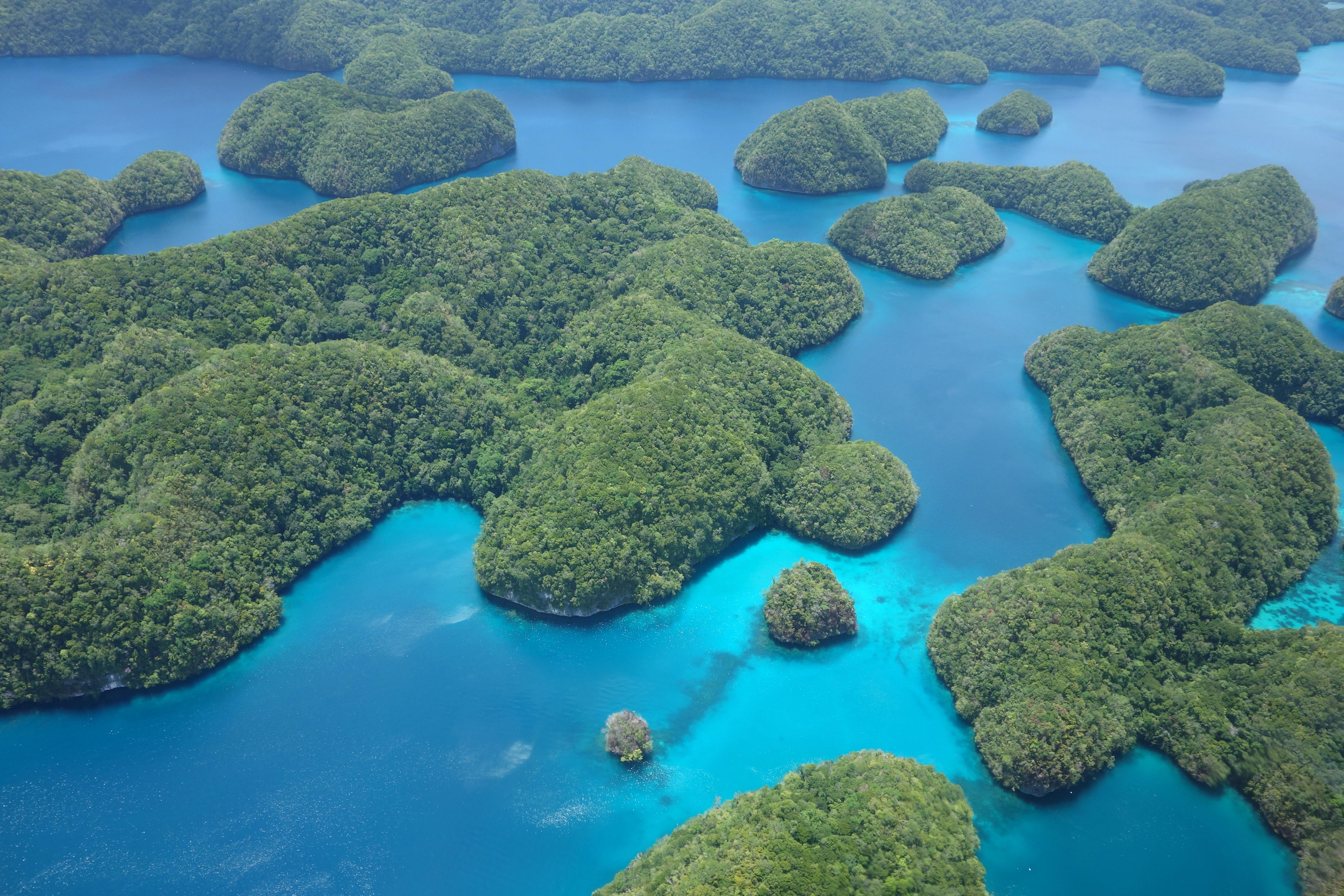
FMFour island states in the middle of the Pacific: Yap with its stone money, Chuuk with the underwater graveyard of the Japanese fleet, Pohnpei with the enigmatic ruins of Nan Madol, and pristine Kosrae. The Federated States of Micronesia offer world-class diving, living Oceanian traditions and complete remoteness from anywhere. Most nationalities need no visa.
Where to go #
Palikir
The tiny administrative capital sits on Pohnpei, its government buildings half buried in tropical greenery. There is essentially nowhere to stay, so travellers come over from the neighbouring town for a couple of hours. It is a curiosity rather than a destination.
Kolonia
The busiest town on Pohnpei and the practical base for any independent trip. The airport, almost all the hotels, the shops and the boat landings are here. In the evenings the town fills with the sound of sakau being pounded on flat stones.
Weno
The main settlement of Chuuk State, on the island of the same name. It looks run-down and dusty, but every dive safari in the lagoon starts from here. Infrastructure is basic and the roads turn to puddles after rain.
Colonia
The central settlement on Yap has kept the feel of old Oceania. The town is famous for its stone money, discs set upright along the streets and beside houses. It is a very calm, clean place with genuinely welcoming residents.
Lelu
The historic heart of Kosrae, built over the site of an ancient basalt capital. Mangroves and channels surround the town and make for lovely slow walks. The atmosphere is one of complete seclusion.
Tofol
The administrative village on Kosrae, home to the post office, the bank and the telecom office. It is the base for anyone wanting to explore the untouched interior of the easternmost state. Life here moves so slowly that time seems to have stopped.
What to see #
The stone mystery: Nan Madol on Pohnpei is the first thing any traveller should see here. This ancient city built across ninety-two artificial islets is called the Venice of the Pacific for its network of canals. A hired boat from Kolonia out to the ruins costs around twenty-five to thirty dollars.
Underwater: Chuuk Lagoon is where to go for the extraordinary graveyard of the Japanese fleet. Dozens of ships and aircraft from the war lie on the bottom, thickly grown over with coral. A dive runs about a hundred dollars, and swimming through sunken tanks and cabins is unforgettable.
Stone money: On Yap, visit the traditional villages with their enormous rai limestone discs. Some are up to three metres across and they still carry value in local transactions. Visiting these open-air banks is usually free or costs a token donation.
Manta rays: You can dive with mantas in Yap's Mil Channel in a single day. The rays are present year round and an encounter is close to guaranteed. Snorkelling with them is possible too and costs considerably less than a full dive.
Waterfall: Kepirohi Falls on Pohnpei is a beautiful twelve-metre cascade in dense jungle. You can swim in the rock pool at its base, which is exactly what you want after walking in that humidity. Entry is a couple of dollars.
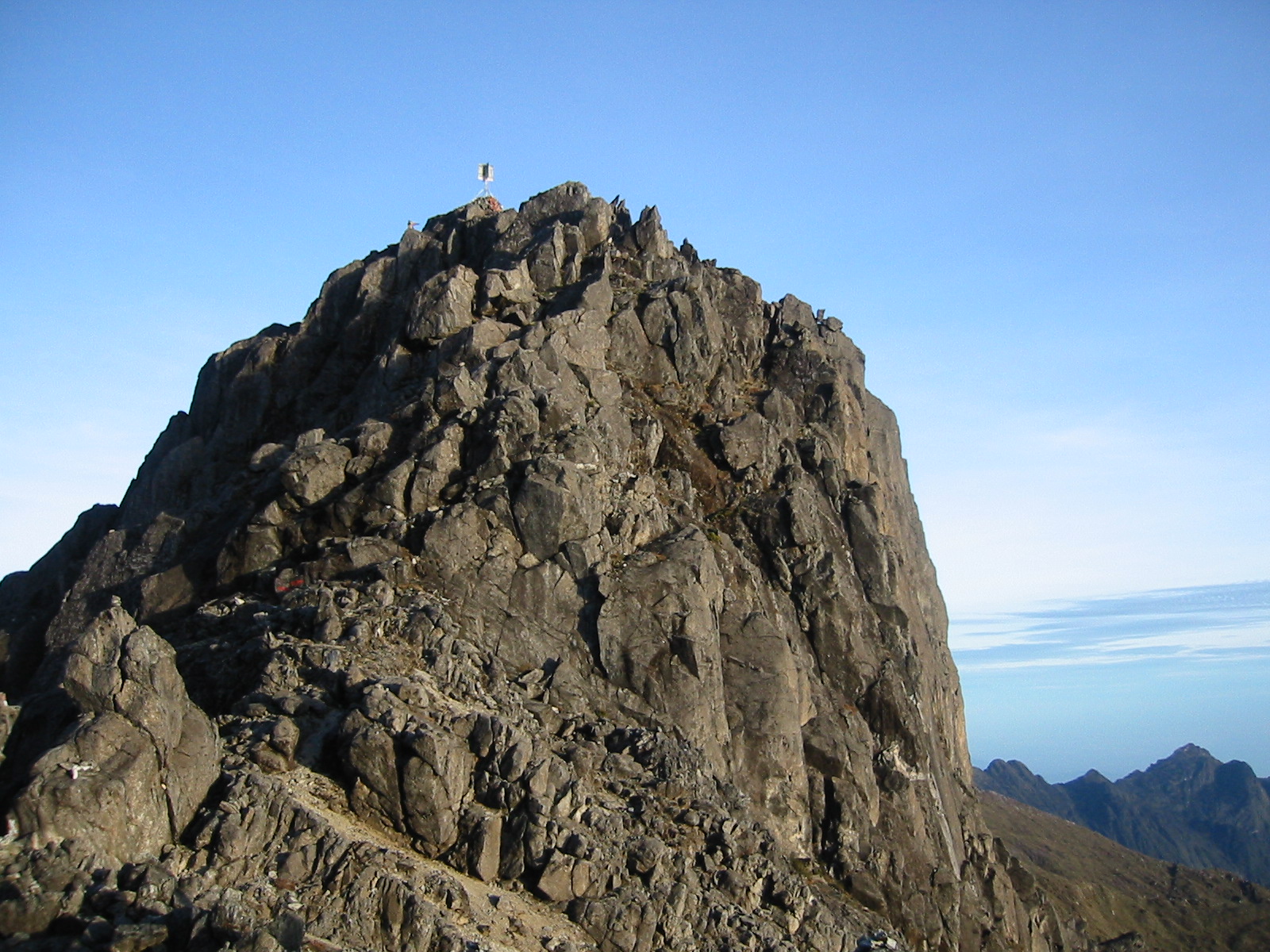
Sokehs Rock: This basalt cliff rises a hundred and eighty metres over Pohnpei. Its profile resembles a human face and it serves as the landmark every ship steers by. The view over lagoon and reef from the top justifies a genuinely hard climb.
Prices #
Currency: The US dollar is the only currency in circulation; the country issues none of its own. Prices in shops and on menus are in dollars and so is your change. Carry plenty of small notes.
Cash: This is a cash country and paper money settles everything. Cards are accepted very rarely, in a couple of larger hotels and dive centres and nowhere else. Bring the full amount you expect to spend, plus a reserve.
ATMs: Bank of FSM machines exist on all the main islands but break down often. Sometimes they simply run out of money, and foreign cards are occasionally refused because of network faults. Never leave one island assuming you can withdraw on the next.
Bargaining: Haggling in markets or shops is not done; prices are fixed and fair. If you are quoted a taxi fare, that is the fare everyone pays, and trying to talk it down reads as disrespectful.
Tipping: Leaving extra money in a cafe is not part of the local culture of hospitality. A genuine thank you and a couple of words in the local language are worth more. Staff are paid and do not expect a supplement.
| Item | Price (USD) |
|---|---|
| Simple lunch | 12.00 |
| Dinner for two | 45.00 |
| Bottled water 1.5l | 1.80 |
| Beer in a bar | 4.50 |
| Coffee | 2.50 |
| Street snack | 5.00 |
| Groceries for a day | 20.00 |
| Guesthouse per night | 70.00 |
| Hotel on Pohnpei | 120.00 |
| Taxi across town | 4.00 |
| Car hire per day | 55.00 |
| Two-tank dive | 110.00 |
| Nan Madol entry | 5.00 |
| Boat to the ruins | 30.00 |
| SIM card with data | 15.00 |
Getting around #
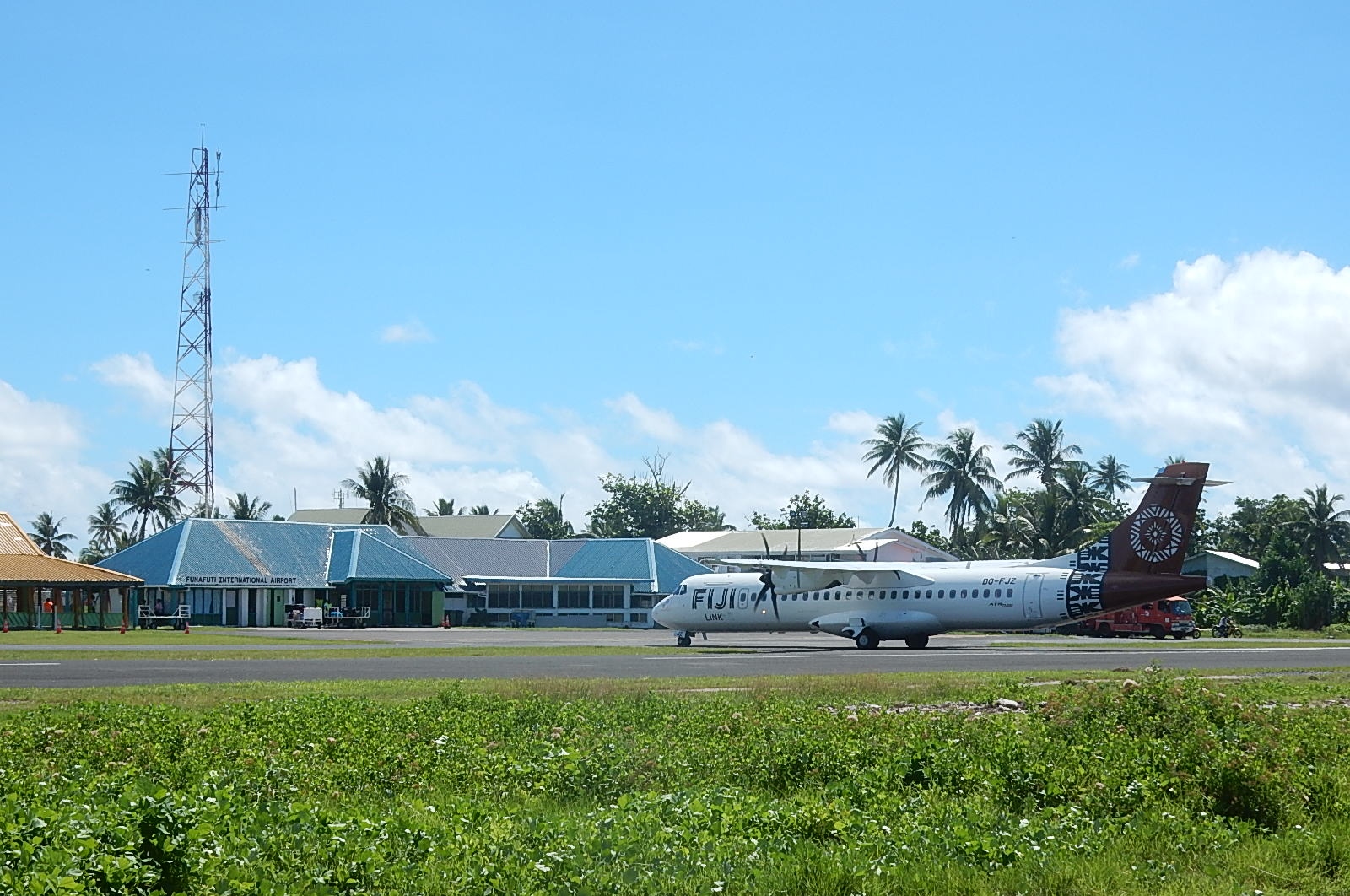
Island Hopper: The only way to move between the states is by United Airlines. The legendary Guam to Honolulu route makes short stops at each island in turn. Tickets are expensive, so book the segments well ahead on the airline's site.
Shared taxis: In Kolonia and Weno, cars operate like shared minibuses. Wave one down, say where you are going, and if it suits the driver's route you get in. A ride within town is a flat two to five dollars.
Car hire: Pohnpei's roads are decent, so a small hire car is the best way to see the island. On Yap and Kosrae there are fewer vehicles and more unsealed road. Rental starts around forty to fifty dollars a day.
Boat taxis: Motorboats work the small islands inside the lagoons, with the price agreed on the jetty in advance. This is the only way to reach Nan Madol from the water or to get to isolated beaches on the outer atolls.
Bicycles: On the smaller islands such as Yap and Kosrae a bicycle is ideal. Many guesthouses lend them to guests free or for very little. It frees you from waiting on infrequent taxis and lets you take the coast road at your own pace.
Cargo boats: State ferries and private barges occasionally run between the islands. It is very cheap and very uncomfortable, and a passage can take several days. Schedules change constantly and are only reliably found by asking in person at the port.
Walking: You can cross any of the town centres on foot in half an hour. Allow for the humidity and the sun, though, because long walks in that heat get exhausting fast. Always carry water and a hat.
Where to stay #
Booking: There is very little accommodation in the country and divers fill it quickly. The usual booking platforms list almost nothing here. Find contact details online and email the owners directly.
Guesthouses: These are the budget option for independent travellers, generally rooms in a large house with shared facilities. Rates start at fifty to sixty dollars, which counts as cheap by Pacific standards.
Dive hotels: On Chuuk and Yap most hotels are built around diving and sell room-plus-dive packages. If you are not diving the price can look steep, but the alternatives are limited.
Facilities: On Chuuk, hot water may run to a schedule and air conditioning may cost extra. Power comes from generators, so short outages at cheaper places are routine rather than exceptional.
Pohnpei hotels: Kolonia has slightly more choice, including a few places with lagoon views. The Village and the Joy Hotel are long-established and reliable. Rooms are plain but clean and have mosquito screens.
Eco lodges: On Kosrae you can find cabins built from natural materials, which is a wonderful way to sleep close to the forest. Bring insect protection. At night the only sounds are surf and jungle.
Sockets: American type A and B plugs are used throughout at 110 to 120 volts. Buy an adapter before you travel; finding one for sale on the islands is close to impossible.
What to eat #
Seafood: Freshly caught tuna is the foundation of the diet. Any small eatery will serve you sashimi or grilled fish with rice, and the quality is superb at a fraction of European restaurant prices.
Breadfruit: The fruit of this tree does the work of the potato here. It is baked, fried into crisps, or stewed in coconut milk. The flavour is distinctive and slightly sweet, and it is filling and cheap.
Coconut: Coconuts are everywhere. The water is drunk for thirst and the flesh goes into sauces, while markets sell coconut sweets and cold-pressed home-made oil.
American legacy: US influence brought a lasting fondness for tinned meat, Spam above all. It gets sliced into salads, fried with eggs and served with rice. Locally this is not junk food, it is a respected staple.
Water: Tap water is not drinkable even after boiling. Always buy bottled water. Approach street food carefully if your stomach is sensitive, because sanitation is basic.
Root crops: Taro and yam are the other pillars of island eating. During celebrations they are cooked in an umu, an earth oven. The starchy tubers balance oily fish and stand in for bread, which barely exists here.
Sakau: On Pohnpei you have to try the kava drink. It is prepared on flat stones and strained through hibiscus fibre, and it leaves your mouth slightly numb and your whole body relaxed. Evening sakau bars are a genuine social institution.
Safety #
Overall: The country is generally safe for visitors, though it pays to stay alert. People are friendly, and there is essentially no hassling or begging, which travellers notice quickly.
Chuuk State: This is the one place calling for extra caution. Weno has a reputation as an uneasy town after dark, so avoid walking alone down unlit streets at night.
Weather: Typhoon season runs from June to December. Big storms can shut down air links for several days, so watch forecasts and build a couple of spare days into any itinerary. Check your own government's travel advisory before you fly.
Currents: Lagoons look placid, but beyond the reef the currents can be powerful. Never swim far from shore without local company unless you know both your own limits and the water.
Wildlife: There are no dangerous land animals, but villages have plenty of stray dogs. They are usually lazy and will simply bark at a stranger. In the water, watch for coral cuts and sea urchins, which heal slowly and painfully.
Medical care: Hospital standards on the islands are modest. Serious injuries require insurance that covers a flight out to Guam, so check that wording before you buy. Carry a well-stocked first aid kit with antiseptics and any antibiotics you have been prescribed.
Insects: Mosquitoes are active year round and can carry dengue. Use strong DEET-based repellent, especially at dawn and dusk, and always check the screens in your room.
Etiquette and culture #
Four different worlds: Each of the four states has its own language and customs. Yapese society is more conservative, Kosraeans are deeply religious, and Pohnpei feels more modern. Respect the differences instead of treating the country as one place.
Rank and land: Yap retains a complex social hierarchy. Some villages cannot be entered without the chief's permission. If you see a prohibition sign or a chain across a path, never go past it without a guide.
Dress: Micronesians value modesty. Women should avoid short shorts and revealing tops outside hotel grounds. On Yap women traditionally go topless, but visitors are not expected to copy that.
Sundays: Sunday belongs to church and rest, and almost everything closes, including food shops and cafes. Buy what you need in advance and spend the day quietly outdoors, as the islanders do.
Photography: Always ask before photographing a person or their house. In some communities a camera is felt as an intrusion, and asking first usually turns into a conversation instead.
Land ownership: Almost all land, including beaches and trails, belongs to individuals or clans. Access is often charged at a dollar or two. Do not argue; it is the landowner's legitimate fee.
Navigators: The islanders descend from the great navigators of the Pacific and still hold knowledge of wayfinding by stars and by the behaviour of birds. Showing genuine interest in that history and in traditional canoes opens a lot of doors.
Connectivity #
One operator: FSM Telecom is the only network, with offices in each state. You need your passport to buy a SIM, and activating a data package can take a while.
Coverage: Stable 3G or 4G reaches only the central parts of the islands and the airports. Head into the interior or out to sea and the signal disappears. Offline maps are essential kit rather than a convenience.
eSIM and roaming: International eSIM providers cover Micronesia patchily at best, so do not rely on the one you usually travel with. Roaming through your home operator, where it works at all, is punishingly expensive. A local SIM is the only sensible way to stay connected.
Hotel internet: Free Wi-Fi is rare. Where internet exists it is usually paid for and very slow, fine for messaging but painful for video or uploading photographs.
Power: The standard is 110 volts, and surges and outages are frequent, particularly during storms. Bring a solid power bank so your devices do not die at the worst moment.
Messaging: WhatsApp and similar apps work whenever there is any signal at all. Video calls rarely hold, so send text or voice messages instead. This is also how you will communicate with accommodation owners.
English: Many people speak a simplified, direct English. Speak slowly and keep your sentences plain. Learning a couple of greetings in the language of the state you are in will endear you to almost anyone.
Phrasebook #
| English | Pohnpeian | Pronunciation |
|---|---|---|
| Hello | Kaselehlie | ka-se-LEH-lee-eh |
| Hello (polite, to one person) | Kaselehlie maing | ka-se-LEH-lee-eh MAHING |
| Good morning | Menseng mwahu | men-SENG MWA-hoo |
| Good day | Rahn mwahu | rahn MWA-hoo |
| Thank you | Kalahngan | ka-LAHNG-an |
| Please | Menlau | men-LAU |
| Yes | Ei | ay |
| No / not | Soh | soh |
| Good | Mwahu | MWA-hoo |
| Bad | Suwed | SOO-wed |
| Water | Pihl | peel |
| Food | Mwenge | MWENG-eh |
| Fish | Mwahmw | mwahmw |
| Delicious | Iou | ee-OW |
| Friend | Kompoakepahi | kom-poa-ke-PA-hee |
| Help | Sewese | se-WE-se |
| Where is...? | Ia wasahn...? | ee-AH wa-SAHN |
| How much does it cost? | Ia uwen pweine? | ee-AH OO-wen PWAY-neh |
| I don't understand | I sohte wehwehki | ee SOH-te weh-WEH-kee |
| Sorry / excuse me | Mahk | mahk |
| Kava drink | Sakau | sa-KOW |
| Booze (literally foreign kava) | Sakau en wai | sa-KOW en why |
Good to know #
Consular help: No country keeps more than a handful of missions here, and most nationalities are covered from Manila, Canberra or Tokyo. Find out who represents your passport before you go and keep copies of your documents both in cloud storage and on paper.
Medical kit: Bring everything you might need, including broad-spectrum antibiotics if your doctor will prescribe them and something for stomach infections. Local pharmacies stock very little and finding a familiar brand is close to impossible.
Sun protection: The equatorial sun is merciless. Factor fifty, a hat and light covering clothing are your best defence, because you will burn in minutes even under cloud.
Hygiene: Carry hand sanitiser, because village cafes are far from sterile. Keep a roll of toilet paper or a packet of tissues with you as well; public facilities often have neither.
Navigation: Download Maps.me with the region offline. It knows the trails to waterfalls and ruins reasonably well, whereas Google Maps often misplaces small features or shows roads that no longer exist.
Departure cash: Always keep twenty dollars in cash per person for the airport departure fee. People forget this constantly, and the card terminals at check-in work only some of the time.
Gifts: If you plan to stay with families or spend a while in one village, bring small souvenirs from home. Children are delighted with almost anything and adults appreciate postcards or badges from where you live.