Philippines
PHAn archipelago of 7,641 islands with turquoise lagoons, white beaches, underwater gardens and volcanoes. The Philippines are one of the most affordable tropical countries anywhere: 1,500 PHP ($25) a day covers you while you dive with whale sharks, jump off waterfalls and explore the rice terraces. English is an official language and Filipinos are among the friendliest people in Asia. The country is vast and varied, from chaotic Manila to the beaches of Palawan and the Chocolate Hills of Bohol.
Where to go #
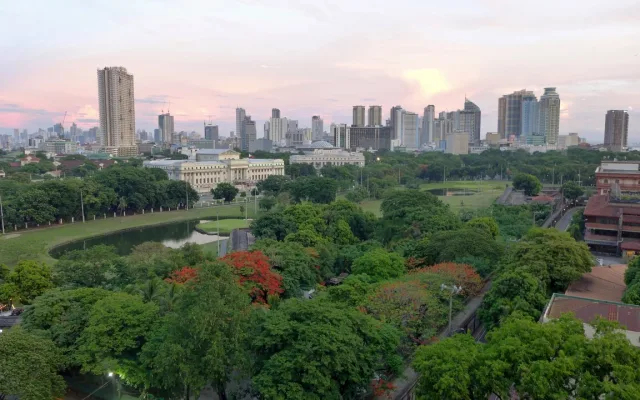
Manila
The capital of the Philippines: Spanish Intramuros with Fort Santiago, Rizal Park, Binondo — the world's oldest Chinatown — and a chaotic megacity on the bay.
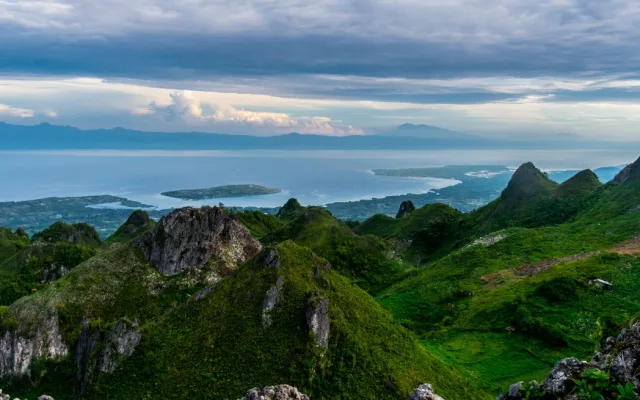
Cebu
The cradle of Christianity in the Philippines: Magellan's Cross and the Santo Niño Basilica, whale sharks at Oslob, Kawasan Falls and thresher sharks at Malapascua.
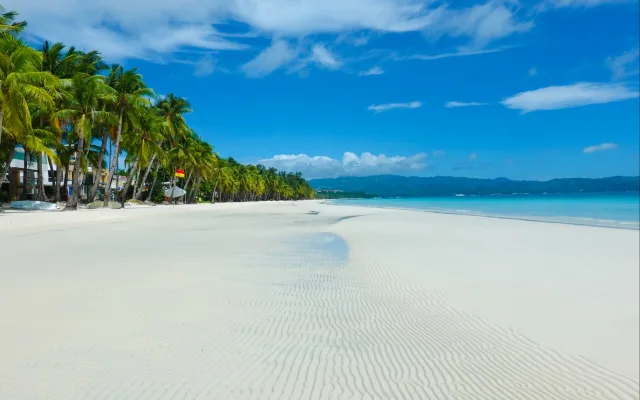
Boracay
A legendary island with White Beach — paraw sails, diving and sunsets over the sea.
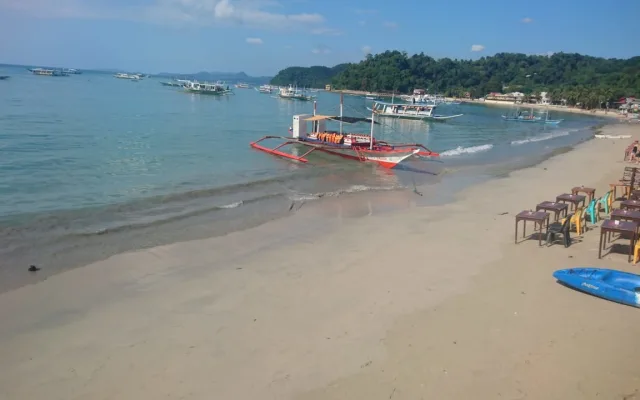
El Nido
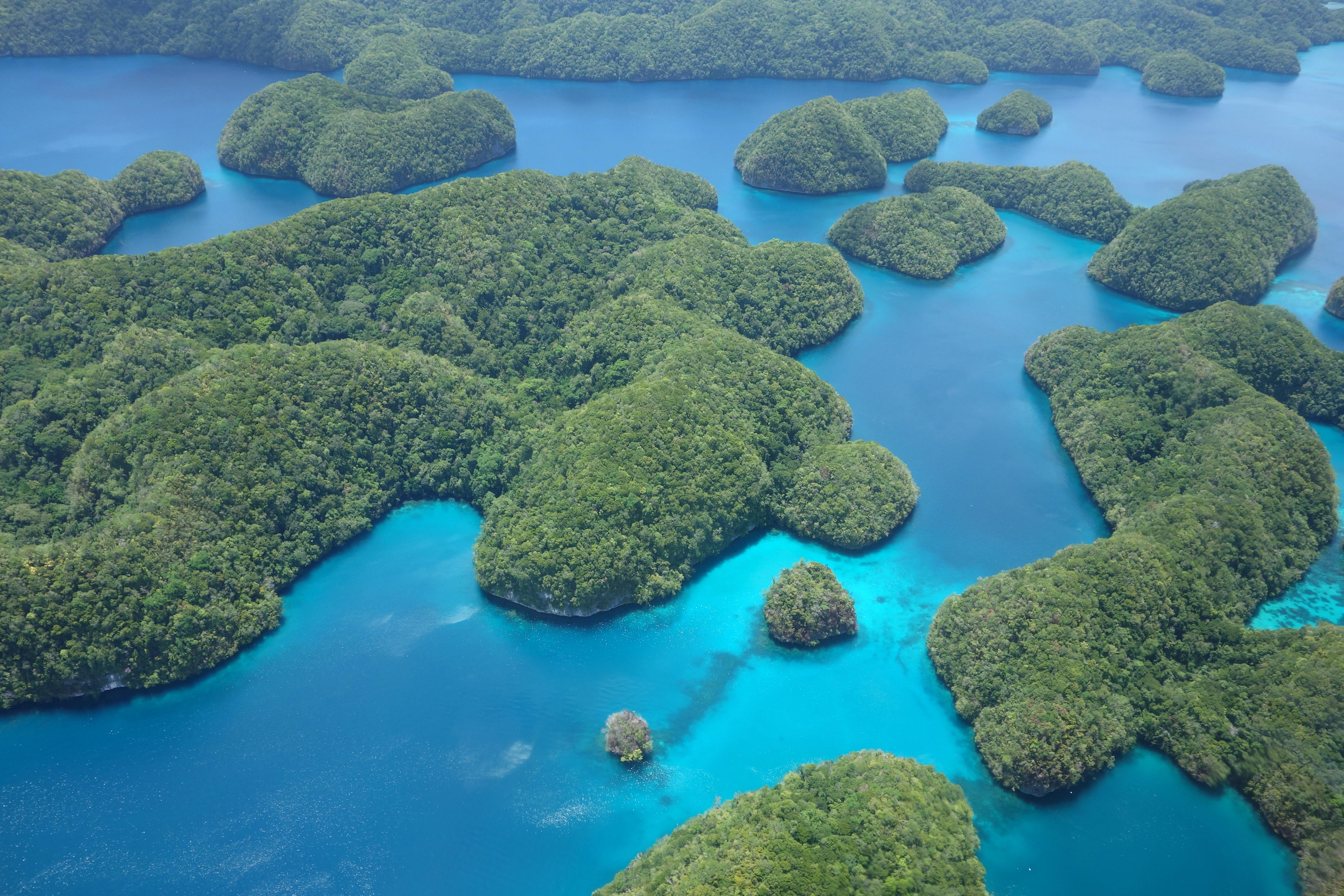
The gateway to the Bacuit Archipelago in northern Palawan: limestone islands, hidden lagoons, island-hopping boat tours and dozens of empty beaches.
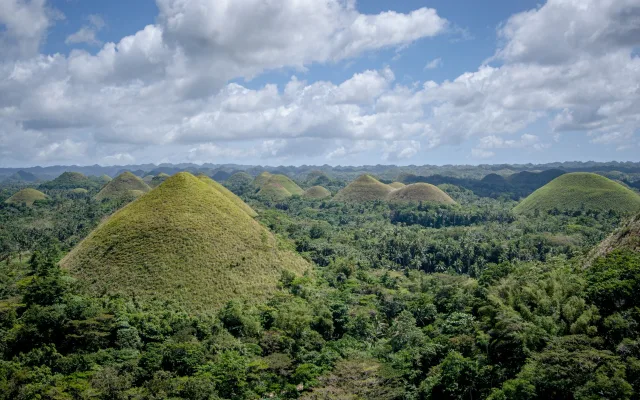
Bohol
Island of the Chocolate Hills — tarsiers at Corella, the Loboc river cruise and diving at Balicasag.
What to see #
The Underground River: near Puerto Princesa, one of the longest navigable cave rivers on the planet. The journey out there takes a while, but the scale of the karst chambers in total darkness, with an audio guide in your ear, is genuinely startling.
The Chocolate Hills: on Bohol, over a thousand almost perfectly round hills that you can do in a day. Rent a motorbike and ride between them yourself instead of joining a group; the freedom is the whole point.
Kawasan canyoning: on Cebu this is the big adrenaline day, jumping from waterfalls into water an improbable shade of blue. Take a local guide, and expect it to be physically hard and the best few hours of the trip.
The rice terraces: at Banaue, fields carved into the mountainsides thousands of years ago. People come for the quiet and for long treks along the slopes, a very long way from any beach.
El Nido lagoons: the island-hopping tours here are the essential experience. Pick Tour A or Tour C to see the best hidden beaches and to paddle a kayak into the emerald water of the big lagoon.
Cloud 9: on Siargao this famous wooden pier is the best place to watch surfers at sunset. The atmosphere is as unpretentious as it gets, with no luxury pretensions attached.
Tarsiers: on Bohol, go and see the tiny primates in the dedicated sanctuary. They are extremely sensitive to noise, so keep your voice down and your flash off for the whole visit.
Prices #
Cash: pesos run the islands, since small shops and tricycles take nothing else. Withdraw a decent amount while you are in a city, because working ATMs thin out badly in villages.
Cards: Visa and Mastercard work in the big malls of Manila and Cebu, in chain restaurants and in mid-price hotels, while Amex is rarely useful. Carry a second card, because terminals sometimes refuse a chip for no obvious reason.
ATMs: Philippine machines charge a fixed fee of around 200 pesos per withdrawal regardless of the amount. Take the maximum of 10,000-20,000 pesos each time, use BPI, BDO or Metrobank, and always decline the machine's own currency conversion.
Changing money: US dollars are the easiest currency to change anywhere in the country, with euros accepted in the bigger cities at a slightly worse rate. Bring clean, unmarked notes, and a Wise or Revolut card if you want the honest exchange rate on withdrawals.
Tipping: restaurant bills frequently already include a service charge, so check before adding more. Where there is none, around 10% is the usual gesture, but nobody will chase you for it.
| Item | Price (USD) |
|---|---|
| Lunch at a carinderia | 3.00 |
| Dinner for two in a café | 20.00 |
| Cappuccino | 2.50 |
| Litre of petrol | 1.20 |
| Litre of bottled water | 0.80 |
| Dorm bed | 9.00 |
| Guesthouse room | 25.00 |
| Jeepney ride | 0.20 |
| Tricycle ride | 1.50 |
| Motorbike hire per day | 9.00 |
| Domestic flight | 40.00 |
| Surf lesson | 25.00 |
| One-hour massage | 10.00 |
| Beer in a bar | 1.50 |
Getting around #
Getting in: Manila and Cebu are the two main gateways. From Europe the usual connections are Doha, Dubai, Istanbul or Singapore; from North America you either fly nonstop from Los Angeles or San Francisco to Manila, or connect through Tokyo, Seoul or Taipei. Build a spare day at each end, because domestic connections are easily derailed by weather.
Domestic flights: between distant islands it is simpler to fly with Cebu Pacific or AirSwift. Book a month ahead and the fare is two or three times lower than it will be the week you travel.
Ferries: the route network covers the whole archipelago. OceanJet fast craft link Cebu and Bohol in two hours, and the overnight 2GO liners double as a night's accommodation on the longer crossings.
Jeepneys: the cheapest way to cover short distances in towns. These converted military jeeps seat passengers facing each other, and the fare is passed hand to hand up the aisle to the driver.
Tricycles: motorbikes with a sidecar that replace taxis in the provinces. Agree the fare before you climb in, or it will multiply by some magic reserved for foreigners.
Grab: in Manila and Cebu the app is a lifesaver. It shows a fixed price up front, so you avoid the negotiation with drivers who flatly refuse to use a meter.
Motorbike hire: on Siargao or Bohol this gives you complete freedom. Expect 400-500 pesos a day, wear the helmet, and understand that licences are rarely checked but the risk is entirely yours.
Where to stay #
Guesthouses: in the tourist areas these give the best balance of price and comfort. You get a private room with a fan or air conditioning in a family home, usually with the family happy to help you plan the next leg.
Bamboo huts: on Palawan and Siargao, accommodation built from natural materials is everywhere. Inside there is a bed and a mosquito net and nothing else, but you hear the surf perfectly through the thin walls.
City hotels: in Manila choose Makati or BGC. Clean streets, modern towers and proper security make a calm first encounter with the capital far more likely.
Hostels: dorm culture is well developed here, and it is the easiest way to find people to split a boat with. Many have their own bar and run themed nights for a young backpacker crowd.
Treehouses: in El Nido you can find genuinely odd places to sleep with a view over the lagoons. Facilities are basic and electricity runs to a schedule, but the memory outlasts the discomfort.
Booking: use the aggregators to search, but in the provinces you can simply walk the street and ask. The best rooms are often not listed online at all and cost noticeably less when you pay cash on the spot.
What to eat #
Pork adobo: the country's best-known dish, braised in soy sauce, garlic and vinegar. It keeps well in the heat, which is why every roadside canteen, or carinderia, has a tray of it going.
Lechon: Cebu is considered the capital of this delicacy, a whole pig roasted over coals to a glass-like crackling, but the pork sits out in the heat for hours in some places, so buy where the turnover is fast. It is served with rice and a dark liver-based sauce.
Sinigang: a sour tamarind broth with vegetables and fish. It restores you after a long day in the sun and, oddly, the sourness makes it refreshing rather than heavy.
Halo-halo: shaved ice, milk, fruit, jelly and a scoop of violently purple ube ice cream in one tall glass. It looks like a mistake and tastes like the national flag, and everyone should try it once.
Jollibee: the Filipino answer to global fast food, built on sweet spaghetti and fried chicken. Locals adore it, and it is worth going in once simply to understand the local palate.
Street barbecue: in the evenings the roadsides fill with grills cooking everything from pork to parts you may not want identified. Stick to chicken or pork skewers cooked in front of you and you will be fine.
Safety #
Street theft: in Manila wear your backpack on your front and keep expensive phones out of sight. Pickpockets are highly skilled, particularly in the crush around terminals and inside jeepneys.
Typhoon season: between June and November the weather can turn very fast. Watch the forecasts, because a storm can strand you on an island for extra days with no way off and patchy communications.
Ice and water: drink bottled water bought from shops. Ice in street-stall drinks is often made from untreated tap water, and that reliably costs you several days of your holiday.
Mindanao: the far south remains politically unstable and is not somewhere to travel casually. Check your own government's travel advisory and stick to the central and northern islands.
Sea urchins: wear reef shoes when swimming off undeveloped beaches. The bottom is frequently coral, and urchin spines can turn into an expensive medical problem quickly.
Sun: the tropical sun does real damage even through cloud. Use the strongest sunscreen you have, because a full-day boat tour will burn you badly on day one otherwise.
Etiquette and culture #
Faith: this is the most Catholic country in Asia and the churches are genuinely full. Respect that, cover shoulders and knees when you go inside, and keep quiet during a service.
Friendliness: Filipinos are remarkably open. If someone grins at you or waves, it is usually hospitality rather than the opening move of a sales pitch.
Karaoke: singing is a national activity, from airport lounges to the smallest village. Be prepared for enormous speakers to keep going until well past midnight directly outside your guesthouse.
Time: nobody is in a hurry and half an hour late counts as on time. Getting annoyed about a delayed boat achieves nothing, so settle into the island pace and use the wait.
Cockfighting: a popular and heavily gambled provincial pastime that many visitors find brutal. Every town has an arena, and for the men involved it is a serious sport with serious money attached.
Kamayan: the tradition of eating a communal meal with your hands off banana leaves. If you are invited to one, accept, because it is offered as a mark of real trust.
Connectivity #
English: almost everyone speaks it, since it is the language of education and administration. You will have no trouble being understood in hotels, ticket offices or taxis anywhere in the country.
Local SIMs: the main operators are Globe and Smart, and you can buy a card at the airport for very little. Activating a data package requires registration, which is now mandatory by law.
eSIM: Airalo and similar international services are the easiest option, letting you land with working data already. It saves queuing at a counter and works out fine for a trip of a couple of weeks.
Coverage: 4G is excellent in the cities but drops away on remote beaches. On Siargao or in El Nido mobile data can be slow and unreliable, so download what you need in advance.
SIM registration: each card has to be linked to your passport through the operator's website. It is straightforward: upload a photo of the document and take a selfie.
Apps: every familiar messenger and social network works without restriction. Filipinos spend a great deal of time online themselves, so connectivity is treated as a necessity rather than a luxury.
Phrasebook #
| English | Tagalog | Pronunciation |
|---|---|---|
| Good day | Magandang araw | mah-gan-DANG AH-row |
| How are you? | Kumusta? | koo-MOOS-tah |
| Thank you | Salamat | sah-LAH-maht |
| Thank you very much | Maraming salamat | mah-RAH-ming sah-LAH-maht |
| Please | Pakiusap | pah-kee-OO-sahp |
| Yes | Oo | OH-oh |
| No | Hindi | HIN-dee |
| How much is it? | Magkano? | mahg-KAH-noh |
| Expensive | Mahal | mah-HAHL |
| Delicious | Masarap | mah-SAH-rahp |
| Beautiful | Maganda | mah-gahn-DAH |
| Where is the toilet? | Nasaan ang banyo? | nah-sah-AHN ahng BAHN-yoh |
| Water | Tubig | TOO-big |
| Friend | Kaibigan | kai-BEE-gahn |
| It's fine (slang) | Okay lang | oh-KAY lahng |
| Let's go! (slang) | Tara! | TAH-rah |
| Westerner (slang) | Kano | KAH-noh |
| Corner shop | Sari-sari | SAH-ree-SAH-ree |
| Hang on a second | Sandali lang | sahn-dah-LEE lahng |
| Got it | Naintindihan | nah-in-tin-dee-HAHN |
| Sir / Ma'am (respect) | Po | poh |
Good to know #
Grab: install it before you arrive, for both taxis and food delivery. It removes inflated fares and arguments with drivers in Manila and every other large city.
eTravel: every arriving passenger has to register on the government eTravel site, no earlier than 72 hours before the flight. Save the QR code to your phone, because it is often checked before you leave the aircraft.
Sockets: the flat two-pin type A and B plugs are standard, on 220V. If your gear is European, British or Australian, a cheap adapter from any 7-Eleven sorts it out on your first day.
Weather: the PAGASA site gives the most accurate tracking of tropical storms. Check it before committing to any inter-island boat crossing in the wet season.
Timetables: 12Go is useful for current ferry and intercity bus schedules. It makes planning a complicated multi-province route far less painful than piecing it together locally.
GCash: the local mobile wallet is convenient if you are staying a while, though it needs a local number to set up. For a short trip, cash plus a working Visa or Mastercard covers everything.