Romania
ROThe country of Dracula, Carpathian peaks and medieval Saxon villages lost in time. Romania is one of the most underrated countries in Europe: the painted monasteries of Bukovina, the Gothic castles of Transylvania and the Danube Delta, the largest wetland ecosystem in Europe. Prices sit well below western Europe, and the hospitality is a pleasant surprise.
Where to go #
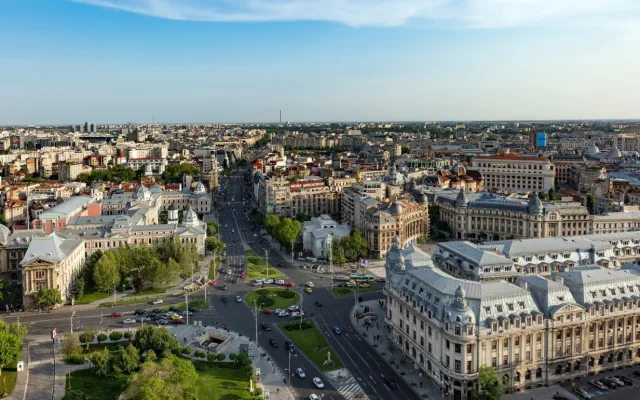
Bucharest
The "Little Paris of the East" — home to the Parliament Palace, the world's second-largest administrative building, and a famously vibrant nightlife scene.
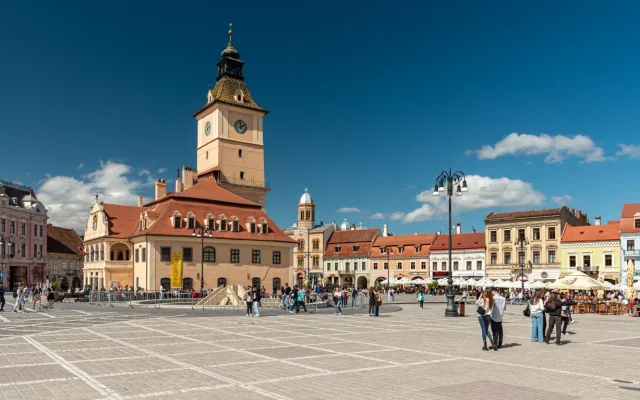
Brașov
Saxon Transylvanian city at the foot of the Carpathians — gateway to Bran and Peleș castles, with the atmospheric central square of Piața Sfatului.
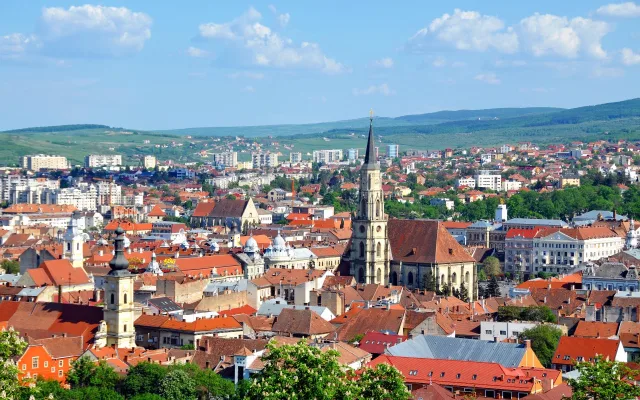
Cluj-Napoca
The cultural capital of Transylvania and Romania's largest student city, with independent cafés, galleries, and the UNTOLD festival.
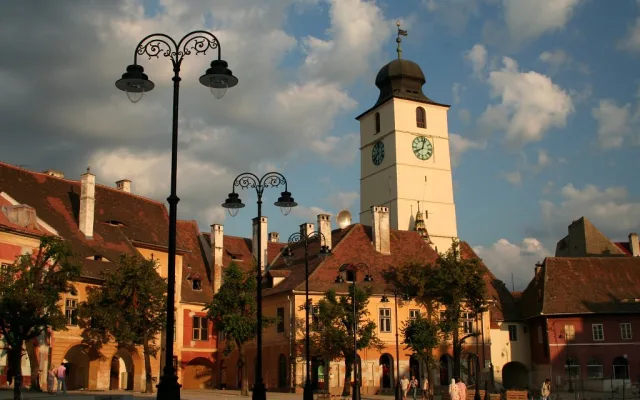
Sibiu
The city many travellers call the finest in Transylvania: colourful houses with attic "eyes", fortress towers, and one of Europe's biggest theatre festivals.
What to see #
Palace of the Parliament: the second largest administrative building on earth, all marble halls and chandeliers. You can only go inside with a booking, and you show your passport at the door.
Bran Castle: the legendary Dracula-hunting stop, which in reality is a modest Gothic fortification on a rock. Vlad Tepes barely set foot in it, yet it stays the single most visited place in the region.
The Transfagarasan: if you are wondering where to go in summer, this is the mountain road. It opens from late June to October and rates among the most spectacular drives in Europe.
Peles Castle: the royal residence at Sinaia is far more refined than Bran. Inside are carved ceilings, stained glass and an extraordinary collection of antique weapons.
Danube Delta: hard to do in a day, so take a boat excursion from Tulcea instead. It is an enormous reserve of pelicans and wild horses where the water runs into the sky.
Painted monasteries of Bukovina: the churches at Voronet and Sucevita are unique for the frescoes on their outer walls. Nobody has managed to reproduce that blue pigment in several centuries of trying.
Lipscani old town: in Bucharest this is the nightlife district, hundreds of bars and cafes deep. By day it is worth stepping into the Stavropoleos church or Hanul lui Manuc, the oldest inn in the city.
Prices #
Currency: the local money is the Romanian leu (RON). The notes are polymer, so they survive being torn at or soaked through.
Exchange: change money at banks or at city exchange offices and skip the airport counters. Euros usually get the best rate, though dollars are taken everywhere too.
Cards: card payment is excellent in the cities and you can tap your phone in coffee shops and on the metro. Head into the mountains or to a village market, though, and you need cash. Visa and Mastercard are universal, Amex much less so.
ATMs: you can withdraw at any major bank. Remember your own bank's cross-border and conversion fees, which is where a Wise or Revolut card quietly saves you money.
Tipping: around 10% of the bill is normal in restaurants. In taxis and small cafes people simply round the figure up.
| Item | Price (USD) |
|---|---|
| Lunch in a cafe | 12 |
| Dinner for two | 40 |
| Street covrig | 0.5 |
| Plate of mici | 5 |
| Papanasi | 6 |
| Cappuccino | 3 |
| Glass of beer | 3 |
| Bottle of wine in a shop | 7 |
| Train to Brasov | 12 |
| Metro ride | 0.7 |
| Litre of petrol | 1.5 |
| Car hire per day | 25 |
| Bran Castle ticket | 14 |
| Fridge magnet | 2 |
| Bottle of water | 1 |
Getting around #
Getting there. Bucharest Otopeni is the main gateway, with budget carriers linking it to London, Paris, Frankfurt, Amsterdam and much of Europe for very little money, plus useful services into Cluj and Timisoara. From North America you connect through one European hub, and fares are at their lowest outside July and August.
Trains. The CFR network reaches the whole country but moves at its own pace. From the capital into Transylvania take the InterRegio services, which are faster and more comfortable than the local stopping trains.
Buses. FlixBus and the domestic operators often save real time on shorter hops. Buy online or at the bus station, the autogara, which every town has.
Taxis. Use Bolt or Uber in the cities; it is cheap and removes any argument about the fare. Never get into an unmetered car waiting outside a station.
Bucharest. The metro is the easiest way around the capital and covers every district that matters. For surface transport buy a Multiplu card and follow the routes in the InfoTB app.
Car hire. A car buys you freedom in the Carpathians, where public services are thin. Roads are mostly in good shape, but the mountain switchbacks want a confident driver.
Airport transfer. Bus 100 runs from Otopeni to the centre around the clock, and a direct train serves Gara de Nord. It costs almost nothing and you can pay by card on board.
Where to stay #
Pensiune. In rural Transylvania look for the Pensiune sign. These are warm family houses with home-made breakfasts, where the owners treat you like a relative.
Where to base yourself. In Bucharest stay in the Old Town if you want the night out, or in Cotroceni if you want to sleep. In Brasov the best options sit at the foot of Tampa hill.
Winter check. Booking for the cold months, read the reviews for confirmation of central heating. Older Transylvanian houses can be damp, and reverse-cycle air conditioning struggles.
Apartments. Airbnb has plenty of stylish flats inside buildings with real history. It often undercuts hotels and lets you cook with produce from the local markets.
Read the recent reviews. Some budget chains in the capital carry a long trail of complaints about cleanliness, so sort reviews by date before you book. Otherwise standards match the rest of Europe at noticeably lower prices.
Castles. For the full effect you can sleep at Cantacuzino or Stirbey. It is expensive, but you get to feel briefly royal among antiques and mountains.
Language. Booking confirmations, front desks and house rules come in English almost everywhere, and in the countryside the owners' children usually translate happily.
What to eat #
Mici. These short grilled sausages served with mustard are the national dish in everything but name. Find the real thing at Obor market in Bucharest rather than in a smart restaurant.
Sarmale. Soft cabbage or vine-leaf rolls come with polenta and sour cream. Every family makes them, and they are the perfect thing to eat at lunch.
What is overrated. Plain mamaliga on its own is simply bland cornmeal porridge. Order bulz instead, the baked balls of it stuffed with cheese and bacon, and you will not be disappointed.
Desserts. Papanasi are the ones to have, doughnuts of sweet cheese buried in thick sour cream and blueberry jam. Portions are huge and one plate comfortably feeds two.
Soups. Romanians love a sour soup, or ciorba. Ciorba de burta, made with tripe, has a reputation as a hangover cure, though the texture puts plenty of visitors off.
Drinks. Before the meal someone will offer you tuica or palinca, fierce fruit spirit. Romania is also a serious wine country, so make a point of trying the local grapes.
Ordering. English menus are standard in the cities and in any tourist town, and staff switch to English without being asked. In villages, pointing at the day's pot works fine and is taken as a compliment.
Safety #
The general picture. The country is comfortable for walking around on your own, including at night. Violent crime against visitors is very rare and the police are competent.
Pickpockets. Stay switched on in crowded buses and on the Bucharest metro. Petty theft in busy places is the one real problem for a distracted traveller.
Stray dogs. Packs turn up in residential outskirts and industrial areas. Give them a wide berth and do not provoke them, though in city centres they are largely gone.
Wildlife. Bears genuinely live in the Carpathian forests and even around the edge of Brasov. Do not hike alone and never try to feed an animal by the roadside.
Driving. Romanian drivers can be aggressive and speeding is common. On narrow mountain switchbacks keep your distance and do not attempt risky overtakes.
Health. Skip the tap water and buy bottled. Private clinics in the big cities provide a high standard of care, but you need your insurance documents on you.
Before you travel. Check your own government's travel advisory for anything current, and make sure your policy covers mountain hiking if the Carpathians are on the plan.
Etiquette and culture #
Latin roots. Romanians are proud of their origins and of a language close to Italian. Calling them Slavs or Hungarians touches a nerve, so do not.
Orthodoxy. Religion matters here socially, not just privately. In working churches keep shoulders and knees covered, and women may want a headscarf.
The vampire business. Locally, Dracula means Vlad Tepes, a serious historical ruler, not the horror-film character. Treat the vampire material as a commercial story told for visitors.
Hospitality. In villages you may be invited in for lunch or a shot of tuica. Refusing without a good reason reads as rude, because genuine conversation is valued.
Superstitions. Do not whistle indoors and do not put your bag on the floor. When buying flowers as a gift, always choose an odd number of stems.
Greetings. A handshake and a "buna ziua" on entering a shop or small guesthouse costs you nothing and changes the temperature of the encounter completely.
Festivals. The country runs on music, from the vast Untold electronic festival in Cluj to the classical evenings of the George Enescu series. Castles often host rock concerts in summer.
Connectivity #
Internet. Mobile speeds here are among the fastest in Europe. Wi-Fi is in nearly every cafe and guesthouse, stable enough to work on properly.
SIM cards. For visitors the simplest option is a prepaid Vodafone or Orange card. You buy them in the branded shops with your passport, and data bundles are very cheap.
eSIM. For a short trip an eSIM from Airalo or a similar provider is the tidiest answer, since it activates in a minute and saves hunting for a shop at the airport.
Roaming. If your SIM is from an EU country, roaming here costs you nothing extra. Plans from the UK, US or Australia usually charge a daily fee, so check the cap before landing.
Language. In tourist areas younger people and hospitality staff speak good English. In the countryside a couple of Romanian phrases will get you a long way faster.
Coverage. 5G performs well in the big cities, but signal drops out in the mountains. Download offline maps before any Carpathian hike.
Apps. Install Bolt for taxis, InfoTB for city transport and CFR for train tickets. Between them they remove most of the friction of an unfamiliar city.
Phrasebook #
| English | Romanian | Pronunciation |
|---|---|---|
| Good day | Bună ziua | BOO-nuh ZEE-wah |
| Hi | Salut | sa-LOOT |
| Thank you | Mulțumesc | mool-tsoo-MESK |
| Please | Vă rog | vuh ROG |
| You're welcome | Cu plăcere | koo pluh-CHEH-reh |
| Yes / No | Da / Nu | da / noo |
| Sorry, excuse me | Scuzați | skoo-ZATS |
| How much is it? | Cât costă? | kuht KOS-tuh? |
| Expensive | Scump | skoomp |
| Where is...? | Unde este...? | OON-deh YES-teh? |
| Water | Apă | AH-puh |
| Bread | Pâine | PUH-ee-neh |
| Beer | Bere | BEH-reh |
| The bill, please | Nota, vă rog | NO-tah, vuh ROG |
| Delicious | Delicios | deh-lee-CHOS |
| I don't understand | Nu înțeleg | noo uhn-tseh-LEG |
| Help! | Ajutor! | ah-zhoo-TOR! |
| Goodbye | La revedere | la reh-veh-DEH-reh |
| Help yourself, here you go | Poftim! | pof-TEEM! (slang) |
| Dude, mate | Tipule | TEE-poo-leh (slang) |
| Cool, awesome | Mișto | meesh-TOH (slang) |
Good to know #
Your embassy. Most countries keep their mission in Bucharest, several of them along Soseaua Kiseleff. Note the address and the out-of-hours number before you fly, in case a passport disappears.
In an emergency. Dial 112 for everything. Operators answer in English, and the call is free from any SIM even with no credit on it.
Plugs. Standard European type C and F sockets, 230 volts. If you come from Europe you need nothing; from the UK, US or Australia bring an adapter.
Maps. Google Maps handles city public transport routing best here. For walking the Carpathian trails, offline AllTrails maps are what you actually want.
Tickets. Book the Palace of the Parliament and Peles Castle online several days ahead. In peak season the walk-up queue can eat hours of your day.
Timetables. Train schedules live at cfrcalatori.ro and bus routes at autogari.ro. These two sites let you plan the whole country without hiring a car.
When to go. May to September suits city walking and mountain hiking; December to March is the season for the ski resorts at Sinaia and Poiana Brasov.