
South Korea
A country where fifteenth-century palaces stand next to neon towers and street food costs 3,000 KRW (about $2). K-pop, K-dramas and Korean skincare have conquered the world, but the real Korea is mountain temples, a faultless metro and samgyeopsal with soju down a noisy Seoul side street. High-tech, safe, spotless — and with one of the great cuisines of the world.
Where to go
#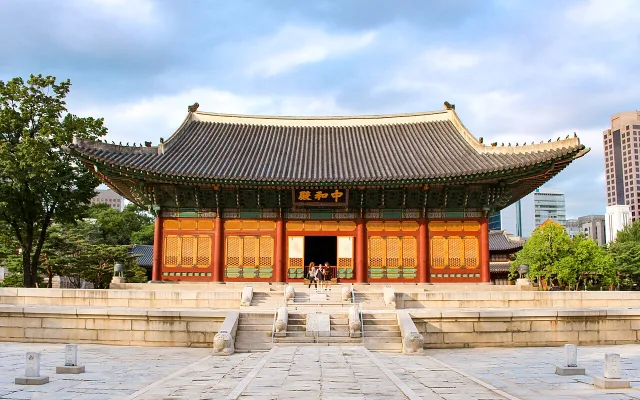
Seoul
The capital of K-pop and K-drama — Gyeongbokgung, Myeongdong, Itaewon and barbecue.
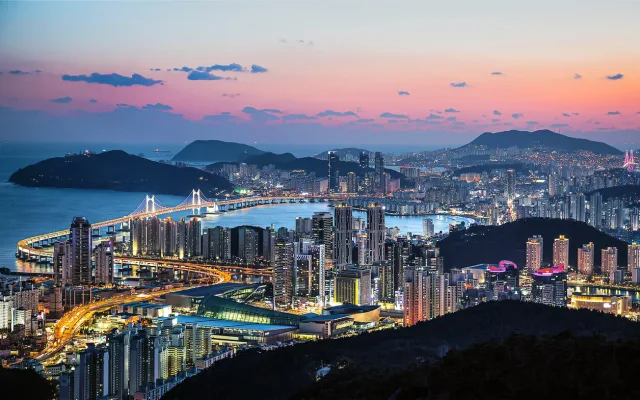
Busan
Korea's seaside city — Haeundae beach, the Haedong Yonggungsa temple and the Jagalchi market.
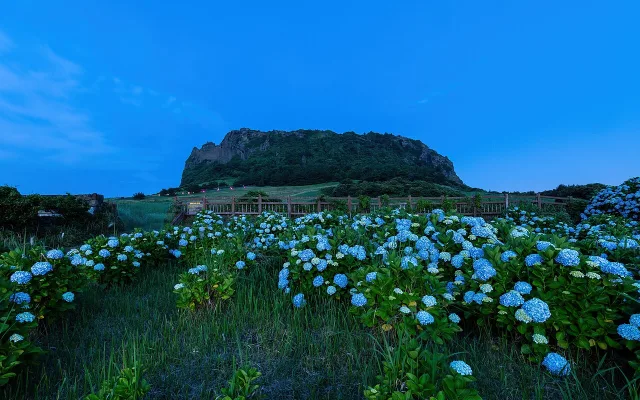
Jeju
A volcanic island — Hallasan, waterfalls, lava tubes and the haenyeo, the women who free-dive for a living.
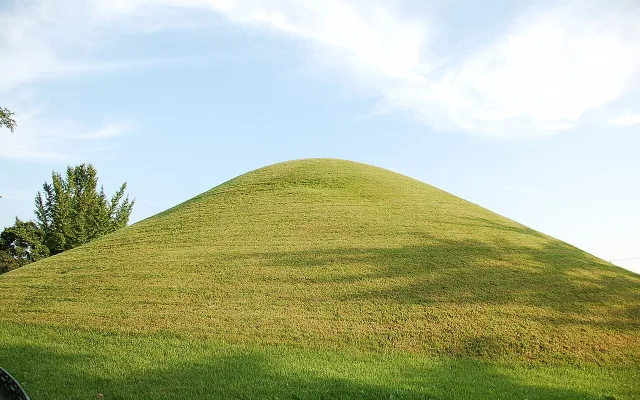
Gyeongju
An open-air museum — the capital of the Silla kingdom, the burial mound tombs and the Seokguram grotto temple.
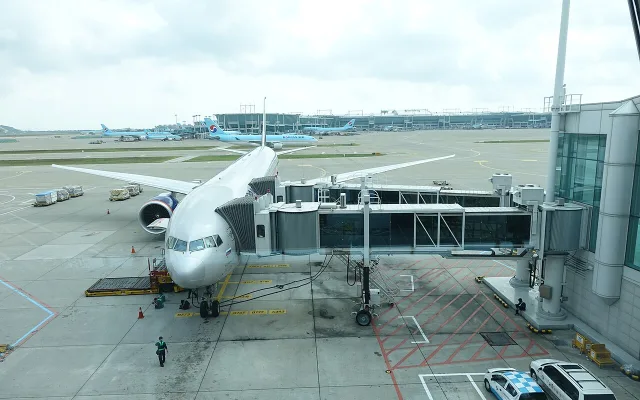
Incheon
The country's main airport and port — Chinatown, Wolmido island and the beaches.
What to see
#Gyeongbokgung Palace: The first thing to see in Seoul, and if you rent a hanbok you get in free. Go early, before the changing-of-the-guard crowds build, and the courtyards are almost empty.
The DMZ: Worth a trip to the border, but remember you can only get there on an organised tour with a licensed guide. Book ahead, because tours fill and access can be suspended at short notice.
Templestay: For quiet, Buddhist monasteries run the Templestay programme, where you live as a monk for a couple of days up in the mountains. It's genuine rather than performative, and the early starts are real.
Gamcheon Culture Village: In Busan, head up to this hillside of painted houses, but arrive before ten in the morning, before the crowds fill the coloured lanes.
Hahoe Village: Near Andong, this is an honest piece of old Korea with people still living in the houses, rather than a reconstruction built for visitors.
Hwaseong Fortress: In Suwon, overrated unless you enjoy long walks along walls, though it's easy to reach on the ordinary metro from central Seoul.
Namsan: The mountain gives a fine panorama, but going up N Seoul Tower itself often isn't worth the lift queue or the ticket price. Walk up instead of taking the cable car.
Prices
#Currency: The Korean won is the only currency in use. Bring US dollars or euros in clean recent notes if you want to change cash, and use the small exchange booths in Myeongdong, which beat the airport rate by a wide margin.
Cards: Korea is close to cashless and Visa and Mastercard are accepted almost everywhere, including buses and market stalls. American Express is spottier. Not every foreign card works in every terminal, so carry a second card and some cash as backup.
ATMs: Look for machines marked "Global ATM" at convenience stores and subway stations, since many domestic machines reject foreign cards. Withdrawal fees are modest.
Tipping: Nobody tips in Korea, and leaving money on the table can cause confusion or mild offence. The price on the bill is the price you pay.
Prepaid cards: Wowpass and Hanpass are prepaid cards you top up with cash, and they work in ordinary shops and cafes as well as on transport.
| Item | Price (USD) |
|---|---|
| Street kimbap | 3 |
| Cafe lunch | 8 |
| Barbecue for two | 40 |
| Bottle of soju | 2 |
| Coffee at Starbucks | 5 |
| Subway ride | 1.2 |
| Taxi (5 km) | 6 |
| KTX ticket to Busan | 45 |
| Hanbok rental | 15 |
| Palace entry | 2 |
| Tower observation deck | 14 |
| Museum ticket | 5 |
| eSIM for a week | 18 |
| Guesthouse night | 45 |
| Bottle of water | 1 |
Getting around
#KTX: The high-speed trains are the best way to cross the country, linking Seoul and Busan in two and a half comfortable hours. Book online and reserve a seat in advance at busy times.
Express buses: If you're not in a hurry, express coaches cost roughly half the train fare and the service is genuinely good, with reclining seats and regular rest stops.
Mugunghwa trains: The slowest services stop at every village and suit only a leisurely trip through the provinces. They're cheap and scenic if time doesn't matter.
T-money: Buy a T-money card at any convenience store. It works on the subway, buses and taxis across the whole country and saves you fumbling for change.
Transfers: Tap your card as you get off a bus and the next ride within thirty minutes is free or nearly free. Most visitors miss this and overpay all trip.
Taxis and maps: Use the KakaoT app to call a car, and Naver Map for routes, because Google Maps works poorly in Korea due to data restrictions.
Airport link: The AREX express train runs from Incheon into central Seoul in forty-three minutes, straight to Seoul Station with no traffic. Incheon itself has direct long-haul flights from London, Paris, Frankfurt, New York, Los Angeles and most Asian hubs.
Where to stay
#Hanok guesthouses: Staying in a traditional house with underfloor ondol heating means sleeping on a futon mat on the floor. It's a distinctive experience, though a firm one.
Motels and love hotels: A great way to save money, since a small budget gets you a huge television, a jacuzzi and a spotlessly clean room. They're used by everyone and carry no stigma.
City hotels: Myeongdong and Hongdae have the widest choice aimed at independent travellers and younger visitors. Both are well connected by subway.
Capsules: A modern way to sleep in the centre for around twenty-five dollars if all you need is a bed and a clean shower. Luggage storage is usually included.
Templestay: Staying at a temple means keeping to a strict schedule, including a three in the morning start and taking part in prayers and ceremonies.
Choosing an area: Book Hongdae for nightlife and a young crowd, Myeongdong for shopping and easy central logistics. Insadong suits anyone here for the palaces.
Booking: International sites work fine, but always check whether the property takes cash won on arrival, as some small places still prefer it.
What to eat
#Samgyeopsal: Grilling pork belly on a burner set into the middle of the table is a whole ritual, and it works best shared with a loud group of friends.
Banchan: Your main course arrives surrounded by small dishes of side plates. They're free and refillable, and it's poor form to order more than you'll finish.
Bibimbap: Rice with vegetables and chilli paste, which you mix thoroughly before eating. It's the quickest and healthiest Korean lunch going.
Markets: At Gwangjang market in Seoul or Jagalchi in Busan you can eat everything from live octopus to hot sweet hotteok pancakes.
Heat: Korean food is genuinely fiery, so learn to say "an maepge" if you aren't ready for chilli that makes your eyes water.
Chimaek: Crispy fried chicken with cold beer has become close to a religion here, and it's what an evening out is built around.
Convenience store ramyeon: The 24-hour shops have hot water dispensers where you brew a pot of noodles and eat it standing at the window counter. It costs almost nothing.
Safety
#Overall: Korea is one of the safest countries in the world, and walking through back streets alone at night is unremarkable here.
Belongings: Leaving a laptop or wallet on a cafe table to reserve a seat is normal local behaviour, though there's no reason for you to test it.
North Korea: The proximity of the border has no bearing on daily life. Military rhetoric is background noise that locals barely register.
Weather: Summer brings serious typhoons and flooding rain, so check forecasts if you're planning mountain hikes. Trails close when conditions turn.
Cameras: Surveillance is everywhere, which is a large part of why street crime and petty theft are close to nonexistent.
Traffic: Drivers can be aggressive and delivery scooters routinely use the pavement, so pay attention at crossings even on a green light.
Lost property: If you leave something on the subway or in a taxi, there's a very good chance it ends up in a lost property office or comes back to you through the police.
Etiquette and culture
#Age and hierarchy: Age governs how people speak to each other. Pass objects and money with two hands as a mark of respect.
Shoes off: Take your shoes off and leave them at the entrance when you enter a Buddhist temple, a traditional restaurant or a private home.
Table manners: Don't start eating until the oldest person at the table has begun, and never stand chopsticks upright in a bowl of rice.
Drinking: Pouring your own drink is bad form. Fill your neighbours' glasses and they'll fill yours, and turn slightly away when drinking with someone older.
Quiet in transit: Loud phone conversations on the subway or city buses are frowned on. Koreans take personal space in public seriously.
Chopsticks: Unlike the rest of Asia, Korea uses flat steel chopsticks, which take a couple of days to get used to.
Temples: Keep quiet inside, don't photograph people praying and dress with shoulders and knees covered when visiting shrines.
Connectivity
#Data: Skip expensive roaming and buy an eSIM before you leave, from Airalo, Yesim or a similar provider, activated by QR code at home. Unlimited-data tourist plans are cheap by global standards.
Maps: Forget Google Maps, which is close to useless for navigation here because of national data rules. Download Naver Map for accurate walking and transit directions.
Translation: English isn't universal, so install Papago, which handles Korean better than anything else and translates text straight from photographs.
Messaging: The whole country runs on KakaoTalk, and it's what you'll use to contact hosts and local guides.
Free wi-fi: Open networks are in the subway, on buses and on every Seoul street corner, but for maps you'll want your own reliable data.
Taxis: The KakaoT app calls a car and shows the fare up front, which removes the language barrier entirely.
Buying a SIM: Tourist SIMs are sold in the arrivals hall at Incheon, but buying an eSIM profile online in advance works out significantly cheaper.
Phrasebook
#| English | Korean | Pronunciation |
|---|---|---|
| Hello | 안녕하세요 | an-nyong-ha-SE-yo |
| Thank you | 감사합니다 | kam-sa-ham-NI-da |
| Yes / No | 네 / 아니요 | ne / a-NI-yo |
| Sorry | 죄송합니다 | chway-song-ham-NI-da |
| How much is it? | 얼마예요? | ol-ma-YE-yo |
| Delicious! | 맛있어요! | ma-SI-sso-yo |
| Where's the toilet? | 화장실 어디예요? | hwa-jang-shil o-di-YE-yo |
| Help! | 도와주세요! | to-wa-ju-SE-yo |
| The bill, please | 계산해주세요 | kye-san-hae-ju-SE-yo |
| Not spicy | 안 맵게 | an MAEP-ke |
| Water | 물 | mul |
| Beer | 맥주 | MAEK-ju |
| Please give me | 주세요 | ju-SE-yo |
| I don't understand | 모르겠어요 | mo-ru-GE-sso-yo |
| Do you speak English? | 영어 하세요? | yong-o ha-SE-yo |
| Amazing! (slang) | 대박! | TAE-bak |
| No way! (slang) | 헐! | hol |
| Older brother/sister (slang) | 오빠 / 언니 | OP-pa / ON-ni |
| Cheers! | 건배! | kon-BAE |
| Goodbye | 안녕히 가세요 | an-nyong-hi ka-SE-yo |
| One more, please | 하나 더 주세요 | ha-na do ju-SE-yo |
| Excuse me | 저기요 | cho-GI-yo |
Good to know
#Entry permit: Anything to do with electronic travel authorisation is handled only at k-eta.go.kr. Don't use other sites, which charge fees for a form you can fill in yourself.
Rail booking: Book high-speed train tickets on the official letskorail.com, which also sells the Korail Pass for visitors.
Tourist helpline: Dial 1330 for a round-the-clock English-language helpline that handles anything from directions to complaints.
Official guide: visitkorea.or.kr carries current information on festivals, museum opening times and seasonal discounts in each city.
Emergencies: Police are on 112, fire and ambulance on 119, and operators generally manage basic English.
Translation: Papago from Naver is the best tool for Korean, since it handles cultural context and slang far better than general translators.
Etiquette to pack: Bring slip-on shoes, given how often you'll be taking them off, and a small bag for rubbish, since public bins are surprisingly rare on the street.
Frequently asked questions
#Many Western nationals can visit visa-free for short stays, but most still need a K-ETA electronic travel authorisation applied for before departure. Check your own passport's rules on the official k-eta.go.kr site, since exemptions change from year to year.
The small exchange booths in Myeongdong consistently offer the best rates for cash. The rate at Incheon airport is noticeably worse, so change only what you need to get into the city there.
Buy a T-money card at any convenience store and load it with cash at a station machine. Tap it at the gate both entering and exiting, or the system won't charge the correct fare.
It's a genuinely unusual place and the best way to understand why the peninsula is divided. You can't go independently, so book a group tour with a licensed guide well in advance.
The KTX high-speed train covers the distance in two and a half hours from central Seoul. Buy tickets ahead on the official Korail site or an international booking platform.
Korea is among the most connected countries anywhere, with free wi-fi in cafes, the subway and on buses. For constant access, buy a tourist eSIM with an unlimited data allowance before you fly.
Ten days covers Seoul properly plus Busan and Gyeongju by high-speed train. Two weeks lets you add Jeju island or a Templestay in the mountains without rushing anything.
Korean skincare, red ginseng products and traditional sweets are the usual choices. K-pop merchandise and the cheap household goods from Daiso stores are also popular with visitors.
Yes, but with restrictions. Registration is mandatory for drones from 2000 g — lighter models can fly without it. Third-party liability insurance is mandatory. Registration applies to drones over 2 kg, and liability insurance is mandatory. Almost all of Seoul is restricted airspace requiring advance permission. The border zone with North Korea is fully closed. Rules for other countries are in the drone ranking by country.
Yes — renting a car requires an international driving permit alongside your national licence. Car rental starts at 21. An IDP under the 1949 or 1968 convention is required alongside your national licence. Rules for other countries are in the driving and rental table.
You can rent a bike, but you need an international driving permit. Crucially, your licence must include category A. Category B is not enough — this is what catches most riders out. A helmet is compulsory. Bike rental usually starts at 18. Rules for other countries are in the driving and rental table.
Calm by world standards: serious incidents involving tourists are rare. Intentional homicides: 0.489 per 100,000 a year (UNODC, 2024 data). Police — 112, ambulance — 119. Ratings for other countries are in the safety table.
Updated
The data on this page goes out of date. Visa rules and permitted stays, border requirements, prices and budgets, transport and local conditions all change fast, and we do not re-check every page every day. We show the date of our last check where we have one, but before you travel, verify with official sources: the country’s consulate, its immigration service, its e-visa portal and your carrier.