 Города и дороги
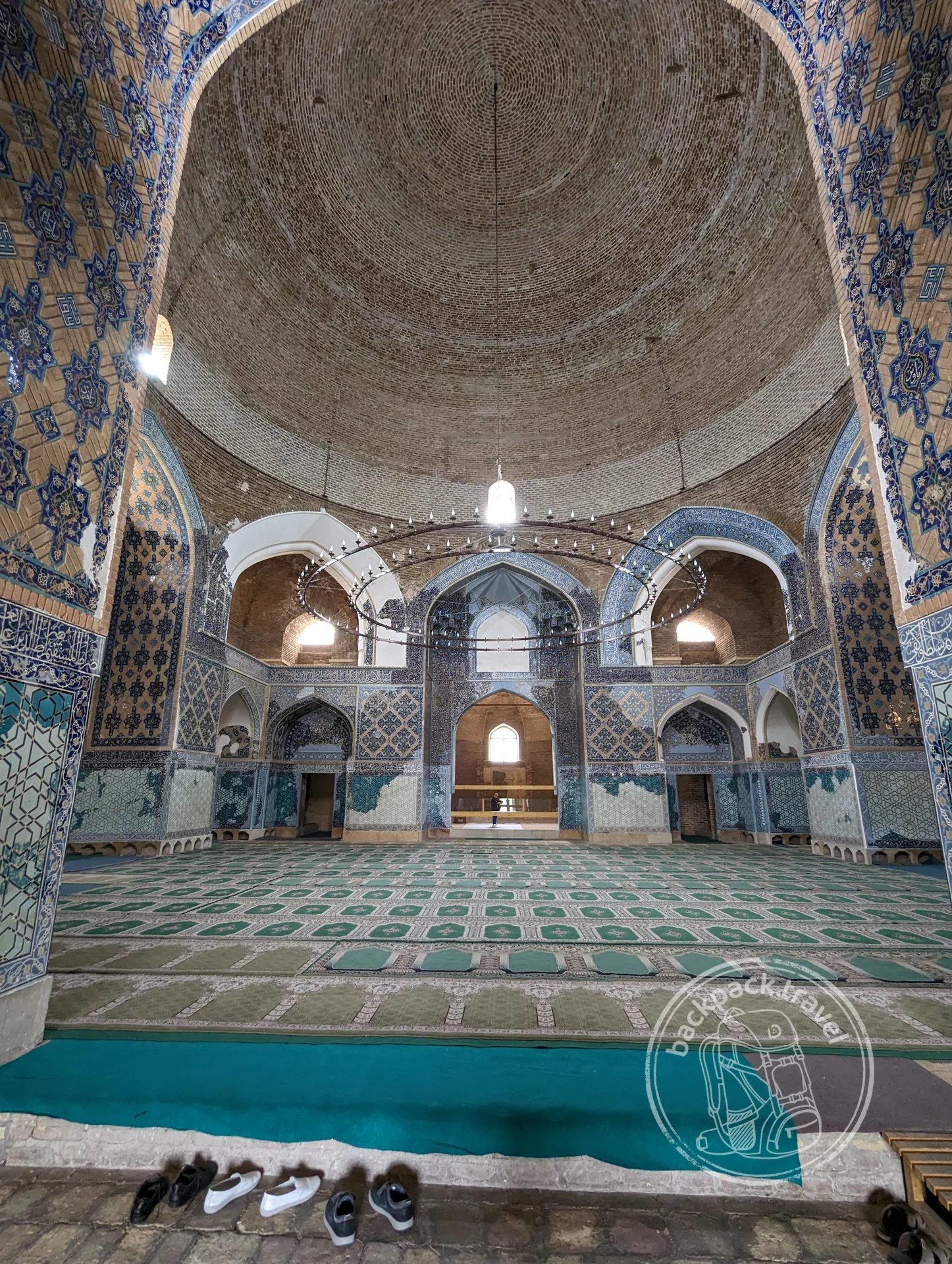
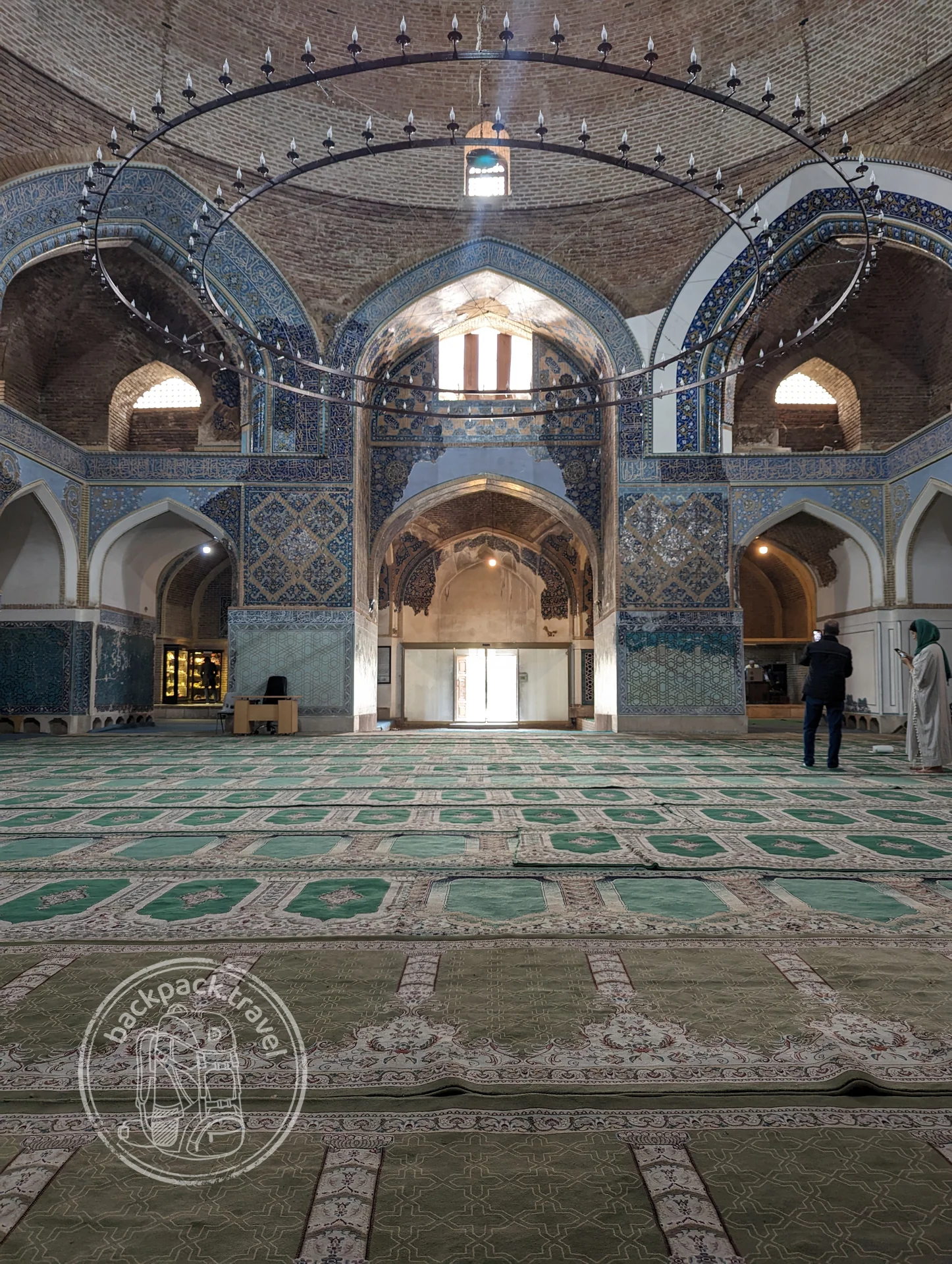
The Blue Mosque, Masjed-e Kabud, was built in the 1460s under Jahan Shah, ruler of the Turkoman Qara Qoyunlu dynasty, whose capital was in Tabriz at the time. The building was part of a large complex with a madrasa, a khanqah, a library and a mausoleum, and it was famed for its facing: the facades and the interior surfaces were covered all over with mosaic of glazed tiles, in which cobalt blue predominated together with white and turquoise, and from that comes the name. The earthquake of 1780 brought down the main dome and most of the vaults, after which the mosque stood in ruins for almost two centuries. Restoration began in the 1970s: the vaults and arches were laid anew in ordinary brick, while the surviving fragments of tilework were left in place, with no attempt to complete what had been lost. Because of this the interior looks unfamiliar: bare masonry of the domes, and beneath it pieces of the old mosaic with plant interlace and inscriptions. Behind the main hall a smaller domed chamber has survived, with the burial of the founder.
The mosque works as a monument and entry is paid; inside it is unfamiliar, with bare brick vaulting and surviving pieces of old mosaic that were deliberately not completed. It is worth dressing modestly. It stands not far from the centre, and takes half an hour to see. Payment in cash.
- Address
- خط ویژه اتوبوس, Tabriz
On the map
Reviews (0)
No reviews yet. Be the first!
Updated