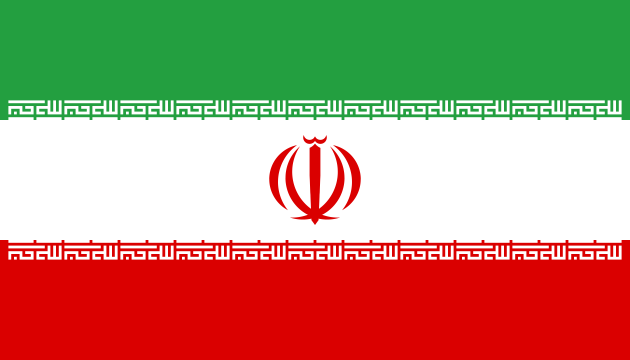
Iran
IRWhere to go #
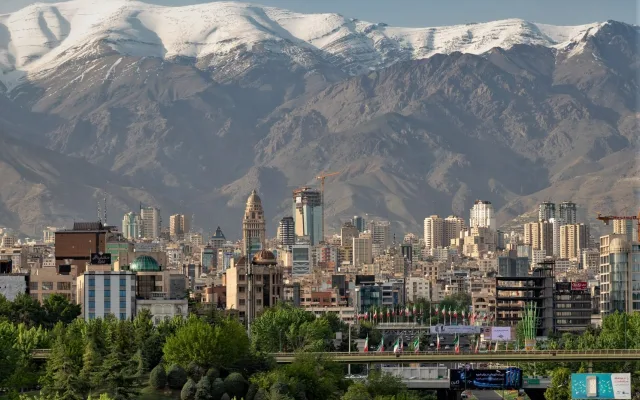
Tehran
Iran's capital under the Alborz range: the Golestan and Niavaran palaces, the National Jewels, a ten-kilometre bazaar and ski slopes within reach of the metro.
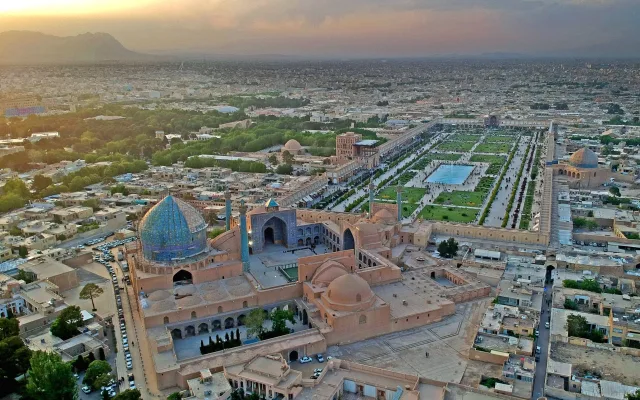
Isfahan
The Safavid capital in central Iran: the UNESCO-listed Naqsh-e Jahan Square, turquoise-domed mosques, the bridges over the Zayandeh Rud and the Armenian quarter of Julfa.
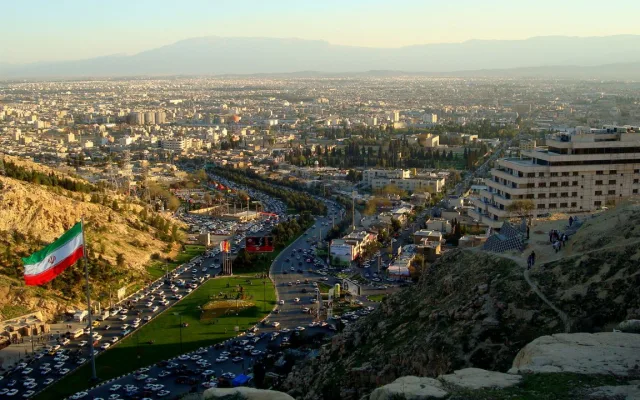
Shiraz
The city of the Persian poets: the tombs of Hafez and Saadi, the Nasir al-Mulk Pink Mosque, cypress gardens, and Persepolis an hour's drive away.
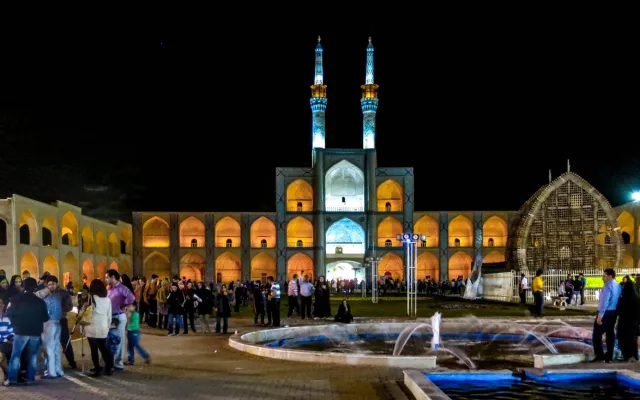
Yazd
A mud-brick desert city of wind towers and vaulted lanes, with a working Zoroastrian fire temple, the Towers of Silence and rooftop tea houses at sunset.
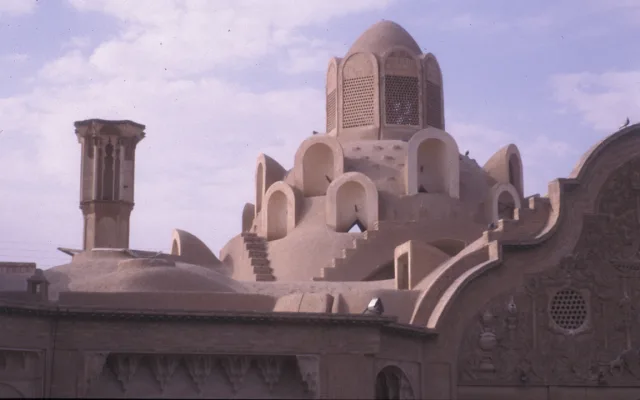
Kashan
A desert town between Tehran and Isfahan, known for its lavish 18th- and 19th-century merchant houses, the UNESCO-listed Fin Garden and the rose villages nearby.
What to see #
Persepolis: If you are wondering where to go for history, the ruins of the Achaemenid capital are item number one. The scale of the columns and reliefs an hour from Shiraz impresses even people indifferent to archaeology.
The Pink Mosque: To get the best shot in Shiraz in a day, arrive at Nasir al-Mulk right at opening. Sunlight through the stained glass turns the hall into a kaleidoscope, but after ten in the morning the magic is gone.
Naqsh-e Jahan Square: In Isfahan, go and stand in one of the largest squares on earth. It is ringed by architectural masterpieces and an endless bazaar where you can lose several hours among spices and carpets.
Towers of Silence: In Yazd, see the enigmatic Zoroastrian structures on the hills. It is a place with an unusual atmosphere where you can understand how the dead were once given their final journey.
Golestan Palace: In Tehran this is the first thing to see. Dazzling mirrored halls and refined mosaics show the true opulence of the Qajar era in the middle of a hectic capital.
Si-o-se-pol: In the evening in Isfahan every road leads to the bridge with 33 arches. People do not merely look at the water here; they listen to poetry and singing under the stone vaults, which creates an atmosphere you will not forget.
Prices #
Currency: The rial is the official unit, but people count in tomans. Drop a zero: "five thousand" means 50,000 rials. Always confirm the figure when paying, or you can be out by a factor of ten.
Exchange: Bring new dollars or euros with no damage. Change them at the "sarafi" exchange offices, where rates beat the banks. Do not deal with street changers, since the risk of being cheated or handed counterfeits is far too high.
Cards: International cards do not function here because of sanctions, so Visa, Mastercard and Amex are all useless and ATMs will not serve you. Cash is your only guarantee of payment at hotels and shops, so bring the full trip budget with you.
Budget: Iran is remarkably cheap for anyone holding hard currency. Inflation makes the country extremely affordable, letting you live very well for what would be small money anywhere in the West.
| Item | Price (USD) |
|---|---|
| Lunch in a café | 4.0 |
| Restaurant dinner | 12.0 |
| Street food | 1.5 |
| Museum ticket | 4.5 |
| Metro ride | 0.1 |
| Taxi across town | 2.5 |
| Litre of petrol | 0.03 |
| Local SIM card | 4.0 |
| Bottle of water | 0.2 |
| Cup of tea | 0.5 |
| Kilo of dates | 2.0 |
| VIP coach ticket | 6.0 |
| Hotel night | 25.0 |
| Domestic flight | 40.0 |
Getting around #
Snapp: Use the local ride app, which works flawlessly and removes all haggling. A ride across town costs almost nothing and drivers find you by GPS without phone calls or explanations.
VIP coaches: Between cities, buy tickets for the VIP services. That means enormous leather seats and genuine rest, which matters on the long hauls from Tehran to the southern provinces.
Trains: The railway links the main destinations with comfort and safety. Book sleeper berths in advance through the aggregator sites, since popular routes fill quickly.
Metro: In the larger cities this is the best way to avoid gridlock. Note that the first and last carriages are reserved for women only, and men may not enter them.
Domestic flights: Flying saves days, covering the country in about an hour. Because of sanctions the fleet is not new, but services are regular and cheap, which is handy for jumping from the capital to the Persian Gulf.
Savari: These shared taxis wait on city squares until full. It is fast but there is no personal space, though it is an excellent chance to meet people and practise the language.
Where to stay #
Traditional houses: The most authentic places to stay in Kashan and Yazd are old mansions converted into hotels. Inside you get a courtyard with a pool and breakfast served on carpets, which is exactly the fairytale you came for.
Guesthouses: Small private hotels are popular here, and the owners treat guests like relatives. It is the best way to save money and hear about the non-touristy parts of town first hand.
City hotels: Tehran has plenty of older buildings and modern no-frills hotels. Service often lags international standards, but cleanliness and basic comfort in the centre are generally assured.
Booking: The global aggregators do not operate here, so use local platforms such as Trip.com. You can also book over WhatsApp, finding contacts on social media or travel forums.
In the room: Rooms almost always contain a prayer mat and a Quran, which surprises people at first. Do not be startled by the absence of conventional beds in very cheap places, where you may be offered a mattress on the floor.
Breakfast: Do not expect a spread; the standard is fresh flatbread, cheese, honey and a boiled egg. Tea is unlimited, but for a proper meal head into a city café.
What to eat #
Kebabs: Charcoal-grilled meat with an enormous portion of rice is the foundation of eating here. Order koobideh, made from minced lamb, which is the most popular and reliably good dish anywhere.
Dizi: Be warned, this one is addictive: a thick meat and chickpea stew served in a clay pot. You mash the ingredients into a paste yourself with a special pestle, which turns lunch into a ritual, so allow time for it.
Ghormeh sabzi: The famous stew of herbs, beans and dried lime is the king of home cooking. The flavour is distinctive and slightly sour, and Iranians rate it above everything else and eat it almost daily.
Rice: Side dishes are taken seriously, laced with saffron, barberries or pomegranate. The prized part is tahdig, the crisp crust from the bottom of the pot, over which genuine battles break out at the table.
Street food: Boiled beetroot and hot corn are sold on the street, particularly in cold weather. It is a cheap and safe way to eat on the move when there is no time for a restaurant.
Drinks: Alcohol is banned outright, so get used to doogh, a salty yoghurt drink with mint. Tea is drunk by the litre, always alongside nabat sugar crystals or dates rather than stirred into the cup.
Safety #
Overall: Iran is a calm country where crime is rarer than in most European capitals. Evening walks are safe as long as you respect local rules and do not go looking for trouble.
Politics: The situation can escalate quickly, so follow the news and read your own government's travel advisory before and during the trip. Stay away from demonstrations and do not discuss politics with people you have just met.
Photography: Photographing military bases, police and ministries is forbidden. Even a station or a bridge can be off limits, so put the camera away if you see uniforms or a wire perimeter.
Being overcharged: The usual trick with tourists involves confusion between rials and tomans. Use Snapp for cars, which eliminates negotiation with inventive drivers and guarantees a fair price.
Dress code: Clothing rules are compulsory in public. A woman without a headscarf risks an encounter with the morality police and a fine. Men must not wear shorts under any circumstances.
Healthcare: Care in the cities is good but expensive for foreigners. Always carry insurance that explicitly covers Iran, because without it neither state clinics nor private centres will treat you.
Etiquette and culture #
Taarof: This is the elaborate system of politeness where a shopkeeper may refuse your money three times. Do not believe it; it is a formality, and you keep offering until payment is finally accepted.
Mosques: Take your shoes off at the entrance to holy places, and women are sometimes handed a chador at the door. Be quiet, do not disturb people praying, and always ask before pointing a camera at anyone.
Greetings: Men should not offer a hand to a woman first; wait for a nod or a spoken greeting. Iranians are extremely friendly and will often approach you themselves to say hello and offer help.
Queues: The idea of personal space is loose here, so queues and transport can feel crowded. Treat it philosophically; it is local temperament, not an attempt to push past you.
Family: Family ties mean everything, so do not be surprised by huge groups picnicking in the parks. You may be invited home for tea, and if you accept, take a small gift of sweets.
The weekend: Friday is the official day off in Iran, when most shops and museums close. Plan your movements around it so you do not arrive at locked doors.
Connectivity #
SIM cards: Buy an Irancell or MCI card at Tehran airport on arrival, showing your passport. Internet is stable in the cities and a fortnight's data package costs a few dollars.
Censorship: Many popular sites and messaging apps are blocked at state level. You will not reach Telegram or Instagram without circumvention tools, which you should set up before you fly.
VPN: This is essential kit for any traveller to Iran in 2026. Install at least three different apps on your phone in advance, because downloading them inside the country is close to impossible.
Local apps: Download Snapp for taxis and Neshan for navigation. These are built for local conditions and work far more accurately than global maps in tangled old quarters.
Language: English is understood by a minority, especially outside the capital. Learn a few basic Farsi phrases and download an offline translator so you can manage in a bazaar or an ordinary hotel.
Coverage: In desert and mountain areas the signal can drop for hours. Before long journeys, download offline maps and warn people at home that you will be unreachable for a while.
Phrasebook #
| English | Persian | Pronunciation |
|---|---|---|
| Hello | سلام | sa-LAAM |
| Thanks (colloquial) | مرسی | mer-SEE |
| Please | لطفا | LOT-fan |
| Yes / No | بله / نه | ba-LEH / na |
| How much is it? | چند است؟ | chand AST |
| Expensive (slang) | گرون | ge-ROON |
| Cheap | ارزان | ar-ZAAN |
| Discount | تخفیف | takh-FEEF |
| Where is...? | ... کجاست؟ | ko-JAAST |
| Water | آب | aab |
| Bread (slang) | نون | noon |
| Rice | برنج | be-RENJ |
| Delicious | خوشمزه | khosh-ma-ZEH |
| Tea | چای | chaay |
| The bill, please | صورتحساب لطفا | soo-RAT he-SAAB LOT-fan |
| I don't want it (slang) | نمیخوام | ne-mee-KHAAM |
| Wait a moment | صبر کنید | sabr ko-NEED |
| Friend | دوست | doost |
| Help | کمک | ko-MAK |
| Beautiful | قشنگه | gha-shan-GEH |
| Good | خوب | khoob |
| Finished (slang) | تموم | ta-MOOM |
Good to know #
Plugs: Iran uses the standard European two-round-pin sockets, so continental chargers need no adapter while UK, US and Australian ones do. Pack a small extension lead, since hotel rooms often have very few sockets.
Power bank: Constant navigation and running a VPN drain a phone quickly, so an external battery is essential. That goes double on long coach journeys, where the USB ports do not always work.
Water: Do not drink from the tap; buy bottled from shops. Cities have many drinking fountains, but their safety is not guaranteed, so carry your own supply in your bag.
Alcohol: Importing and drinking alcohol is strictly illegal. Do not try to bring it in your luggage or buy it from strangers, because the penalty can extend to deportation.
Medicines: Bring a kit with rehydration salts and cold remedies, since the food may not suit your stomach at first. Iranian pharmacies stock good products, but the brand names will all be in Farsi.
Consular help: Check before you travel whether your country has a working embassy in Tehran, since several handle Iran from elsewhere, and note that some governments advise against all travel here. Save the contacts either way.