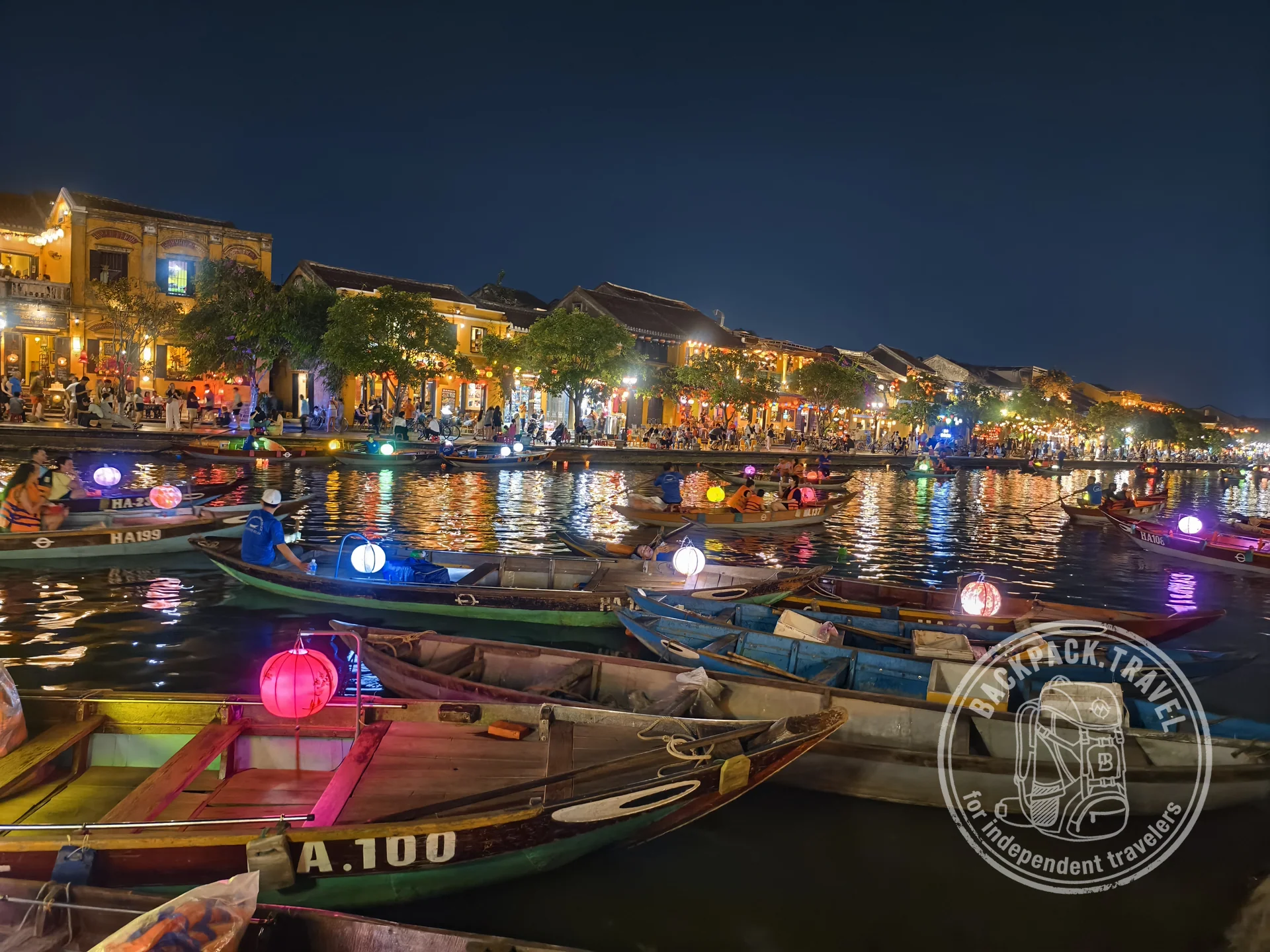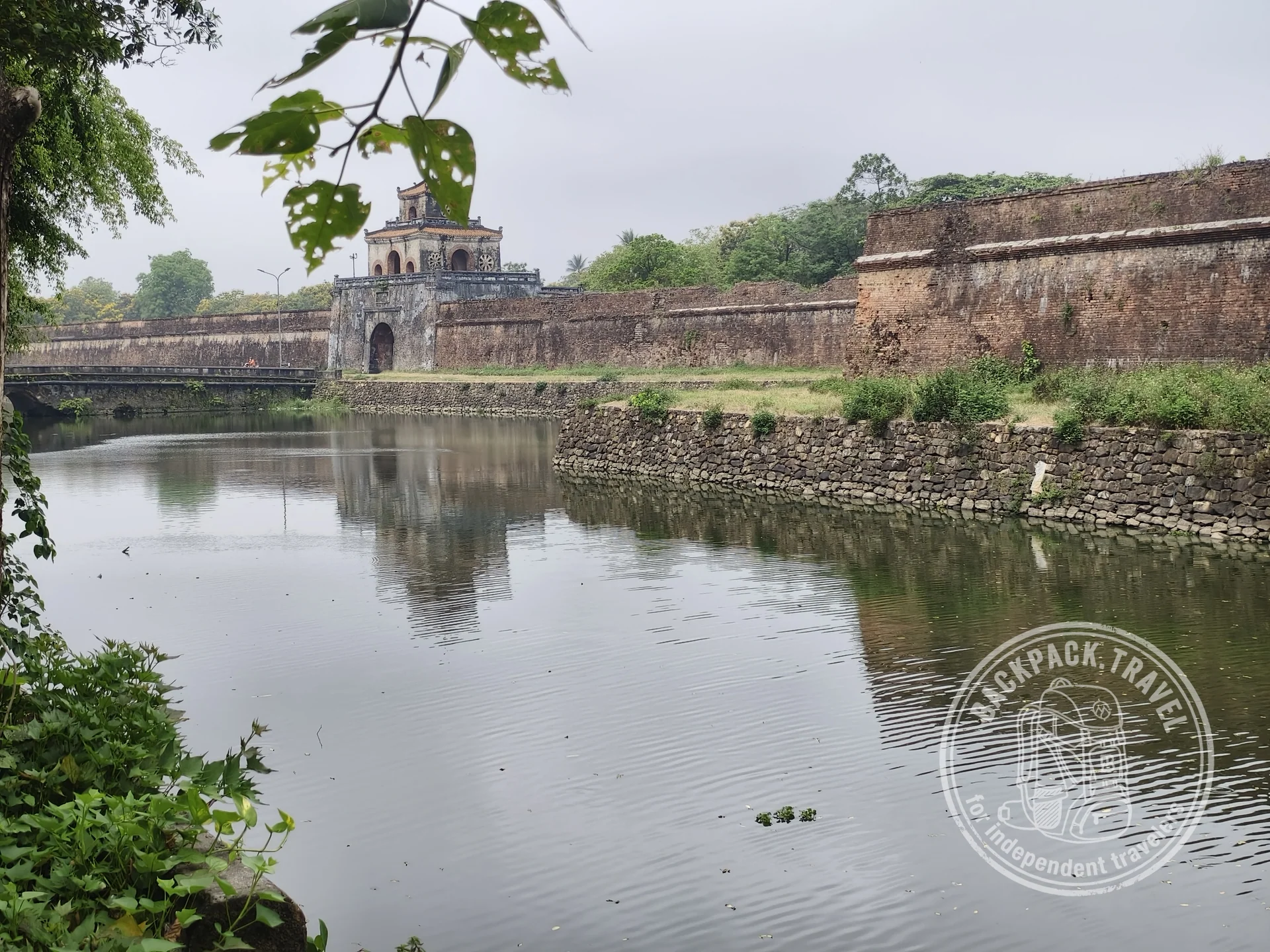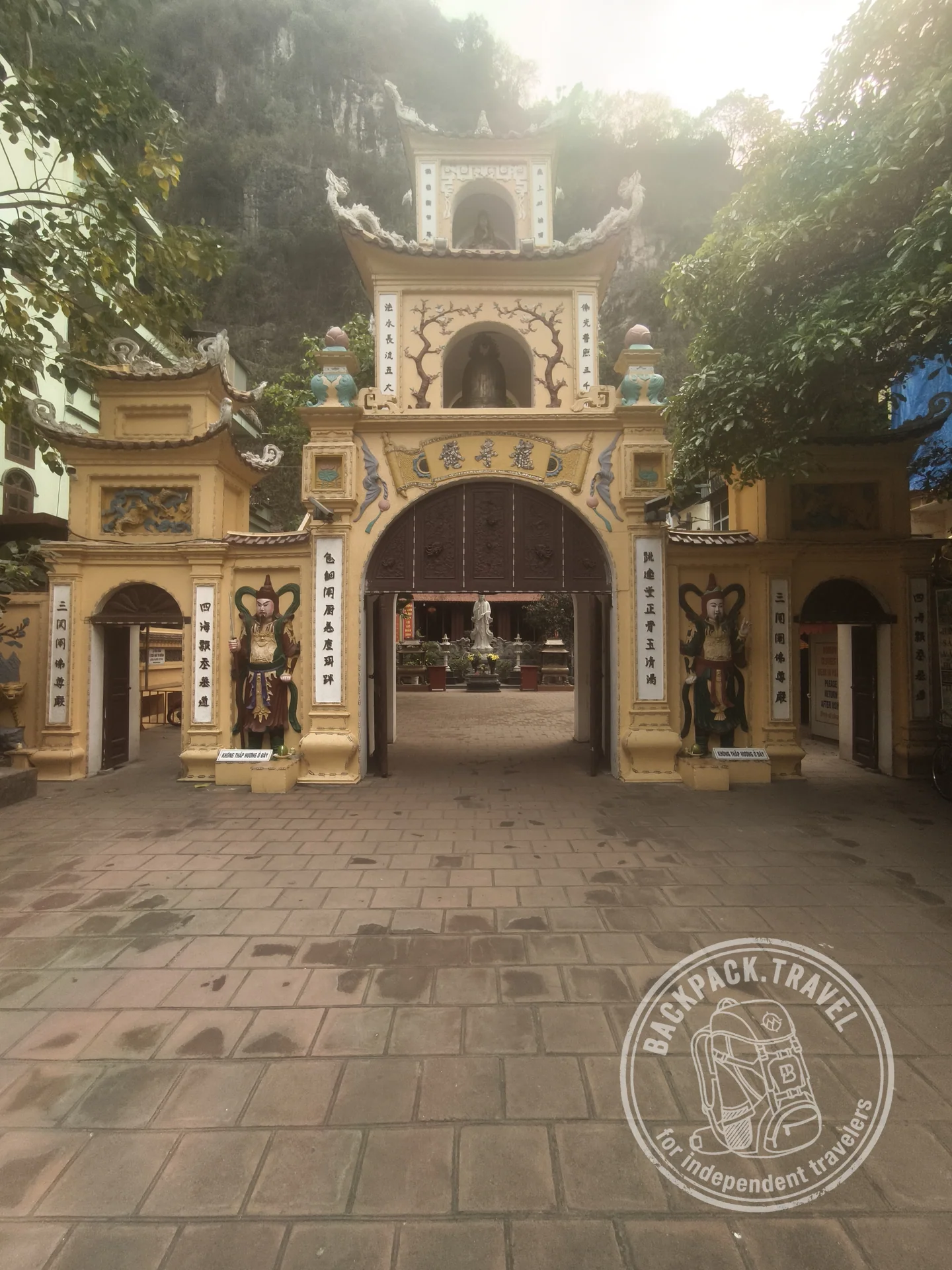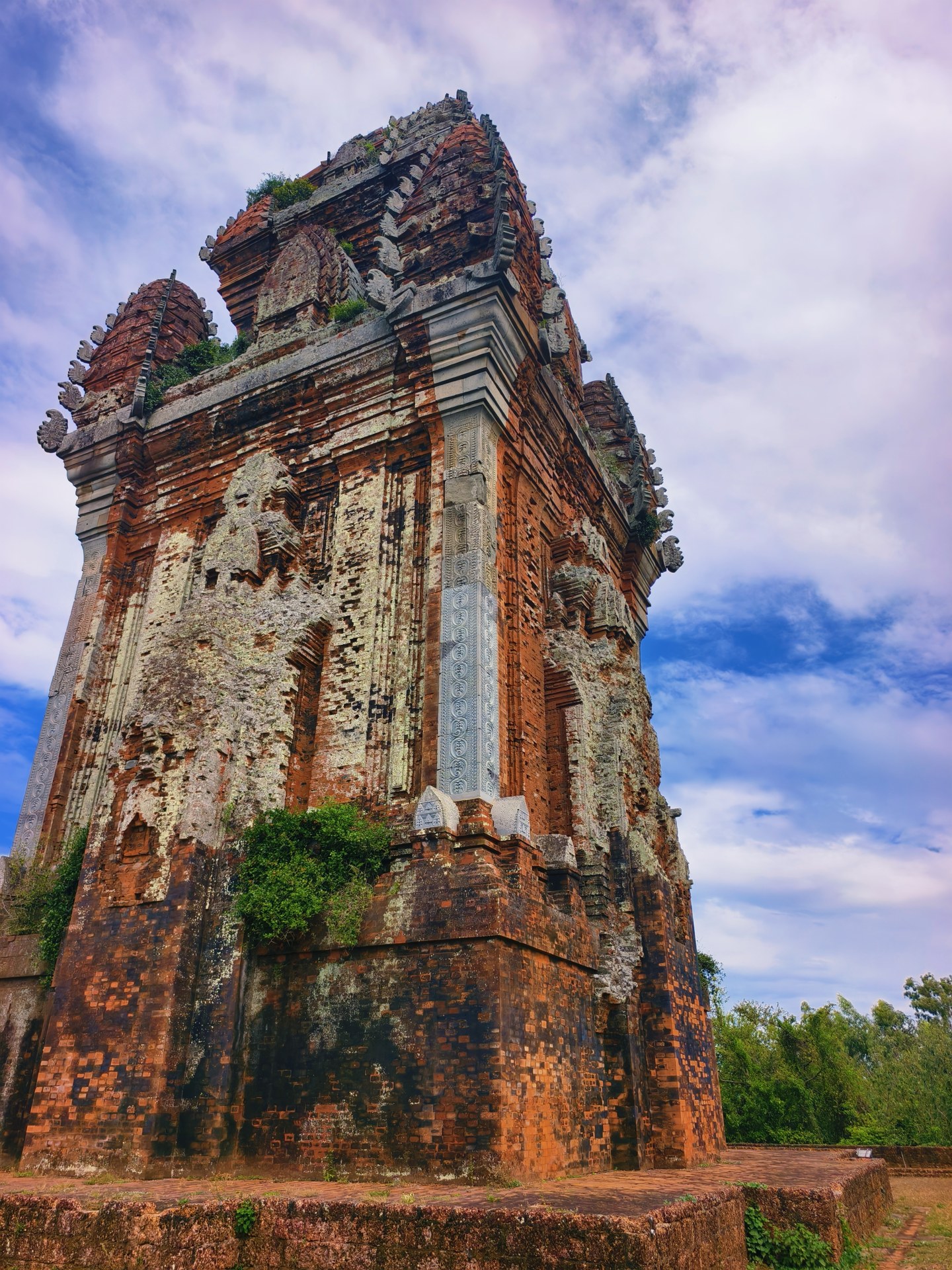
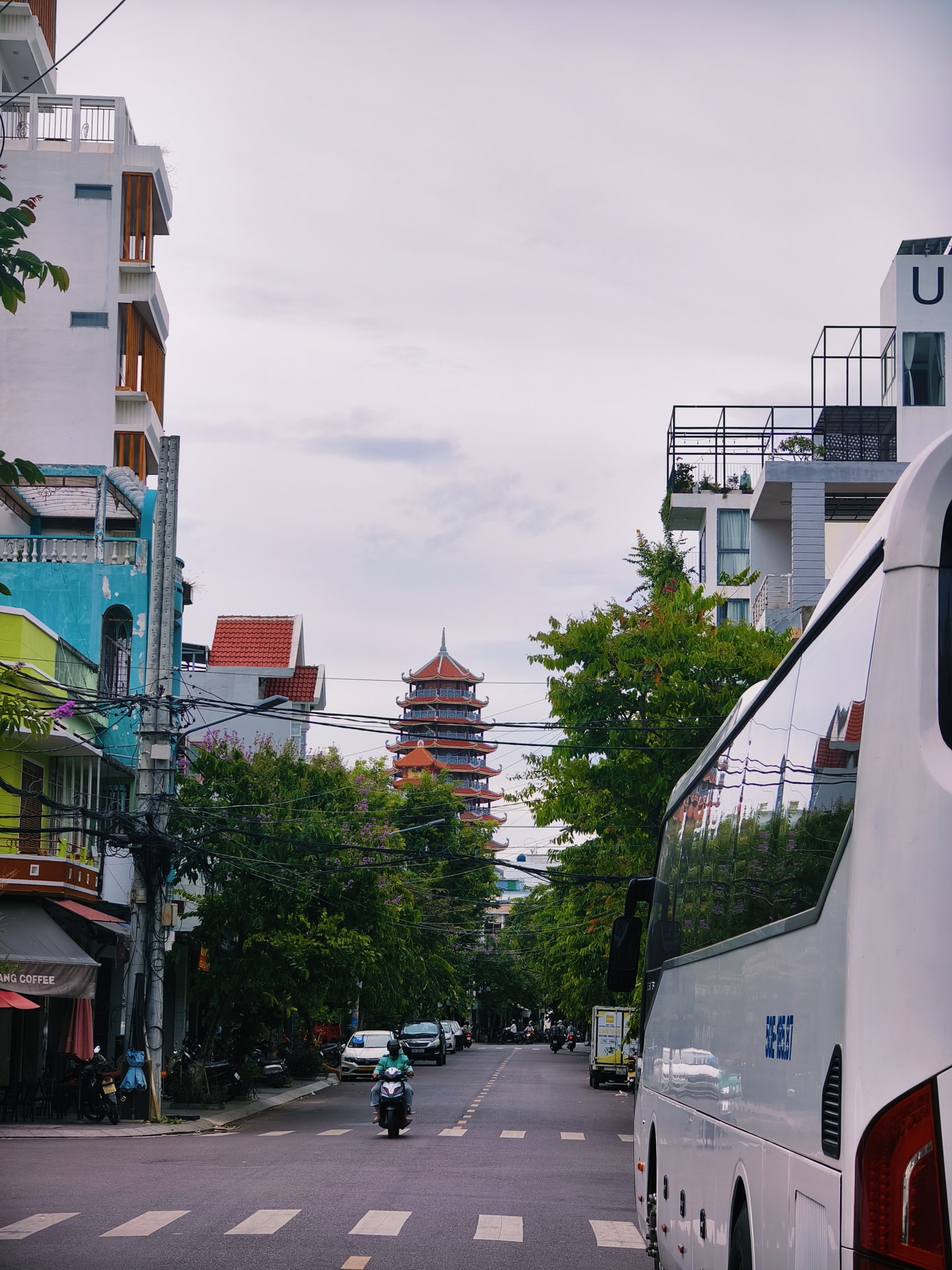


An ordinary view of a modern Vietnamese city — multi-storey buildings, buses, signs in English and Vietnamese, and in the distance a multi-tiered pagoda in the Chinese style, of which Vietnam has a great many as a legacy of the Buddhist tradition. Unlike neighbouring Thailand and Cambodia, Vietnam holds to Mahayana Buddhism, which came from China, so local temples look different from Thai wats: curved tiled roofs, dragons along the ridges, multi-tiered towers instead of bell-shaped stupas.
Such towers are usually put up in a monastery courtyard and keep the ashes of abbots and of lay people whose families donated to the monastery. The main temple of Quy Nhon itself is Long Khanh on Tran Cao Van street: it was founded in 1715 by the monk Duc Son for the local Chinese community, and the monastery went through its largest restoration in the 1950s — it stretched over six years and was completed in 1956. In the courtyard stands a seventeen-metre figure of the Buddha Amitabha on a stone lotus, and the pagoda keeps a bronze bell cast in 1805.
Quy Nhon itself was badly destroyed during the war and rebuilt anew, so almost no old buildings remain in the centre, and the blocks are cut through by wide straight avenues.
- Address
- Hai Bà Trưng, Quy Nhon
On the map
Reviews (0)
No reviews yet. Be the first!
Updated