 Города и дороги
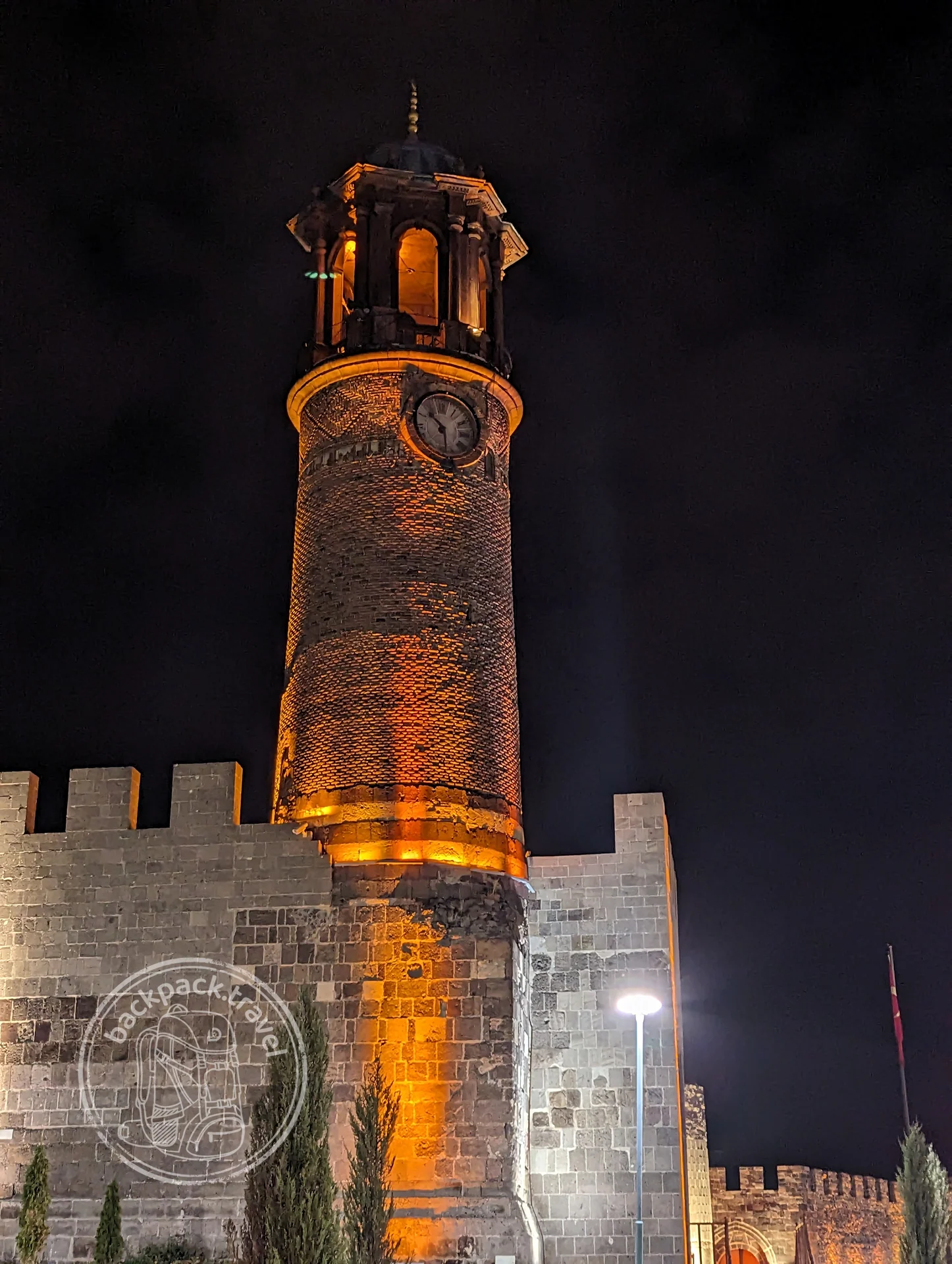
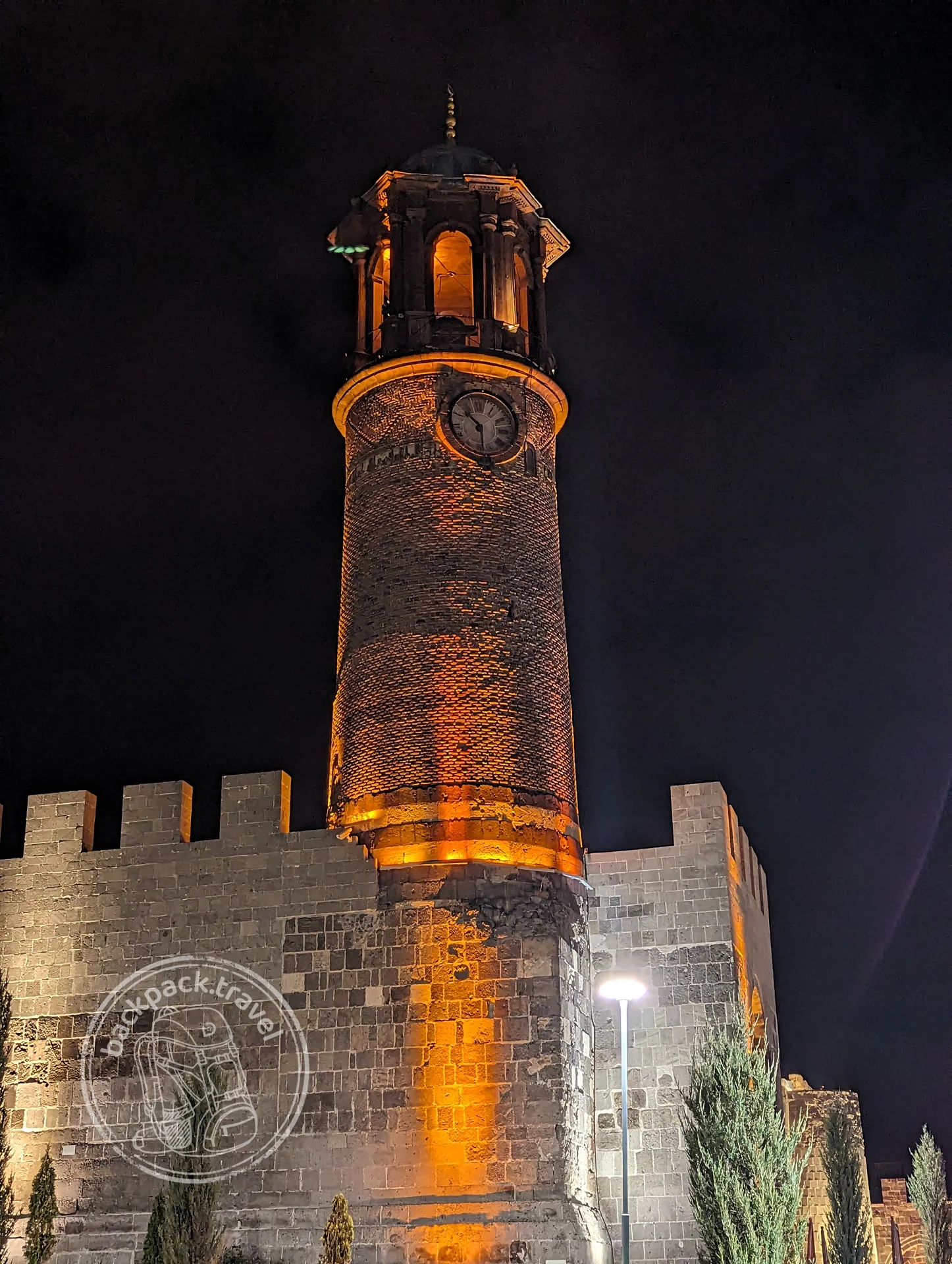
A citadel in the centre of the city, founded by the Byzantines in the fifth century under Theodosius II and added to by the Seljuks, the Ilkhanids and the Ottomans. The walls are laid in dark local stone and rise above the flat plain from which Erzurum has always controlled the road from the Caucasus into the interior of Anatolia. The chief landmark is the Tepsi Minare tower, put up in the twelfth century as a minaret and later adapted as a clock tower: the clock mechanism was brought from England in the nineteenth century. The shaft of the tower is of brick, with a pattern of dark and light bricks, while the crenellated parapet of the walls below gives it the distinctive silhouette that is floodlit in the evening. Inside the fortress courtyard a small twelfth-century mosque has survived, converted from an earlier church. From the upper platform the whole city and the ridges around it are visible; in winter everything here is under snow, and the temperature drops to thirty degrees below zero.
- Address
- Menderes Caddesi, Rabia Ana Mahallesi, Erzurum
On the map
Reviews (0)
No reviews yet. Be the first!
Updated