 Города и дороги
Description
The largest city of eastern Anatolia, two thousand metres up: the carved portal of the Çifte Minareli Medrese, Seljuk tomb towers, a Byzantine citadel and the Palandöken ski slopes above the rooftops.
Wiki
Erzurum is the largest city of eastern Anatolia, with around four hundred thousand inhabitants, set on a plateau almost two thousand metres up. The road from the Caucasus into the interior of Turkey has always run through it, and the city was in turn Armenian Karin, Byzantine Theodosiopolis, then Seljuk, Ilkhanid and Ottoman. The altitude makes the climate sharply continental: Erzurum counts as the coldest large city in Turkey, winter holds from November through March, and the temperature drops to thirty degrees below zero.
Why come and what to actually see
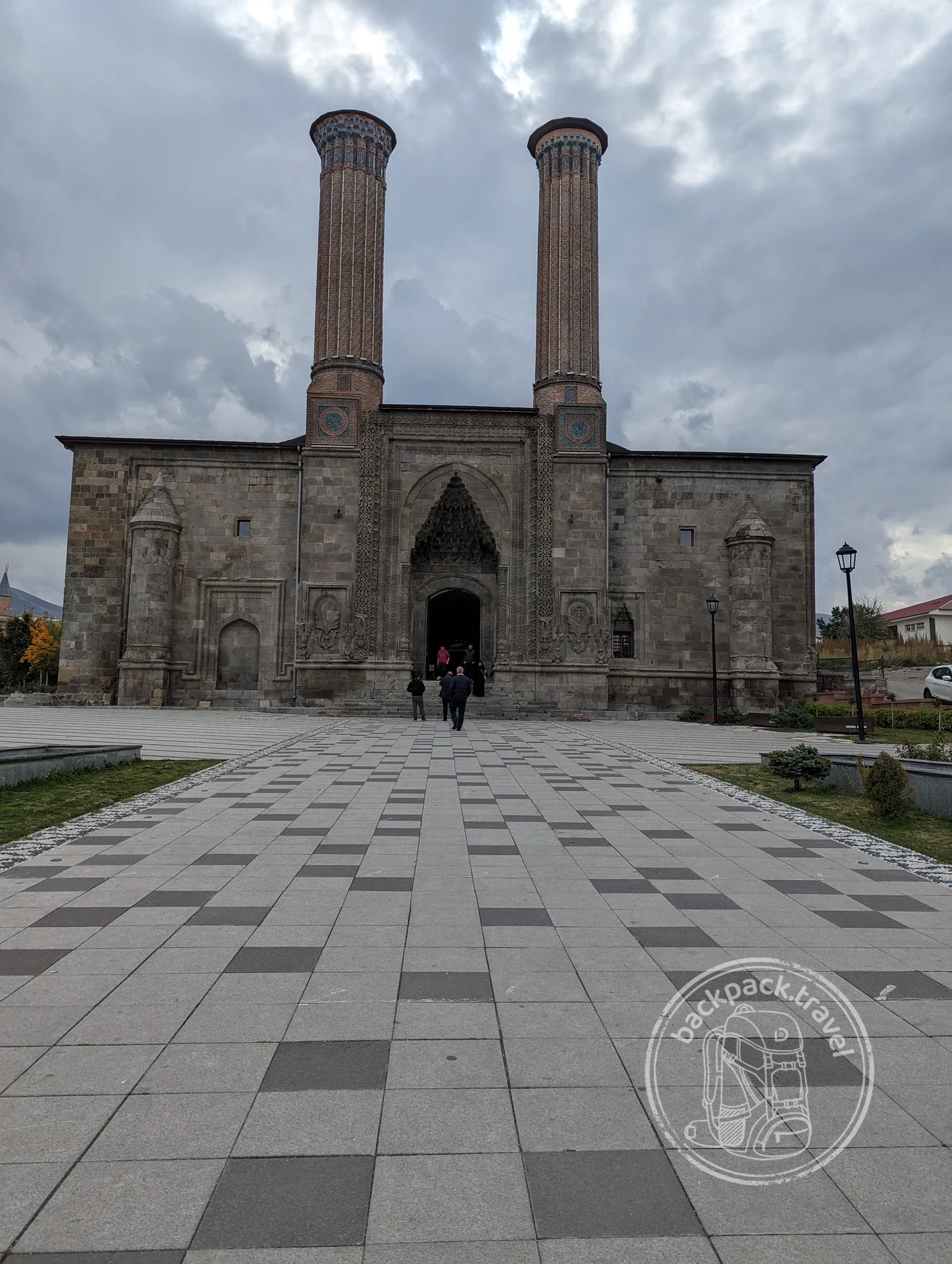
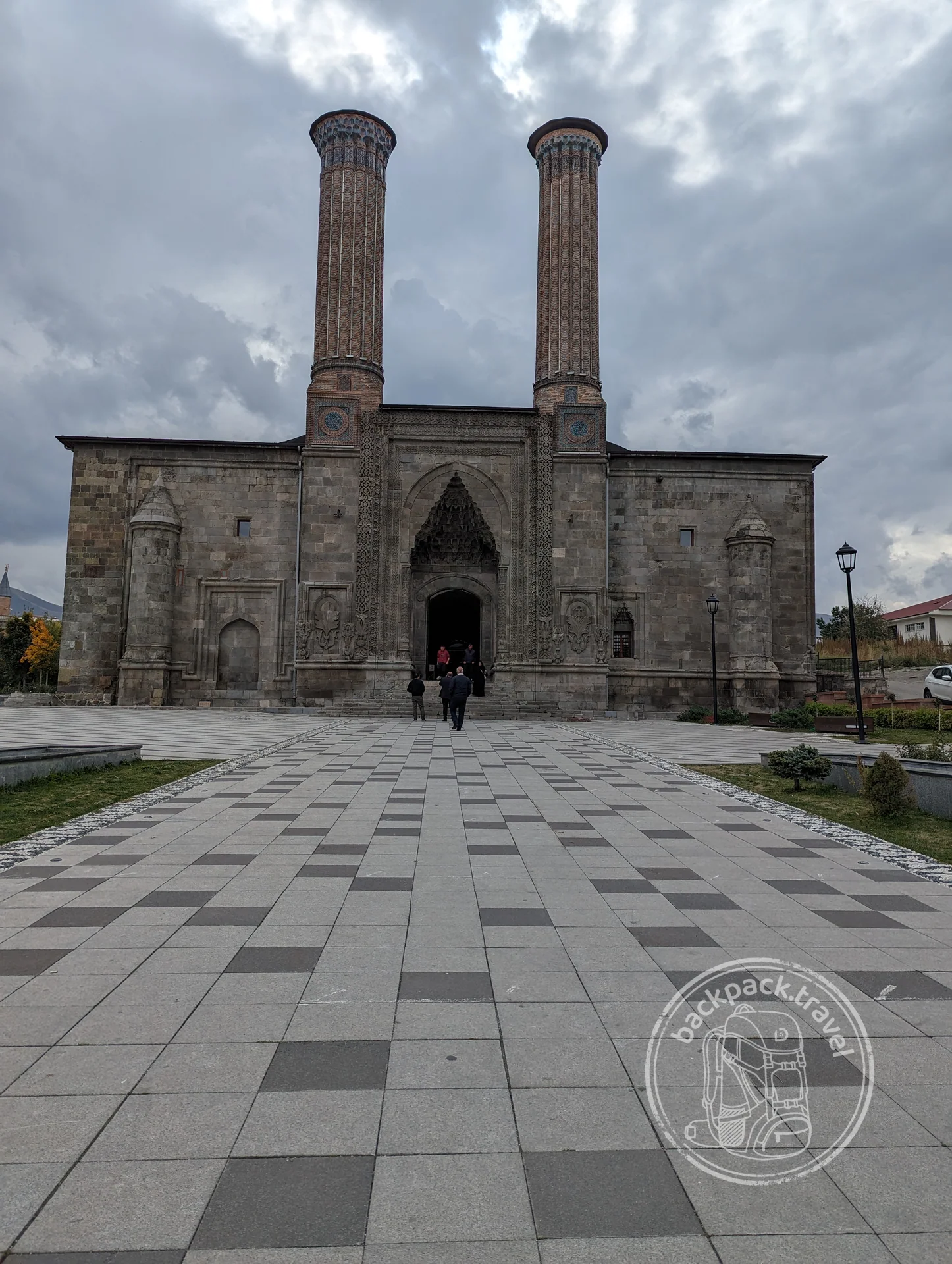
The main building is the Çifte Minareli Medrese of the late thirteenth century, one of the largest Seljuk structures in Anatolia. Two brick minarets faced in turquoise tile rise above the entrance portal, and the portal itself is covered edge to edge in stone carving: palmettes, vegetal ornament, paired dragons and a double-headed eagle at the tree of life, a motif that is pre-Islamic rather than anything else. Inside is a two-storey courtyard with galleries and a domed tomb chamber at the far end. The medrese was never finished: the Mongol invasion cut the work short.
Beside it stands the Ulu Camii of 1179, an austere hypostyle mosque without a single tile, its wooden ceiling carried on seven rows of supports. Next door are the Üç Kümbetler, three tomb towers of the twelfth to fourteenth centuries with the conical roofs typical of the Seljuk east.
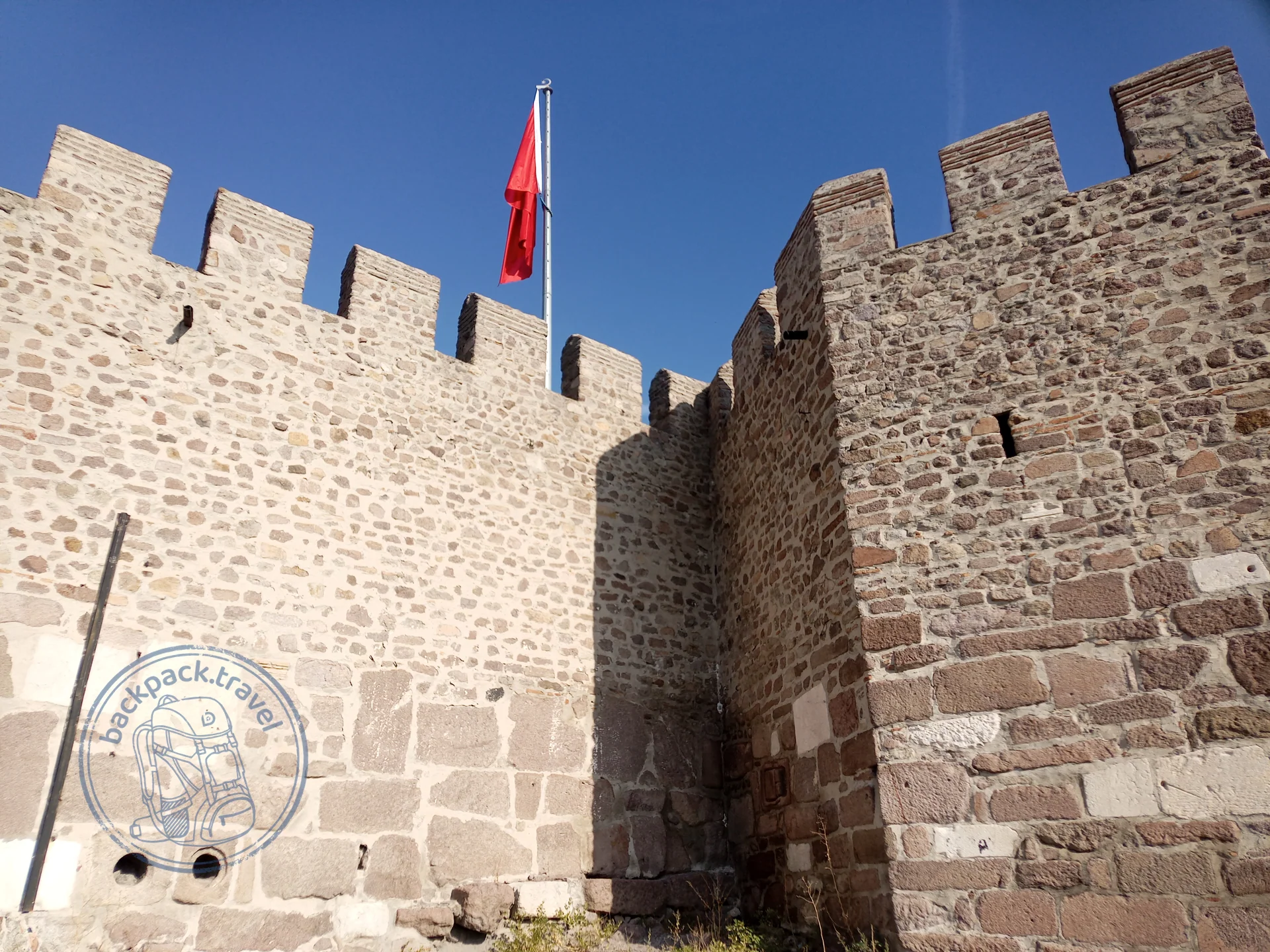
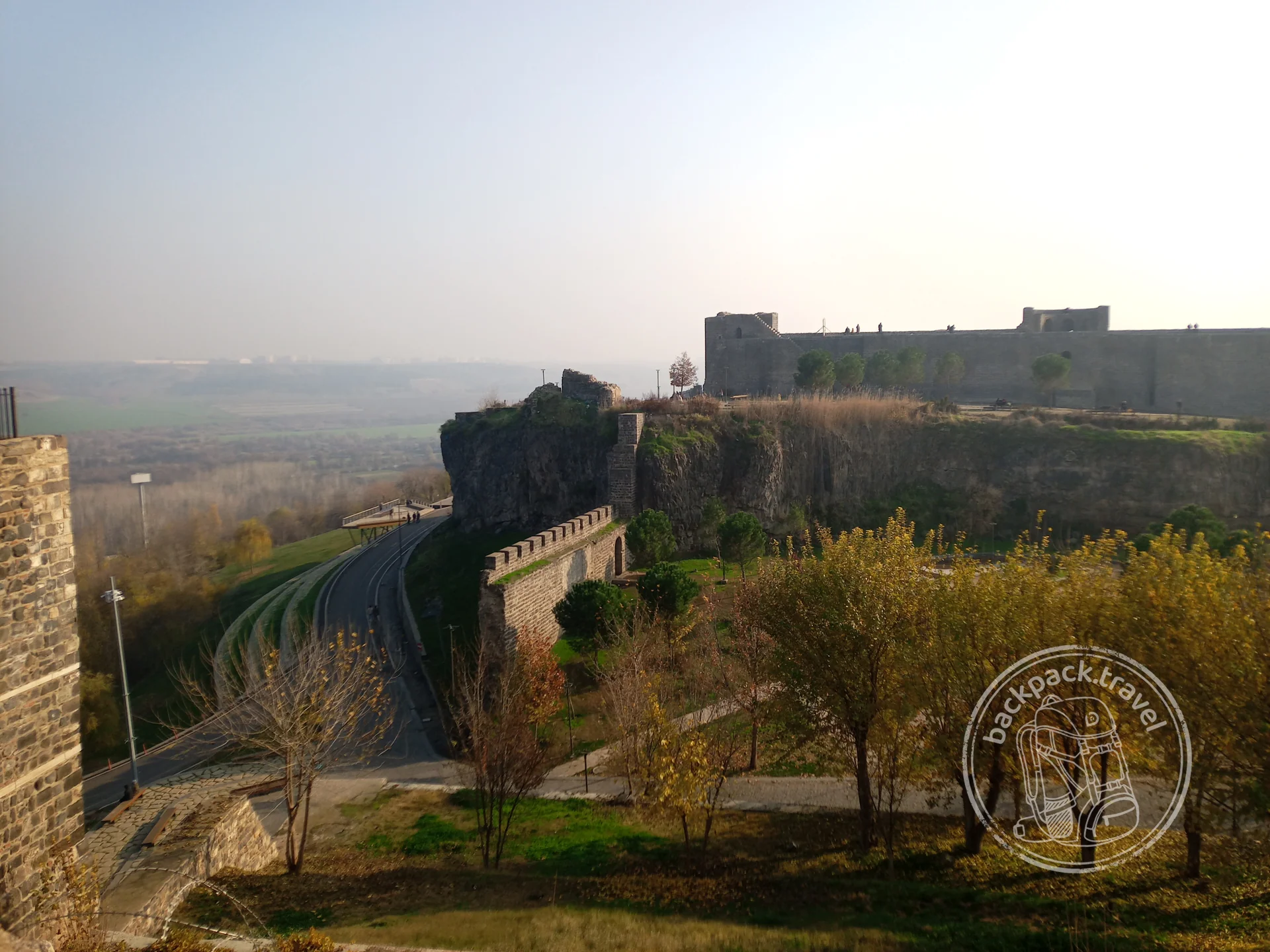
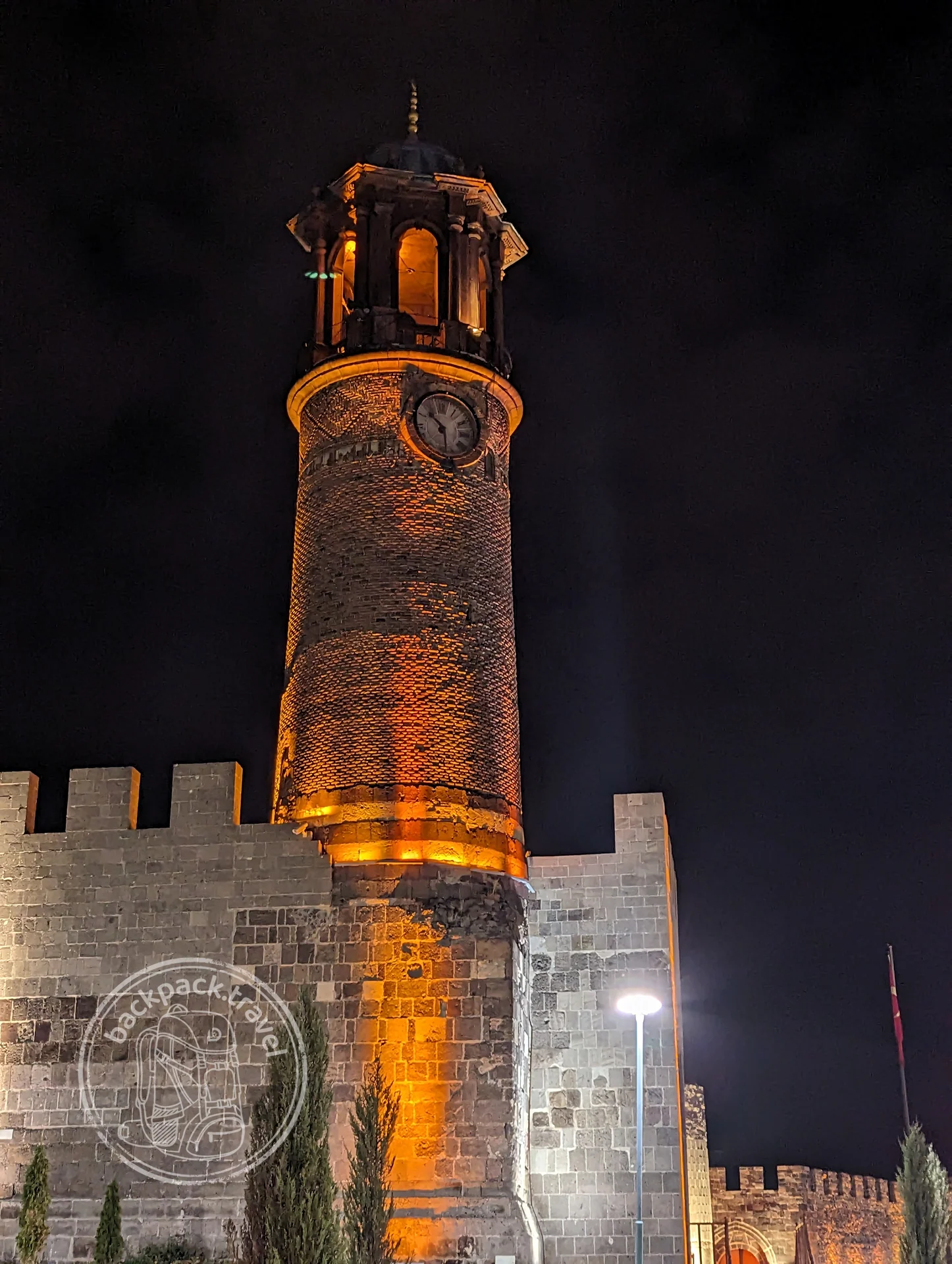
The citadel was founded by the Byzantines in the fifth century. What remains is a circuit of dark stone walls and the Tepsi Minare, a twelfth-century minaret converted in the nineteenth into a clock tower with English-made works. The upper platform gives a view over the whole city and the ranges around it.
Winter adds Palandöken, a ski resort directly above the city, with runs of over three kilometres and a season from December to April. The lifts start ten minutes' drive from the centre, which is rare for a ski resort.
Getting there and getting around
Erzurum airport takes flights from Istanbul and Ankara, about two hours in the air, and sits ten kilometres from the centre. The Eastern Express train from Ankara takes about twenty hours and is treated as an attraction in its own right, since the route runs through the mountains; in winter the tickets go early. Buses connect the city with Trabzon, Kars and Van.
The centre is compact, the main monuments stand along a single street and can be walked in half a day. Minibuses and taxis run up to Palandöken. In winter the pavements ice over, so bring the footwear for it.
Where to stay
The centre has several mid-range city hotels, cheap by Turkish standards. A separate category is the hotels on the slopes of Palandöken, built for skiers: they cost more and work mainly in winter, but the lift is at the door.
In summer there are always rooms; in winter the resort hotels fill up at weekends and during school holidays. If the trip is not about skiing, staying in the centre makes more sense — everything else is closer from there.
Day trips
Kars, with its Russian building stock of the late nineteenth century and the ruins of the Armenian capital Ani, lies two hundred kilometres away, about three hours. Ani is worth the journey: a city on a plateau by the Armenian border, with cathedrals of the tenth and eleventh centuries standing in empty steppe.
Tortum, with its waterfall and lake, is a hundred kilometres north on the road to Artvin. The crater lake of Nemrut near Tatvan — not to be confused with Mount Nemrut near Adıyaman — is about three hundred kilometres off, which makes it an overnight trip.
When to come
For the city itself, May to October. Summer days run around twenty-five degrees, the air is dry, and evenings are cool even in July. May and September strike the best balance: warm but not hot, and the plateau is green.
Winter is another matter. From December to March the snow lies steadily and the city runs on the ski season; it is not the best time for the monuments, though the medrese portal under snow looks better than it does in summer. April and November are the shoulder months of mud and raw wind, and not worth the trip.
Food and money
The local speciality is cağ kebab, lamb on a horizontal spit over an open fire, served in pieces with flatbread. People also eat kadayıf dolması, a sweet of walnuts in pastry with syrup, and drink a great deal of tea. The meat houses are plain and cheap, and the portions are large.
Cards are accepted everywhere and there are ATMs at every turn. Cash is needed in small shops and at the market. Exchange offices in the centre give a better rate than the airport.
What to know
Almost two kilometres of altitude makes itself felt: the climb to the citadel is harder than it looks, and the sun is fiercer than usual, especially in winter over snow.
Erzurum is a conservative city, noticeably stricter about dress than the coast; women should cover shoulders and knees. Alcohol is sold, but not everywhere, and in the old part of town it is almost impossible to find. The mosques are in use, so there is no need to go in during prayers, and women must cover their hair.
Updated