 Города и дороги
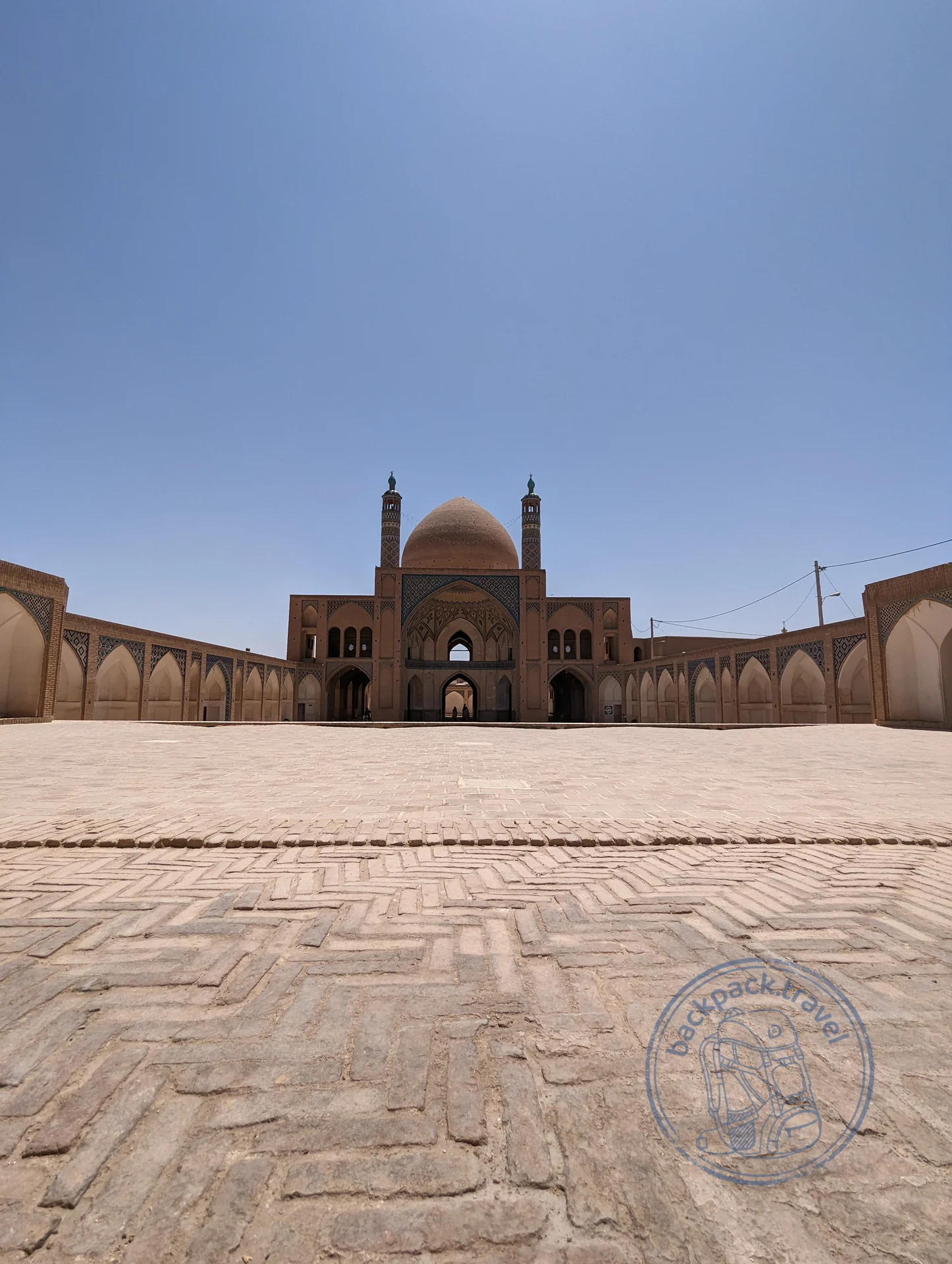
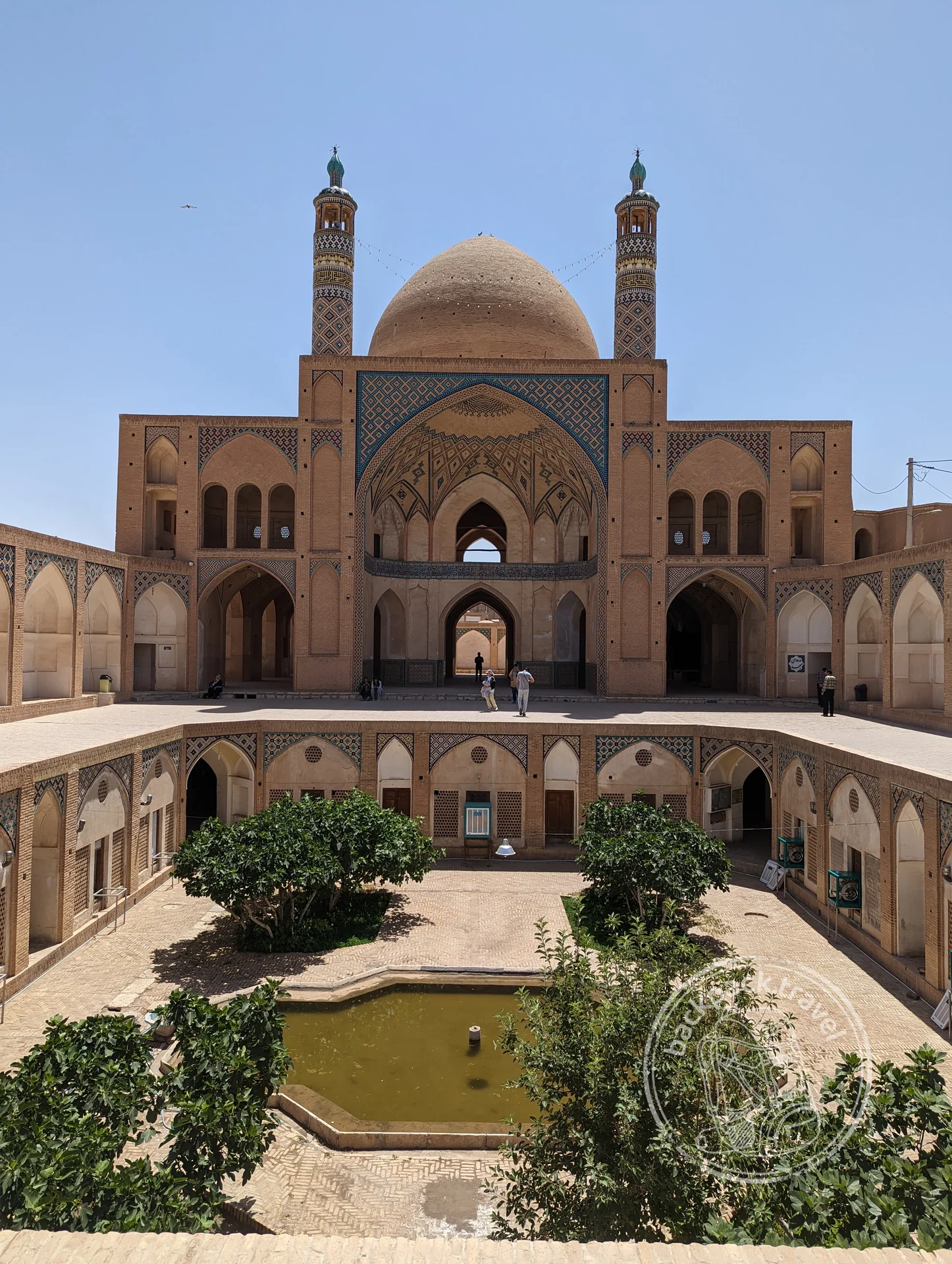
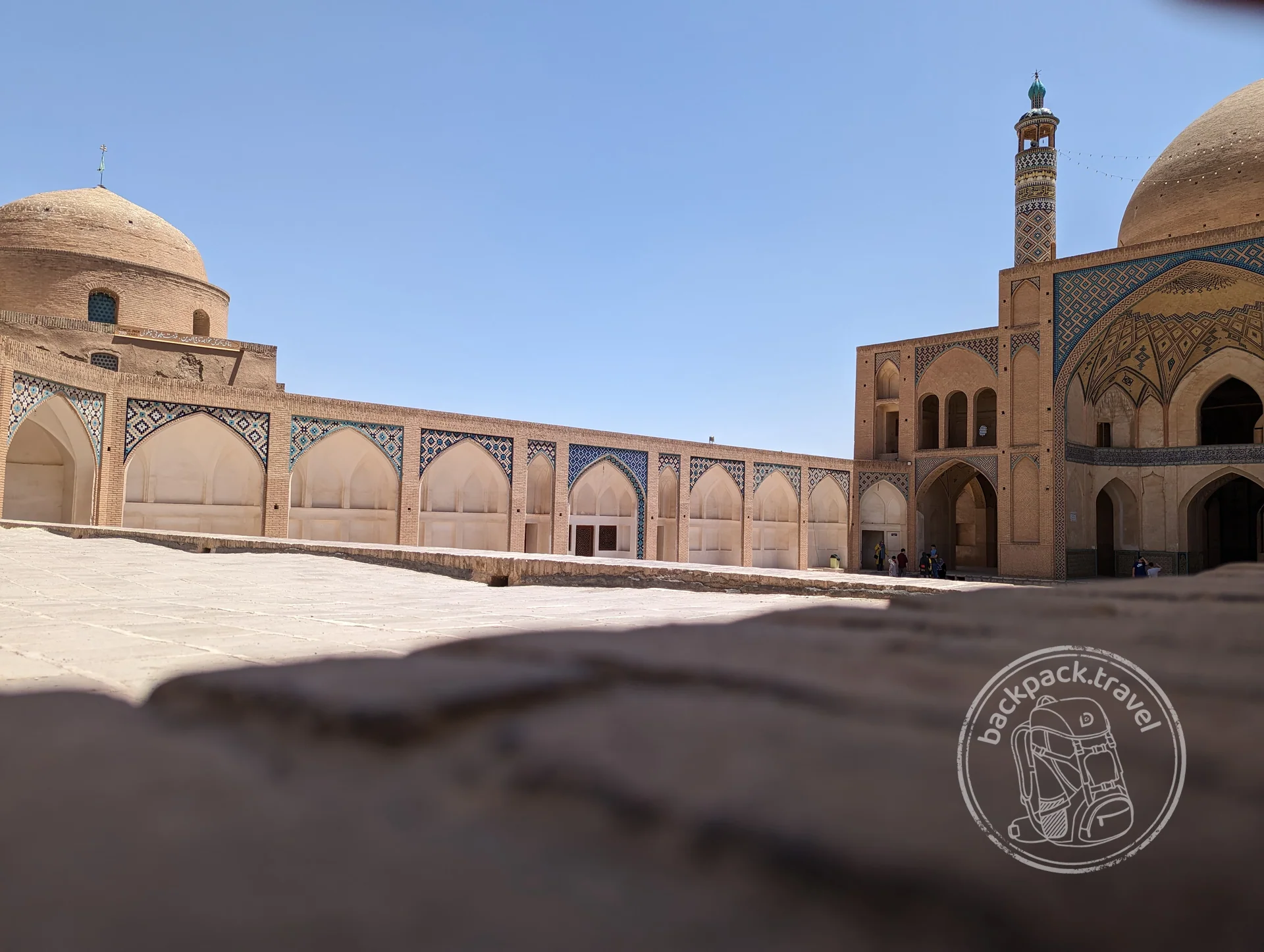
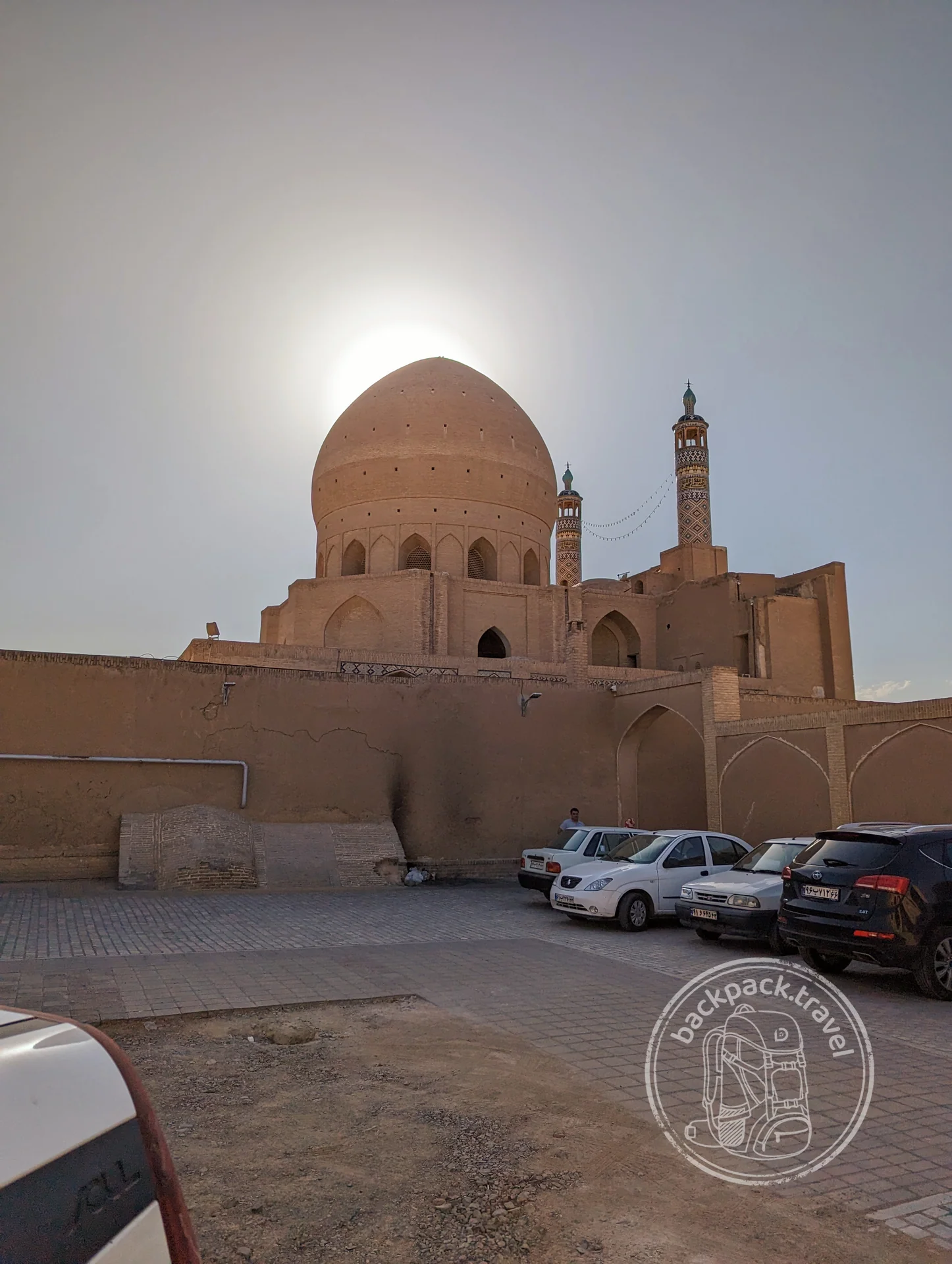
This complex of a mosque and a religious school was built in the middle of the nineteenth century under the Qajars, commissioned by the pupils of the preacher Mullah Mehdi Naraqi, whom the town called Agha Bozorg, meaning "the great master". Its main feature is a courtyard on two levels: the upper one opens onto the prayer hall and the portal, while the lower one, sunk several metres into the ground, is surrounded by the students' cells and was dug deep enough to reach a qanat channel with running water. Below ground level it is noticeably cooler in summer, and the same logic runs through the whole building: thick clay walls, wind towers, a minimum of openings on the sunny side. Because of the change in level the dome and the two minarets can be seen from both courtyards, but from the lower one they look taller than they are. The decoration is deliberately restrained — almost the entire complex is built of sand-coloured unfired brick, with tiles used only on the portal and the drum of the dome. For this combination of scale and austerity Agha Bozorg is usually called the most coherent building of Qajar Kashan.
- Address
- سنگین باف, Kashan
On the map
Reviews (0)
No reviews yet. Be the first!
Updated