
Nepal
The country of the Himalaya and Everest, of ancient temples and Buddhist stupas — Nepal remains one of the cheapest and most spectacular destinations in the world. The treks to Everest Base Camp and around Annapurna are on every traveller's list. The Kathmandu valley with its dozens of UNESCO temples, paragliding over Pokhara, the jungle of Chitwan with its rhinos and tigers — all in one small country. Nepalis say Namaste with a smile you remember for life.
どこへ行く
#
Kathmandu
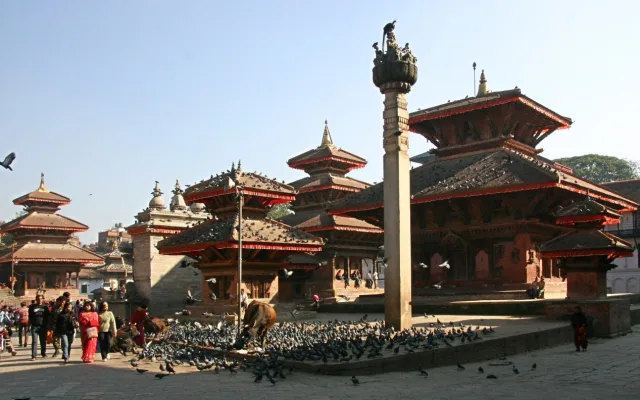
Kathmandu is Nepal’s capital and the largest urban centre in the Kathmandu Valley, a basin of hills at the foothills of the Himalaya. The city grew where historic trade routes met and still has a dense fabric of old neighbourhoods: bazaars, courtyards, temples, palaces and houses with carved wooden windows stand alongside modern streets and taller buildings. Durbar Square and the Hanuman Dhoka palace complex, Swayambhunath, Boudhanath and Pashupatinath are among the valley’s best-known heritage sites. UNESCO groups the valley’s heritage into seven monument zones: three historic Durbar Squares and four religious ensembles. They lie in different parts of the valley, so allow time for each visit and account for traffic. Around the centre, Thamel, Indra Chowk and the old market lanes are easy to explore on foot. Small shrines often sit behind modest entrances and courtyards just off the main streets. Kathmandu remains the main gateway for travel across Nepal. International flights arrive here, and the city is a starting point for trekking routes, Pokhara and the country’s national parks. It can be noisy and congested, but it is also the most practical place to learn about the valley’s cultures, try Nepali food and prepare for a journey into the Himalaya. Leave extra time when travelling between heritage sites on opposite sides of the city.
Pokhara
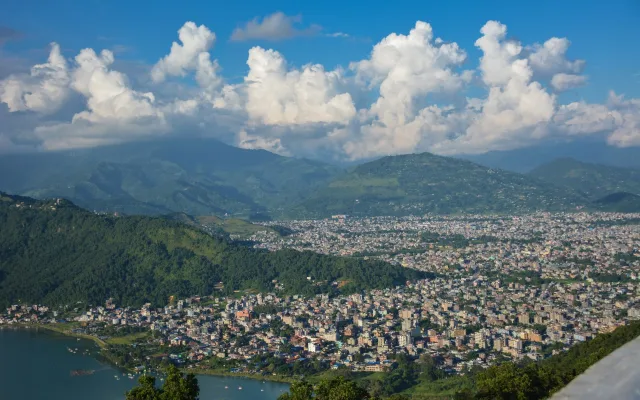
Nepal's trekking capital — Phewa Lake, the Annapurna skyline and the start of the great Himalayan routes.
Lumbini
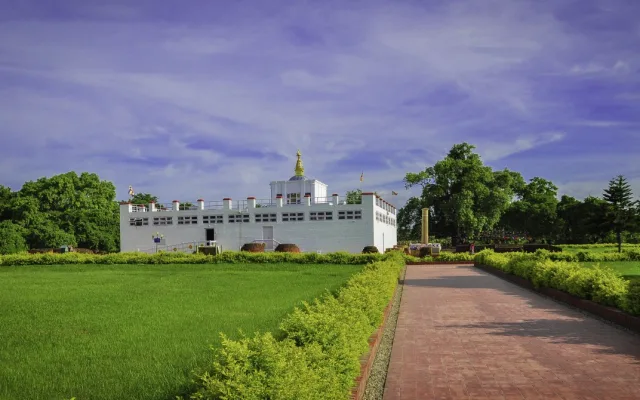
The birthplace of the Buddha and a UNESCO site — the sacred Maya Devi garden and monasteries built by countries worldwide.
見どころ
#Everest: The highest point on earth, and the pilgrimage every mountain obsessive dreams of. The trek to Base Camp takes about two weeks and demands serious preparation. The flight into Lukla in a small aircraft is an extreme attraction in its own right.
The Annapurna Circuit: One of the world's great walks, worth doing for the sheer change of climate zones. You pass from subtropical jungle up into high-altitude desert. The Thorong La pass at 5,416 metres is the trial that defines the route.
Boudhanath Stupa: An enormous Buddhist shrine in Kathmandu, best seen at sunset. Hundreds of monks and pilgrims circle it constantly to the sound of mantras. It is the spiritual heart of the Tibetan community and the most photogenic place in the city.
Pashupatinath: The place to go if you want to understand Hindu culture and tradition. Open-air cremations are performed on the banks of the Bagmati river. The atmosphere is confronting, but it is essential to grasping how life and death work here.
Swayambhunath: An ancient hilltop temple with a full panorama of the capital, easily done in a morning. It is called the Monkey Temple for the hundreds of brazen primates living around its base. Buddhist stupas and Hindu shrines sit peacefully side by side.
Chitwan: A lowland national park, worth a trip for jeep safaris through the jungle. You can get close to one-horned rhinos and, with luck, Bengal tigers. It is a fine way to swap mountain scenery for genuine tropical wilderness.
物価
#Currency: The Nepali rupee is pegged to the Indian rupee. Money changers in Thamel are everywhere, and dollars and euros are swapped quickly at a fair rate on every corner.
Cards: Visa and Mastercard work only in the bigger towns, and Amex barely at all. There are no terminals in the mountains, so withdraw cash with a healthy margin before you set off on any trek.
ATMs: Nabil Bank machines are the most reliable. Note that nearly every ATM charges a fee of around 500 rupees per transaction, so take out larger amounts less often and use a Wise or Revolut card to avoid the extra conversion markup.
Bargaining: In gear shops and souvenir stalls, knock at least a third off the asking price. Sellers build an outrageous tourist margin into their first number.
Tipping: Guides and porters are tipped at the end of the trek. The usual measure is roughly the equivalent of a couple of days of their pay for the whole route.
Banknotes: Indian 500 and 2,000 rupee notes are officially banned in Nepal. Never accept them as change from money changers in the border districts.
| Item | Price (USD) |
|---|---|
| Dal bhat in a cafe | 3.5 |
| Momo (10 pieces) | 1.8 |
| Bottle of water in the mountains | 2.5 |
| Night in a teahouse | 5.0 |
| Everest beer | 4.2 |
| Taxi from the airport | 6.0 |
| Cappuccino | 2.2 |
| Local SIM card | 2.0 |
| Licensed guide, per day | 30.0 |
| Porter, per day | 20.0 |
| Paid internet on the trail | 4.0 |
| Charging a phone at a lodge | 2.0 |
| Hot shower on trek | 3.5 |
| Masala tea | 0.6 |
| Durbar Square entry ticket | 8.0 |
移動手段
#Getting here: Tribhuvan airport in Kathmandu is the only international gateway, reached from Europe with a single change in Doha, Dubai, Istanbul or Delhi, and from North America usually via a Gulf hub or Bangkok. Fares peak in October and November and again in spring, so book those windows months out.
Buses: Tourist coaches link the main towns and tickets are sold in any agency. They are more comfortable and safer than the local services. Kathmandu to Pokhara takes about eight hours thanks to endless roadworks and jams.
Taxis: In the cities use the Pathao or InDrive apps so you can see an honest fare. A motorbike taxi cuts through the gridlock faster and costs about a third of a car. Street taxi drivers quote foreigners double as a matter of routine.
Domestic flights: Small aircraft are the only quick way into Lukla. Mountain flights are frequently grounded by weather for days on end. Always leave slack before your international departure from Kathmandu.
Driving and rickshaws: Traffic keeps to the left and is chaotic, and hiring a car without a local driver is a poor idea given the road surfaces and the local etiquette of who yields. Cycle rickshaws in the lanes of Thamel are more of a novelty than a convenience, with a negotiable and usually inflated price.
Airport transfer: The simplest way into the centre on arrival is a prepaid taxi. The payment desk sits right at the terminal exit, which removes any scope for haggling or being fleeced.
宿泊
#Guesthouses: The most practical format for an independent traveller. There are hundreds in the tourist districts, and you can walk in off the street and ask to see a room. Always check for hot water and working sockets before you agree.
Teahouses: The mountain lodges on the trekking routes offer extremely modest conditions. Walls are often thin plywood and the toilet is shared at the end of the corridor. Rooms are bitterly cold in winter, so a warm sleeping bag is non-negotiable.
Monasteries: Some Buddhist centres let you stay in a simple cell. It is the best way to sink into silence and meditation. Conditions are spartan but the atmosphere is unique and worth a couple of nights.
Booking: The big platforms carry only a fraction of what exists. The best places are often found on the ground, on the recommendation of other backpackers or simply by looking.
The trekking deal: Up in the mountains a bed often costs almost nothing on the condition that you eat in the lodge's own dining room. Decide to have dinner elsewhere and the price of that bed multiplies.
Neighbourhoods: In Kathmandu it is worth sleeping away from the main Thamel roads for the sake of quiet. The Boudhanath area suits anyone looking for calm and comfort.
食事
#Dal bhat: The foundation of every Nepali diet, and you will come to love it within days. Rice, lentil soup and vegetables come with unlimited refills. On the trail it is the safest and most nourishing choice and the fuel that gets you up the hill.
Momo: The legendary Nepali dumpling, filled with vegetables or buffalo meat. They are steamed or fried until crisp. The best momo often come from tiny local joints where only Nepalis are eating.
Thukpa: A thick, restorative Tibetan noodle soup that warms you right through. It is the perfect thing after a long day walking at altitude. It comes both vegetarian and with finely chopped meat.
Water: Never drink untreated water and never take ice in a drink. Buy sealed bottles or use a proper filter and chlorine tablets.
Street food: Try chatamari, the Nepali take on pizza built on a rice flour pancake. Fried chowmein noodles are just as popular, cooked in front of you. It is cheap, fast and surprisingly good even at the humblest stalls.
Breakfast: The typical mountain morning is porridge or Tibetan bread. Real coffee is hard to find on the trail, so save that for the roasteries of Pokhara. And the "Dal Bhat Power 24 Hour" printed on every T-shirt is not a joke.
治安
#Altitude sickness: This is a real risk above 3,000 metres. Gain height gradually and drink plenty of water to avoid swelling. At the first sign of a severe headache or nausea, descend immediately.
Insurance: Take out a policy that explicitly covers helicopter rescue from high altitude. Without that document, getting off the mountain will cost you several thousand dollars, demanded in cash before the rotor turns.
Guides: Since 2023, walking the popular trekking routes without a licensed guide has been prohibited. A guide does more than find the path; they watch your condition when oxygen runs thin. That is the point of the rule.
Crime: Nepal is a remarkably calm country, but watch your pockets in the crush of Thamel. Do not leave valuables or cash in unlocked rooms in mountain lodges. Theft is rare, but vigilance costs nothing.
Animals: The wild monkeys around the temples can turn aggressive and can carry rabies. Do not show them food and do not try to interact. Keep your distance and never provoke them with shouting or sudden movements.
Traffic: Pedestrians have no priority whatsoever in the cities. Cross with real care even at a marked crossing. On mountain roads keep rockfall in mind, especially after heavy rain, and check your own government's travel advisory before you travel.
マナーと文化
#Greeting: A simple "Namaste" with palms pressed together works wonders and opens every door. It signals deep respect for the person and their culture. Smile back when locals greet you, because they mean it.
Sacred sites: Walk around Buddhist stupas and mani walls clockwise, always. This is a fundamental rule and it is not bent. Take your shoes off before entering any Hindu temple or private home.
Etiquette: The left hand is considered unclean, so pass food and money with the right. Never touch a Nepali's head, not even a small child's. In local tradition the head is the most sacred part of the body.
Dress: At holy sites, shoulders and knees must be fully covered. Travelling in revealing clothing draws silent disapproval, especially in conservative villages. Respect the local instinct for modesty.
Photography: Always ask before pointing a camera at a resident or a monk. At the cremation ghats shoot with maximum delicacy, staying out of the way and never intruding on a family's grief.
Festivals: Nepal runs on its own calendar and its festivals are loud affairs. The great autumn festival of Dashain can paralyse transport for a week. Factor that in when you plan your route through the country.
通信・インターネット
#Local networks: Nepal has two leaders, Ncell and NTC (Namaste). Ncell gives excellent 4G in the cities, while NTC holds a signal better in deep valleys.
Buying a SIM: Get one at the airport for around 200 rupees. You need your passport and a photo. A 28GB data bundle runs about 600 rupees.
Wi-Fi on the trail: Teahouse internet is almost always paid, from two to five dollars. On the Everest route look for Everest Link cards, which hold up better at altitude.
Charging: Sockets in the lodges are charged for, two to three dollars a go, so a heavy-duty power bank is essential. Signal frequently disappears above 4,000 metres.
eSIM: eSIM options are gradually appearing, and providers like Airalo cover Nepal, but a physical SIM is still more practical because you can top it up by USSD code in remote villages.
Language and apps: English is widely spoken in Kathmandu, Pokhara and along the trekking routes, and menus and signs in tourist areas are usually bilingual. For taxis install Pathao or InDrive, where the fare is half the street price, and download offline Maps.me, which carries the trails.
会話集
#| English | Nepali | Pronunciation |
|---|---|---|
| Hello | नमस्ते | nah-mas-TAY |
| Thank you | धन्यवाद | dhahn-yah-BAAD |
| How much is it? | कति हो? | KAH-ti ho? |
| Expensive | महँगो | ma-HAN-go |
| Cheap | सस्तो | SAS-to |
| Where is the toilet? | शौचालय कहाँ छ? | shau-CHA-lai ka-HAAN cha? |
| Yes / No | हो / होइन | Ho / HO-ee-na |
| Help! | मद्दत गर्नुहोस्! | mad-DAT gar-nu-HOS! |
| I don't understand | मैले बुझिन | MAI-le bu-JHI-na |
| Water | पानी | PAA-nee |
| Food | खाना | KHAA-na |
| OK, fine | ठीक छ | Theek cha |
| Very tasty | धेरै मिठो | DHE-rai MI-tho |
| Left / Right | बायाँ / दायाँ | BAA-yaan / DAA-yaan |
| Hotel | होटेल | ho-TEL |
| Friend | साथी | SAA-thee |
| Big brother (polite address) | दाई | Dai |
| Dal bhat power! (slang) | दाल भात पावर | Dal bhat POW-er |
| Sorry | माफ गर्नुहोस् | Maaf gar-nu-HOS |
| Slowly | बिस्तारै | bis-TAA-rai |
| Beautiful | राम्रो | RAAM-ro |
| Let's go | जाऔं | JA-aun |
役立つ情報
#Gear: Almost everything you need for a trek can be bought or rented in Thamel for very little. The quality of the counterfeit brand kit is perfectly adequate for a single route. Do bring your own broken-in boots, though, because new ones will shred your feet.
Sun protection: At altitude the ultraviolet burns you even under cloud. SPF 50 and covered skin are a genuine necessity. Bring proper category 3 or 4 sunglasses for the snowy sections.
Medical kit: Pack rehydration salts, blister plasters and cold remedies you trust. Diamox helps with altitude sickness but should be a last resort rather than a routine. There are no pharmacies in the mountains and the range in the cities is thin.
Buffer days: Always keep two spare days at the end of the trip before your flight home. Small aircraft out of the mountains can be grounded for a week by fog or wind. Do not schedule an international flight tight against your return from a trek.
Weather swings: Nepal is a country of extreme contrasts. It can be hot in Kathmandu and a week later you will be sleeping in a down jacket. Layering is the only clothing system that works everywhere here.
Plugs and power: Sockets are types C, D and M, so bring a universal adapter. Power cuts are still common outside the main cities, which is another argument for that power bank.
よくある質問
#Most nationalities need a visa, and it is very easy to obtain on arrival at Tribhuvan airport. You choose 15, 30 or 90 days and pay the fee in cash US dollars on the spot. Filling in the online form on the official immigration site in advance speeds up the queue considerably, and you should always check your own passport's rules first.
No. Under rules in force since April 2023, independent trekking is banned on most of the popular routes. Foreign visitors must hire a licensed guide through a registered agency, and this is checked at the numerous checkpoints inside the national parks.
A one-way ticket for a foreign visitor runs around 257 US dollars. Because of congestion at the capital's airport, peak-season flights are often moved to Manthali instead. Book months ahead, since demand in season is enormous and seats vanish quickly.
For Himalayan trekking the state operator Namaste (NTC) is the better choice, with the widest coverage in remote districts. Ncell performs well in cities and tourist valleys but falters at height. Either way, above 4,000 metres a stable signal is rare on any network.
Budget at minimum 40 to 50 dollars per person per day for an economical trek. That covers food, a simple teahouse bed, the mandatory guide and the permits. Domestic flights, insurance and gear purchases are separate and substantial line items.
October and November are ideal, when the sky is at its clearest and the peaks are sharp. Spring, March to May, is also good, with rhododendrons flowering in the forests, though haze can build in the air. Summer brings the monsoon, when roads wash out and the mountains disappear into cloud.
Cards are taken only in larger hotels and restaurants in Kathmandu and Pokhara, often with a surcharge of a few percent. The moment you leave the cities for the trail, Nepali rupees in cash are the only currency. Withdraw what you need from a Kathmandu ATM before heading up.
You need a specialist adventure policy covering activity up to 6,000 metres. The critical clause is helicopter evacuation, because that is the only way off the mountain if altitude sickness hits. Read the terms carefully, since standard travel policies routinely exclude high-altitude trekking.
Yes, but with restrictions. Registration is mandatory for a drone of any weight. Flights require CAAN approval; the Himalayas and airport areas have extra limits, and trekking zones are often closed. Rules for other countries are in the drone ranking by country.
Yes — renting a car requires an international driving permit alongside your national licence. Traffic drives on the left. Car rental starts at 18. An IDP is required. Mountain roads are demanding and motorcycle rental is popular for the Annapurna routes. Rules for other countries are in the driving and rental table.
You can rent a bike, but you need an international driving permit. Crucially, your licence must include category A. Category B is not enough — this is what catches most riders out. A helmet is compulsory. Bike rental usually starts at 18. Rules for other countries are in the driving and rental table.
Calm by world standards: serious incidents involving tourists are rare. Intentional homicides: 2.13 per 100,000 a year (UNODC, 2020 data). On the Transparency International corruption index the country ranks 109 of 180 — expect shakedowns from police and officials. Road deaths run at 16.3 per 100,000 a year — traffic is more dangerous here than crime. Do not drink tap water — stick to bottled. Police — 100, ambulance — 102. Ratings for other countries are in the safety table.
更新日
The data on this page goes out of date. Visa rules and permitted stays, border requirements, prices and budgets, transport and local conditions all change fast, and we do not re-check every page every day. We show the date of our last check where we have one, but before you travel, verify with official sources: the country’s consulate, its immigration service, its e-visa portal and your carrier.