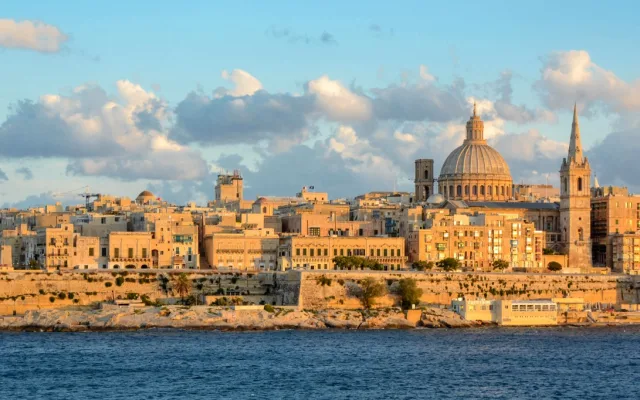
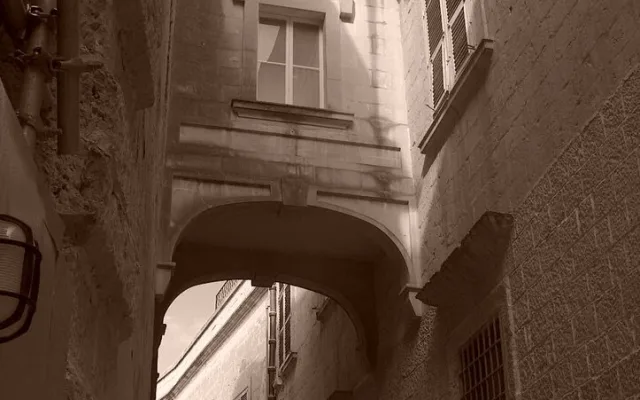
Description
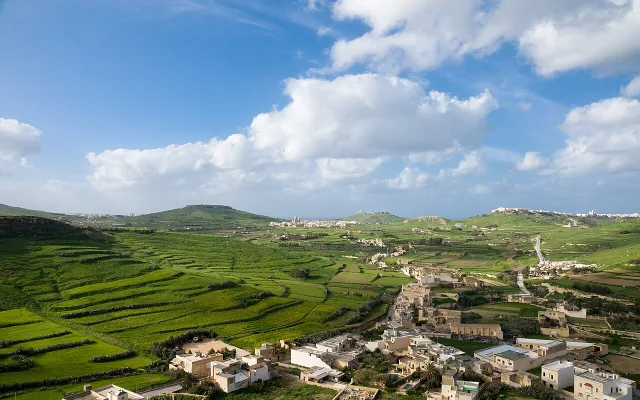
The capital of Gozo island — a 16th-century citadel and idyllic villages.
Wiki
Victoria is the main town of Gozo, the second-largest island in the Maltese archipelago. Small in size but rich in history, it grew up around a fortified hilltop citadel that commands views over almost the entire island, and serves as the transport, commercial and cultural heart of Gozo.
History of Victoria
A settlement on the site of the present town dates back to antiquity: the citadel hill was inhabited in the Bronze Age, and during the Roman period a fortified centre stood here. In the Middle Ages a town grew up around the fortress, which locals called — and still call — Rabat in Maltese. In 1551 the town suffered a catastrophe: an Ottoman fleet sacked Gozo and carried off almost the entire island population into slavery. Afterwards the Knights of the Order of St John rebuilt and strengthened the fortifications. The modern name was bestowed in 1897, when the town was renamed Victoria to mark the Diamond Jubilee of Queen Victoria's reign, though the local name Rabat has remained in everyday use.
Overview of Victoria
Victoria sits at the centre of Gozo, making it a natural hub from which bus routes fan out to every village and bay on the island. The town divides into two parts: the historic Citadel on the high ground, and the bustling lower town centred on It-Tokk Square (Independence Square), where daily life hums and a market is held. Despite its status as the island's capital, Victoria remains intimate: narrow streets, Baroque churches and low-rise buildings create the atmosphere of a traditional Mediterranean town.
Interesting facts about Victoria
- For centuries the Citadel was the only refuge: until the 17th century, Gozitans were required by law to shelter within its walls at night.
- The town is home to two rival opera houses — the Aurora and the Astra — each linked to its own music club.
- The dome of the Cathedral inside the Citadel is not real: a flat ceiling has been painted to create the illusion of a full dome when viewed from below.
Exploring Victoria
A good place to start is It-Tokk Square, from which narrow streets climb up to the Citadel gate. Inside the fortress you will find quiet lanes, viewing terraces on the bastions and a panorama of the island stretching across hills, fields and sea. In the lower town it is worth visiting the Basilica of St George — an ornate Baroque church tucked into the old quarters — and strolling through the Villa Rundle Garden, a green oasis on the edge of the centre.
Sights of Victoria
The Citadel
The defining landmark and symbol of Victoria is this fortified hilltop town. Restored bastions, gates and ancient houses stand alongside museums and the Cathedral. From the ramparts you can see virtually all of Gozo spread out below.
Cathedral of the Assumption
The Baroque cathedral inside the Citadel was built at the turn of the 17th–18th centuries to a design by Lorenzo Gafà. It is famous for its painted trompe-l'œil dome — an illusion created by an artist on a flat ceiling.
Museums of the Citadel
Within the fortress walls there are several small museums: archaeological, natural history and ethnographic collections, as well as the old prison with historical graffiti scratched onto the walls of its cells.
Basilica of St George
A richly decorated church in the lower town, noted for its marble furnishings and gilded interior details.
Weather in Victoria
The climate is Mediterranean: summers are hot and dry with plentiful sunshine, winters mild and wet. The best time to visit is spring or autumn, when the heat is not oppressive and the island is covered in greenery and wildflowers.
Beaches near Victoria
The town itself lies inland, but the coast is never far away.
- Ramla Bay — a wide beach with distinctive reddish-golden sand.
- Xlendi — a sheltered bay with a waterfront, cafés and easy access to the water.
- Marsalforn — a popular seaside village to the north of Victoria.
5 things to do
- Climb the Citadel bastions for a panoramic view of all of Gozo.
- Look up at the painted trompe-l'œil dome of the Cathedral.
- Browse the market and soak up the atmosphere of It-Tokk Square.
- Visit the museums of the old fortress and the historic prison.
- Head to the red sands of Ramla Bay or the sheltered cove at Xlendi.