Description
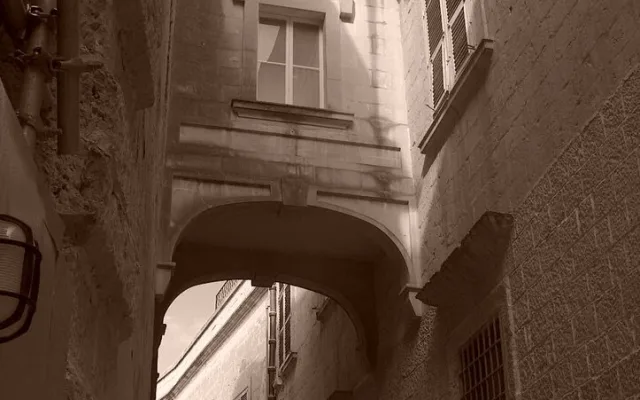
The Silent City — Malta's ancient fortified former capital, with narrow lanes and sweeping views from the bastions.
Wiki
Mdina is one of Malta's oldest cities, set on an elevated plateau in the centre of the main island. The hush that reigns within its fortified walls has earned it the nickname the Silent City. Its formal title, granted in the 15th century, is a different thing: Città Notabile, "the noble city".
History
Settlement on this hill dates back to remote antiquity. The Phoenicians, and later the Carthaginians, recognised the strategic value of a point from which much of the island could be surveyed. Under the Romans the city was known as Melita and served as Malta's administrative centre. The city received its present name during the period of Arab rule (9th–11th centuries): it was the Arabs who enclosed the settlement with strong fortifications and separated it from the suburb by a deep ditch, and the word "mdina" derives from the Arabic term for a walled city.
In the Middle Ages the Maltese nobility held court here, and Mdina remained the capital until the arrival of the Knights of the Order of St John in 1530. The Hospitallers moved the centre of power to the Grand Harbour, where Valletta later grew up, and the old capital gradually declined in importance. The devastating earthquake of 1693 damaged many of its buildings, after which the city was largely rebuilt in a Baroque spirit layered over its medieval foundations.
Architecture and Atmosphere
Mdina is small: only a few hundred people live within the walls, and vehicle access is strictly restricted — which is precisely what creates that distinctive silence. The layout of narrow, deliberately winding lanes is a legacy of the Arab and medieval periods: the crooked alleys confused attackers and provided shelter from wind and heat.
Key landmarks:
- Main Gate (Mdina Gate) — the grand Baroque entrance of the 18th century, decorated with coats of arms; widely recognised from its appearances in film and television.
- St Paul's Cathedral — the cathedral church rebuilt after the earthquake by architect Lorenzo Gafà. According to tradition, it stands on the site where the Apostle Paul, shipwrecked here, met the Roman governor Publius.
- Noble Palaces — Palazzo Falson, Palazzo Vilhena, and other residences of ancient Maltese families, some of which are open to visitors.
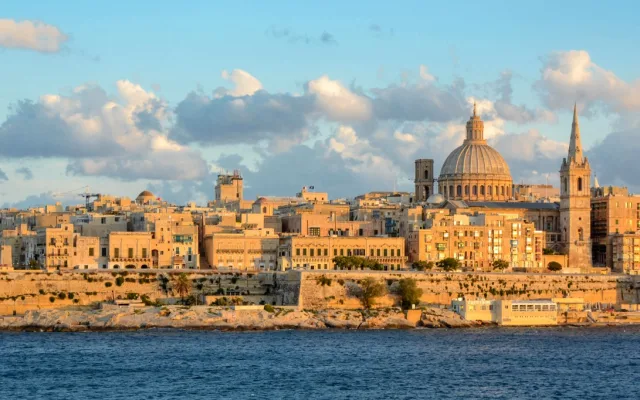
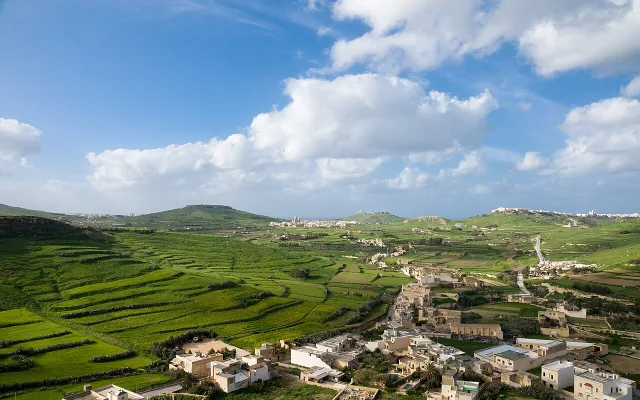
- Bastions — from the fortified walls on the northern and eastern sides a panorama opens up across a good half of the island: fields, villages, and on a clear day the Grand Harbour with Valletta.
The walls connect seamlessly with the neighbouring town of Rabat, which was historically Mdina's suburb and to which most of the population was gradually relocated over time.
What to See in a Day
One day is enough to explore the city at a leisurely pace. A sensible route is to enter through the Main Gate, walk along the central street to the cathedral square, visit the cathedral and the adjoining museum, then turn off into the maze of lanes and make your way to the bastions for the panoramic walk. The small private museums and thematic exhibitions devoted to daily life in the Knights' era and medieval crafts also deserve a look.
It is worth setting aside time for neighbouring Rabat: it is home to the Catacombs of St Paul and St Agatha — early Christian underground necropolises — as well as grottos associated with the legend of the apostle. Many travellers combine both towns in a single trip.
Food and Drink
Within the old walls and in Rabat, cafés and restaurants serve traditional Maltese food. The culinary emblem of the area is pastizzi, flaky pastries filled with ricotta or mushy peas. Also popular are ftira — a local flatbread sandwich — and timpana, a baked macaroni pie enclosed in pastry. To drink, visitors are offered herbal liqueur and local wines. A particular local custom is coffee or tea enjoyed with a view of the surroundings, which draws visitors specially in the afternoon.
Practical Information
- Getting there. Mdina stands inland, roughly in the centre of Malta. Public buses run here from Valletta and the coastal resorts; the journey takes around half an hour. By car it is convenient to drive to Rabat, where the car parks are, as access to the historic core is restricted.
- When to visit. Spring and autumn are the most comfortable seasons, free from the summer heat. Early morning and late afternoon are when the city is at its quietest and best for photography — during the day more tour groups arrive.
- What to keep in mind. The streets are paved with stone and slope in places, so comfortable footwear is advisable. The cathedral and some of the palaces are functioning religious or museum sites with their own opening hours, which it is worth checking in advance.
Compact but rich in history, Mdina offers a coherent overview of Malta's past: in a few hours you can trace the journey from the Phoenicians and Romans, through the Arab Middle Ages, to the Baroque of the Knights' era.