 Города и дороги
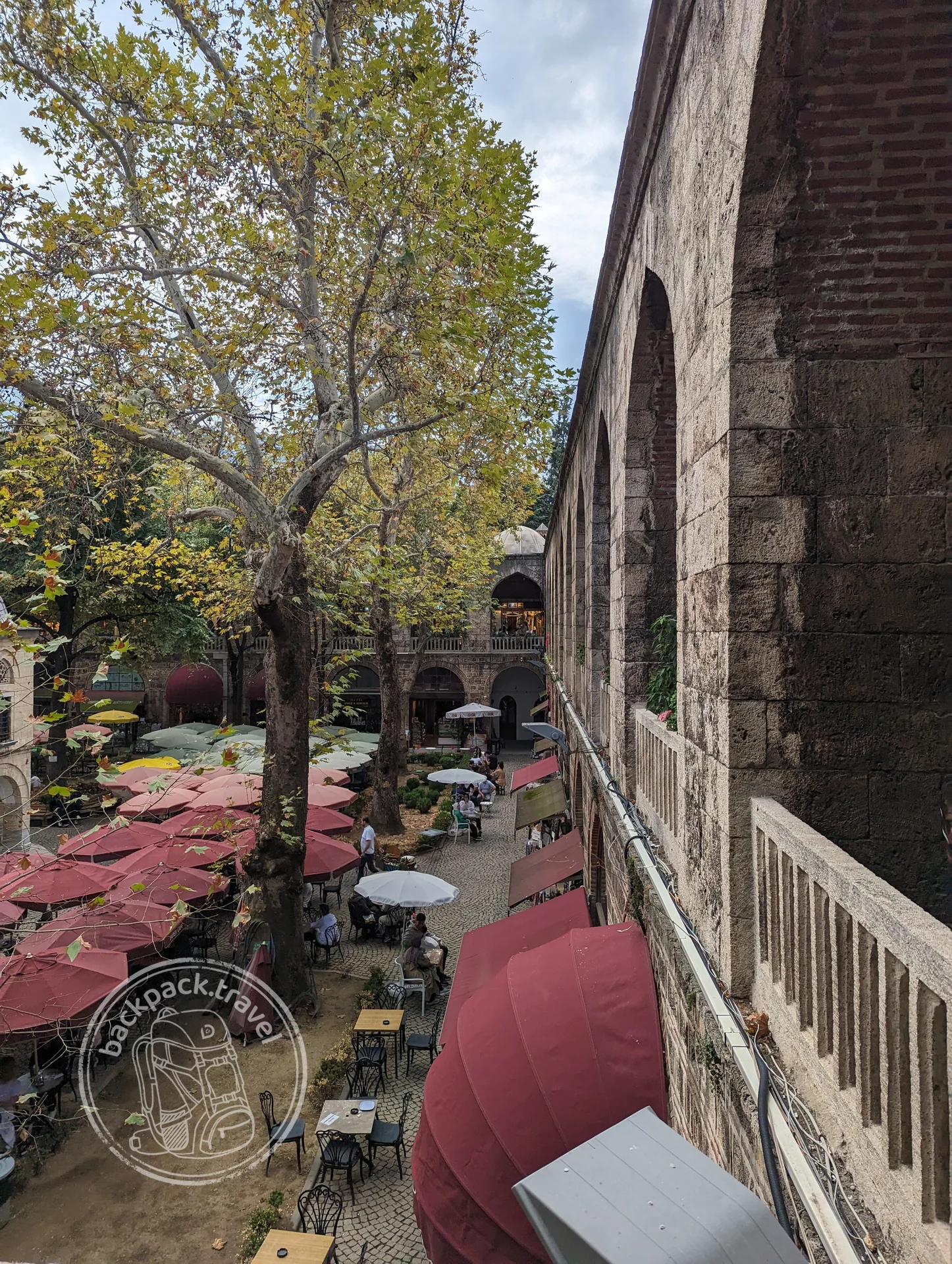
Koza Han was built in 1490-1491 by order of Sultan Bayezid II: the income from the caravanserai went to the upkeep of his mosque in Istanbul. The name translates as the house of cocoons and describes its purpose, for centuries silk cocoons brought in from the surrounding villages were traded here, and Bursa remained the main silk centre of the Ottoman Empire. The building follows the classic han layout: a rectangular courtyard ringed by a two-tier arcade, with storerooms and shops below and rooms for merchants above. There are about a hundred rooms in all, more than half of them on the upper floor. In the middle of the courtyard stands a small octagonal mosque raised on piers above an ablution pool, a device typical of the large Ottoman hans. The courtyard is planted with plane trees, tea house tables are set out beneath them, and this long ago turned the han into a meeting place for the city. The silk trade has not vanished: the shops on the lower level still sell scarves and fabrics, and in spring, during the cocoon season, a fair is held in the courtyard. The han adjoins the covered market and is connected to it by a gate.
- Address
- Nalbantoğlu, Osmangazi
Lists and awards
On the map
Reviews (0)
No reviews yet. Be the first!
Updated