 Города и дороги
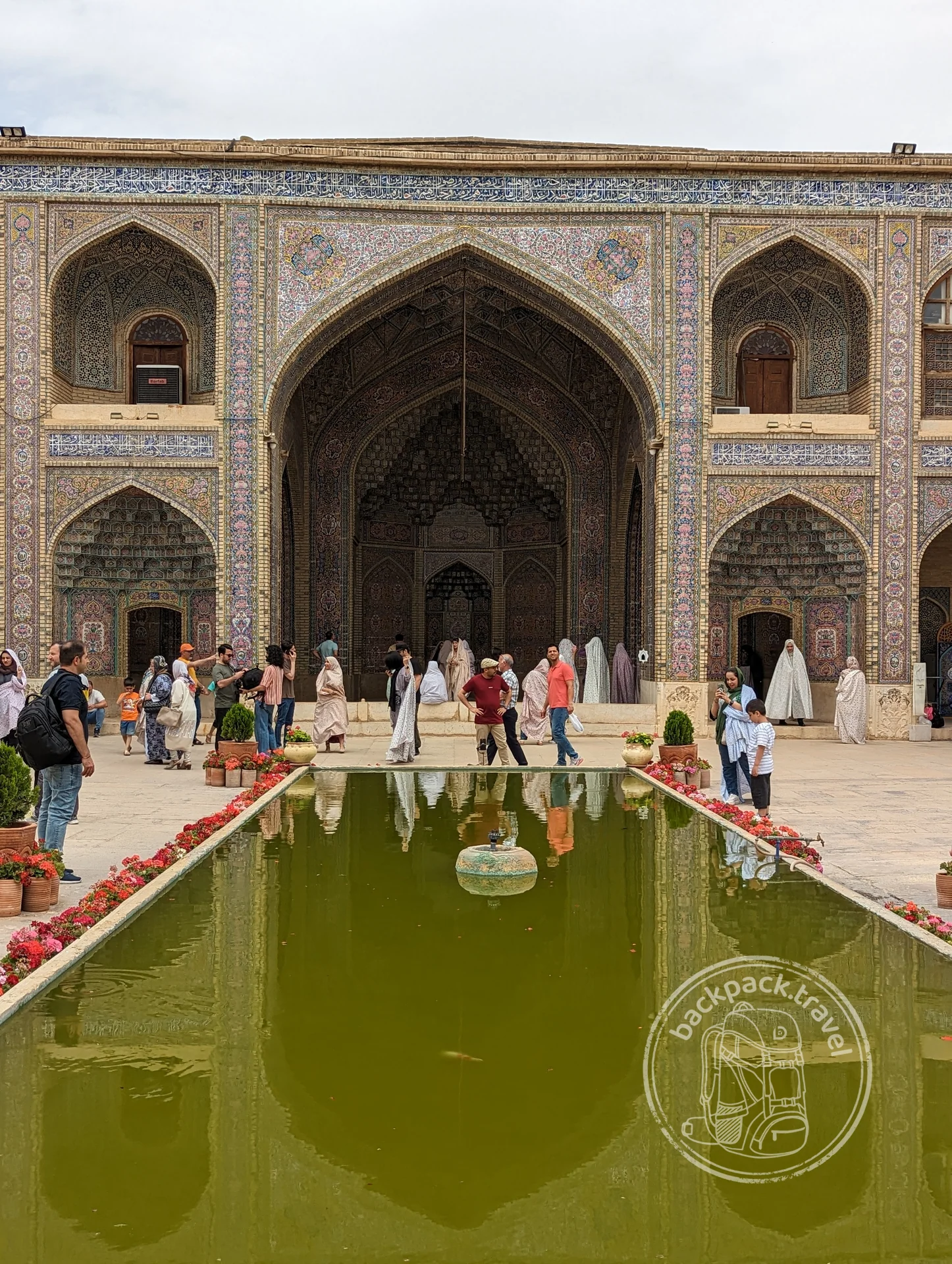
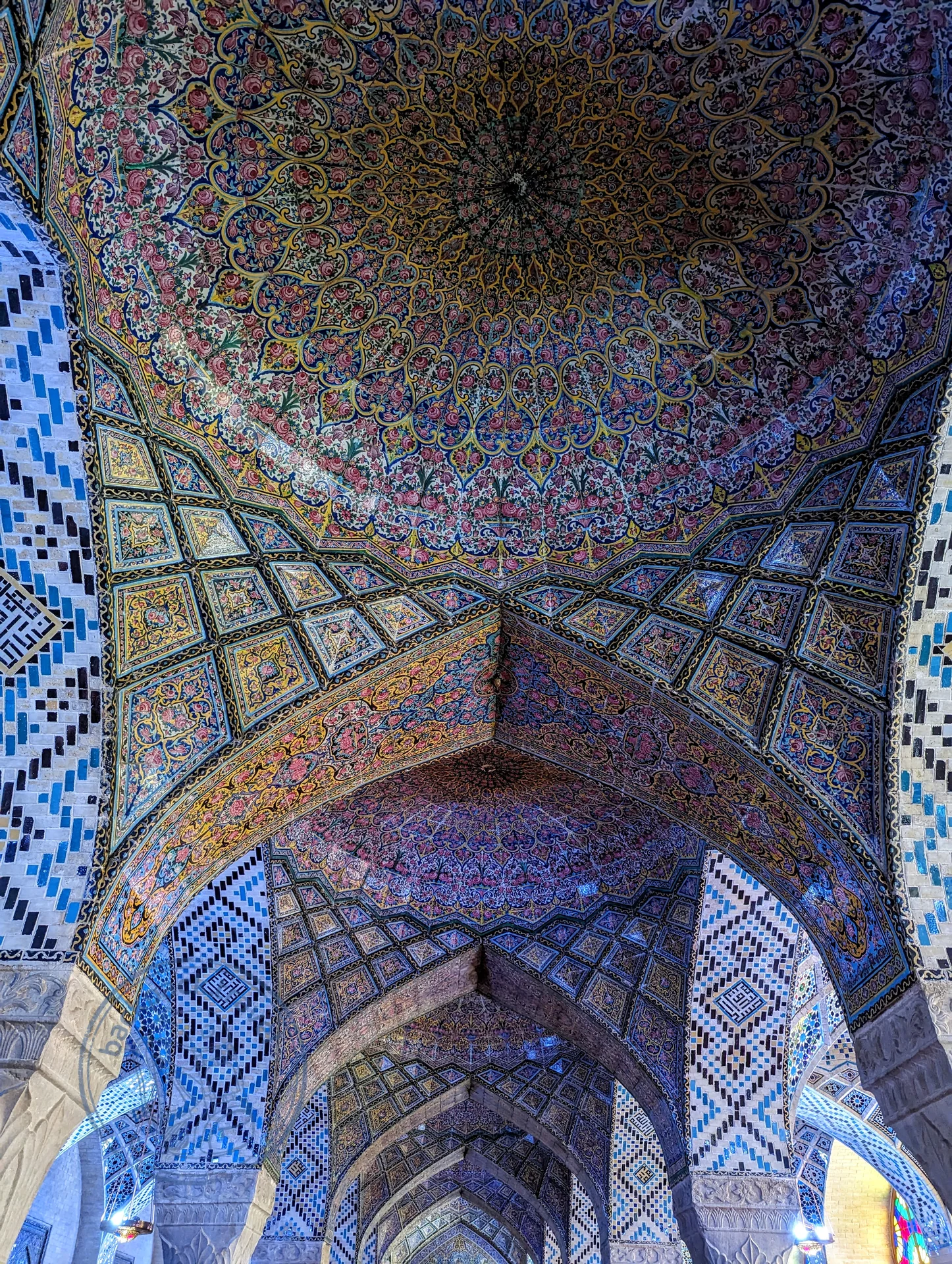
The Nasir al-Mulk Mosque was built in Shiraz between 1876 and 1888 with the money of Mirza Hasan Ali Nasir al-Mulk of the influential Qavam family. From the outside it is an ordinary mosque of the Qajar period, with iwans and a rectangular courtyard with a pool, but it is famous for the interior hall on the western side. Its windows are made almost entirely of coloured glass, and in the morning the sun projects their pattern onto the carpets and onto the twisted columns: twelve stone-carved pillars hold up the vaults of the winter prayer hall. The tilework of the facade is dominated by pink, a colour rare in Iranian architecture, which is why the mosque is called the Pink Mosque. The decoration is completed by small muqarnas vaults, panels showing vases and flowers, and painting on plaster. The mosque was designed by Mohammad Hasan-Memar and Mohammad Reza Kashi-Saz-e Shirazi. The light does not last long: the coloured patches on the floor hold until roughly mid-morning, and by midday the hall turns into an ordinary dim shabestan.
For the famous play of light you have to come early in the morning: the coloured patches from the stained glass last until about mid-morning and by midday the hall goes dark. There is an entrance fee, and that is also when the most photographers gather. The mosque is in use, so dress conservatively. Payment in cash.
- Address
- Haji Agha Razaz Alley, Shiraz
On the map
Reviews (0)
No reviews yet. Be the first!
Updated