 Города и дороги
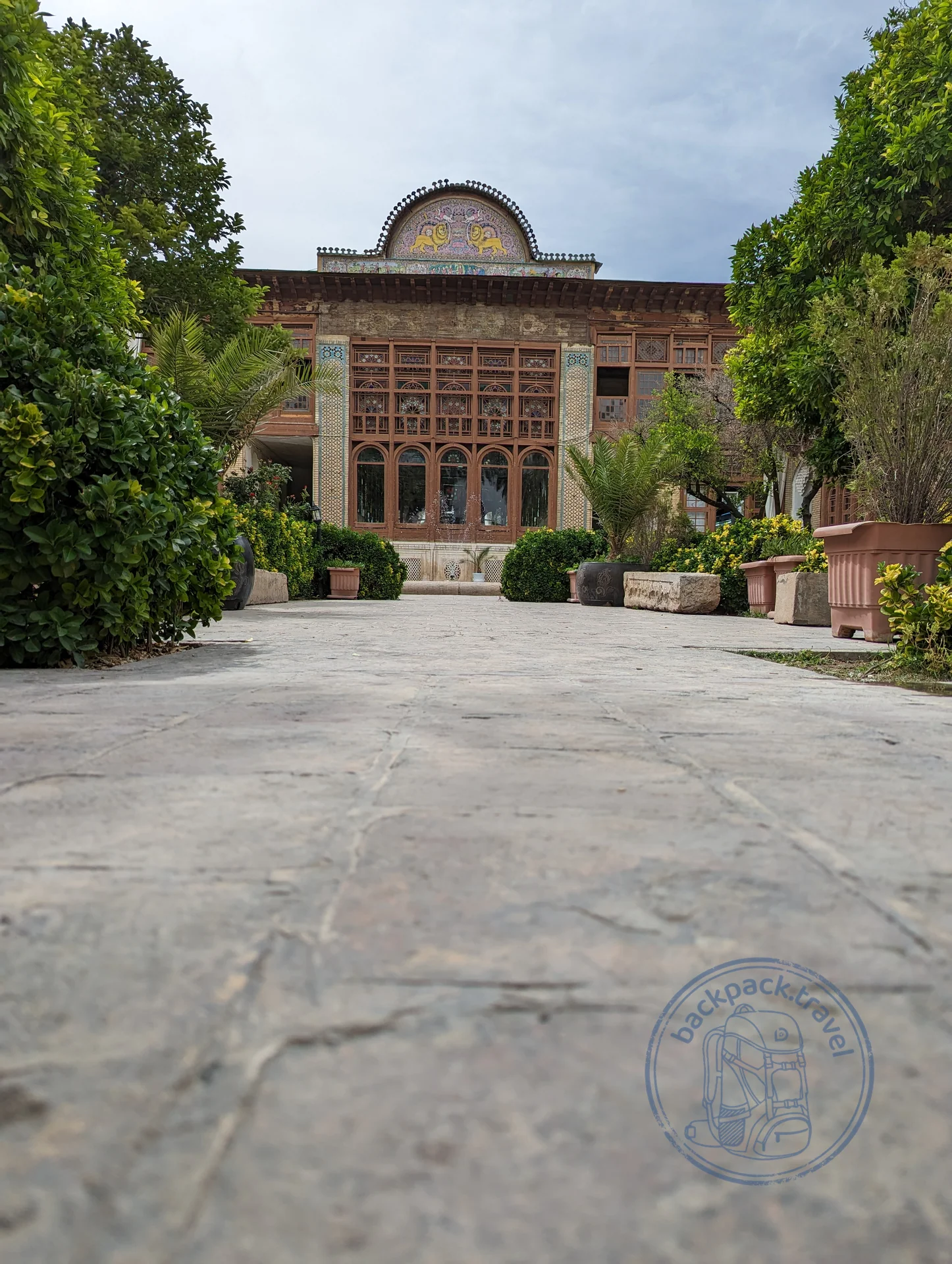
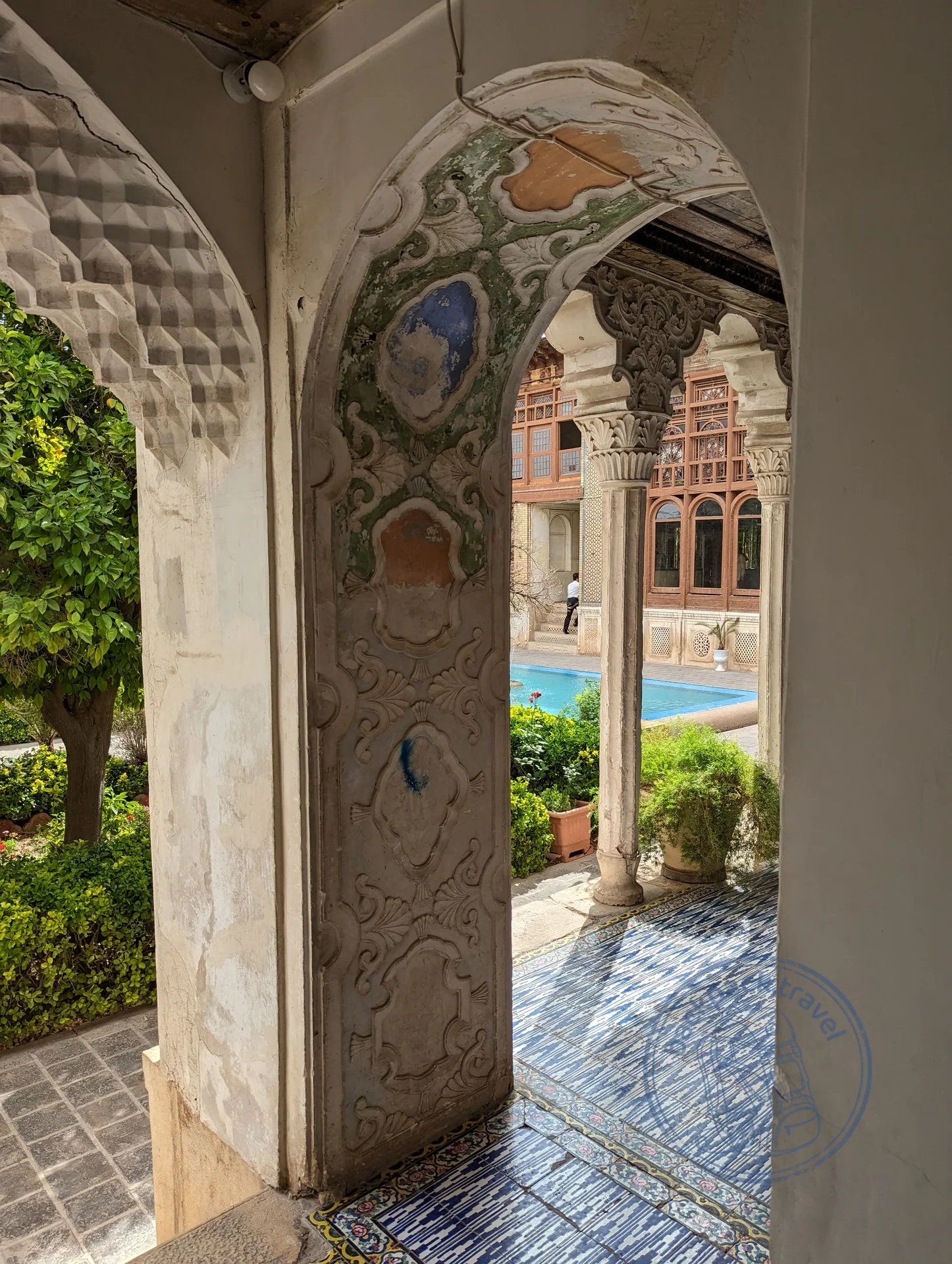
Naranjestan-e Qavam is a town mansion of the Shirazi family of Qavam al-Mulk, built between 1879 and 1886. The name means orange garden: in front of the house lies a small rectangular courtyard with a narrow pool, planted with bitter oranges, which in Shiraz blossom at the end of winter. The main building is a formal pavilion with an open veranda, where wooden latticed windows and mirrored ceiling work are combined with paintings on European subjects: in Qajar times borrowed motifs were readily brought into Persian decoration. Above the entrance is a tiled composition with a lion and sun, the emblem of the Iranian monarchy. The inner rooms are painted with floral and landscape panels, the floors are laid with tiles, and some of the halls are finished with fine mirror mosaic. In the 1960s the house was occupied by the Asia Institute under the art historian Arthur Upham Pope, and foreign researchers of Iranian architecture worked here. Today the mansion is open as a museum.
The mansion is open as a museum and there is an entrance fee; it is at its best at the end of winter, when the bitter oranges are in bloom in the courtyard. It stands in the centre of Shiraz, next to the other houses of the Qavam family. Payment in cash.
- Address
- Nasir Nezam Alley, Shiraz
On the map
Reviews (0)
No reviews yet. Be the first!
Updated