 Города и дороги
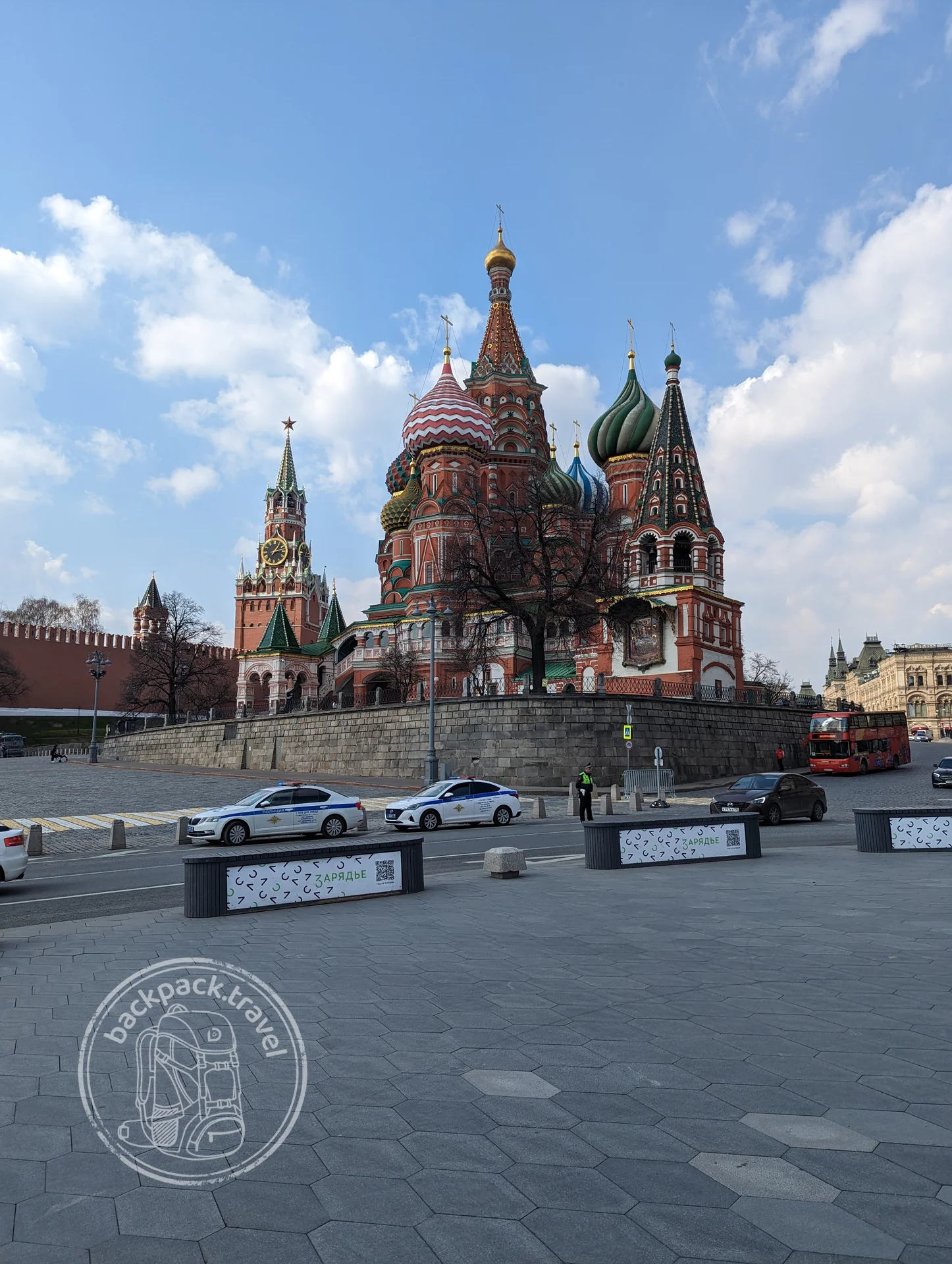
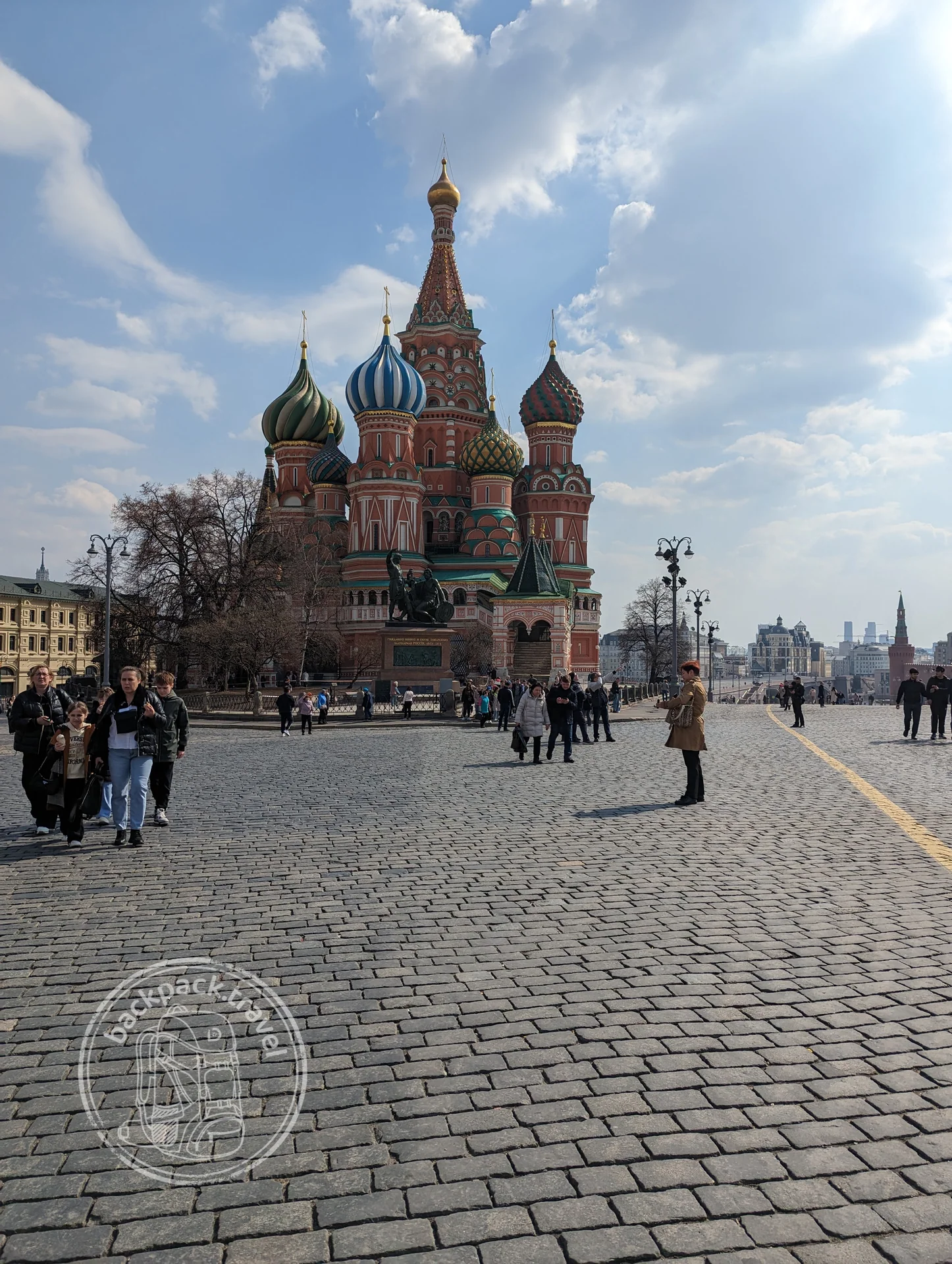
The Cathedral of the Intercession, known the world over as Saint Basil's Cathedral, stands at the southern end of Red Square, right by the slope down to the Moskva River. It was built between 1555 and 1561 on a vow made by Ivan the Terrible after the taking of Kazan: each chapel is dedicated to the saint whose feast day fell on one of the campaign's victories. Since 1990 it has been on the UNESCO World Heritage list together with the Kremlin and Red Square.
Nine churches on one base
Instead of a single building the architects raised nine separate churches on a shared undercroft: the central tented pillar of the Intercession, about sixty-five metres high, is ringed by eight towers linked by an outer gallery. Chronicle tradition names the builders as Barma and Postnik, who by one reading are the same man, Postnik Yakovlev, later responsible for the walls of the Kazan Kremlin. There is no large interior hall: the churches are cramped and the passages narrow, and the whole composition is meant to be read from outside.
Where the name comes from
The current name comes from popular veneration of the holy fool Basil, buried by the north-east wall. A tenth chapel was added over his grave in 1588, the only heated one, so services ran there all year, and the name spread to the whole cathedral.
The domes
The bright colouring of the domes came long after the original design, in the seventeenth and eighteenth centuries; at first the cathedral was white with gilded cupolas. Up close it is clear that no two domes repeat: each has its own spiral, facet or scale pattern.
Inside and out
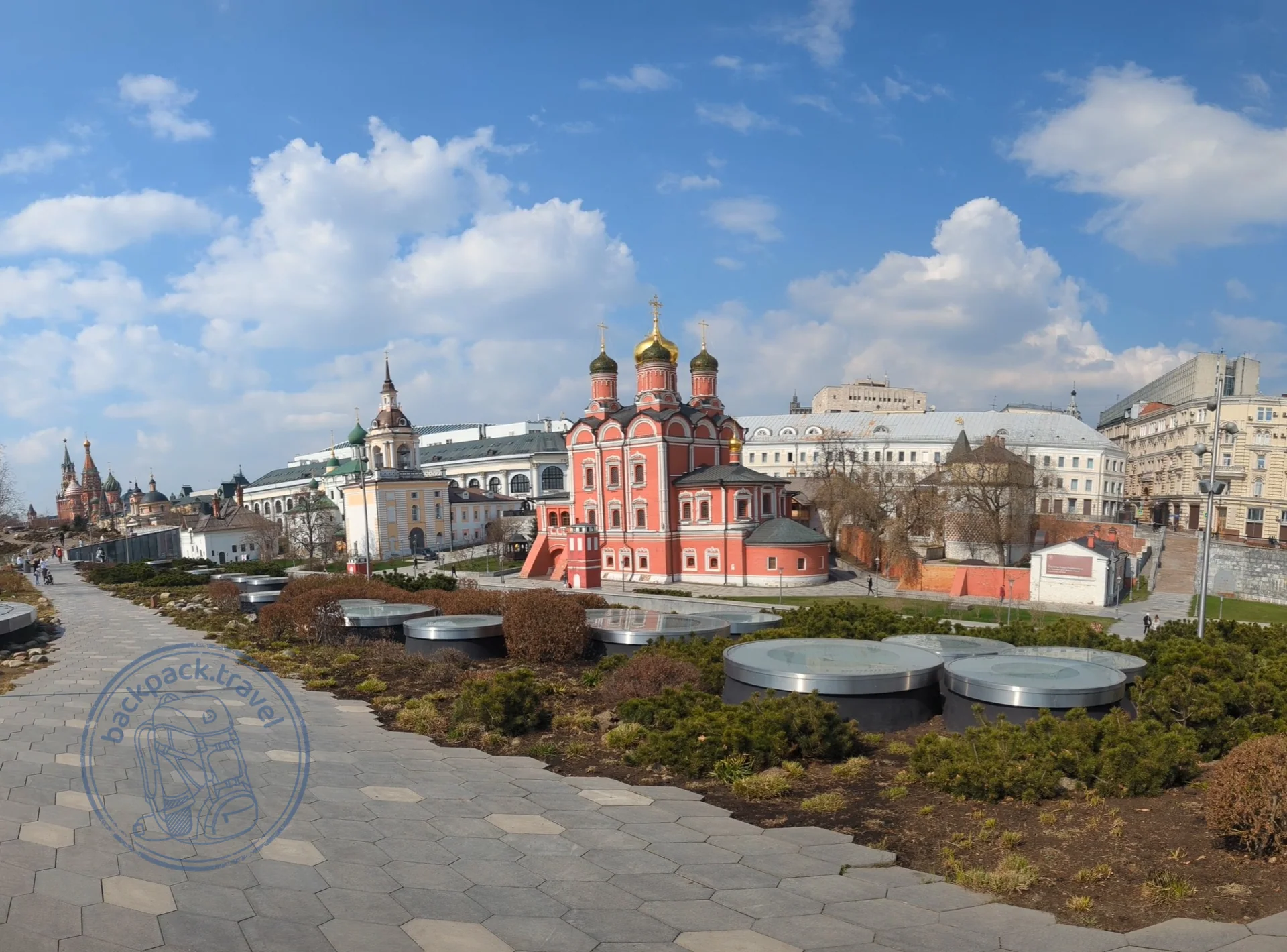
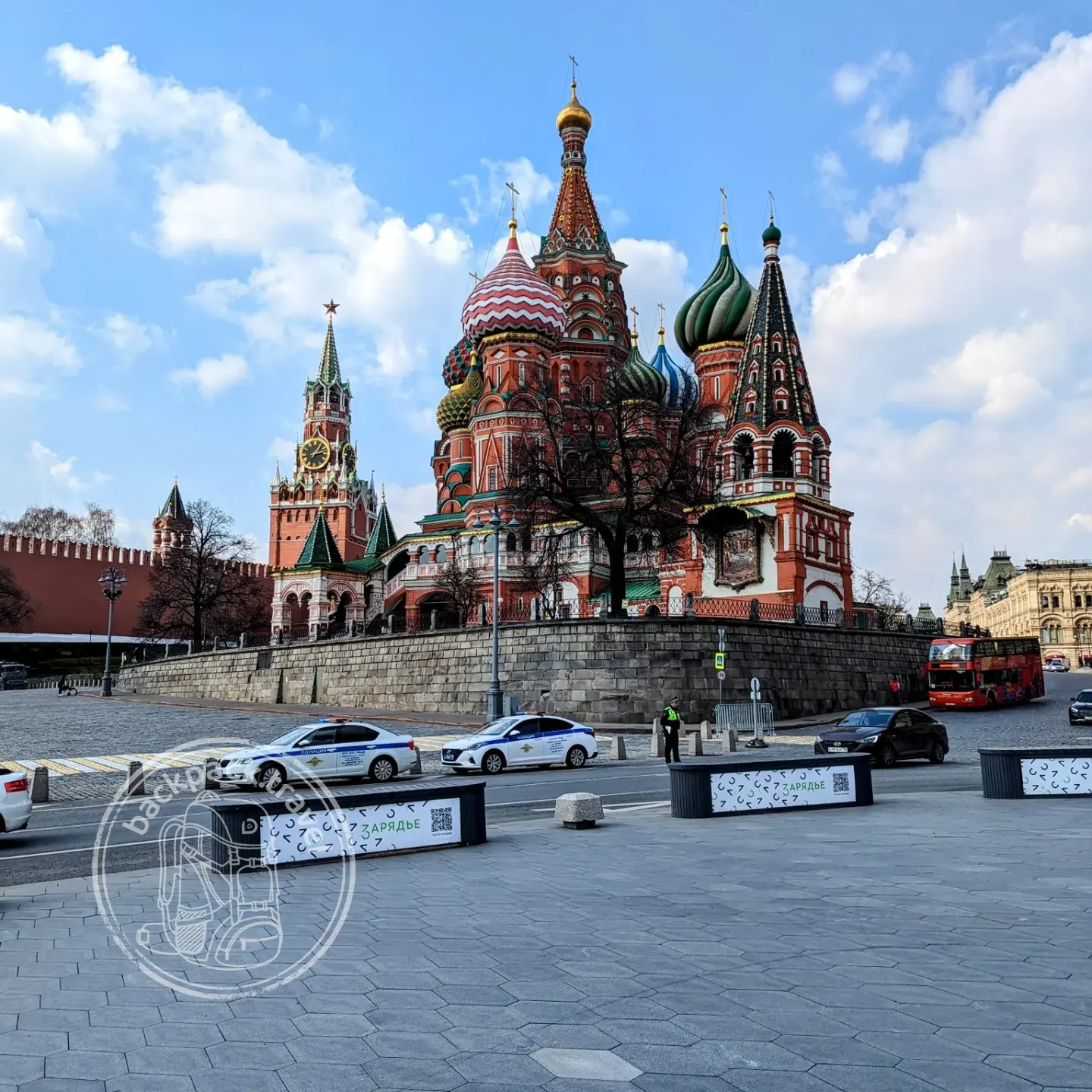
The cathedral is now a branch of the State Historical Museum and also holds services. The interiors keep their historic floors, uneven and with high thresholds, and the stairs between levels are steep. There is no heating, so it is cold inside in winter and opening hours can be cut short. From outside the best angle is from Vasilyevsky Spusk, where the cathedral reads whole against the Kremlin wall and the Spasskaya Tower.
- Address
- Red Square 7, Moscow · metro Okhotny Ryad
- Opening hours
- Daily except first Wednesday, hours vary by season
- Prices
- 700 RUB, foreign visitors 2000, ages 7–17 350
Lists and awards
On the map
Reviews (0)
No reviews yet. Be the first!
Updated