Johannesburg
South AfricaDescription
South Africa's economic heart — the Apartheid Museum, Soweto, Constitution Hill and the lively Maboneng quarter.
Wiki
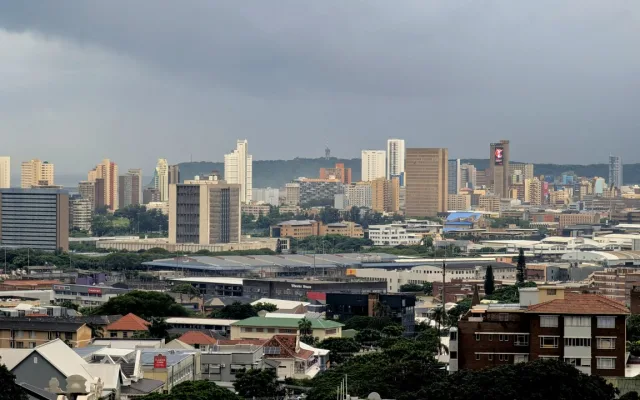
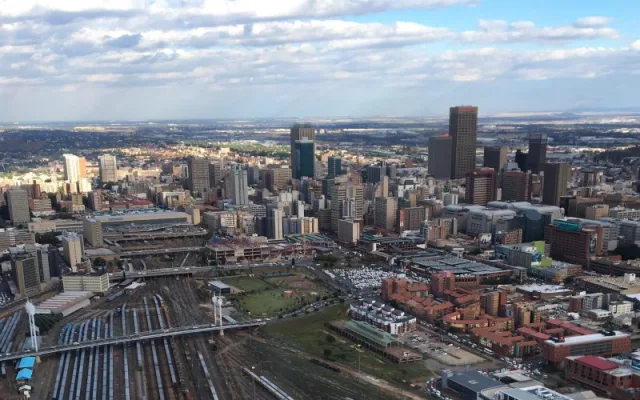
Johannesburg is the largest city in South Africa and the continent's main economic hub, grown up almost overnight after gold was found on the Witwatersrand ridge. Today it is a varied, energetic and contradictory metropolis, where the towers of the business district sit beside townships, and the memory of apartheid is interwoven with a young creative culture.
The city and its history
Around 5.8 million people live in Johannesburg and the surrounding Gauteng region, and considerably more counting the outer suburbs. The city's history began in 1886, when a prospector found gold-bearing rock; within a few years a tent camp had become an industrial centre. The traces of the gold rush are still visible: the giant mine dumps around the city are among the largest man-made hills on the planet.
Locals affectionately call it Jozi or Joburg. It stands at about 1,750 metres above sea level, so the climate is milder than you might expect in Africa: warm rainy summers with thunderstorms (November to February) and dry sunny winters with cool nights (June to August).
Main sights
- The Apartheid Museum — the key place for understanding the country. The exhibition reconstructs the system of racial segregation step by step through photographs, documents, film and personal stories; at the entrance each visitor is given a card assigning them a racial category.
- Soweto — South Africa's best-known township and a centre of anti-apartheid resistance. Tours run along Vilakazi Street, where the houses of Nelson Mandela and Archbishop Desmond Tutu stand — two Nobel laureates from one street. Nearby is the Hector Pieterson Museum, dedicated to the schoolchildren's uprising of 1976.
- Constitution Hill — a complex on the site of the Old Fort prison, through which both Mandela and Gandhi passed. The Constitutional Court of South Africa now sits here, and the blocks have been turned into a museum of human rights.
- The Maboneng Precinct — a renewed quarter in the eastern part of the centre: former warehouses and industrial buildings now hold galleries, workshops, coffee houses and weekend street markets.
- The Newtown Cultural Precinct — a cultural cluster with the Market Theatre and a jazz legacy; the district is considered one of the cradles of South African jazz.
Around Johannesburg
- The Cradle of Humankind — a UNESCO World Heritage Site about 50 km to the north-west. The Sterkfontein caves yielded the famous australopithecine remains, and the Maropeng interpretive centre stands alongside.
- Pretoria (Tshwane) — the country's administrative capital, an hour away. Here are the Union Buildings with the president's residence and the vast Voortrekker Monument.
- The Walter Sisulu Botanical Gardens and the city zoo — quiet places for a walk and for families; birds of prey nest by the waterfall in the botanical garden.
Food
The cooking reflects the country's many faces. Try braai (the local barbecue), bobotie (spiced mince baked under an egg custard), dried biltong, the hearty pairing of pap and vleis (maize porridge with meat), and bunny chow — half a loaf filled with hot curry. Coffee culture is well developed, particularly in renewed districts such as Maboneng.
Practical information
Johannesburg is the region's largest aviation hub: O. R. Tambo International Airport connects the city with Europe, Asia and the rest of Africa. Within the city, pre-booked taxis and ride-hailing apps are convenient, and the Gautrain express service runs between Johannesburg, the airport and Pretoria.
The tourist areas are safe with sensible care. Avoid displaying valuables, do not walk unfamiliar districts after dark, and visit townships with a guide. The national currency is the South African rand; cards are accepted everywhere, but a small reserve of cash is useful at the markets.
How long to allow
Around three days works well. Give the first to apartheid: the museum and Constitution Hill. Devote the second to Soweto with its historic streets and memorials. The third suits a trip out of town — the Cradle of Humankind or Pretoria — or an unhurried look at the Maboneng and Newtown art quarters.