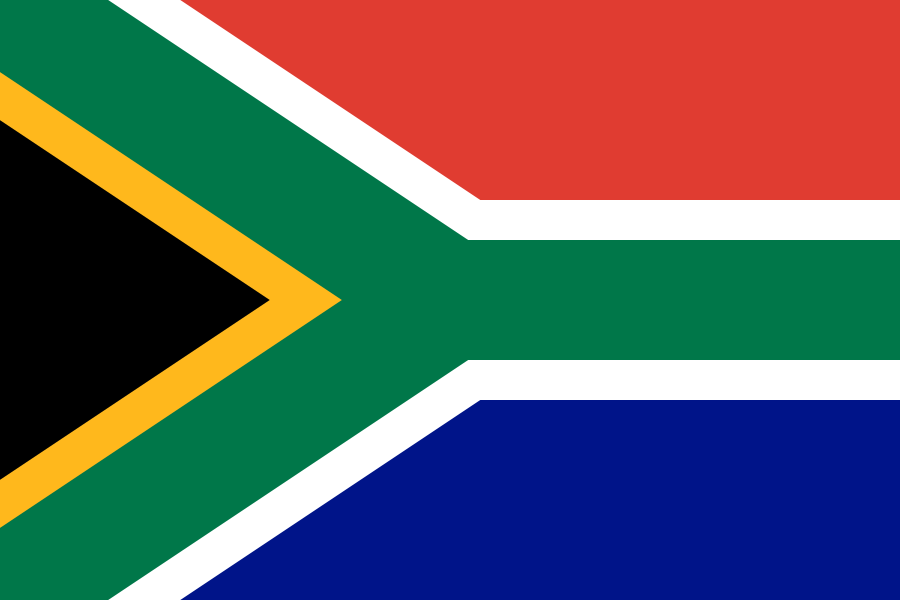
South Africa
ZAA country at the foot of Africa, where safari in wild savannah sits alongside world-class vineyards and dramatic ocean coastline. Cape Town is a fixture on lists of the world's most beautiful cities, and Kruger is one of the best national parks anywhere for watching the Big Five. South Africa astonishes with its range: cosmopolitan cities and Zulu villages, penguins on the beach and whales offshore.
Where to go #
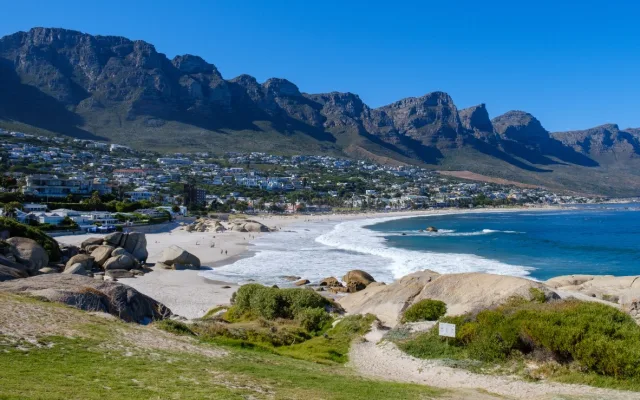
Cape Town
The Mother City beneath Table Mountain — Robben Island, the V&A Waterfront and the penguins of Boulders Beach.
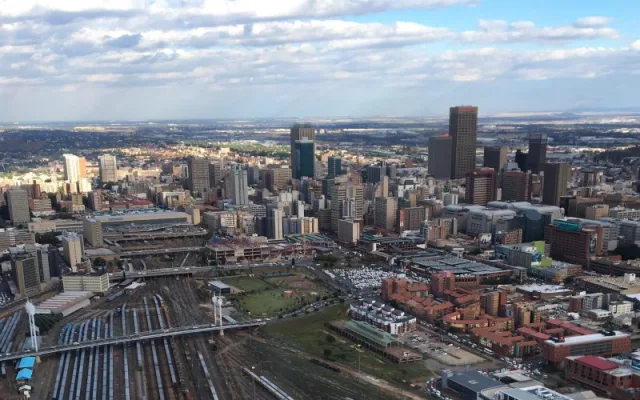
Johannesburg
South Africa's economic heart — the Apartheid Museum, Soweto, Constitution Hill and the lively Maboneng quarter.
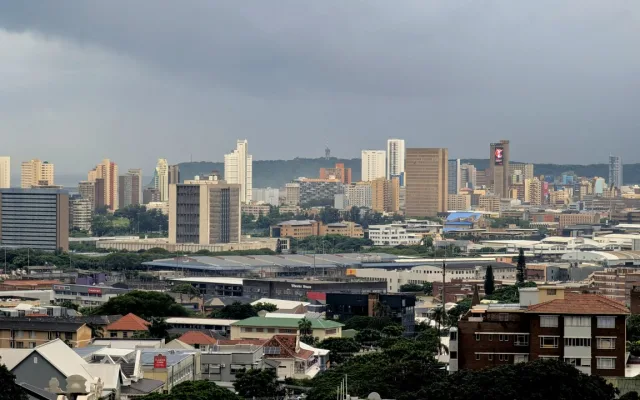
Durban
A beach city on the Indian Ocean — the Golden Mile, uShaka, the Indian quarter and South African surfing.
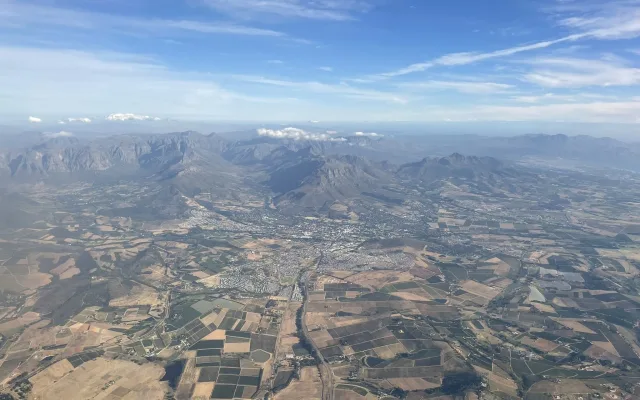
Stellenbosch
South Africa's wine capital in the Cape winelands — Cape Dutch architecture, tastings at hundreds of estates and university charm.
What to see #
Table Mountain: Get up it — the cable car with the rotating floor gives the best views in the country. Book online a week ahead or you'll spend three hours queuing at the ticket office in full sun.
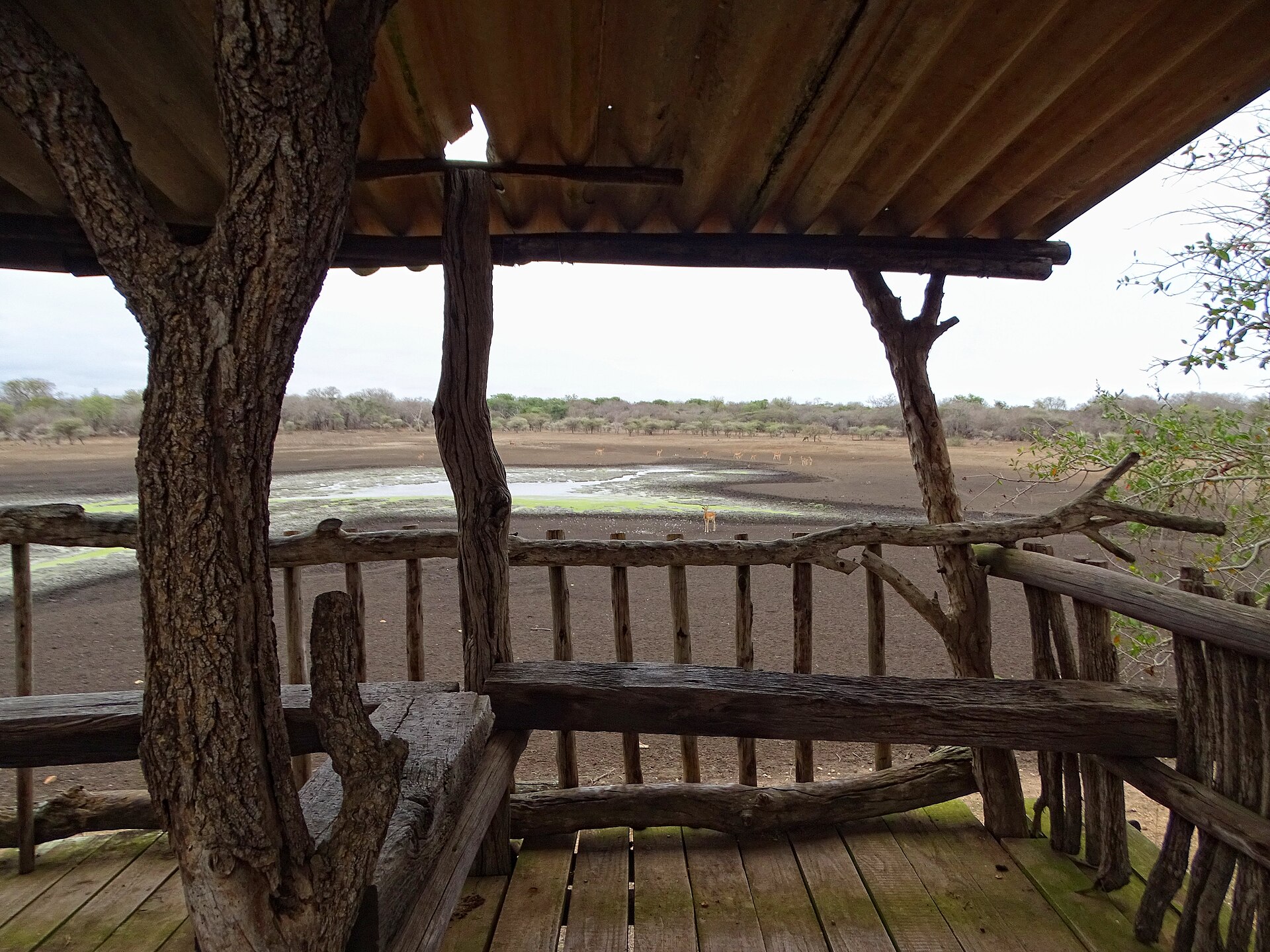
Kruger National Park: Worth the drive for the big five and the best wildlife experience South Africa offers. Doing it yourself in a hire car works out several times cheaper than a guided tour in an open-sided vehicle.
Cape Point in a day: You can combine the Cape of Good Hope with the penguins at Boulders Beach in one outing. It's the classic route, and the thing to watch is your belongings, because the baboons here are aggressive and openly rob visitors.
Robben Island: The prison is a world heritage site and the clearest way into the country's history. Former inmates lead the tours, but ferry places sell out a month ahead, so book long before you go.
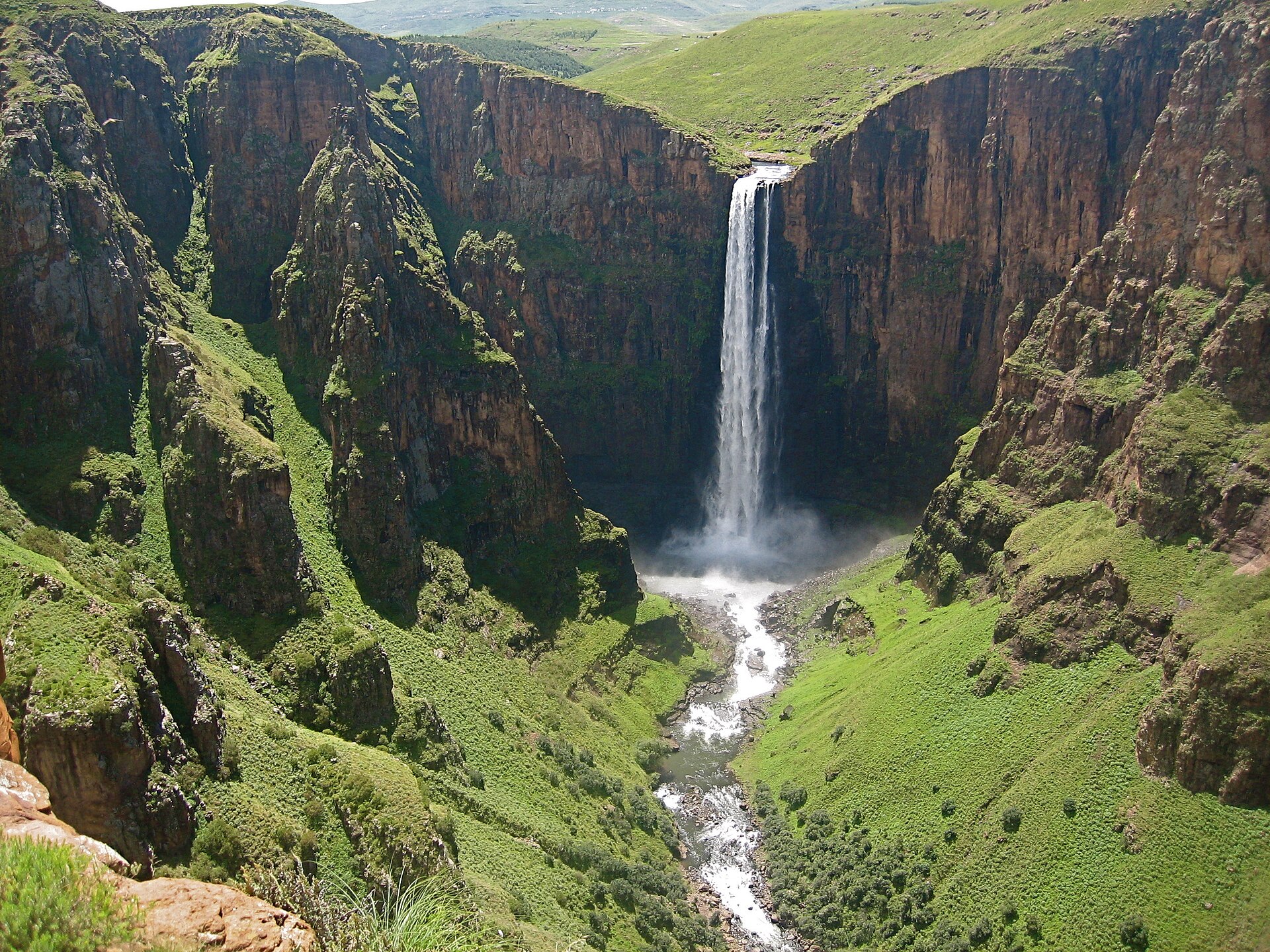
Blyde River Canyon: Colossal in scale and one of the largest green canyons on the planet. The God's Window viewpoint is often socked in with cloud, so check the forecast before committing to the long drive.
The Garden Route: Slightly overrated if you just drive it straight through. To get anything from it, stop in Tsitsikamma and walk the suspension bridges over the churning Storms River mouth.
Prices #
Currency: The local money is the rand. Change foreign currency at bank branches or bureaux in the larger shopping centres, because street rates are terrible and the transaction itself is unsafe.
Cards: Visa and Mastercard are accepted almost everywhere, from supermarkets to petrol stations, and contactless is standard. American Express is taken far less often. ATMs are widespread, but use ones inside malls or bank branches rather than standalone machines on the street.
Cash back at the till: A handy way to get notes without ATM fees. At supermarkets like Pick n Pay you can ask the cashier to add an amount to your purchase and hand it over in cash.
Tipping: Ten to fifteen percent is standard in restaurants. You'll also want rand coins for the informal car guards in the street, who normally get five or ten rand for watching your vehicle.
| Item | Price (USD) |
|---|---|
| Litre of milk | 1.10 |
| Loaf of bread | 0.90 |
| Cappuccino | 2.20 |
| Beer in a bar | 3.50 |
| Cheap cafe lunch | 8.50 |
| Dinner for two with wine | 45.00 |
| Bottle of wine in a shop | 6.00 |
| Uber ride (5 km) | 5.50 |
| Litre of petrol | 1.25 |
| Dorm bed | 14.00 |
| Guesthouse room | 65.00 |
| SIM with 10GB | 12.00 |
| Kruger park entry | 35.00 |
| Table Mountain cable car | 25.00 |
| Biltong (100g) | 4.50 |
| Fridge magnet | 2.50 |
Getting around #
Hire car: This is the best way to see the country under your own steam. Driving is on the left, the roads are excellent, and you'll need an international driving permit plus a credit card for the deposit.
City taxis: In Cape Town and Johannesburg, use Uber or Bolt and nothing else. It's the safest option, since drivers are vetted and the journey is tracked.
Domestic flights: FlySafair and Airlink connect the major cities cheaply if you book ahead. Cape Town to Johannesburg takes only two hours in the air, which beats two days of driving.
MyCiTi buses: Cape Town runs a modern bus network with dedicated lanes. You buy a myconnect card, top it up at a kiosk and tap in and out at the terminals.
Gautrain: In Gauteng province, this fast rail line links the airport with central Johannesburg and Pretoria. It's quick, clean and properly secured, and far more reliable than the ordinary commuter trains.
Minibus taxis: The cheapest way to move, and not recommended for visitors. They drive chaotically, crash often, and the hand-signal and cash-along-the-row payment system takes locals years to master.
Flying in: Cape Town and Johannesburg both have direct long-haul links to London, Frankfurt, Amsterdam, Doha, Dubai, Istanbul and Atlanta, with more capacity over the southern summer. Fares are lowest in the shoulder months of April to May and September.
Where to stay #
Guesthouses: South Africa has an unusually strong guesthouse and B&B culture. For fifty to eighty dollars you get a proper room in a family-run house with breakfast and genuine hospitality from the owners.
Safe areas: In Cape Town, look at Sea Point, Green Point or Gardens. Avoid staying in the CBD itself, because the streets there empty out after dark and the character of the area changes completely.
Booking: International booking sites work normally here. For the December and January peak, book three months ahead or you'll be left with only the expensive options.
Safari camps: The national parks have state-run SANParks camps. Staying in a tent or a rondavel there costs a fraction of the private lodges, though facilities are basic and you cook your own food over a fire.
Apartments: Short-term apartment rental is well established. It saves money on meals and lets you stay in smart areas like Camps Bay with an ocean view from your own terrace.
Local quirks: Electric fences and window bars are normal domestic security, not a sign of a bad neighbourhood. Ask whether a property has backup power, since scheduled electricity cuts are a fact of life.
What to eat #
Braai culture: The braai is the national ritual of cooking meat over coals. If you're invited to one, understand that it's a social event lasting many hours, so don't turn up ravenous expecting to eat straight away.
Cured meat: Try biltong, spiced air-dried meat sold in every shop, and boerewors, the coiled farmer's sausage that gets grilled and served in a roll with onion. Both are national staples rather than tourist novelties.
Indian heritage: Bunny chow is big in Durban and Cape Town. It's half a loaf of white bread hollowed out and filled with thick, very hot curry, and you eat it with your hands.
Street food: Be careful where you eat away from the tourist areas. A gatsby sandwich from an outlying suburb can be a gamble; stick to established food halls like the V&A Food Market.
Wine: South Africa makes excellent wine, particularly the local Pinotage grape. A good bottle in a supermarket costs about six dollars, which makes this a paradise for anyone who likes drinking well cheaply.
Dessert: Order malva pudding, a warm sponge with apricot jam soaked in cream sauce. It's very rich, very sweet, and the dessert every South African family claims to make best.
Safety #
The basic rule: South Africa has a very high crime rate. The single most important rule for an independent traveller is never to walk through a city after dark, even if your destination is two blocks away.
Load shedding: Rolling power cuts happen regularly across the country. Install the EskomSePush app so you know the schedule and don't get stuck in a lift or on an unlit street.
Car guards: Every free parking area has people in high-vis vests. They aren't official employees, but the convention is to give them a few coins when you leave to keep an eye on your car.
Valuables in cars: Don't leave bags, jackets or phones visible in a hire car. Thieves will break a window for an empty box, so everything goes in the locked boot before you park.
On the street: Don't flash an expensive watch or camera in crowded places. Take your phone out inside a cafe or shop rather than on the pavement, where snatch thefts happen at speed.
On the road: If anyone other than police tries to flag you down on a highway, don't stop. If you break down, stay inside the locked car and call roadside assistance by phone or app.
Advisories: Read your own government's travel advice before you go, which will flag specific districts to avoid. Make sure your insurance covers driving and any adventure activities you plan.
Etiquette and culture #
Rainbow nation: Since the end of apartheid, South Africa has recognised eleven official languages. You'll find African, European and Indian traditions layered together within a single city block.
Ubuntu: The local concept means humanity and shared community. People here are generally warm and open, ready to point you in the right direction or chat about the weather in a queue.
History: Racial division remains a raw subject. Be tactful discussing politics or the past, and don't ask direct questions about income or privilege across ethnic groups.
Time: The rhythm of life is relaxed. The phrase "now-now" does not mean now; it might mean five minutes or an hour, so be patient waiting for service.
Religion: South Africans are devout, mostly Christians of various denominations. Many shops close early on Sundays and people dress in their best for church.
Sport: The country lives for rugby, cricket and football. A Springboks victory is a national holiday in all but name, and every pub fills with fans in green shirts.
Connectivity #
Networks: Vodacom and MTN are the main operators. Vodacom has better coverage in rural areas and national parks, while MTN often delivers faster data in the big cities.
SIM registration: Buying a physical SIM requires your passport and proof of address. The RICA process is compulsory, takes about twenty minutes, and activation can drag on for a day.
eSIM: This is the easiest option for a short trip. Providers like Airalo let you buy a data bundle in advance so you're online the moment you land, with no queue and no paperwork.
Coverage: 4G and 5G work well in the cities. In deep canyons or the middle of Kruger the signal disappears entirely, so download offline maps before you set off.
Cost: Mobile data is not especially cheap here by international standards. Ten gigabytes costs roughly twelve dollars, so save video streaming for hotel wi-fi.
Wi-fi: Almost every guesthouse and hotel has free wi-fi. Speeds are middling but fine for calls and email, unless load shedding has just knocked the neighbourhood offline.
Phrasebook #
| English | South African English / Afrikaans | Pronunciation |
|---|---|---|
| Hello (slang) | Howzit | HOW-zit |
| How's it going? | How's it going? | hows it GO-ing |
| Thanks | Dankie | DUNK-ee |
| Great / tasty (slang) | Lekker | LEK-ker |
| In a bit (slang) | Now-now | now-NOW |
| Barbecue | Braai | bry |
| Sorry | Jammer | YUM-mer |
| How much? | Hoeveel? | HOO-fee-il |
| All good (slang) | Sharp-sharp | shahp-SHAHP |
| Where's the toilet? | Where is the loo? | where iz the LOO |
| Help me | Help my | help may |
| Mate (slang) | Bru | broo |
| Dried meat | Biltong | BIL-tong |
| Farmer's sausage | Boerewors | BOO-ruh-vors |
| Traffic light | Robot | ROH-bot |
| Too expensive | Te duur | tuh DEER |
| The bill, please | Die rekening, asseblief | dee REK-uh-ning ah-suh-BLEEF |
| Water | Water | VAH-ter |
| Please | Asseblief | ah-suh-BLEEF |
| Have a good one | Have a good one | hav a good WON |
| Yes / No | Ja / Nee | yah / nee-uh |
| Goodbye | Totsiens | TOT-seens |
Good to know #
Plugs: South Africa uses the enormous type M plug with three round pins. Standard European adapters do not fit, so buy a local adapter at the first supermarket or petrol station you pass.
Tap water: Cape Town's water is among the cleanest in the world and safe to drink straight from the tap. In rural areas and on safari, buy bottled water to be safe.
Sun: The southern hemisphere sun is fierce even under cloud. Use factor fifty and wear a hat, or you'll burn badly in half an hour of walking.
Apps: EskomSePush is essential for tracking power cuts. Google Maps with offline regions downloaded is the other one, because mobile data will fail you at the worst moment.
Healthcare: Private clinics are excellent and expensive. Take out proper insurance before you fly and bring a basic medical kit, since many familiar medicines are prescription-only here.
Wildlife: Never get out of your vehicle on safari outside designated areas. Animals are used to cars but read a person on foot as either prey or a threat, and the outcome is fatal.