Description
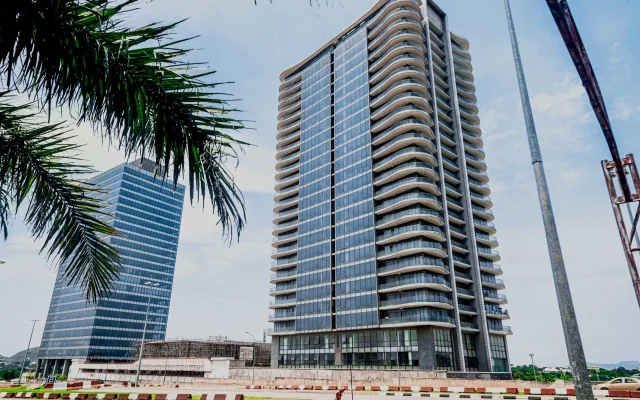
Nigeria's purpose-built capital, laid out on a grand scale: the granite monolith of Aso Rock dominates the skyline, while the city centre is home to the striking National Mosque and National Museum.
Wiki
Abuja is a rare example of an African capital built from scratch: its master plan was drawn up in the late 1970s, the city was built through the 1980s, and it replaced overcrowded Lagos as capital in 1991; the site was chosen at the country's geographic centre to ease inter-ethnic tensions. For the independent traveller, that means order, wide boulevards and relative safety by Nigerian standards — but also a city where almost nothing is walkable and everything depends on transport. Two days is more than enough: Abuja is better understood as a transit hub and entry point into central Nigeria than as a destination in its own right.
What's actually worth seeing
The key sights are clustered around the Three Arms Zone and Central Business District, so you can cover them in a single day.
- Aso Rock — the granite monolith that defines the city's skyline. You can't get close: the presidential complex and a security perimeter occupy its base. The best views are from the city's boulevards and parks. Avoid photographing uniformed personnel or government buildings.
- National Mosque — its golden dome is visible from across the city. Non-Muslims are sometimes admitted outside prayer times, but only by arrangement and in modest dress; ask the guards on arrival, there is no ticket desk or published schedule.
- National Christian Centre directly opposite — a striking counterpoint, and easy to visit in the same outing.
- National Museum — small but provides useful context: Nok terracotta, bronzework and ethnographic collections. An hour to ninety minutes gives you a real sense of the country around you.
- Millennium Park and Jabi Lake — where Abuja residents go in the evening. Jabi, with its waterfront and boat rides, is a pleasant spot for sunset, with cafés nearby.
- Wuse Market — the place for ankara fabrics, beads and crafts; bargaining is expected, go in the morning and keep your bags close.
The Sarius Palmetum botanical garden in Maitama and a trip out to Zuma Rock along the road towards Suleja make a good second-day option if you want to get into nature.
Getting there and getting around
Nnamdi Azikiwe International Airport (ABV) is roughly 40 km west of the centre, around 40–60 minutes by road. There is no metro or rail link, so your options are an official taxi from the arrivals desk (more expensive, fixed price) or a pre-arranged driver. Bolt and InDriver both operate in Abuja and are considerably cheaper than street taxis — these are your main tools for getting around. A local SIM with data (MTN, Airtel or Glo — bought with your passport) takes care of half your logistics.
Conventional public transport is almost non-existent. Shared minibuses and keke (motorised tuk-tuks) run on the outskirts, but for visitors apps are far more reliable. If you plan a day trip out of the city (Zuma Rock, Suleja), hiring a car with a driver for the day is the better option — it removes the need to negotiate each journey and solves the question of getting back.
Where to stay and what to budget
Stay in Wuse 2, Maitama or the Central Area: these neighbourhoods are safer, have cafés and ATMs, and put you close to the main sights. Asokoro is a quiet diplomatic district but expensive. Garki is more affordable and practical, though further from the action. Western-style backpacker hostels are virtually absent; the standard format is guesthouses and mid-range hotels — book ahead, as prices vary widely.
Two days is enough: one for the city sights and the market, the second for Jabi Lake, the museum and, if you like, the rocks outside the city.
Food, money and prices
Food is hearty and cheap at local chophouses: jollof rice, egusi, suya (spiced meat skewers — a classic roadside evening snack), plantains and pepper soup. A chophouse lunch costs a few dollars; a sit-down restaurant dinner is noticeably more. Food and transport are generally inexpensive, but accommodation and imported goods can be pricey.
Practical notes on money:
- Payments are in naira; the exchange rate fluctuates, so carry cash for markets and keke rides.
- Cards are accepted at hotels and shopping malls but not everywhere — withdraw cash from ATMs at major banks (GTBank, Zenith, Access).
- Change money at banks and exchange bureaux, not on the street.
Prices are as of 2026.
Safety and common mistakes
Abuja is considered one of the calmer cities in the country, but basic caution is essential: avoid walking alone on dark, empty boulevards at night (the city is not pedestrian-friendly), don't photograph security forces or government buildings, and be prepared for police checkpoints — politeness and having your documents to hand resolves them. Outside the city and on the highways the situation changes: discuss routes such as Kaduna with locals and do not travel at night.
- Don't expect to walk anywhere — distances are large, so plan every journey.
- The dry season (November–March) is more comfortable; December is peak season with higher prices, and the harmattan brings dusty haze.
- Arrange your visa in advance and check yellow fever vaccination requirements — a certificate may be requested on entry.