Almaty
KazakhstanDescription
Kazakhstan's largest city and former capital, spread along the foot of the Alatau: ski slopes, glacial lakes and gorges half an hour from the centre.
Wiki
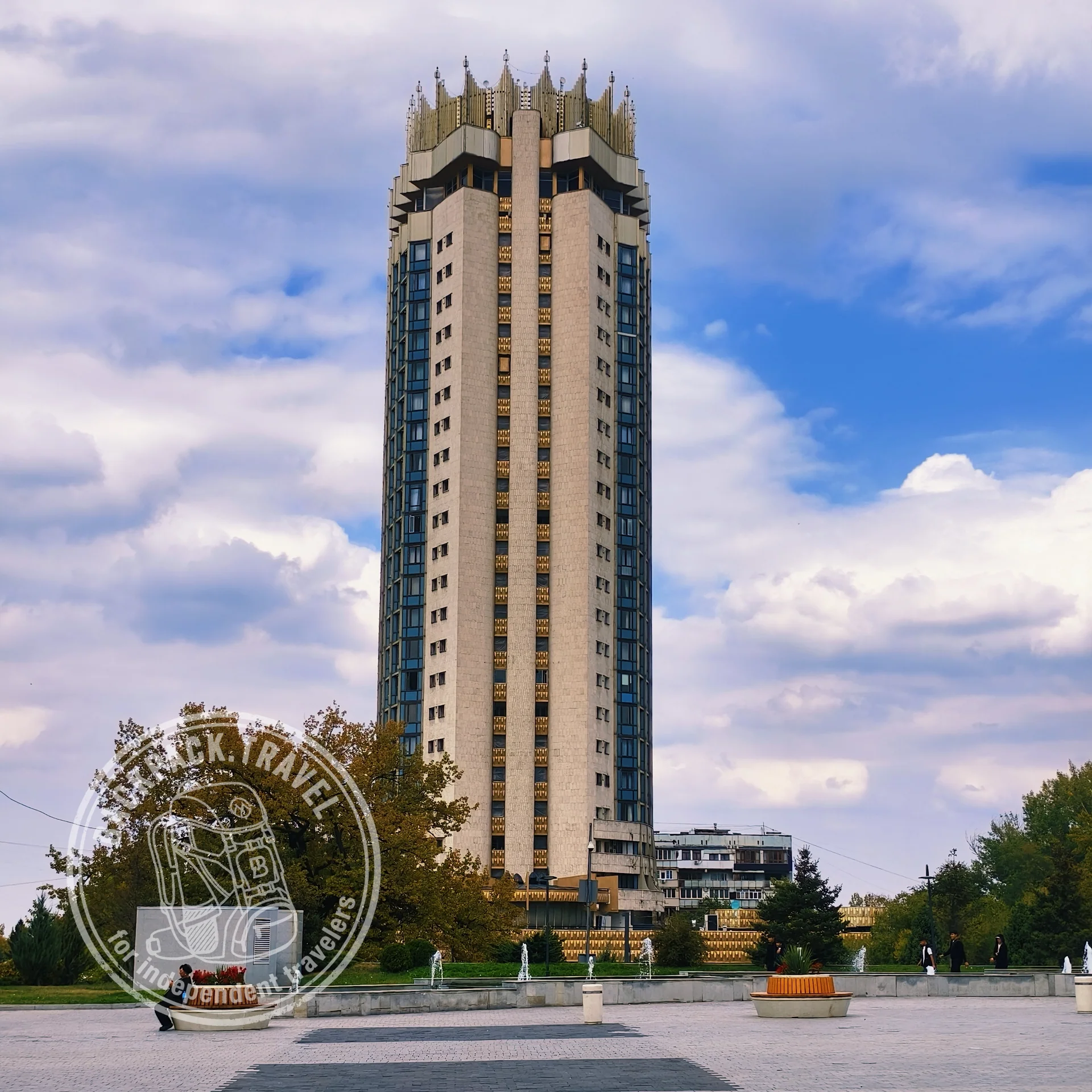
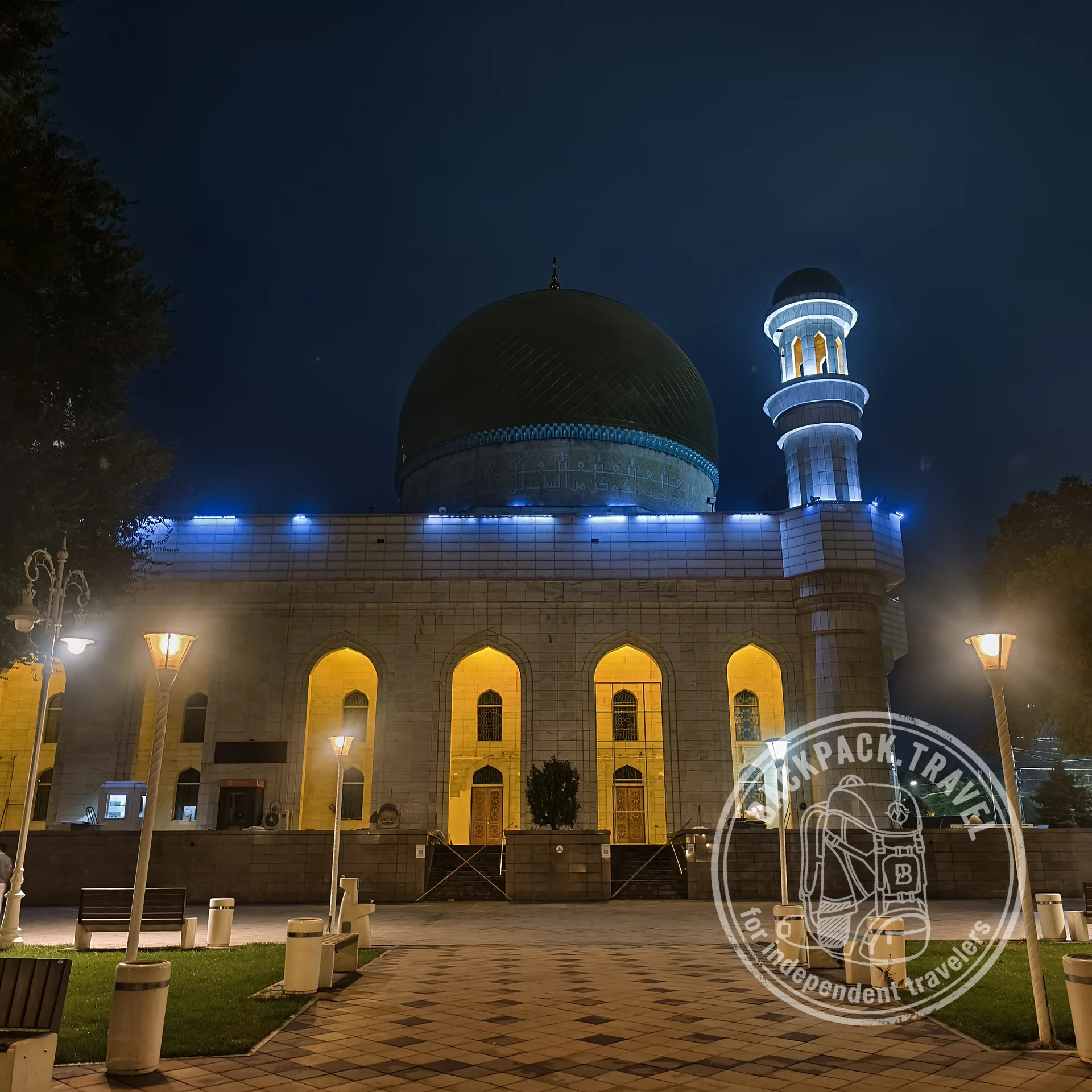
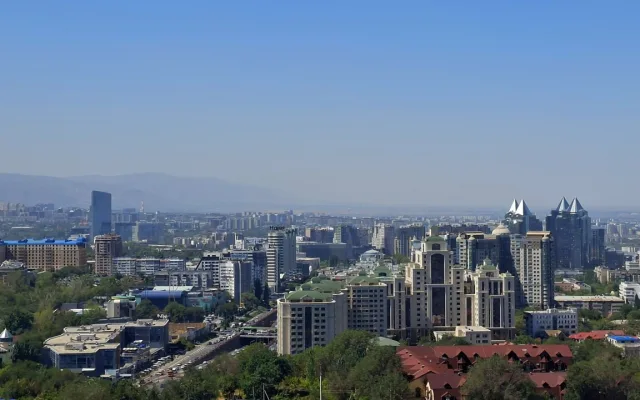
Almaty is Kazakhstan's largest city and its former capital, spread across the south-east of the country right at the foot of the Trans-Ili Alatau. It is a green metropolis of more than two million people where snow peaks are visible from almost every junction, and where ski slopes, gorges and glacial lakes are half an hour away.
History and the shape of the city
The city grew out of the Verny military fort, founded in 1854 on the site of earlier settlements in the foothills. The name of the region is traditionally linked to the word alma, "apple": these foothills are the home of the wild Sievers apple, ancestor of the cultivated varieties, and the large-fruited aport apple became a local emblem. In the Soviet period Alma-Ata was the capital of the Kazakh SSR, and it remained the capital of the independent state until 1997, when the administrative centre moved to Astana. The "southern capital" kept its role as the country's cultural, financial and academic heart.
The street plan is a convenient grid oriented by the mountains: if you are walking uphill towards the Alatau, you are heading south. The centre is thick with greenery — irrigation channels, shaded avenues and parks take the edge off the summer heat.
What to see
- Kok-Tobe — a green hill on the south-eastern edge with a television tower and viewing terraces. A cable car takes you up, and the summit gives a wide panorama of the city against the mountains.
- Medeu — the legendary high-altitude skating rink at around 1,691 m, where dozens of speed-skating world records were set. In summer people come for the walking and the mountain air.
- Big Almaty Lake — a turquoise glacial lake in the mountains about an hour from the centre. The colour of the water shifts with the season and the light.
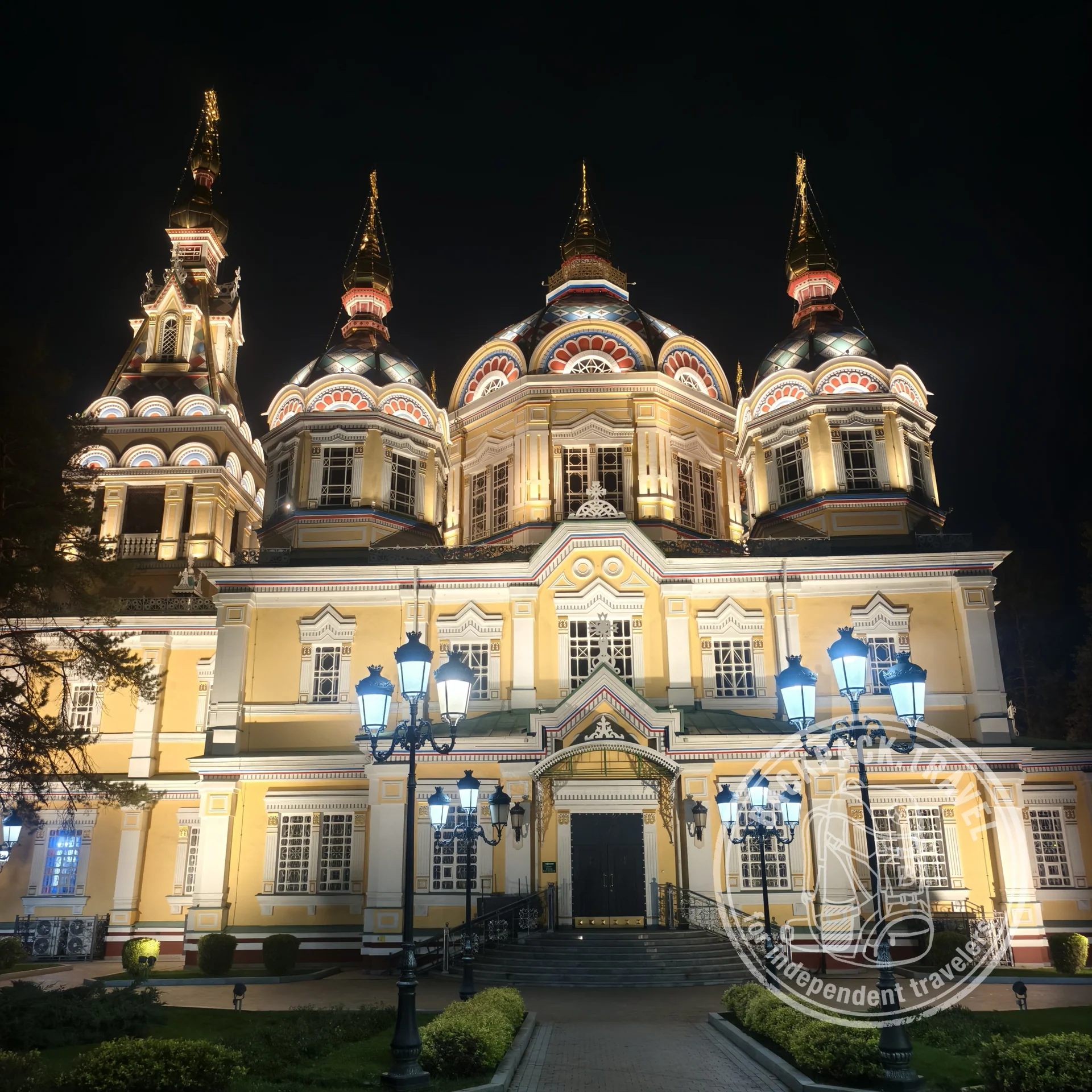
- The Ascension Cathedral — one of the tallest wooden churches in the world, built in the early twentieth century under the engineer Andrei Zenkov. It came through the great earthquake of 1911 intact. It stands in Panfilov Park.
- The Green Bazaar (Kok Bazaar) — a colourful covered market and the best place to try and buy kazy horse sausage, kurt, nuts, dried fruit and spices.
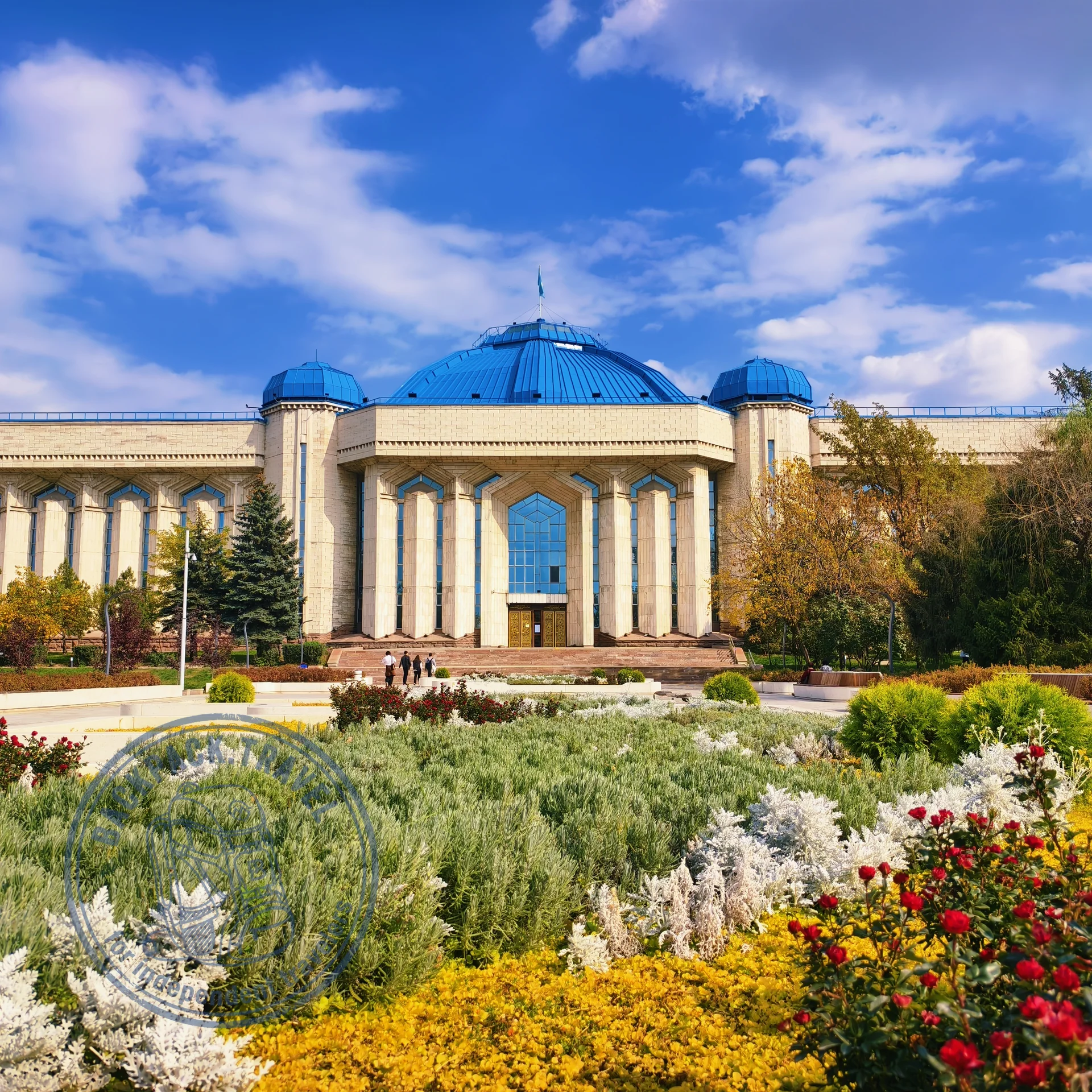
- The Kasteyev State Museum of Arts and the Central State Museum — for Kazakh art, crafts and the archaeology of the region.
The outdoors
Almaty's great asset is how close the mountains are. In winter Shymbulak operates above the city — a ski resort with runs of every grade and a lift system linked down to Medeu. In summer the surrounding gorges — Butakovka, Medeu, Big Almaty — turn into trekking routes. Trips to the Assy plateau and the canyons a couple of hours out are popular too. If you are heading for real altitude afterwards, allow a day of gentle climbing to acclimatise.
Food
The local table combines nomadic tradition with the inheritance of the Silk Road. Beshbarmak with boiled meat and pasta sheets is essential, along with rich lagman, manty, plov and shashlik. Uyghur and Dungan influence gave the city its spicy noodle dishes. A separate point of pride is the coffee scene: there are plenty of speciality cafés and the roasting is good. Lunch in a canteen costs about 2,300–3,300 tenge ($5–7), dinner in a restaurant 7,000–14,000 tenge ($15–30).
Practical information
Almaty international airport (ALA) is served by Air Astana, FlyArystan, Turkish Airlines, Lufthansa and others. A taxi into the centre is around 3,300–4,700 tenge ($7–10). Getting around, Yandex Go is easy (900–2,300 tenge, $2–5, a ride); there is a single metro line at about 120 tenge ($0.25) a journey, plus buses and BRT routes. For independent trips to the mountain lakes, hiring a car is useful at 12,000–19,000 tenge ($25–40) a day, and fuel is cheap. Prices are as of 2026.
When to go, and a three-day plan
May–June and September–October are the most comfortable months, holding at 18–25 °C, with the orchards in blossom in spring and the city turning gold in autumn. Summer is hot at 28–32 °C, though it is always cooler in the mountains. Winter, December to March, is the ski season.
Over three days it makes sense to give the first to the centre — Panfilov Park, the Ascension Cathedral, the Green Bazaar and the ride up Kok-Tobe. The second day goes to the Medeu–Shymbulak pairing with a walk on the slopes. The third is for Big Almaty Lake or one of the gorges, to feel the closeness of the mountains that is the real reason to come to Almaty.