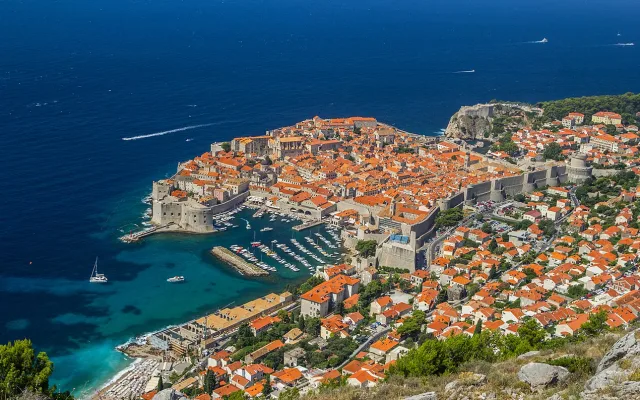
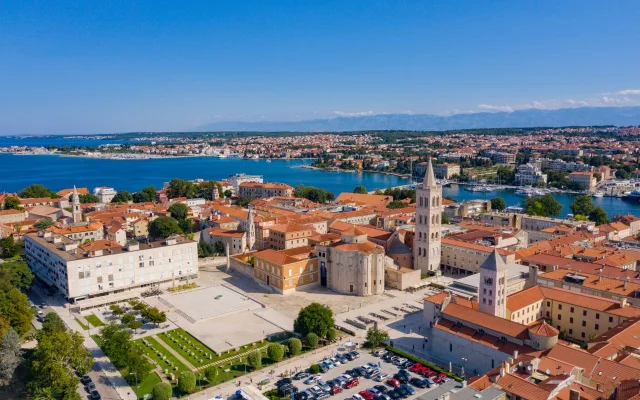
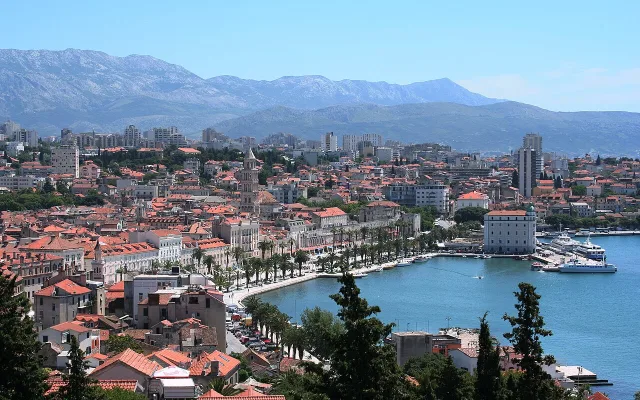
Description
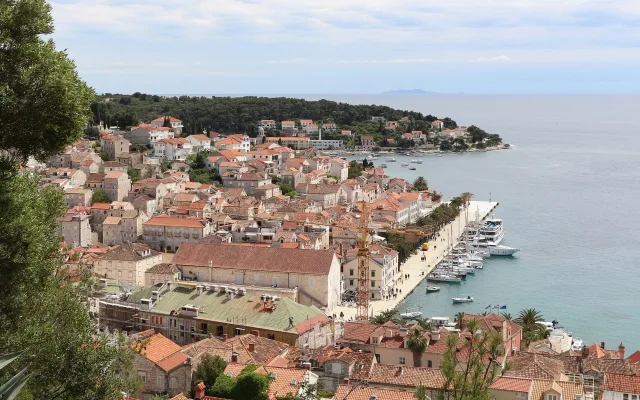
Sunny island of lavender fields, ancient Venetian fortifications and lively beach parties in the Croatian Adriatic.
Wiki
Hvar is one of the most celebrated islands of the Croatian Adriatic, stretching nearly 70 km along the Dalmatian coast south of Split. It combines ancient Greek history, Venetian architectural heritage, lavender-covered hillsides and a reputation as one of the liveliest resorts in the Mediterranean.
Overview
The island has a population of around 11,000, with the largest settlement being Hvar Town, home to approximately 4,000 residents. Hvar is considered the sunniest place on the Adriatic, recording more than 2,800 hours of sunshine per year — a fact that shapes both its mild climate and a tourist season that stretches from May to October. The Mediterranean landscape is made up of vineyards, olive groves, pine forests and the famous lavender fields that fill the air with their distinctive scent in early summer.
History
Human settlement on the island dates back to antiquity: in 384 BC, Greek colonists from Paros founded a settlement here called Pharos — present-day Stari Grad, the oldest town in Croatia. From that era survives the Stari Grad Plain, a parcelled agricultural landscape that exemplifies the ancient Greek land-use system, still in operation today and inscribed on the UNESCO World Heritage List. The island subsequently formed part of the Roman Empire, Byzantium, the Republic of Venice, and later the Habsburg dominions. It was the Venetian period (13th–17th centuries) that shaped the character of Hvar Town, with its white-stone palaces, fortifications and harbour, which became an important stopover on maritime trade routes.
Sights
- Hvar Town — the heart of the island, a compact historic centre with cobbled lanes and Renaissance and Gothic facades in pale stone.
- St Stephen's Square (Trg Sveti Stjepana) — the largest town square among the Adriatic islands, framed at one end by the 16th-century Cathedral of St Stephen and its bell tower.
- Fortica (Španjola) — a hilltop fortress standing about 86 metres above the town, with walls that command a panorama of the harbour and the Pakleni Islands.
- Hvar City Theatre — founded in 1612 and considered one of the oldest public theatres in Europe.
- Franciscan Monastery — a 15th-century foundation with a quiet garden, a picturesque bell tower and a collection of paintings; an ancient cypress grows in the courtyard.
- Pakleni Islands (Pakleni otoci) — an archipelago of numerous small islets just a kilometre from Hvar Town. The best known are Palmižana and Jerolim; water taxis run directly from the harbour.
- Stari Grad — the island's second most important town, a peaceful alternative to the busy capital, with ancient roots and a picturesque waterfront.
- Vrboska — a tiny village nicknamed "Little Venice" for its narrow canal and footbridges.
- Jelsa — a cosy fishing town on the northern shore, green and family-friendly.
- Lavender fields near Velo Grablje — the blooms arrive in June–July, when the hillsides turn violet.
Food and Wine
Hvar's gastronomy is built on the sea's bounty and Mediterranean tradition: fresh fish, squid, octopus cooked under a peka (a heavy domed lid), olive oil, cured ham pršut and local cheeses. The island is celebrated for its winemaking — red wine is produced from the Plavac Mali grape and white from the indigenous Bogdanuša variety. Herbal liqueurs and honey are frequently served, while lavender, rosemary and other aromatics appear in dishes and souvenirs alike.
Three Days on Hvar
Three days are enough to cover the highlights. Day one is devoted to Hvar Town: a stroll across St Stephen's Square, a visit to the cathedral, a climb to Fortica for the sunset and an evening along the waterfront. Day two is set aside for a boat trip to the Pakleni Islands — swimming in secluded coves and lunch at a waterside tavern. Day three heads inland: Stari Grad with its UNESCO-listed ancient plain, tranquil Vrboska and the lavender-covered slopes, with a wine tasting if the mood takes you.
Practical Information
Hvar is reached by ferry and high-speed catamaran from Split; services arrive at Hvar Town and Stari Grad. Buses run across the island, but renting a car or scooter is more convenient for independent travel. Peak season is July and August, when prices and crowds are at their highest; late spring and September are better for a quieter visit, while June is ideal for those who come for the lavender in bloom. Beaches are mostly pebble and rock, so water shoes are worth bringing.