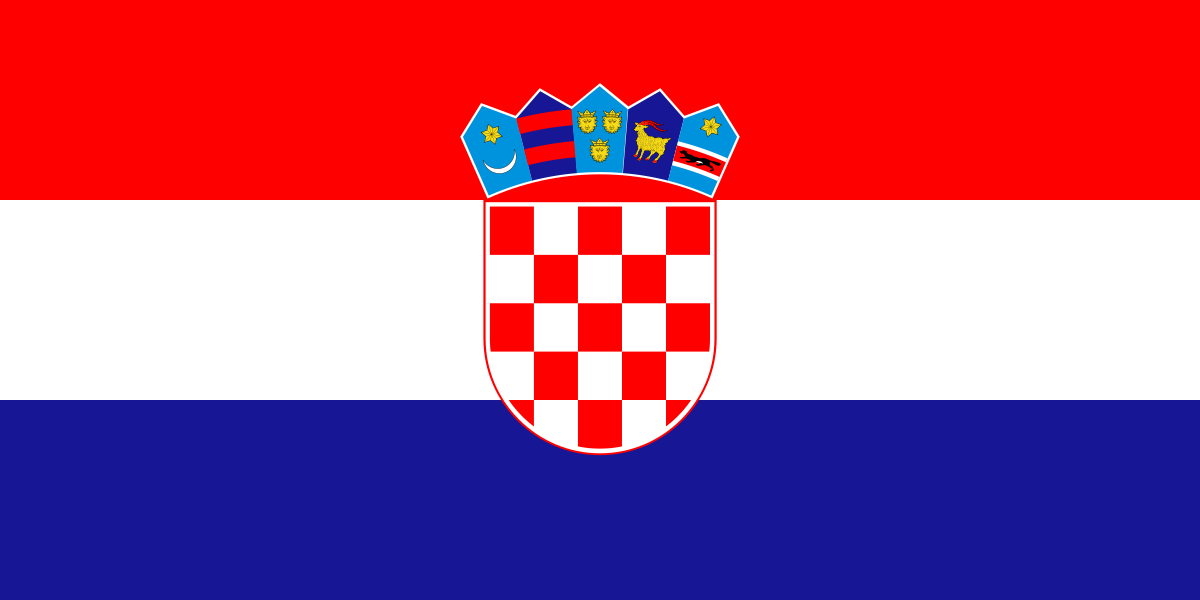
Croatia
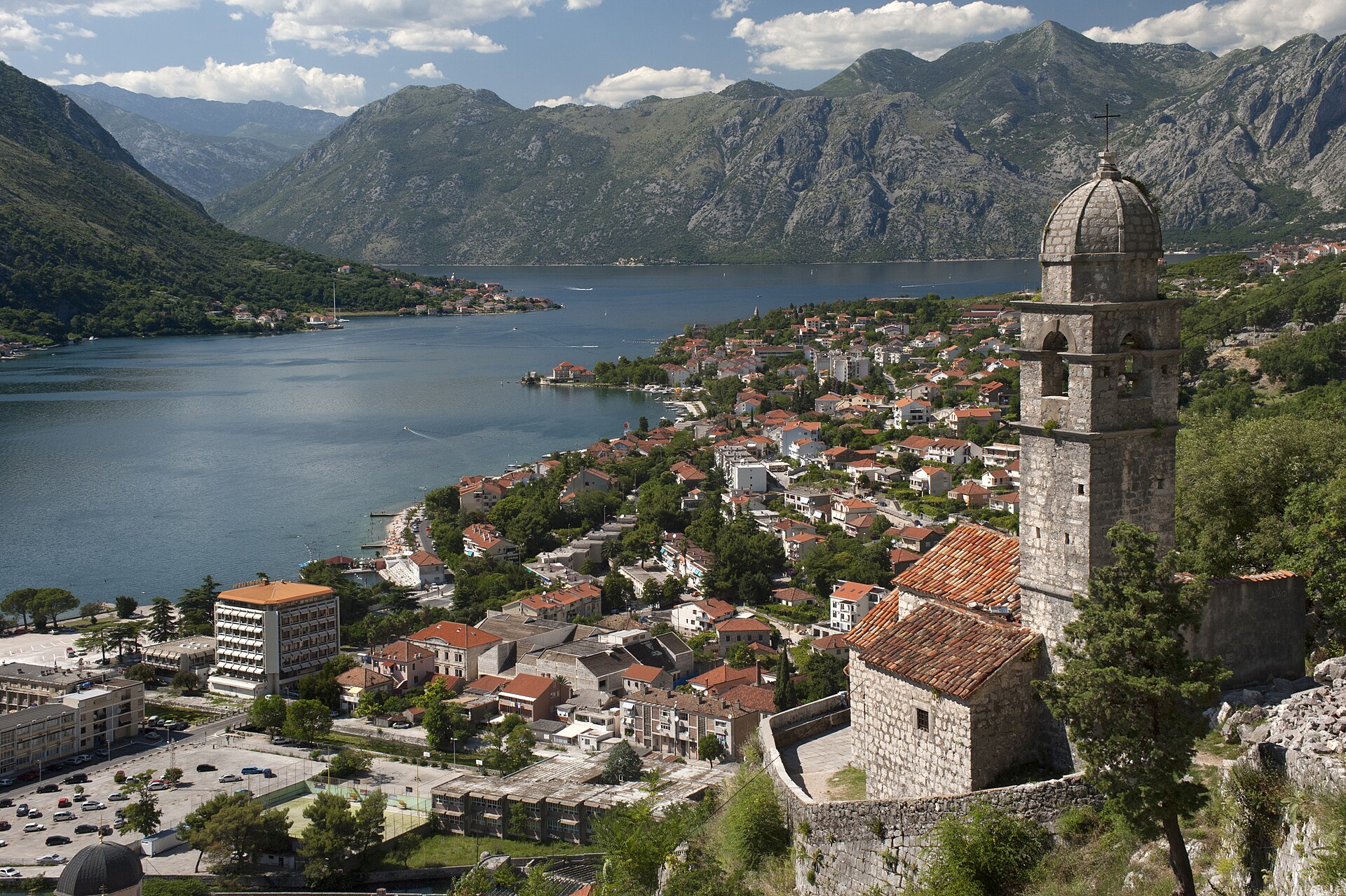
HRA thousand islands, the turquoise Adriatic and medieval towns familiar from Game of Thrones. The cascading lakes of Plitvice, the walls of Dubrovnik and Diocletian's Palace in Split are all Croatia. The food runs from fresh seafood to Istrian truffles, and prices sit below Italy or Greece. A near-perfect balance of beach, ancient history and unspoilt nature.
Where to go #
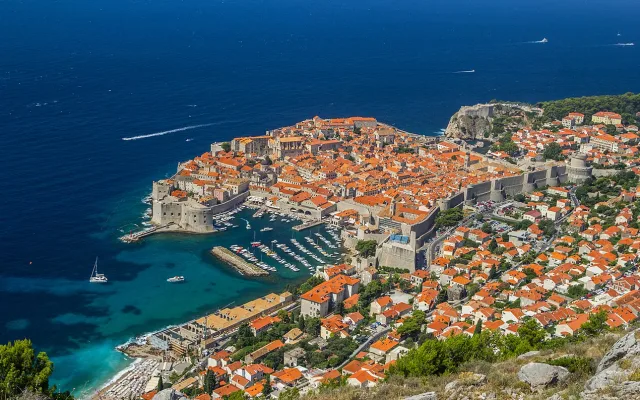
Dubrovnik
The pearl of the Adriatic — the city walls, the Old Town and the Game of Thrones filming locations.
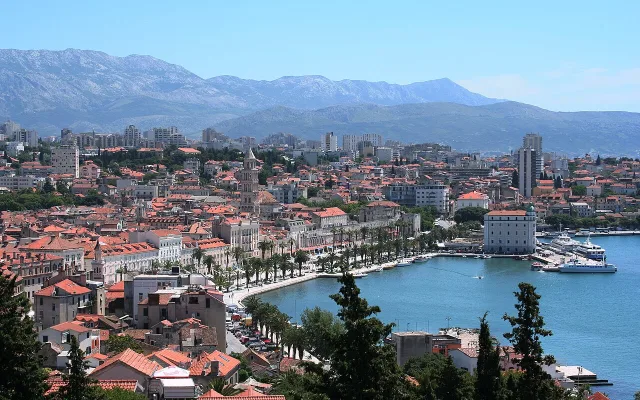
Split
Diocletian's Palace, Bačvice beach and the ferries to Hvar.
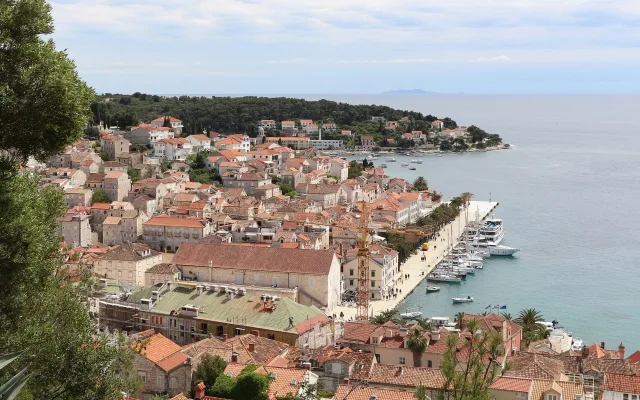
Hvar
Sunny island of lavender fields, ancient Venetian fortifications and lively beach parties in the Croatian Adriatic.
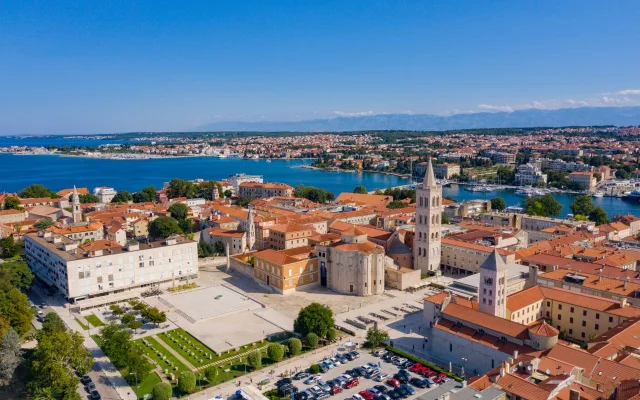
Zadar
A Dalmatian city with the Sea Organ — an avant-garde instrument played by the waves of the Adriatic — and a historic old town on a peninsula.
What to see #
Plitvice Lakes: The country's headline natural wonder, sixteen turquoise pools linked by cascades. Summer entry runs 40 euros, so book online several weeks ahead.
Dubrovnik city walls: Walking the full circuit gives you the best views over the Adriatic and the tiled roofs. Go for the 8:00 opening to get ahead of the cruise-ship crowds.
Diocletian's Palace: In Split this is the heart of the city. The cellars are ticketed, but the palace streets themselves cost nothing to wander. The best place to go for the atmosphere of ancient Rome.
Krka National Park: Go here if Plitvice looks too expensive or too full. There are waterfalls here too, and the logistics from Split or Šibenik are far simpler and faster.
Blue Cave: A day is enough for a boat tour from the island of Vis to this glowing grotto. Trips depend on the weather, and the price is often inflated by demand.
Mljet island: Where to go for silence and pine forest, in a national park with saltwater lakes. It makes an ideal day out from Dubrovnik on the fast catamaran.
Prices #
Currency: Croatia uses the euro and nothing else. The old kuna is no longer accepted anywhere, so bring euros or withdraw them on arrival.
Cards: Visa and Mastercard terminals sit in almost every shop, and contactless is standard. Amex acceptance is thinner outside hotels. ATMs are everywhere, but avoid the standalone Euronet machines, which push poor conversion rates.
Wise and Revolut: Since the local currency is the euro, a multi-currency card removes conversion costs entirely and is the cheapest way to spend here.
Tipping: Around 10% in a restaurant if the service was good. In self-service cafés and bars, rounding up to the nearest euro is plenty.
Markets: Keep small cash on you for farmers' markets and the little kiosks on the islands. Many have no terminal, and change for a large note is grudging.
| Item | Price (USD) |
|---|---|
| Espresso | 2.50 |
| Pizza in a café | 14.00 |
| Dinner for two | 65.00 |
| Marenda set lunch | 12.00 |
| Glass of wine | 5.00 |
| Beer 0.5l | 4.50 |
| Meat burek | 3.50 |
| City bus ticket | 2.00 |
| Litre of petrol | 1.80 |
| Kilo of fish | 22.00 |
| Ferry to an island | 15.00 |
| Fridge magnet | 4.00 |
| Dubrovnik walls ticket | 45.00 |
| Plitvice ticket | 45.00 |
Getting around #
Buses: The easiest way around the country is by coach with Arriva or FlixBus. Buy online in advance, because the popular Split-Zagreb runs fill up quickly.
Ferries: Jadrolinija runs both car ferries and fast catamarans between the mainland and the islands. For a foot passenger this is cheap travel, with short hops from about 5 euros.
Car hire: For inland trips and for Istria, a car pays for itself. Local agencies are often more flexible on deposits than the big international chains.
Trains: The rail network is thin and mostly links Zagreb with Split or Rijeka. Journeys take longer than the bus, so it is a choice for people who simply like trains.
City transport: Zagreb has an extensive tram network, and coastal towns run buses. Tickets come from Tisak kiosks or from the driver, and the driver always charges more.
Ride apps: Uber and Bolt operate in the larger centres, which removes any haggling. Prices are fixed and a car usually arrives within ten minutes.
Getting there: Zagreb, Split and Dubrovnik have direct summer flights from most of Europe, including London, Frankfurt, Paris and Amsterdam, plus low-cost services from Ryanair and easyJet. From North America the standard routing is one European connection.
Where to stay #
Private rooms: The dominant format is apartments and rooms that Croatians call sobe. Look for the blue "Apartment" signs on the street, or book through the usual platforms well ahead.
Guesthouses: The old quarters are full of small family-run guesthouses. It is a good way to sleep inside a historic centre without paying for hotel stars and services you will not use.
Hostels: Zagreb and Split have modern hostels with dorms and proper common areas. It is the budget answer for a solo traveller, though a Dubrovnik dorm bed in August can be startling.
Camping: Organised campsites and bungalow parks are popular along the coast. Many sit in pine forest right by the water, with the best access to clean pebble beaches.
Location: To save money, take a place two streets back from the promenade, or in the next village along. An apartment kitchen cuts your food bill substantially.
Season: August prices can be double those of May or September for identical weather. Book three or four months ahead if you want the good options.
What to eat #
Bakeries: In any pekara, try burek, the layered pastry filled with meat or cheese. It is the cheapest snack going and stays filling and decent at any hour.
Set lunch: Look for Marenda on the coast or Gablec in Zagreb. For 10-15 euros you get soup and a main, roughly half the evening menu price.
Ćevapi: Grilled minced-meat sausages served in soft flatbread with raw onion. Balkan classic, made fast and made well in more or less every grill house.
Seafood: Fish at the market is expensive but always fresh. Be careful in harbour restaurants, where the "catch of the day" is sometimes billed by weight without anyone mentioning it first.
Dalmatian classics: Pašticada is beef braised in wine with gnocchi, and it is worth ordering in a family konoba. Black risotto with cuttlefish ink is the other coastal standard.
Coffee: Croatians have turned coffee into a multi-hour ritual on open terraces. An espresso is cheap and nobody will move you along, so sit and watch the sea.
Safety #
Overall: This is one of the calmer countries in Europe, and walking at night is not a concern. Serious incidents are rare, particularly in the coastal tourist zones.
Pickpockets: In the crush at Dubrovnik's Pile Gate and in Split's markets, keep an eye on your wallet and phone. Petty theft in peak season is the one real risk here.
Sea urchins: On wild rocky beaches, wear water shoes. Urchins hide in the crevices and standing on one barefoot is both painful and slow to heal.
Hiking: If you head inland on foot, stay on marked trails. In remote border areas old mines can in theory remain, and they are signposted.
Sun: The Adriatic breeze makes the heat deceptive and you can burn in a couple of hours. Use high-factor sunscreen and drink far more water than feels necessary.
Getting help: Locals are generally warm towards visitors, and most younger Croatians speak good English and will happily point you the right way.
Before you go: Check your own government's travel advisory for anything current, though for Croatia it rarely amounts to more than routine advice.
Etiquette and culture #
Coffee first: Coffee culture here is not a caffeine habit, it is the social structure. Do not order takeaway. Sit down, and give it half an hour.
Religion: The population is mostly Catholic, so many small shops close on Sundays. In churches, keep quiet and cover shoulders and knees.
Fjaka: In Dalmatia there is a word, fjaka, for the blissful state of not wanting to do anything at all. Do not get annoyed by an unhurried waiter, just accept the tempo.
Conversation: Croatians are proud of their history and of the independence war of the nineties. Steer away from regional political comparisons unless someone else opens the subject.
Football: Football here is close to a religion, and the national squad are folk heroes. At a match in Split you will see the devotion of the Torcida stands up close.
Naturism: The country is well known for its FKK beaches. It is an ordinary part of local holiday culture and treated without any fuss.
English: English is widely spoken by anyone under fifty, and menus and signs on the coast are almost always translated.
Connectivity #
SIM cards: You can pick up a local SIM at any Tisak newsstand or supermarket. Tourist bundles with unlimited data for a week run 10-15 euros.
Operators: The main networks are T-Mobile, A1 and Telemach, and coverage is solid across the country. Even on distant islands the data works well enough for maps and messaging.
eSIM: Airalo, Yesim and similar services support Croatia, which is convenient if you want to be online the moment you land and skip the airport shop entirely.
Language: Croatian is a Slavic language and will look impenetrable, but you will rarely need it. Hotel and restaurant staff almost always speak good English.
Wi-Fi: Free hotspots exist in most cafés and apartments, though speeds sag in peak season. In old towns with thick stone walls, indoor signal is often weak.
Apps: Install the official Jadrolinija app for ferry timetables and GetByBus for coach tickets. Google Maps handles walking routes through the narrow lanes surprisingly well.
Phrasebook #
| English | Croatian | Pronunciation |
|---|---|---|
| Good day | Dobar dan | DOH-bar dahn |
| Hi / Bye | Bok | bok |
| Thank you | Hvala | HVA-la |
| Please | Molim | MOH-leem |
| Yes / No | Da / Ne | da / neh |
| Sorry | Oprostite | oh-PROS-tee-teh |
| How much is it? | Koliko košta? | KO-lee-ko KOSH-ta |
| The bill, please | Račun, molim | RA-choon MOH-leem |
| I don't understand | Ne razumijem | neh ra-ZOO-mee-yem |
| Delicious | Ukusno | OO-koos-no |
| Help! | Upomoć! | OO-po-moch |
| Beer | Pivo | PEE-vo |
| Wine | Vino | VEE-no |
| Where is the toilet? | Gdje je WC? | g-dyeh yeh VEH-tseh |
| Beach | Plaža | PLA-zha |
| Mate (slang) | Stari | STA-ree |
| Blissful idleness (slang) | Fjaka | FYA-ka |
| Late-morning snack | Marenda | ma-REN-da |
| Peak time, the buzz (slang) | Špica | SHPEE-tsa |
| Goodbye | Doviđenja | do-vee-JEH-nya |
| Cheers! | Živjeli | ZHEEV-yeh-lee |
Good to know #
Your embassy: Most diplomatic missions are in Zagreb. Save your own country's embassy details before you travel, but use them only for lost passports, not routine problems.
Healthcare: The system is good, but a doctor's visit without insurance starts around 50 euros. Keep your insurer's assistance hotline number to hand.
Souvenirs: The best things to take home are local olive oil, Pag cheese and lavender sachets from the islands. Skip coral and shells in gift shops, which are often imported anyway.
Plugs: Croatia uses European type C and F sockets at 230 volts. UK and US travellers will need an adapter, and US devices need a dual-voltage charger.
Opening hours: Small shops may close for a midday break, especially in high summer. Larger supermarkets usually run until nine or ten in the evening without a pause.
Skip the tours: Instead of expensive group excursions, use the scheduled passenger catamarans to reach nearby islands. It costs a fraction as much and you set your own timings.