Amsterdam
NetherlandsDescription
The city of canals — the Rijksmuseum, Van Gogh, bicycles and the Jordaan.
Wiki
Amsterdam is the capital of the Netherlands and its financial, cultural and historical heart, a city that grew up around water and still lives by its rules. Standing where the river Amstel meets the IJ inlet, it combines medieval compactness with an atmosphere of openness that travellers from all over the world come for.
A general picture
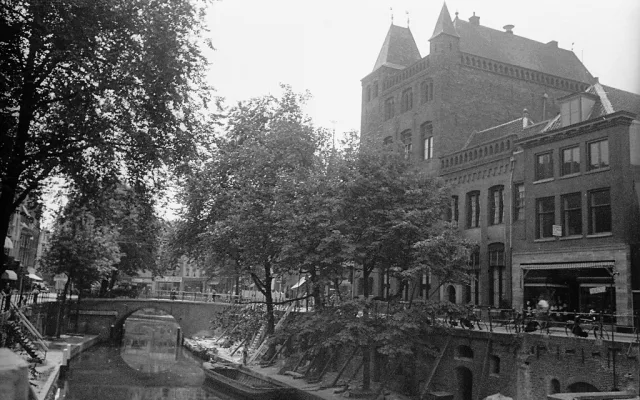
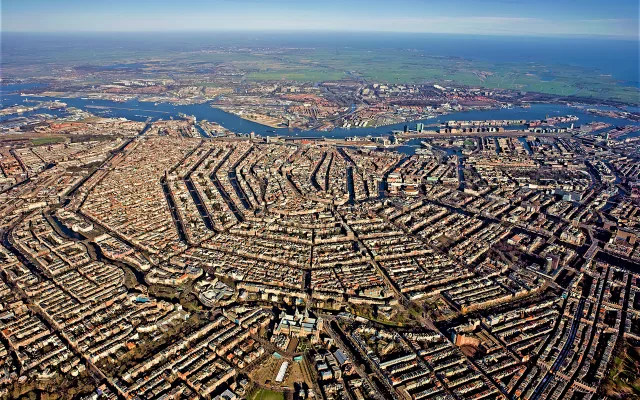
Around 900,000 people live in the city, and considerably more in the wider metropolitan area. Amsterdam is small in area, so it is realistic to cross the centre on foot or by bicycle in half an hour. The historic core is formed by the famous canal ring (Grachtengordel) — a semicircle of three parallel waterways: the Herengracht, the Keizersgracht and the Prinsengracht, dug in the 17th century at the height of the city's trading prosperity. Along them stand narrow merchant houses with ornamental gables and hoisting beams for lifting goods. The 17th-century canal ring is on the UNESCO World Heritage list as an outstanding example of urban planning; the city has some 165 canals and more than 1,200 bridges in all.
History
The name comes from a dam on the river Amstel: a 13th-century fishing settlement turned into a trading hub and, by the 17th century, into one of the wealthiest cities in Europe. This was the Golden Age: the East India Company, banking, cartography and painting made Amsterdam a world centre. Rembrandt worked here, books banned in other countries were printed here, and refugees found shelter — Huguenots, Portuguese Jews, Puritans. A spirit of religious tolerance and commercial pragmatism shaped the character of the city for centuries to come.
Sights
Plan the route thoughtfully — the queues are long, and entry is often by online ticket only.
- The Rijksmuseum — the national museum, with Rembrandt's "Night Watch" and canvases by Vermeer, as well as an extensive collection of applied art and history.
- The Van Gogh Museum — the largest collection of the master in the world, showing his evolution from early dark works to the bright landscapes of Provence.
- The Anne Frank House — the secret annexe where a Jewish family hid from the Nazis; today a memorial and one of the most visited museums in the country.
- The Jordaan — a former working-class quarter, now the most welcoming district, with galleries, antique shops, quiet hofje courtyards and cafes.
- Dam Square with the Royal Palace and the New Church, along with the busy Leidseplein and the Museumplein museum quarter.
- The Bloemenmarkt — the floating flower market, trading in tulip bulbs and seeds.
- A boat trip along the canals — the best way to understand the layout of the city and to see the facades from the water.
The red-light district (De Wallen) stands somewhat apart — the oldest part of the city, with medieval lanes and a nightlife atmosphere of its own.
Atmosphere and culture
Amsterdam is the bicycle capital of the world: two wheels are an equal participant in traffic here, and cycle paths are everywhere. The city is famous for its liberal manners, its density of museums and its abundance of greenery — the Vondelpark serves as the main recreation area for residents. The cultural programme includes the Concertgebouw concert hall, the opera and a great many festivals.
Food
Dutch cooking is simple and filling. Be sure to try the stroopwafel, a thin waffle with a caramel filling, haring (pickled herring, eaten with onion and gherkins), chips with sauces, and the cheeses — Gouda and Edam. Bitterballen (fried balls with a meat filling) and erwtensoep, a thick pea soup, are popular. The Albert Cuyp market in De Pijp is an excellent place for a bite and for getting to know the local food.
Practical advice
Three days is the optimum: a day for the museums, a day for walks along the canals and through the Jordaan, and a day for the surroundings. From Schiphol airport the train is the convenient way into the centre. Trams, the metro and ferries run around the city, and a contactless card works for payment. Note that drinking alcohol in the street is fined, and it is best to give way to cyclists early. The weather is changeable in any season, so an umbrella and a windproof jacket will not go amiss, and tickets to the popular museums are worth booking well ahead.
Photos