 Города и дороги
Description
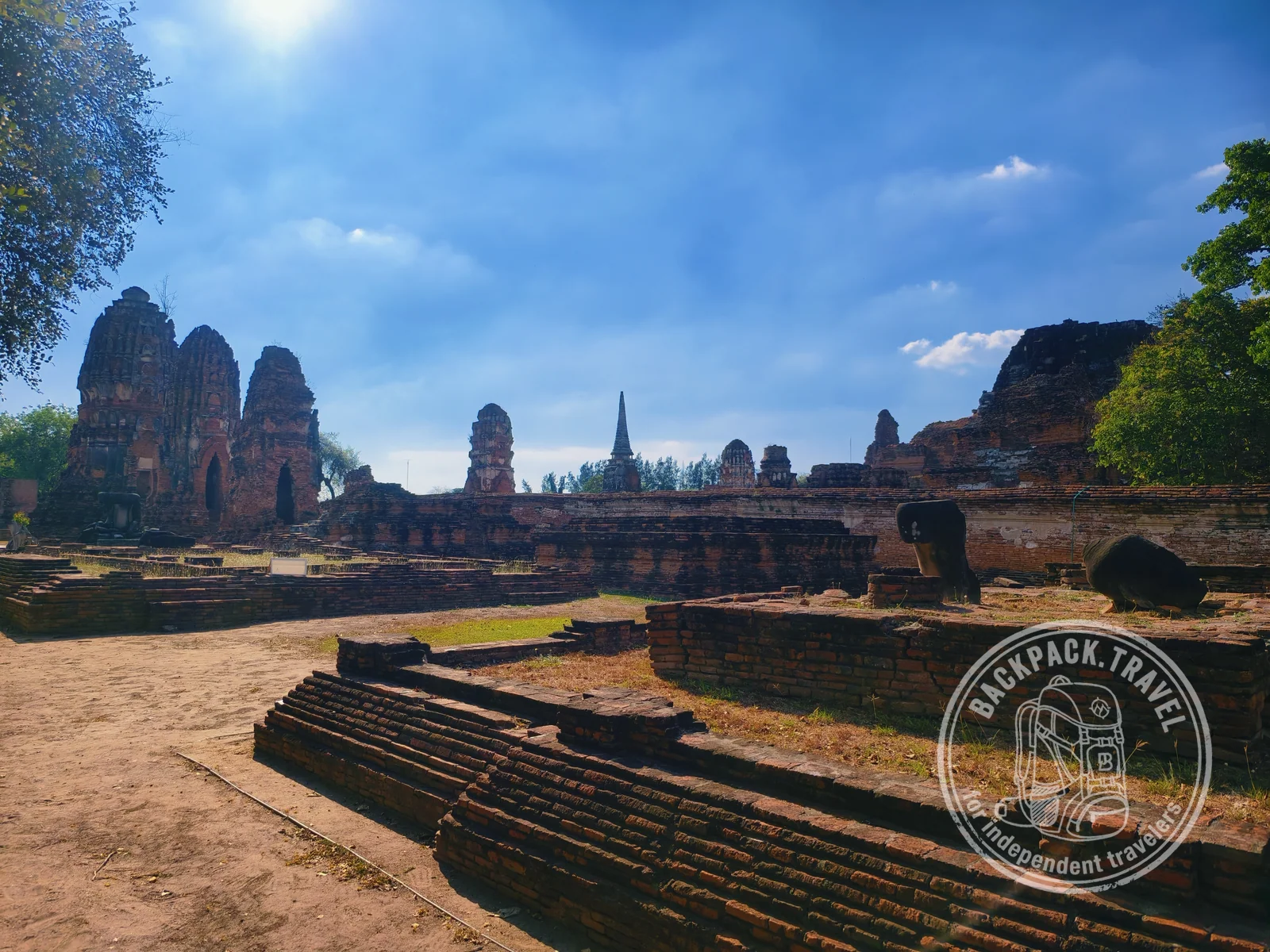
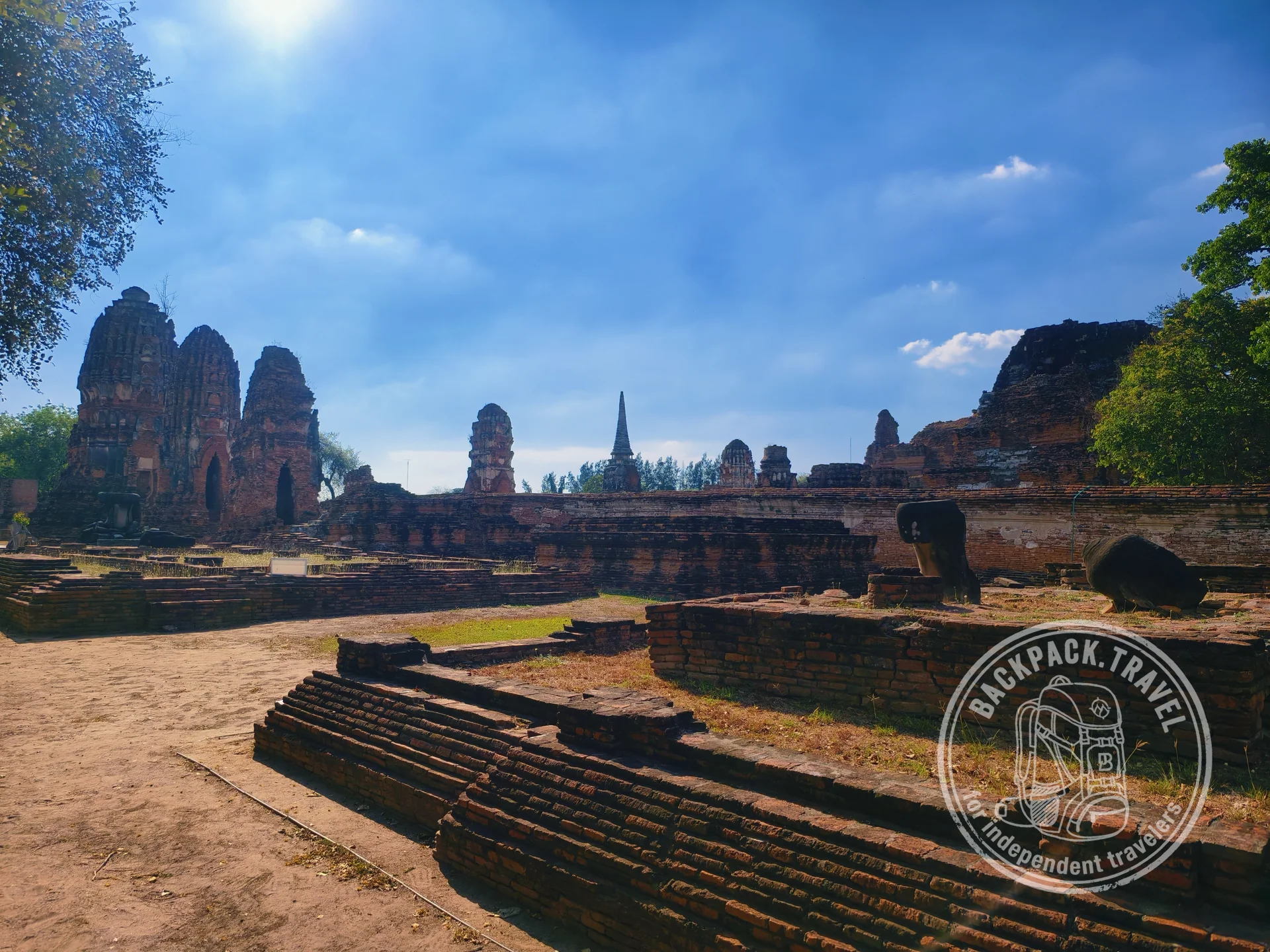
The capital of Siam from the fourteenth to the eighteenth century, burned by the Burmese in 1767. What is left of the city are brick prangs and rows of headless Buddhas, in a historical park on the UNESCO list.
Wiki
Ayutthaya is the ruin of the Siamese capital that stood here from the middle of the fourteenth century until 1767, when a Burmese army took the city and burned it. It was never rebuilt: the new capital was founded downstream at Bangkok, and on the site of the old one there remains a historical park of brick chedis, prangs and rows of headless Buddhas. This is the most logical day trip out of Bangkok, about 80 kilometres to the north.
What was here
The city was founded in 1350 by King Ramathibodi I on an island formed by three rivers, the Chao Phraya, the Pasak and the Lopburi. Over more than four centuries Ayutthaya grew into one of the largest cities in the world of its time, with Portuguese, Japanese, Dutch and French quarters. The destruction of 1767 was total: the wooden palaces burned down, the statues were stripped for their gold and the heads of the Buddhas were knocked off. What you see is a brick skeleton without plaster and with almost no sculpture. The historical park has been on the UNESCO list since 1991.
What to see
There are several dozen sites. A sensible set for one day is this:
- Wat Mahathat was the principal temple of the state, founded in the fourteenth century. This is where the famous stone head of the Buddha grown into the roots of a tree sits, the most reproduced image of Thailand after Bangkok. Exactly how it ended up there is not known; the theories run from looting after the sack of the city to the roots simply growing around it.
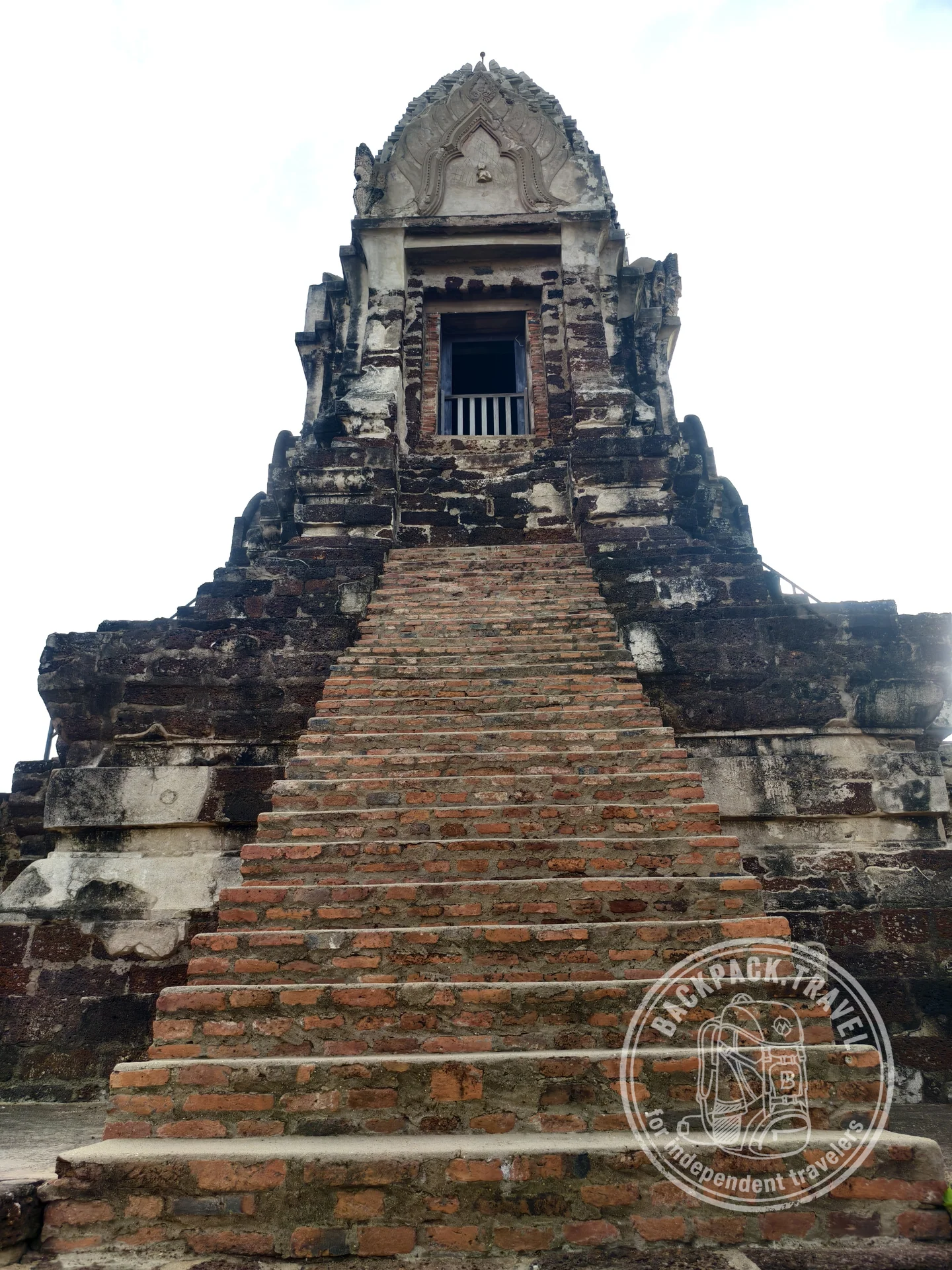
- Wat Ratchaburana stands opposite Wat Mahathat, with a tall prang you can climb into. A hoard and frescoes were found in the crypt; this is one of the few places in the park where painting has survived.
- Wat Phra Si Sanphet was the royal temple on the palace grounds, three large chedis in a row holding the ashes of kings, and the most recognisable silhouette of Ayutthaya.
- Wat Chaiwatthanaram is on the western bank of the Chao Phraya, off the island. It follows the Khmer scheme, with a central prang and a gallery, and it is the best site to catch at sunset. People also come here to be photographed in historical costume, so it grows crowded towards evening.
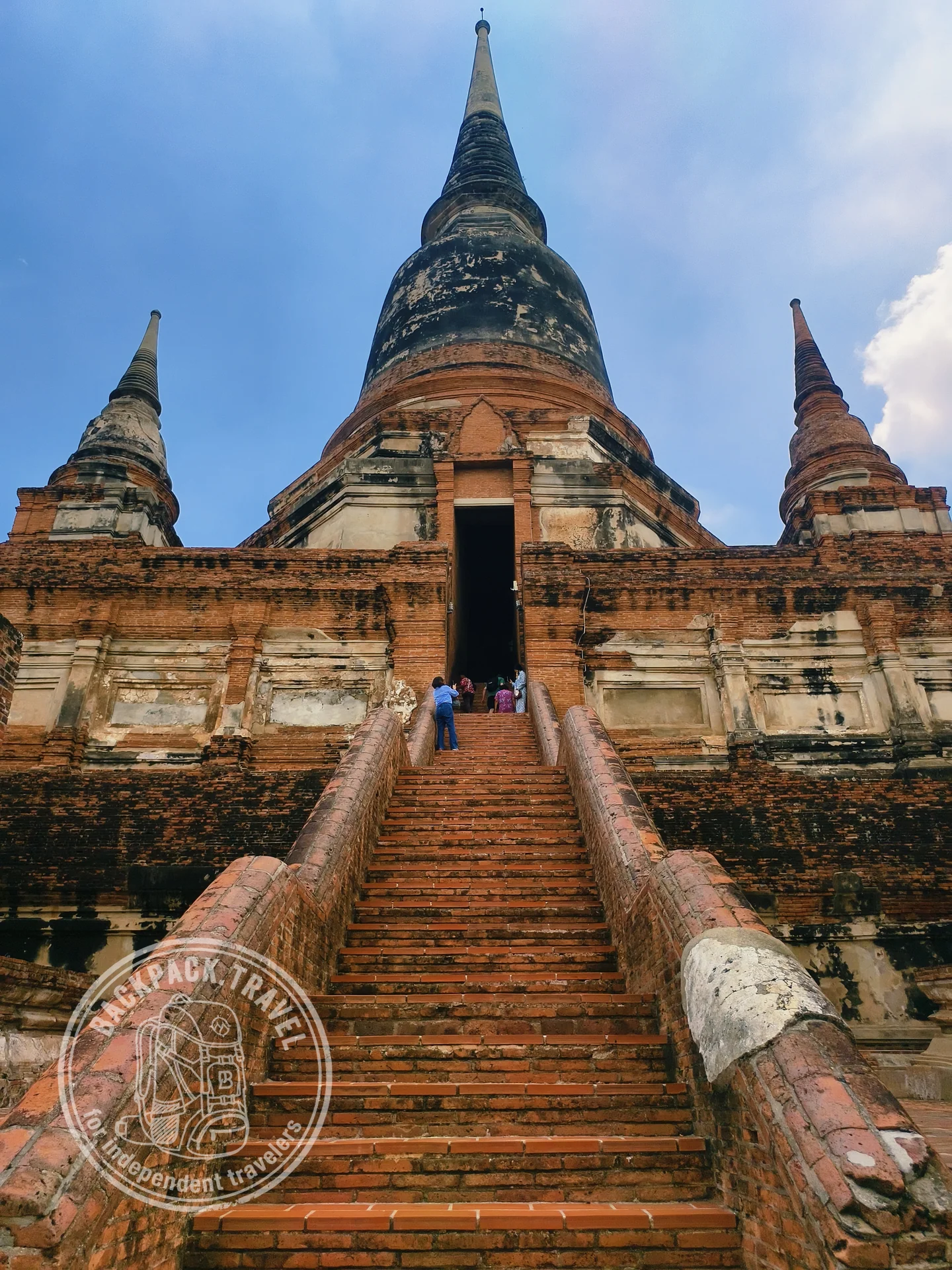
- Wat Yai Chai Mongkhon lies across the river to the southeast, a working temple with an enormous chedi and rows of Buddhas in yellow robes. Here you can see how all of this looked when it was alive.
- Wat Lokayasutharam is a reclining Buddha in the open air, about 37 metres long.
Individual temples charge admission, around 50 baht to enter; there is a single ticket for the main sites that pays for itself from roughly the fourth temple onwards. Hours are generally from 8 to 18, and some of them are lit up in the evening.
Getting there and getting around
- The train from the central Krung Thep Aphiwat station is the most predictable option, about an hour and a half, with cheap tickets. The line runs away from the highway and does not sit in traffic jams.
- Minivans from the northern Mochit terminal take about the same time on the timetable, but at rush hour they easily turn into three hours.
- Within the town a bicycle or a scooter is the most convenient way around: the island is flat and the distances are short. The alternative is a tuk-tuk hired by the hour, with the route and the price agreed in advance. The park cannot be covered on foot, as the sites are scattered over kilometres.
How much time to allow
Most people come for a single day from Bangkok: an early start and four or five temples at a brisk pace. Staying the night in Ayutthaya is noticeably better, because you get sunrise and sunset in the park, when the coaches are gone and the heat lets up. Two days are worth allowing for the sake of the national museum, a boat trip around the island and the more distant sites.
The main enemy here is the sun: there is almost no shade in the park and the brick bakes. Plan your sightseeing from eight to eleven and after three, and give the middle of the day to the museum or to lunch. Clothing has to be modest, covering shoulders and knees, and that rule applies at the ruins too.
Who will not enjoy it
Ayutthaya comes down to brick. If you are not ready to take pleasure in foundations, stupas and fragments with no gilding and no interiors, fatigue will set in by the third temple: from the outside they look alike, and the difference is visible only to someone with an interest in history. There is no picturesque "ancient city" with streets and houses here, as the ruins stand like islands in the middle of an ordinary Thai provincial town with its traffic and its wires. Nor is this a place for a rest: heat, dust and constant journeys. For those going to Thailand for the sea and for idleness, it is more honest to stick to the temples of Bangkok.