Description
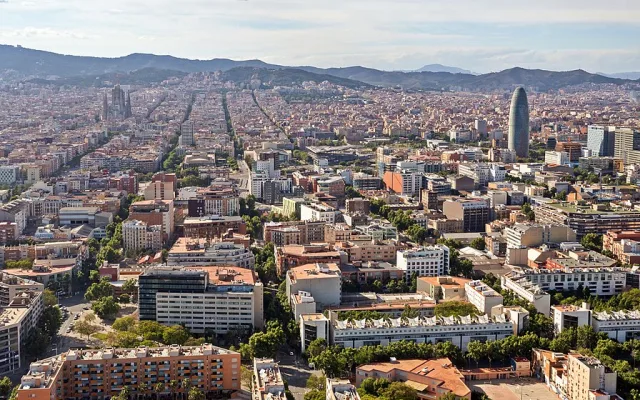
Barcelona is known for the creations of the architect Gaudi, for strolling La Rambla and for the beaches of Barceloneta. The city is also famous for Catalan cooking.
Wiki
Barcelona is the capital of the autonomous community of Catalonia and the second-largest city in Spain, spread along the Mediterranean coast between the Collserola hills and the sea. It is a vivid mixture of Gothic antiquity, the audacious modernism of Antoni Gaudi, busy boulevards, sandy beaches and a food culture that long ago turned the city into one of the most alluring destinations in Europe.
A little history
The city began as the Roman colony of Barcino in the late 1st century BC, and traces of that era still show through in the masonry of the city walls and the columns of the temple of Augustus. In the Middle Ages Barcelona became a wealthy trading centre of the Crown of Aragon, whose maritime power extended across the whole western Mediterranean. The industrial boom of the 19th century and the demolition of the old fortifications made it possible to lay out the Eixample district, with its famous grid of blocks with chamfered corners, designed by the engineer Ildefons Cerda. It was here that Catalan modernisme unfolded, and Barcelona acquired its instantly recognisable architectural face.
Gaudi's architecture
The legacy of Antoni Gaudi is the main reason millions of travellers come to Barcelona.
- The Sagrada Familia — the vast church of the Holy Family, under construction since 1882 and funded by donations. Its forest of stone towers and the stained glass that floods the interior with coloured light have no equal anywhere. Tickets (including the climb up the towers) cost roughly €26–36 (about $30–42); entry is strictly by timed slot and must be booked ahead.
- Park Guell — a garden city on a hill with its mosaic dragon-salamander, undulating bench and colonnades. The paid monumental zone costs about €18 (roughly $21), while the surrounding park is freely open.
- Casa Batllo — the "House of Bones" on Passeig de Gracia, with a facade of broken ceramic and a scaly roof.
- Casa Mila (La Pedrera) — a stone building with a wave-like facade and surreal chimneys on the roof.
- Palau Guell — one of Gaudi's early commissions, close to La Rambla, with fantastical chimneys and grand reception rooms.
Many of these buildings are on the UNESCO World Heritage list.
Districts
The Gothic Quarter (Barri Gotic) — the medieval core, with narrow lanes, the cathedral and the picturesque little bridge on Carrer del Bisbe. El Raval is a colourful multi-ethnic district west of La Rambla. El Born is a fashionable quarter with the basilica of Santa Maria del Mar, the Picasso Museum and no shortage of wine bars. Barceloneta is the former fishermen's quarter by the sea, the district of beaches and seafood places. Gracia is the bohemian part of the city, with welcoming squares and family restaurants, which has kept the feel of a separate town. The famous boulevard of La Rambla links Placa de Catalunya with the port and the Columbus monument.
Catalan food
Catalan gastronomy has a character of its own and does not reduce to the general Spanish clichés. Be sure to try pa amb tomaquet (pan con tomate) — bread rubbed with tomato and sprinkled with olive oil — along with paella, fried squid, slow-cooked meats, crema catalana for dessert and the local sparkling cava. The tapas format, small dishes served with a drink, is ideal for getting to know a range of flavours. For produce and street food head to the La Boqueria market off La Rambla (beautiful but crowded) or to the less touristy Santa Caterina under its wavy coloured roof. A modest lunch in a cafe costs from roughly €12–15 ($14–17). Prices are as of 2026.
Beaches and the sea
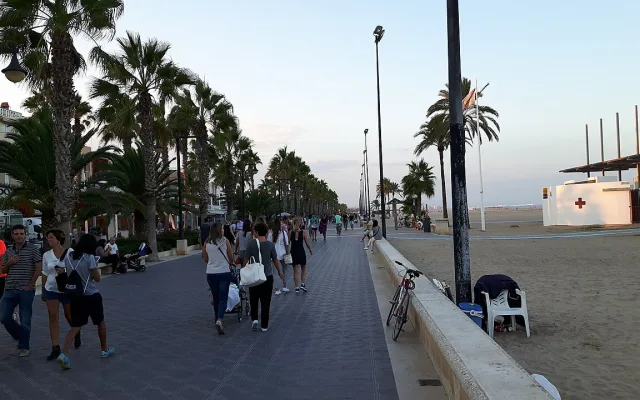
The city's shoreline runs for several kilometres. Barceloneta is the most accessible and liveliest beach, within walking distance of the centre, while Bogatell and Nova Icaria further east are a little calmer and more spacious. The water warms up and stays comfortable for swimming from about June to October. The seafront is good for walking, cycling and admiring the yachts of Port Olimpic.
Practicalities
Allow around four days to get to know the city: a day for the Sagrada Familia and the Eixample, a day for the Gothic Quarter and El Born, a day for Park Guell and Gracia, and one more for the beaches and a walk up Montjuic hill with its castle, museums and views. Public transport is well developed: metro, buses and funiculars cover the whole city, and multi-journey passes are convenient. Tickets for the popular Gaudi sites are best bought online in advance. In the centre, watch for pickpockets in the crowds on La Rambla and on the metro. The best time to visit is spring and early autumn, when it is warm but without the summer heat and the peak queues.
Photos