Description
The "Paris of the East" — Gemmayzeh nightlife, downtown ruins, mountain cooking and a seafront that has outlived every war.
Wiki
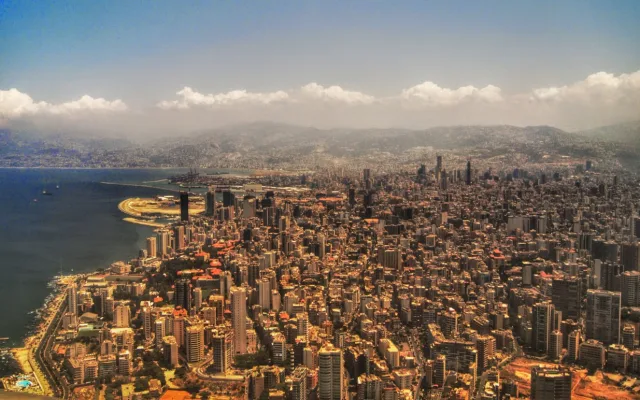
Beirut is the capital of Lebanon, a Mediterranean port with more than five thousand years of history and a reputation as the most cosmopolitan city in the Middle East. It is often called the "Paris of the East" — for its French inheritance, its liberal habits, its cafés and its stubborn capacity to rebuild itself after each war and disaster.
Getting your bearings
The city sits on a headland pushing out into the sea between two mountain ranges. Around 2.2 million people live in the wider metropolitan area, and that population mirrors Lebanon's mosaic: eighteen religious communities are officially recognised — Sunni and Shia Muslims, Maronite, Greek Orthodox and other Christians, Druze, Armenians and more. The mix shows at every turn: a mosque stands next to a cathedral, Arabic script next to French shop signs. Beirut lived through the civil war of 1975–1990 and the port explosion of August 2020, whose traces are still visible in the seafront districts. Conditions in the region can shift quickly, so check the current security situation and your own government's travel advice shortly before you travel.
What to see
- The Corniche — a five-kilometre seafront promenade, the city's favourite place for a walk, a run or a sunset. People fish from the parapet and sell cardamom coffee and boiled corn along it.
- Raouché (the Pigeon Rocks) — two natural stone arches rising out of the water at the western tip of the city, and Beirut's best-known natural landmark.
- Mohammad Al-Amin Mosque — the largest in the country, with turquoise domes and tall minarets, completed in 2008. St George's Maronite Cathedral stands right beside it: religious coexistence made visible in a single square.
- Downtown (Solidere) — the business and shopping quarter rebuilt after the war, with the Roman Baths, Place de l'Étoile and the clock tower.
- The National Museum of Beirut — a superb collection of Phoenician sarcophagi, Roman mosaics and Byzantine artefacts.
- Beit Beirut — a "house of memory" on the former front line, a bullet-riddled building turned into a monument to the war.
Neighbourhoods and atmosphere
Bohemian Beirut lives in Gemmayzeh and Mar Mikhaël to the east. Narrow streets with stairways, restored Ottoman-era townhouses, galleries and independent shops by day; dozens of bars, restaurants and clubs by night. These are the districts the 2020 explosion hit hardest, and they are still being put back together. Hamra in the west is the university and shopping quarter, full of cafés and bookshops; Achrafieh is the Christian hill with the most elegant housing stock.
Food
Lebanese cooking is rightly rated among the best in the Mediterranean, and Beirut is its capital. The table starts with mezze, a spread of small dishes: hummus, baba ghanoush made from charred aubergine, tabbouleh heavy on parsley and bulgur, moutabbal, stuffed vine leaves, labneh. For something hot, look for kibbeh (bulgur and meat croquettes), chicken shish taouk, kafta grilled over charcoal and fresh fish along the shore. Pudding means knafeh with cheese and syrup, baklava, or ice cream flavoured with mastic. Lebanon is an ancient wine country: bottles from the Bekaa Valley and the local aniseed spirit arak accompany almost any dinner.
Practicalities
Money. Lunch in a café runs about $10–18, dinner in a restaurant $30–60, a glass of local wine $8–12. The Lebanese pound has swung violently in recent years, so prices are usually quoted and settled in US dollars — bring cash in small notes, and expect figures to move. Prices are as of 2026.
Transport. Beirut–Rafic Hariri International Airport (BEY) is the country's only commercial airport. The list of airlines serving it has changed repeatedly over the past few years, so check which carriers are actually flying before you build an itinerary around a particular route. A taxi into the centre is around $25–35. There is next to no city public transport; what fills the gap is the service taxi (a shared car running a rough route, $2–4 a leg) and the Bolt app. A private taxi is a negotiated $8–15.
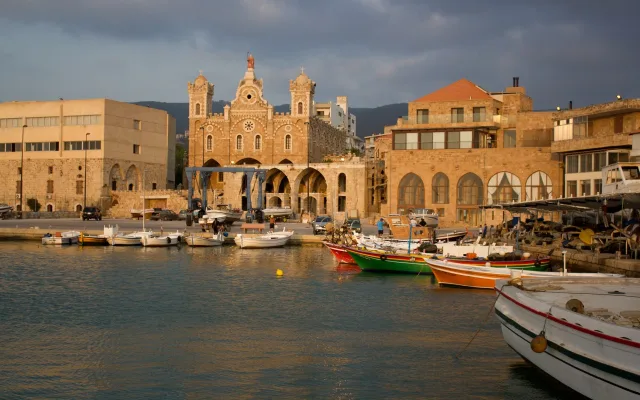
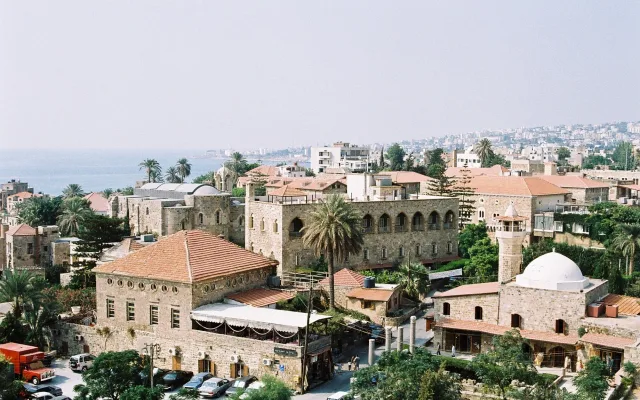
Trips out of town. Phoenician Byblos (Jbeil) is about an hour away, and coastal Batroun about the same. The road passes temple sites, old harbours and hill villages. With time to spare, head up into the Lebanon mountains to the cedar groves.
When to go
May–June and September–October are the sweet spots: dry, warm, around 22–28°C, with the swimming season in full swing. Summer is hot and humid. Winter is mild but wet, hovering around 12–15°C — and yet there is snow in the mountains an hour away, one of the rare places where you can swim in the sea and ski on the same day.
How long to stay
Three days covers the city: the first for the Corniche, Raouché and downtown; the second for the museums, Beit Beirut and an evening in Gemmayzeh; the third for a run out to Byblos or Batroun. That is enough to feel Beirut's contradictory rhythm, from classical ruins to bars that empty at dawn.