Description
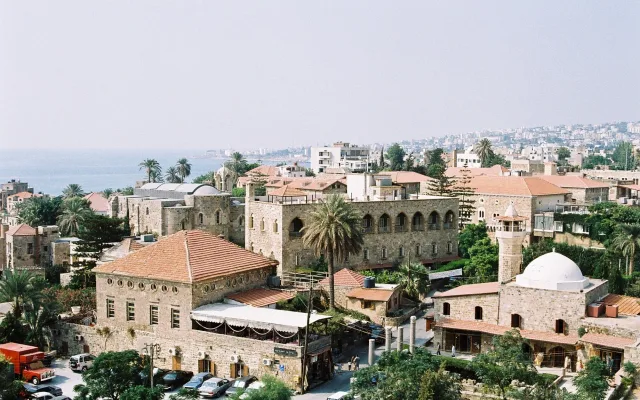
One of the world's oldest continuously inhabited towns — a Crusader citadel above a Phoenician harbour that still works.
Wiki
Byblos (Jbeil in Arabic) is one of the rare places where "one of the oldest cities in the world" is not marketing copy: archaeologists have dug through layers here running from the Neolithic to the Crusaders, and all of it sits in one compact archaeological park by the sea. A single day is enough to see the ruins, the old harbour and the souk without hurrying, and if you are based in Beirut you can do it there and back.
What is genuinely worth seeing
The main event is the archaeological site, with the Crusader citadel standing inside it. This is not a set of separate monuments but one hill above the harbour, where Roman columns, Phoenician temples, royal tombs and a twelfth-century fortress share the same ground. The citadel towers give the best view over the port and the sea — save them for the end of your circuit, when the light softens towards sunset.
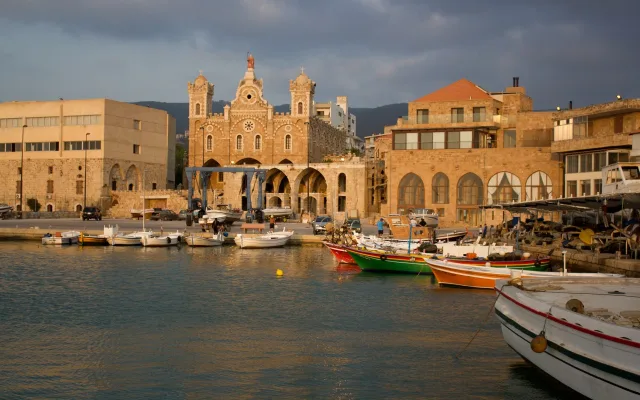
- The Phoenician harbour — a small natural anchorage that has been in use for thousands of years. Today it is a row of fishing boats and a couple of fish restaurants along the quay: an atmospheric place to stop for a coffee, but fifteen or twenty minutes is all it takes to see.
- The old souk — restored stone lanes right at the entrance to the archaeological zone, lined with antique dealers, potters, soap sellers and souvenir shops. Prices are pitched at visitors and haggling is expected; treat it as a pleasant approach route rather than a destination.
- St John-Mark Cathedral — a Maronite church begun by the Crusaders in 1115, with an unusual open-air domed baptistery on its northern side. Entry is normally free; look in as you pass.
- The wax museum — naive tableaux from Lebanese history. An acquired taste: worth it only if you are travelling with children or have time to burn.
A sensible loop: souk, then the archaeological zone and citadel, then out to the harbour and along the quay. Everything is within a walking radius of under a kilometre, and you do not need a car inside the town.
How much time to allow
One day is plenty. Budget an hour and a half to two hours for the archaeological site itself, and about as much again for the harbour, the souk and lunch. If you also want to swim and lie on a beach, that is a full day, and it becomes worth staying the night rather than driving back to Beirut in the evening. An overnight also buys you a quiet evening in the old town once the day groups have left.
Getting there and getting around
Byblos is about 40 km north of Beirut along the coast road.
- Service taxis (shared cars) are what most independent travellers use: cheap, but the car follows a route and picks up other passengers along the way. Make clear you want Jbeil itself, not a drop somewhere "on the way through".
- Minibuses leave from the Dora area in northern Beirut and are the cheapest option of all. Destination boards in Latin script are not guaranteed — ask for "Jbeil".
- A private taxi will take you door to door but costs noticeably more. Agree the fare before you get in; meters are often absent.
Beirut airport (BEY) is roughly an hour away. If you are landing and seeing Byblos on the same day, it is simpler to take a car straight from the airport and bypass the centre.
Food and money
The cooking is Lebanese with a lean towards fish and seafood. The reliable move is mezze: a spread of small dishes (hummus, moutabbal, tabbouleh, fattoush, fried vegetables) that works out better value and more fun for a group than one large plate each. The fish restaurants by the harbour are the most photogenic and the most expensive; walk a couple of streets inland for fairer prices.
Broadly: lunch in a simple taverna is cheap, while dinner with fish by the water lands at good European restaurant prices. One Lebanese quirk to plan for is currency chaos — prices may be reckoned in dollars or in pounds at a "market" rate that moves. Carry US dollars in small notes, confirm the total before you order, and do not count on cards being accepted everywhere.
Safety and when to go
Conditions in Lebanon can change fast — check recent news and your own government's travel advice before you go, especially for regions beyond the Beirut–Byblos coastal strip. Byblos itself is quiet and geared to visitors, but the wider context is not something to ignore.
The best months are May–June and September–October: warm, the sea still or already comfortable, fewer people. July and August are the peak — hot, crowded, with beach clubs full and pricier. Winter is mild but too cold for swimming, which is the trade-off for having the ruins and the old town to yourself.
Common mistakes
- Arriving without US dollars in cash and relying on a card, and finding no convenient way to pay.
- Eating only by the harbour without looking inland — you pay for the view.
- Planning Byblos as "a couple of hours in passing": the drive eats the time, so give it half a day at least.
- Not checking the current situation in the country before setting off.