Description
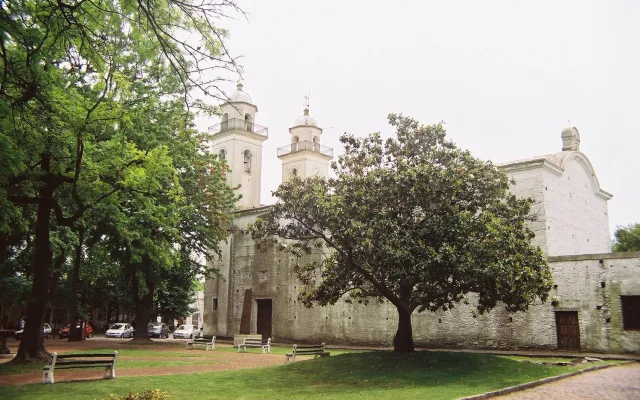
Uruguay's oldest city, with the cobblestone streets of the Barrio Histórico and a lighthouse facing Buenos Aires — the perfect day trip across the estuary.
Wiki
Colonia del Sacramento is one of those rare cases where a day trip fully justifies itself: a small, compact, walkable city, easy to reach from Buenos Aires by ferry and be back in time for dinner. But if you can stay the night, do — evening Colonia, once the day crowds have gone, is a different place entirely.
Why go and how long to allow
The city's main draw is its preserved colonial quarter from the 17th and 18th centuries, Uruguay's first UNESCO World Heritage site, inscribed back in 1995. Portugal and Spain seized Colonia from each other seven times after its founding in 1680, and the result is a blend of two architectural traditions across a handful of cobbled blocks. You can walk through the Barrio Histórico at a relaxed pace in 3–4 hours; the entire historic centre is navigable on foot with no need for a car.
A day is the bare minimum and it's enough for a day trip. But Colonia has two faces: daytime brings ferry crowds from Argentina, while evenings after the last departure bring near-empty streets and a sunset over the Río de la Plata from the old slipway and pier that is worth the extra hours. If you want the second experience, stay overnight.
Getting there and getting around
- From Buenos Aires by ferry — the most logical route. Fast ferries take about an hour; slower, cheaper services are also available. Booking tickets online in advance is worthwhile, as sailings on weekends and in high season sell out. Argentine and Uruguayan border formalities are handled on board — bring your passport.
- From Montevideo — by bus along the highway, a journey of a few hours; Colonia fits neatly into a wider circuit of the country.
- Within the city — on foot. The port and bus terminal are a short walk from the old quarter. Renting a golf cart, scooter or bicycle is a popular way to reach Real de San Carlos and the beaches on the outskirts, but for the centre itself it is unnecessary.
What to see
The heart of everything is the Barrio Histórico, with its cobblestones and low-slung houses. The key sights form a single walking loop:
- Calle de los Suspiros — a short, sloping street leading down to the river, the most photographed in Uruguay. Come early in the morning or late afternoon to catch it without crowds.
- Faro de Colonia — the lighthouse next to the ruins of the San Francisco convent, the best vantage point over the terracotta rooftops and the bay. There is a nominal admission charge.
- Portón de Campo — the only surviving city gate, dating from 1745, with a wooden drawbridge; a natural starting point for a walking tour.
- Iglesia Matriz on Plaza Mayor 25 de Mayo — the oldest church in the country.
- House museums (Casa de Lavalleja, the Governor's House, the Portuguese Museum and the Municipal Museum) — small collections with token admission fees; a combined ticket covering several museums is usually available and saves money if you like going inside.
- Real de San Carlos — an abandoned early-20th-century leisure complex on the outskirts: the ruins of a bullfighting arena, a pelota court and an old racetrack. An atmospheric, uncrowded spot for anyone with a spare hour and their own transport.
- The old slipway and waterfront — the place to be at sunset. The Río de la Plata here is as wide as a sea, and the sun drops straight into the water.
Colonia department has wineries of its own — Los Cerros de San Juan, the oldest in the country, and the estates around Carmelo such as Narbona — where you can taste Tannat, Uruguay's signature red grape variety. Tastings are generally by appointment; getting there without a car is awkward, so a wine detour is better planned as part of a broader country itinerary.
Food and prices
The cooking is simple and meat-centred. Try a chivito — Uruguay's signature sandwich of beef, ham, egg, bacon and cheese, filling enough to count as a full meal. Alongside it you will find parrilla/asado (meat grilled over coals), milanesa, and dulce de leche in every possible form for dessert. Uruguay is not among South America's cheaper destinations, and Colonia's tourist centre sits above the average: cafés directly on Plaza Mayor and along the main streets charge noticeably more. Walk a couple of blocks away from the UNESCO quarter and prices become considerably more reasonable.
Ways to save: take an early ferry in and a late one back instead of staying overnight; buy the combined museum ticket; eat away from the tourist core; book ferry tickets online in advance.
When to go and what to watch out for
The best time to visit is the Uruguayan summer and shoulder season (late spring through early autumn, November–March), when it is warm and all the cafés are open; winter is quieter and cheaper but many places close earlier. Colonia is one of the safest and most relaxed small towns in the region and is perfectly pleasant to walk around in the evening.
Common mistakes: arriving on a weekend, when Argentine visitor numbers peak; forgetting your passport (this is an international border crossing); misjudging the last ferry and getting stranded; trying to visit the wineries without a car. And don't rush off straight after lunch — the sunset is worth staying for.