Гран-Бассам: достопримечательности и что посмотреть, Кот-д'Ивуар
Côte d'IvoireDescription
Côte d'Ivoire's first capital and a UNESCO-listed colonial quarter on the Atlantic coast.
Wiki
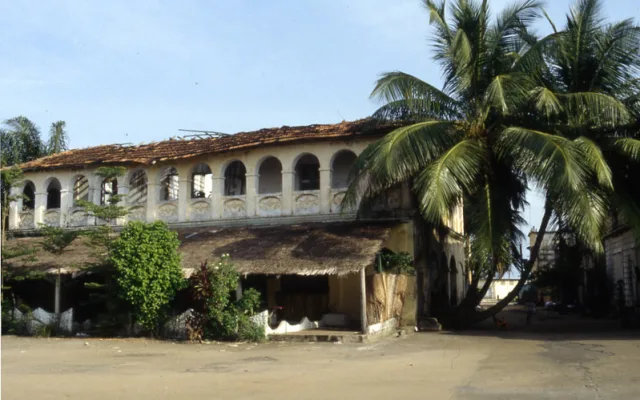
Grand-Bassam is one of those places where half an hour in a shared minibus from Abidjan is enough to step into an almost frozen 19th century: peeling colonial mansions a stone's throw from the ocean surf. It's worth the trip for the contrast alone — the business buzz of the city against a slow beach town where the main pleasure is wandering among ruins and listening to the waves.
What's actually worth seeing
All the interest is concentrated in the Quartier France — the historic quarter on a narrow spit of land between the lagoon and the Atlantic. This is the UNESCO site itself: rows of yellow and white buildings that once housed governors, trading companies and the customs service, many now half-abandoned and slowly crumbling in the humid climate. That very "ruinousness" is what gives the place its atmosphere — not a restored open-air museum but a lived-in, inhabited decay. Allow 1.5–2 hours for the walk; go slowly and look into the courtyards.
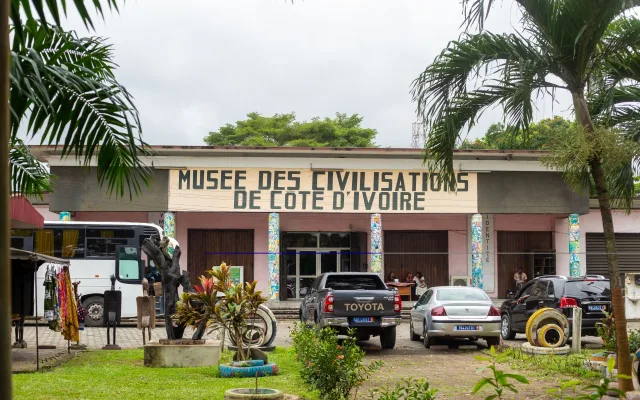
- National Costume Museum in the former governor's palace — the most substantial indoor stop. Traditional dress from the country's many peoples, a concise and honest way to understand Côte d'Ivoire's ethnic mosaic. Half an hour to an hour.
- Old Cathedral of the Sacred Heart — an abandoned neo-Gothic church, photogenic from outside; getting in is not always possible.
- The beach — a long Atlantic strip just beyond the quarter. The ocean is warm, but watch out for rip currents: they pull you away from shore quickly; swim near beach establishments where someone keeps an eye on the water and don't go out far.
- For the curious — the N'Zima village with traditional huts and a voodoo shrine in Kouasikro. These are niche stops: if African traditional religions aren't your thing, skipping them won't spoil the day.
The reality: half the "sights" are facades you look at from the outside. Don't expect museum infrastructure; expect texture and atmosphere.
How much time to allow
One day is more than enough. The ideal plan — leave Abidjan in the morning, walk the quarter before the heat sets in, have a fish lunch by the water, spend the afternoon on the beach and head back in the evening. If you'd rather take it slow and swim after dark, stay overnight: there are hotels and guesthouses along the beach, but on weekdays the town is quiet — all the energy arrives at weekends, when Abidjanais and expats come down from the city.
Getting there and around
Grand-Bassam is 40 km east of Abidjan; the nearest airport is ABJ. Options:
- Shared minibus (gbaka) from Abidjan — the cheapest option, about $2; look for transport heading east and ask for "Bassam".
- Taxi from the city or airport — faster and direct, but more expensive; agree on the price before you get in, there are no meters.
You don't need a vehicle inside town: the entire historic quarter is walkable, everything within a kilometre. For the beach area and outlying villages, a moto-taxi (zémidjan) is cheap and quick — but helmets are absent and local traffic habits are what they are, so assess the risk yourself.
Food and money
The cuisine is a mix of Ivorian and French. Try attiéké (fermented cassava) with grilled fish, garba, fufu; for breakfast there are decent croissants and baguettes, a legacy of the colonial era. The cheapest and tastiest meals are at a maquis — the local casual open-air eatery; a full lunch comes to a few dollars. Dinner at a beach restaurant is noticeably pricier, closer to tourist-level. One local curiosity: bangui, fresh palm wine, costs next to nothing but goes down deceptively easily.
In practice: food at a maquis and transport are cheap; beach restaurants and weekend accommodation are noticeably more so. Cash (CFA francs) is essential — cards are rarely accepted and ATMs are few, so withdraw money in Abidjan before you come.
When to go
The best season is the dry season, November–March, with temperatures around 26–30 °C. In January the harmattan can blow in: this dry wind carries dusty haze from the Sahara, the sky turns milky and sunsets lose their colour — worth knowing if photography matters to you. The rainy season brings downpours and makes wandering the quarter considerably less pleasant.
Practical notes
- Safety: the quarter and beach are calm during the day, but don't leave valuables unattended on the sand, and avoid walking alone on unlit stretches of beach after dark.
- Swimming: take the ocean seriously — rip currents here are a real hazard, not a formality.
- Rookie mistake — going on a weekday and expecting life: the quiet grows on you, but not immediately. If you want atmosphere and people, plan for Saturday or Sunday.
- French gets you by almost everywhere; English is of limited use, so keep an offline translator handy.
- Respect privacy: many of the "ruins" are still someone's home — ask before walking into a courtyard or photographing people.