Description
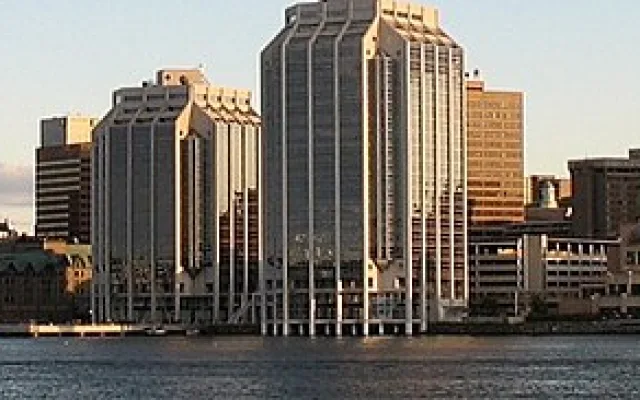
Halifax is an Atlantic port city in Canada, known for its historic citadel, fresh lobster, the pubs of Argyle Street, and the lighthouse at Peggy's Cove.
Wiki
Halifax is the largest city in Canada's Maritime Provinces and the capital of Nova Scotia, built around one of the deepest and most ice-free natural harbours in the world. Founded by the British in 1749 as a military outpost, it has lived by the sea for nearly three centuries: convoys departed from here, the bodies of Titanic victims were brought ashore here, and the city witnessed one of the most powerful man-made explosions of the pre-nuclear era.
A brief history and the city's character
The city is named after George Montagu-Dunk, Earl of Halifax. From the outset it was conceived as a counterweight to the French fortress of Louisbourg, and its early layout follows military logic: a hill topped by a citadel, streets descending to the waterfront, warehouses and shipyards. The 19th century made Halifax the most important transatlantic port of the British Empire, while the 20th brought two tragedies etched into the city's memory. In April 1912, the bodies of Titanic passengers were brought here — many are buried at Fairview Lawn Cemetery. Then on 6 December 1917, a collision between two ships, one of which was carrying explosives, caused the Halifax Explosion, which destroyed the city's north end and claimed around two thousand lives.
Today Halifax is a compact, green, and youthful city: several large universities (Dalhousie, Saint Mary's) fill the streets with students, and by Canadian standards the cost of living is noticeably more affordable than in Toronto or Vancouver.
What to see
- Halifax Citadel — a star-shaped Victorian-era fortress on top of a hill, complete with a moat, bastions, and a garrison dressed in the historical uniforms of a Scottish regiment. The daily noon cannon salute is a long-standing tradition by which residents once set their clocks.
- Waterfront — a wooden boardwalk stretching several kilometres along the harbour, past piers, street performers, shops, and restaurants. From here, a city ferry crosses to Dartmouth — one of the oldest ferry services in North America.
- Maritime Museum of the Atlantic — a maritime museum with genuine Titanic artefacts (including a deck chair and wooden carvings) and a detailed exhibition on the 1917 explosion.
- Pier 21 — the former immigration terminal, the "Atlantic Ellis Island," through which one in five Canadians entered the country. Now Canada's National Immigration Museum.
- Public Gardens — a model Victorian park dating from the mid-19th century, with fountains, a bandstand, and flowerbeds in the British style.
- Fairview Lawn Cemetery — rows of modest headstones marking the graves of Titanic victims, including the "unknown child" who became a symbol of the disaster.
Day trips
A half-day trip to Peggy's Cove is almost obligatory: a white lighthouse perched on bare granite boulders lashed by Atlantic waves — the province's most recognisable landscape. On the way, it is worth stopping at the memorial to Swissair Flight 111.
An hour and a half west lies Lunenburg — a historic port town protected by UNESCO, with brightly coloured wooden buildings and a shipyard where the legendary racing schooner Bluenose was built, depicted on the Canadian dime. Nature lovers should also explore the coastal villages of the South Shore, with their endless beaches and fishing wharves.
Food and drink
Maritime cuisine revolves around the bounty of the cold Atlantic. The freshest lobster is served whole or as a lobster roll — a bun generously stuffed with claw meat. Mussels and oysters from Prince Edward Island, large scallops from Digby, smoked fish, and chowders are all popular. A distinctly local creation is the donair: a spiced beef wrap with a characteristic warm, sweet sauce made from condensed milk, officially recognised as the city's signature dish. The pubs around Argyle Street and Grafton Street are the heart of the evening scene, with craft beers from local breweries.
Price guide: lunch at a café around 18–25 CAD (about $13–18), dinner with drinks 40–70 CAD ($29–50), a lobster roll 25–35 CAD ($18–25), coffee at Tim Hortons about 2.50 CAD ($2). Prices are as of 2026.
Getting there and around
Halifax Stanfield International Airport (YHZ) is about 35 km north of the city centre, served by Air Canada, WestJet, Porter, and seasonal transatlantic flights. You can reach the city by the Maritime Bus airport shuttle (around 22 CAD / $16) or by taxi. The historic core is small enough to cover on foot; for longer journeys, Halifax Transit runs frequent buses (around 3 CAD / $2 per ride, with the harbour ferry included in the same system).
The ideal length of stay is three days: the first for the Citadel, the waterfront, and the museums; the second for Peggy's Cove and the coastline; the third for Lunenburg. The best time to visit is June to October, when ferry services run, festivals take place, and autumn adds the lobster season and the colours of a Maritime fall.