Description
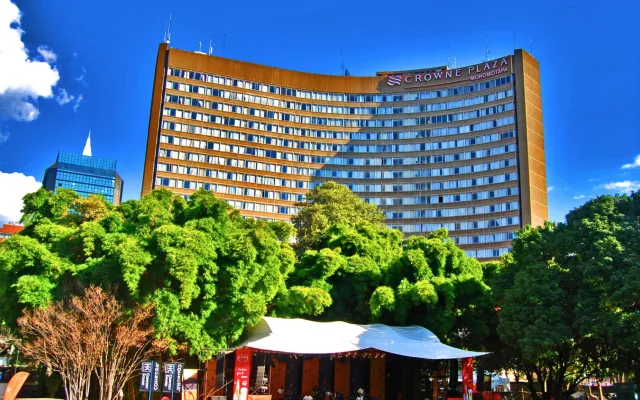
Harare is the capital of Zimbabwe, known for its National Botanic Garden, the National Gallery and as the starting point for visits to the ruins of Great Zimbabwe.
Wiki
The capital of Zimbabwe, with around 1.5 million people in the city proper and 2.5 million across the metropolitan area. Known as Salisbury from 1890 to 1982, when it was the capital of the colony of Southern Rhodesia, it was renamed after the Shona chief Harare. It stands at 1,480 m, which gives it a mild climate. The city is not a destination in itself — most people pass through on the way to Victoria Falls, Mana Pools National Park or Great Zimbabwe, a UNESCO site. Check the economic and political situation before travelling: the country has been in crisis for years.
Main sights
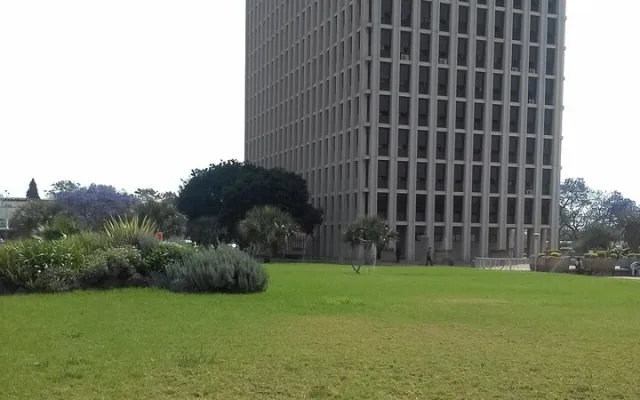
- The Avenues — Harare's historic quarter, the former colonial district, with shaded streets of jacaranda that flower purple in October and November.
- The National Gallery of Zimbabwe — the country's principal gallery, showing Shona art and the internationally significant Zimbabwe Stone Sculpture school.
- National Heroes' Acre — the memorial to the heroes of the independence struggle, on a hill above the city.
- Mbare Musika Market — the largest market in Harare. Not for the faint-hearted.
- Mukuvisi Woodlands — the main reserve within the city limits, with antelope, giraffes and zebras.
- Lion and Cheetah Park — a private reserve 25 km out.
- Cleveland Dam — the city's freshwater supply, with the Larvon Bird Gardens nearby.
- Harare Botanical Gardens — 67 hectares.
- Great Zimbabwe — a UNESCO site 290 km away, the largest medieval stone ruins south of the Sahara (11th-15th centuries, capital of the Munhumutapa empire).
- Domboshava — rock paintings and a viewpoint outcrop 30 km out.
- Mana Pools National Park — a UNESCO site 350 km away on the Zambezi, the country's leading safari park.
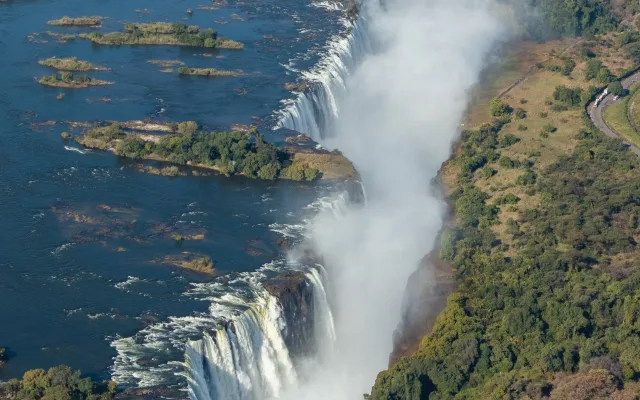
- Victoria Falls — 850 km away, an hour and a half by air, or via the Zambian border.
Food and prices
The cooking is Zimbabwean: sadza (much like ugali), nyama (meat), mopane worms (an acquired taste) and boerewors sausages inherited from South Africa. Lunch in a café is $8-15, dinner in a restaurant $18-35. A litre of petrol costs $1.50 and a taxi across town $5-15, by negotiation; Vaya and Hwindi are the local ride-hailing apps. US dollars circulate alongside the local RTGS dollar. Prices are as of 2026.
Getting there and getting around
Harare International Airport (HRE) is served by South African Airways, Ethiopian, Kenya Airways and Emirates. A taxi into the centre costs $25-35. Around the city there are taxis and kombis, the minibuses, which suit the experienced. To Victoria Falls it is an hour and a half by air ($200-400, expensive) or eighteen hours by train ($15-30, and legendary).
When to go
May to October is the dry season, 12-25°C, and ideal for safari. September and October are the hottest months before the rains, and the best time for concentrations of animals at the water. The wet season (November to April) is the green season, and the jacarandas flower in October. One warning stands above the rest: Zimbabwe has been in economic crisis for years.