Description
One of the oldest settlements in Russia — a 14th-century stone fortress, Truvor's hillfort and the Slavonic Springs.
Wiki
Izborsk is a small village thirty kilometres west of Pskov, and at the same time one of the places where the chronicle history of Rus begins. Under the year 862 it is named among the towns to which the Varangians came: Rurik to Novgorod, Sineus to Beloozero and Truvor to Izborsk. Today it is a museum reserve: a stone fortress on a hill, an ancient hillfort, springs and the valley around them.
The fortress
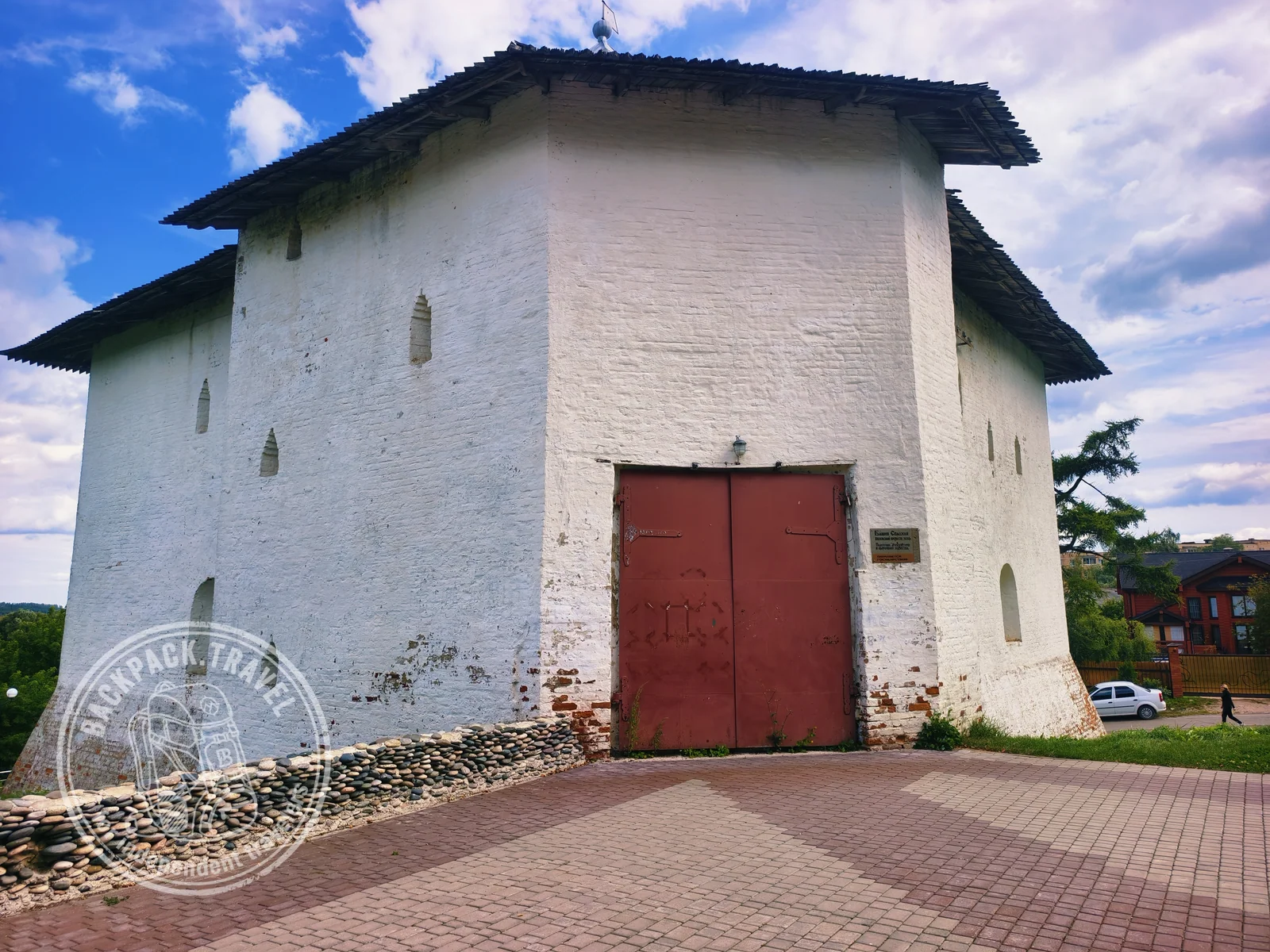
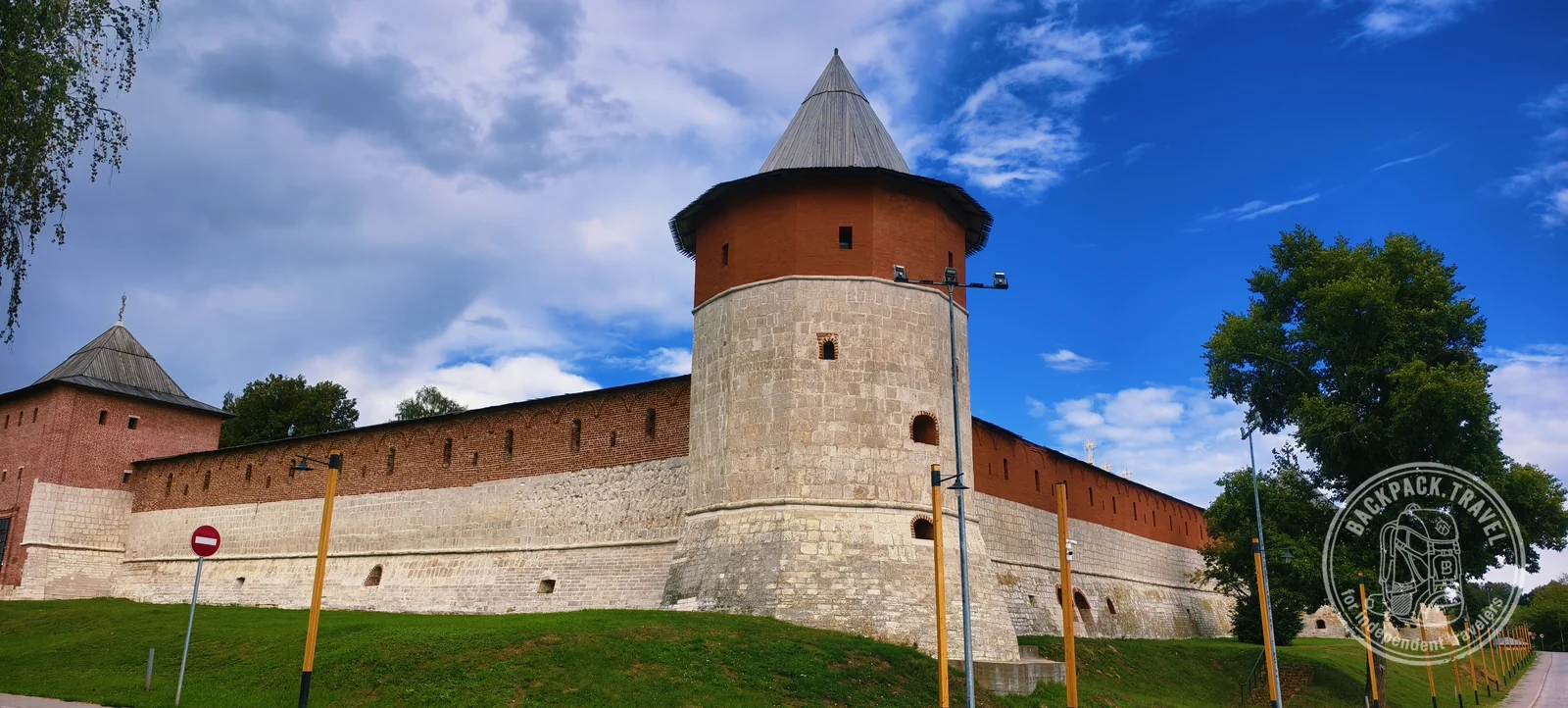
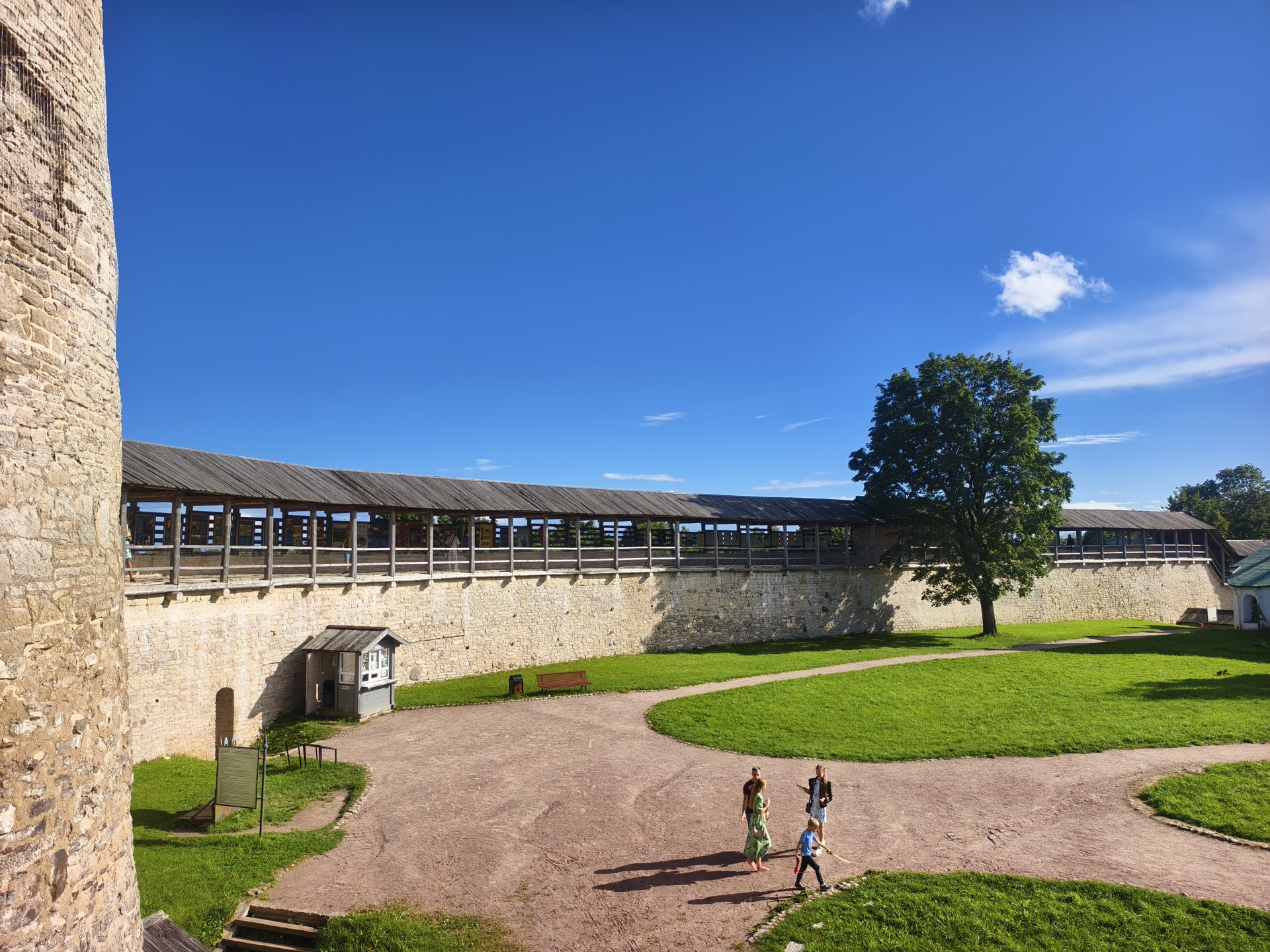
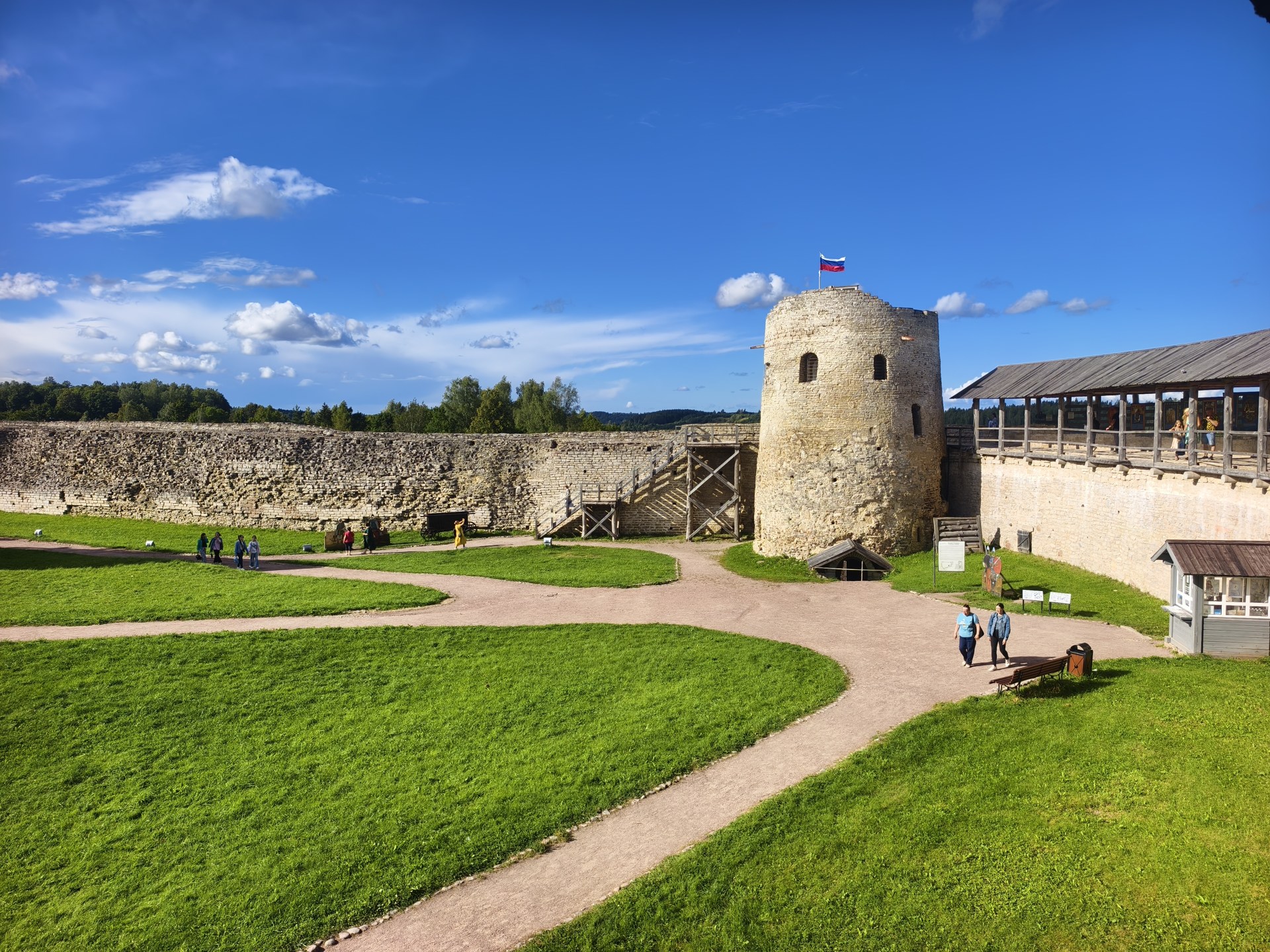
Izborsk fortress was founded in 1330 by the posadnik Sheloga on Zheravya Hill, where the settlement moved from the older site. Over the next two centuries it withstood dozens of sieges and was never taken by storm by the Livonians — hence its reputation as the "iron town".
What to look for inside and out:
- The Lukovka tower — the oldest, standing inside the perimeter rather than in the wall; there is a viewing platform on top from which both the valley and the hillfort are visible.
- The Talavskaya, Vyshka, Ryabinovka, Temnushka and Kolokolnaya towers — Vyshka is the tallest, and Kolokolnaya once carried the belfry.
- The zakhaby — long stone corridors before the gates, built as traps; this characteristically Pskovian device is unusually legible at Izborsk.
- St Nicholas Cathedral, 14th century, inside the walls and still in use.
- The secret passage to water in the northern section of the wall.
After the restoration of 2010-2012 for the 1,150th anniversary the fortress looks whole; some of the masonry is new, and it shows.
Truvor's hillfort and the springs
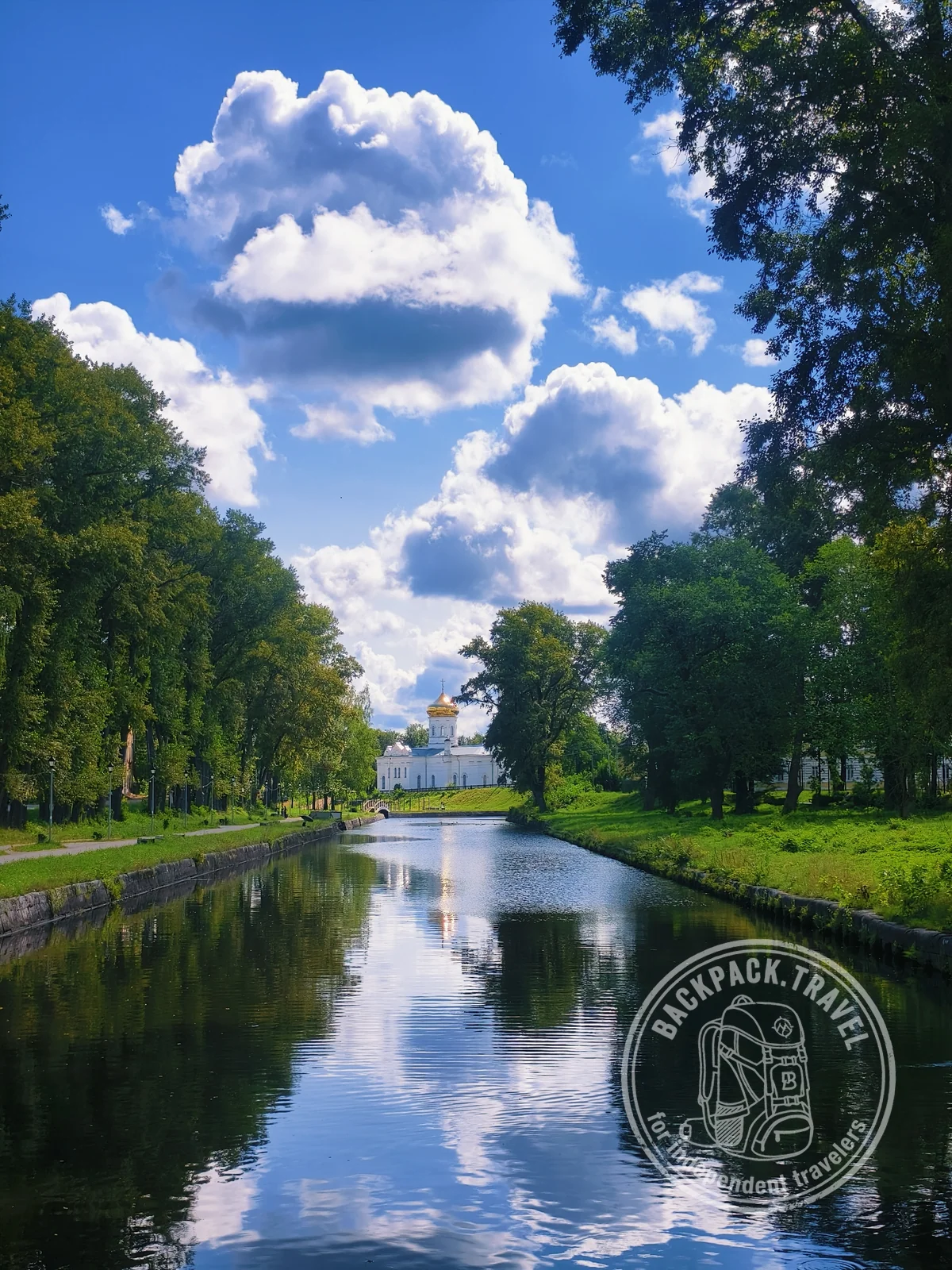
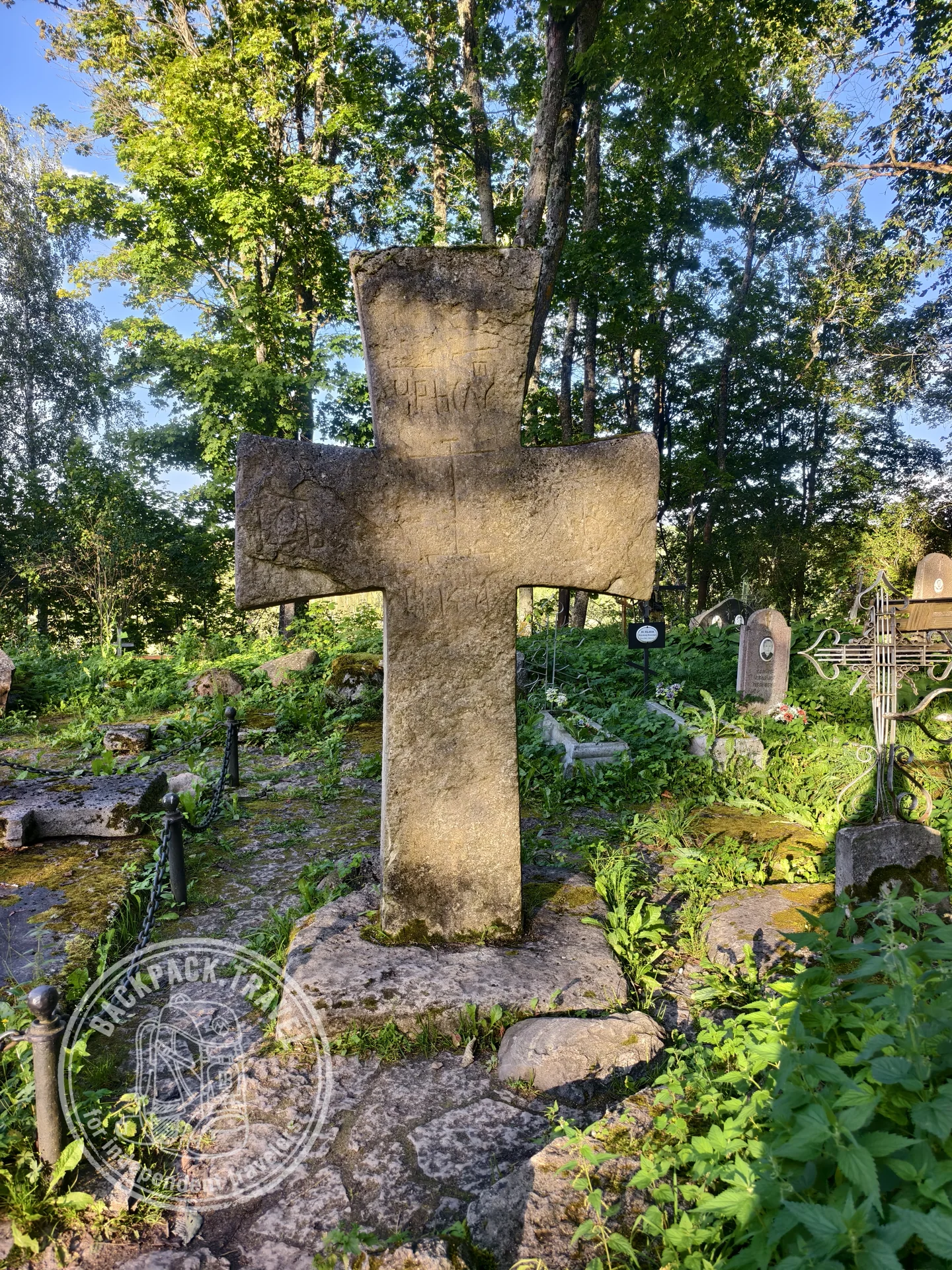
A kilometre from the fortress, across a field, is Truvor's hillfort: a promontory above Gorodishchenskoye lake where the original Izborsk stood. Ramparts and a ditch are all that remain of the buildings, and at the edge stand a small 17th-century church of St Nicholas and an old cemetery with Truvor's Cross, a stone cross over two metres high. It has nothing to do with Truvor, of course: it is dated to the 14th or 15th century, but the name has stuck.
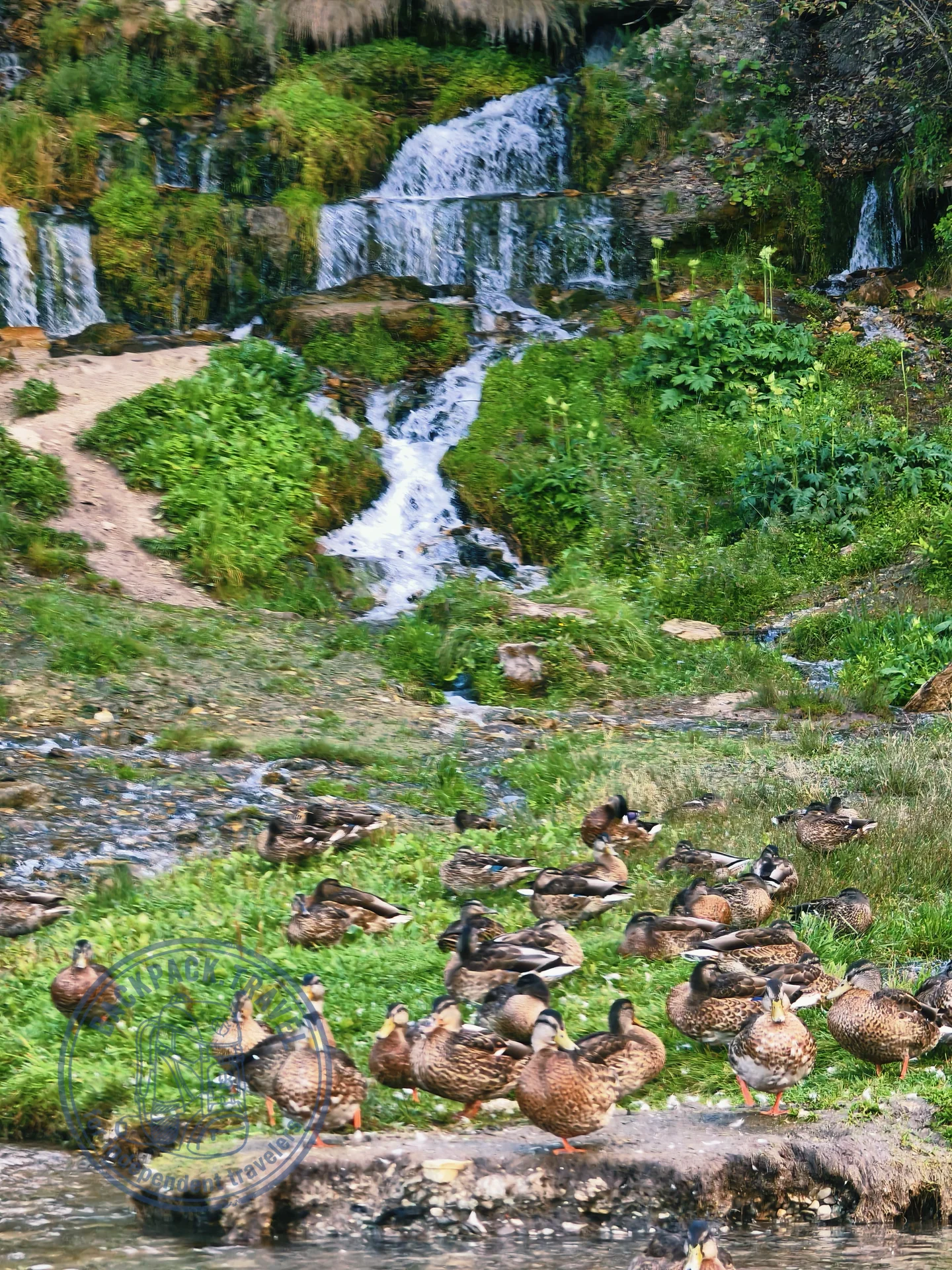
A path leads down from the hillfort to the Slavonic Springs, also called the Springs of the Twelve Apostles: more than a dozen jets break straight out of the limestone bluff and run into the lake. The spot is busy and genuinely beautiful, and swans live on the lake, entirely used to visitors. The path is wet and slippery all year round, so wear the right shoes.
The Malskaya valley
North of Izborsk runs the Malskaya valley, a deep cleft in the Devonian limestone with a lake at the bottom. The ruins of the Malsky Monastery of the Saviour and St Onuphrius stand here with their leaning bell tower, and a spring rises at the foot of the slope. It is a quiet place with almost no visitors, best reached on foot or by car — there is no scheduled transport.
The museum reserve
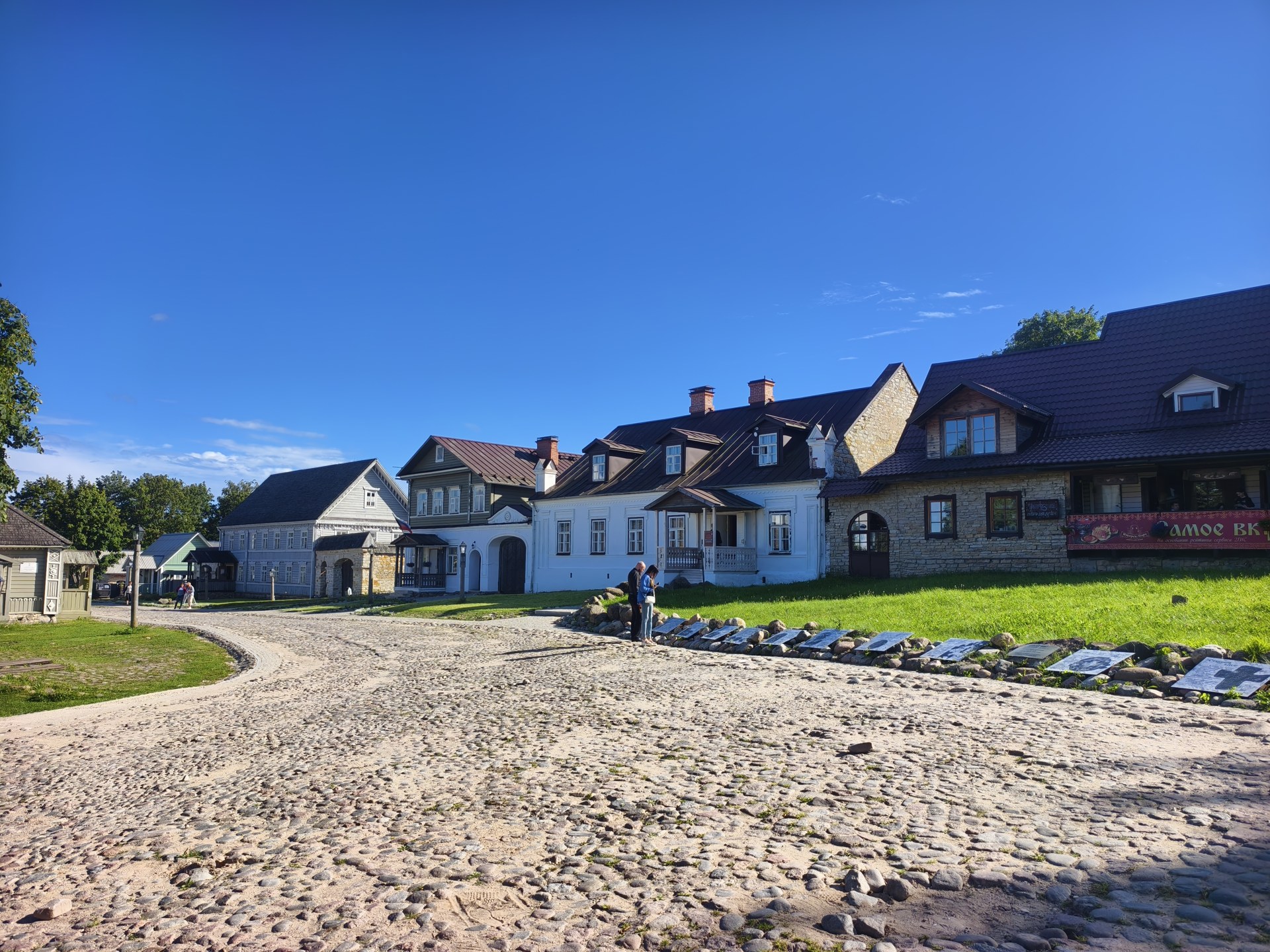
The museum is more than the fortress. Along the main street stand 19th-century merchant houses built of the local flagstone; the Anisimov merchant house and the Belyanin estate hold displays on daily life, crafts and the archaeology of Izborsk. Tickets are sold individually or as a single combined pass.
Getting there
- From Pskov — a scheduled bus to Izborsk, or any bus heading to Pechory, 40-50 minutes. Services are regular but widely spaced, so check the timetable in advance.
- Pskov is connected by train to St Petersburg (about 3.5 hours) and Moscow (an overnight service), and has an airport.
- By car — take the Pechory road; there is parking by the fortress.
- Pechory pairs naturally with Izborsk in one day: the Pskov Caves Monastery is 20 km further along the same road.
Practicalities
- Allow half a day: an hour for the fortress, an hour and a half for the hillfort and the springs, the rest for the valley and the merchant houses.
- There are cafés in the village, but not many, and they do not all open year-round; in high season pies and mead are sold by the fortress.
- Bring cash: signal and card terminals at the springs and in the valley are unreliable.
- The paths are unsurfaced, and the fortress, the hillfort and the springs are linked by walks across field and slope.
When to go
May to September is the most convenient season, with crowds at weekends in July and August. Early autumn, when the valley turns yellow, gives the best balance of views and quiet. Winter is beautiful and empty, but the path to the springs ices over and some displays keep shortened hours.
Common mistakes
- Allowing an hour for Izborsk "on the way to Pechory" — that leaves only the fortress.
- Walking to the springs in city shoes.
- Taking Truvor's Cross for a 9th-century monument.
- Arriving without cash and without water: outside the main street there is next to no infrastructure.