Description
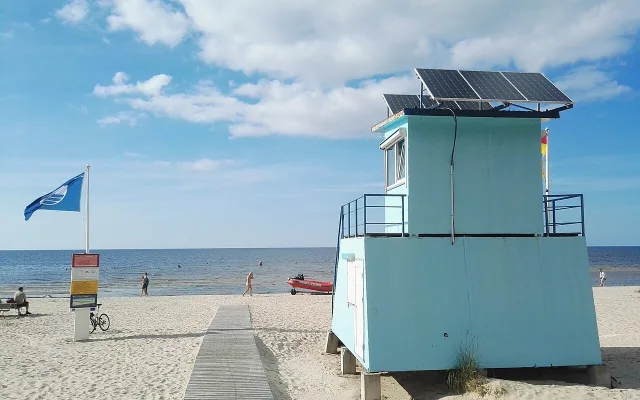
A Baltic resort near Riga — some 26 km of pale sand, pines at the water's edge, wooden Art Nouveau villas and the bog boardwalk at Ķemeri.
Wiki
The Baltic coast 20–25 minutes from Riga: pine trees right at the beach, wooden villas from the late 19th century, and a wide strip of fine pale sand you can walk along for kilometres. Jūrmala is not a "city" in the usual sense but a chain of former fishing villages strung out along the sea, and the logic of a visit here is different from a typical city trip.
Getting there and how it works
The easiest way is by commuter train from Riga Central Station. Trains run frequently, the journey takes about half an hour, and the fare is cheap by European standards. The key point: Jūrmala stretches roughly 32 km and is divided into districts, each with its own station. The most useful for visitors are Majori (the heart of the resort, with the pedestrian street Jomas) and neighbouring Dzintari (concert hall, park). Buy your ticket to Majori.
By car, take highway A10, but be aware: cars pay a toll to enter Jūrmala, around €2 per day; the rules and the season it applies to have changed over the years, so check before you travel. If you are travelling by public transport, this does not apply to you.
Getting around inside is straightforward: a railway line runs the length of all the villages with stations every couple of kilometres, so you can "teleport" from one end to the other on the same commuter train. The beach runs without a break, so many people cover the distances on foot along the water's edge.
What is genuinely worth seeing
- Jomas Street in Majori — pedestrianised, lined with cafés and shops. The main promenade, but also the main tourist crush. Better as a starting point than as a destination in itself.
- The beach — the reason people come. The sand is fine and firm, the entry into the sea is gentle and shallow, and the water warms slowly. Ideal for long walks; look for the blue Blue Flag signs, which mark cleaner, well-maintained stretches.
- Wooden architecture — villas in National Romantic and Art Nouveau styles on the side streets of Majori and Dubulti. Simply wander the blocks between the sea and the railway: carved verandas and turrets are the resort's signature look.
- Dzintari — a forest park with wooden walkways and a lookout tower from which you can see both the forest and the bay. Nearby is the Dzintari Concert Hall, which hosts performances throughout the summer.
- Dubulti — the narrowest part of the spit: the sea on one side, the Lielupe river on the other. There is a distinctive Art Nouveau church here and quiet beaches without the crowds.
How much time to allow
Two days is more than enough. A realistic breakdown: day one — Majori, Jomas Street, the beach and the wooden villas; day two — Dzintari with its park, plus quieter Dubulti or Ķemeri. If nature appeals, on the second day consider Ķemeri National Park with its bog boardwalk trail (it is further out, but the landscape is entirely different — peatlands and lakes).
Many people visit as a day trip from Riga — for the beach and a couple of hours of walking, that works perfectly well. But to experience the resort in the morning and evening, without the midday crowds, an overnight stay is better.
Where to stay
The best base is Majori or Dzintari: central, a couple of minutes from the beach and the station, with life in the evenings. Dubulti and Bulduri are quieter and greener, well suited to those after peace and calm. Staying at the far ends of the spit only makes sense if you specifically want solitude — you will be dependent on the train timetable.
When to go
The season is short and clear-cut: June to August. The Baltic is cold; swimming is comfortable only at the height of summer, and even then not for everyone. In these months, though, the resort is alive — cafés, concerts and hire services all operating. Out of season, Jūrmala becomes a place for melancholy walks under the pines: beautiful, but empty and windy. May and September are a compromise: fewer people, lower prices, but the sea is already or still too cool for swimming.
Money, food, practicalities
Jūrmala is a resort, and prices on Jomas Street reflect that — noticeably higher than in Riga. A simple way to save money is to eat and stock up in Riga and come here specifically for the beach and walks. Locally, it is worth trying smoked Baltic fish and fresh berries in season. As a guide: the train from Riga is about €1.50 (roughly $2), lunch at a cafe on Jomas Street €15-22 ($17-25), smoked fish at the market €6-10 a kilo ($7-12), and the car entry toll €2 a day. Prices are as of 2026.
Things to note:
- Currency — euro. Cards are accepted everywhere.
- Mosquitoes and ticks in the forest parks and Ķemeri are a real presence in summer; insect repellent is a good idea.
- The sea is shallow and calm, but popular beaches get crowded in hot weather; for quiet, head towards Dubulti and beyond.
- Do not chase "sights" — there are essentially none. Jūrmala's value lies in the combination of pines, sand and wooden villas, and the right way to enjoy it is a slow walk, not a checklist.
Common mistakes
Coming in winter expecting a resort — you will find an empty spit. Driving without knowing about the entry toll. Spending the whole day in the Jomas Street crowds without ever reaching the beach and the quiet neighbourhoods where the real Jūrmala hides.