 Города и дороги
Description
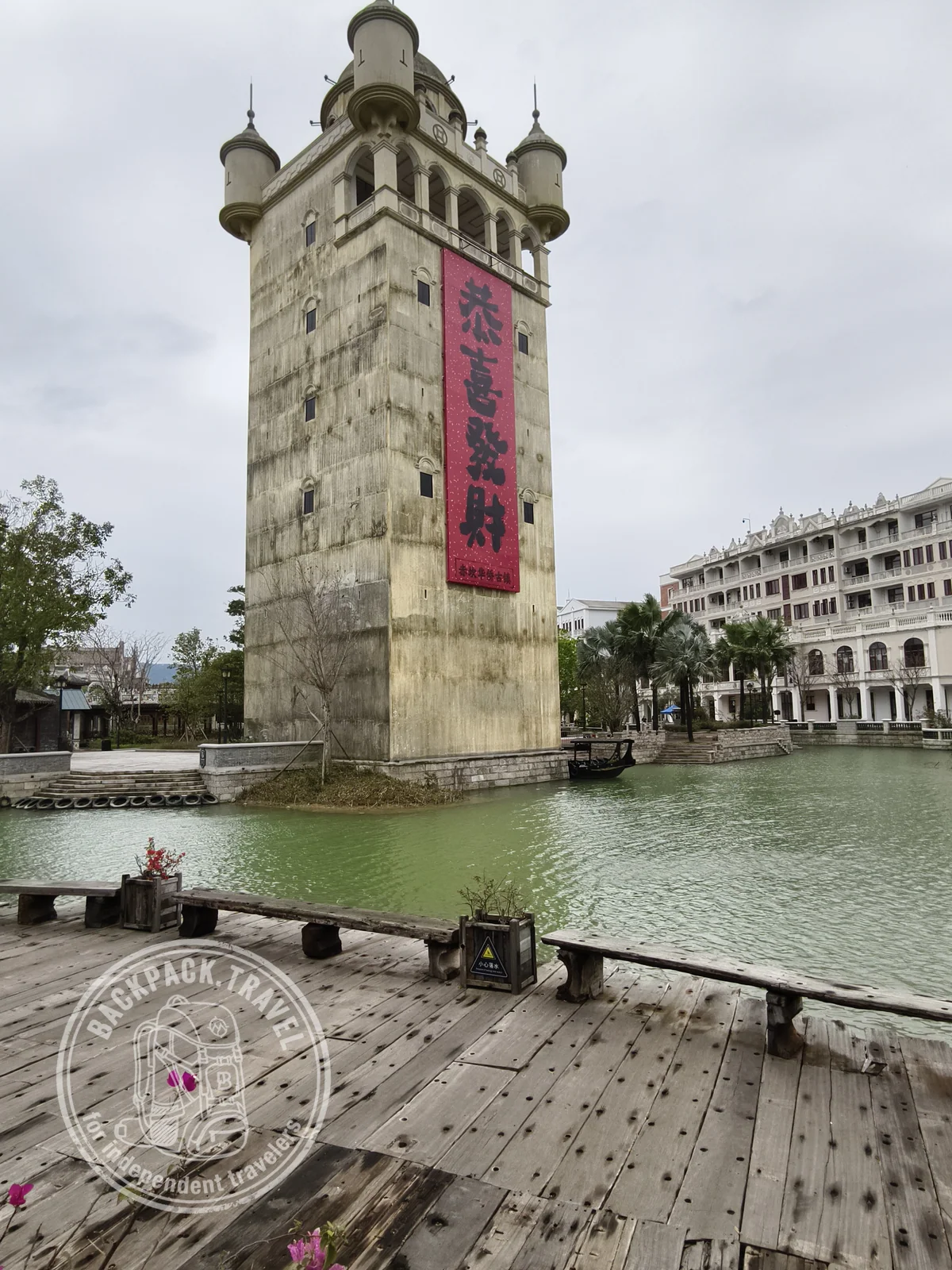
A county in Guangdong built up with diaolou, the fortress towers raised in the early 20th century by emigrants who had returned from overseas. This blend of a Chinese core with European columns and domes is on the UNESCO list.
Wiki
Kaiping is a county town in the west of the Pearl River delta, roughly a hundred and something kilometres from Guangzhou. There is one reason to come here: scattered through the surrounding villages are hundreds of diaolou, the multi-storey fortress towers put up in the first third of the 20th century by locals who had grown rich overseas. In 2007 the Kaiping Diaolou and Villages were entered on the UNESCO list.
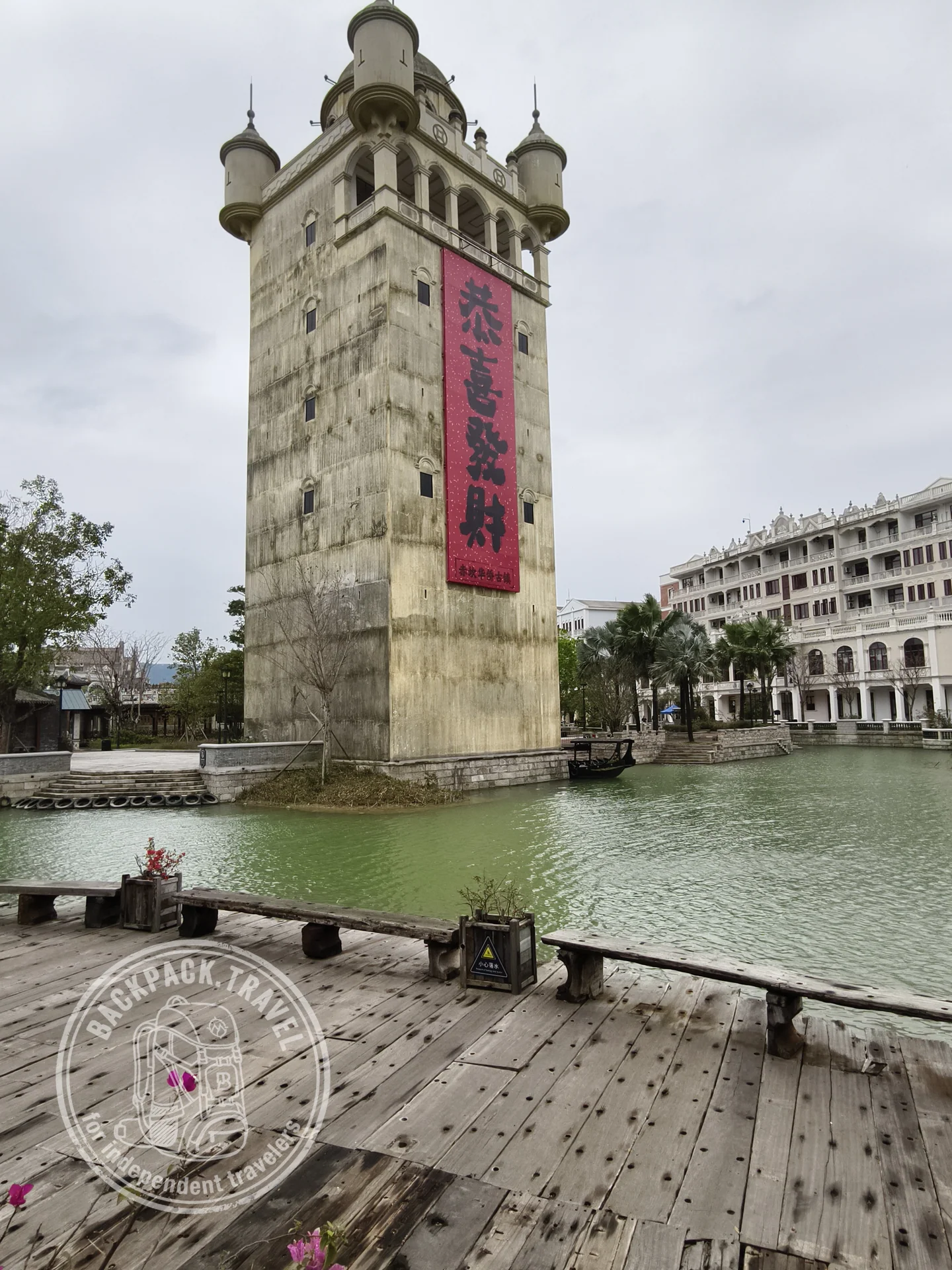
The history of these towers is easy to follow. Kaiping belongs to the Siyi region, from which in the 19th century a huge share of Chinese emigrants left to earn a living in America and Southeast Asia. The money flowed back to the home villages, and with the money came foreign architecture: Greek columns, baroque pediments, domes and balustrades. The relatives who had stayed behind were wealthy and defenceless, the countryside swarmed with gangs, and so a house was built as a fortress, with steel shutters, loopholes and overhanging corner turrets at the top.
What to see
- Jinjiangli is the village with Ruishilou, the tallest tower in the county. It has nine storeys, a colonnade and a dome on top, and was built in 1923.
- Majianglong is a group of villages by the river, drowned in bamboo thickets. The towers here stand not in open fields but in dense greenery, and this is the pleasantest part of the route for a slow walk.
- Liyuan Garden is the estate of Xie Weili, built between 1926 and 1936. Canals, pavilions and residential villas are joined into a single complex in which the Chinese garden tradition is mixed with colonial decoration until the two can no longer be told apart.
- Sanmenli is the village with Yinglonglou, the oldest of the surviving towers, from the beginning of the 16th century. There is no Western decoration here whatsoever, just a powerful brick box, and looking at it you can see what the whole thing started from.
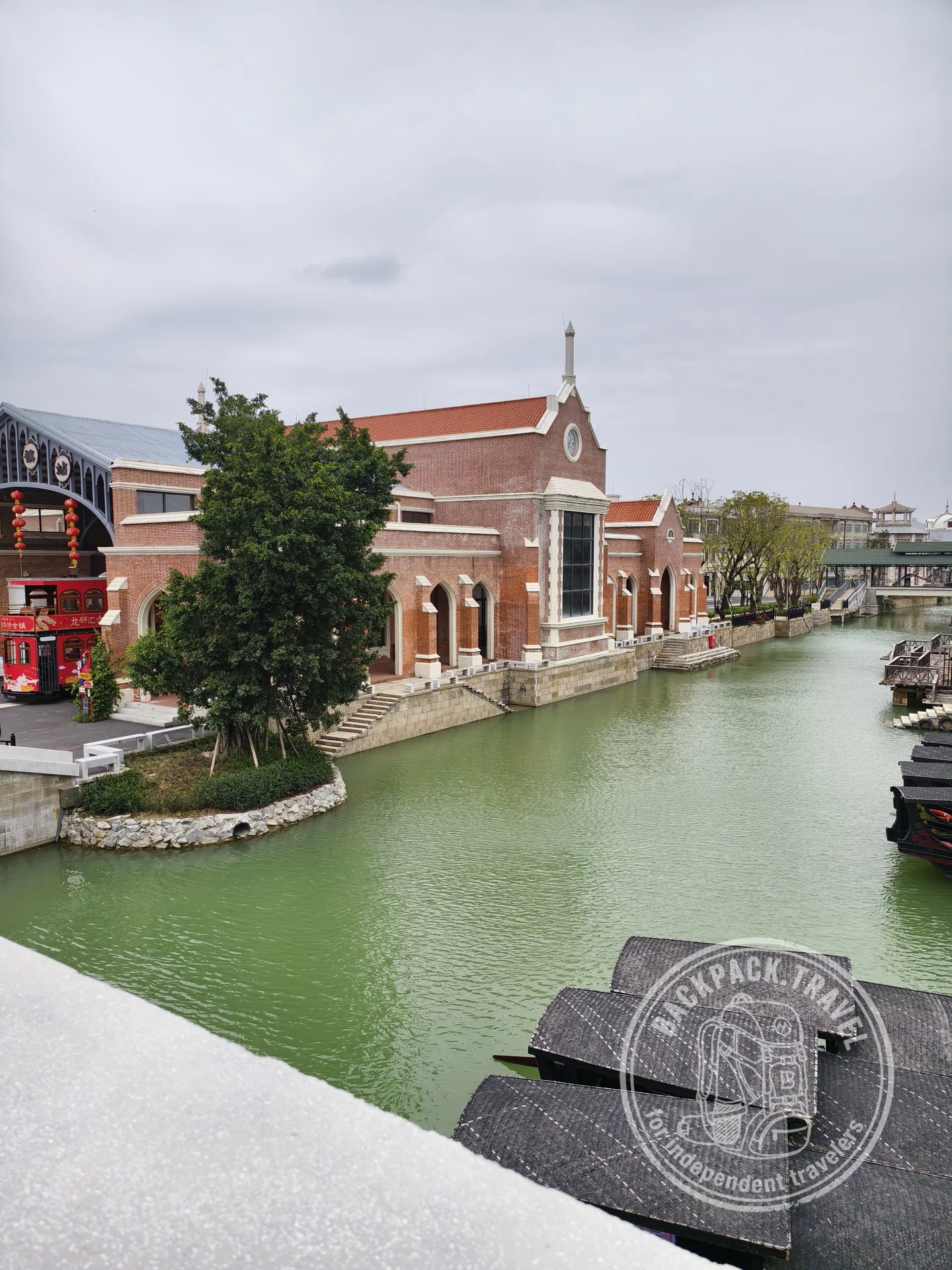
- The old town of Chikan is kilometres of arcaded qilou houses along the Tan River, where well-known Chinese films were shot. In 2017 the residents were resettled for a large-scale reconstruction and the town reopened as a paid tourist zone: the architecture is in place, the former life has gone.
The village of Zili
Zili is the best known of the Kaiping villages and the point people come here for even on a single day. Nine towers stand right in the middle of the rice fields, with no streets or fences between them, and you approach along narrow baulks. Mingshilou, put up in 1925 with the money of an owner who traded in America, is open inside: the furnishings have survived almost in full, with carved furniture, a longcase clock, canopied beds and family portraits on the walls. From the upper terrace the other towers are visible, and from there it becomes clear how the system worked, since every house kept watch over its neighbours.
The picture is set by the agricultural calendar. Guangdong takes two rice harvests a year, so the fields around Zili can be bright green at the height of growth, golden before the cutting in July and at the end of autumn, and bare, with water and stubble, between the cycles.
Fees and entry
The sites are sold separately, but there is also a combined ticket for several villages together with Liyuan Garden, which works out better over a full day. Chikan since its reconstruction runs a box office of its own. The exact sums have changed more than once in recent years, so it is worth going by the order of magnitude: a few dozen yuan for a single village and noticeably more for the joint ticket. The main expense here is not the tickets in any case but the transport, since the sites are scattered tens of kilometres apart, there are almost no scheduled buses between them, and the practical answer is to hire a car with a driver for the whole day.
How much time to allow
A full day with a car covers the main things: Zili, Liyuan, Majianglong and Jinjiangli make up one sensible circuit if you set out in the morning and do not linger in every village. Two days leave room for Chikan, Sanmenli and simply for wandering the fields in the morning and evening light, which is the real reason to come here with an overnight stay. A day trip out of Guangzhou is technically possible but comes out ragged, as the journey in both directions eats three or four hours and half a day is left on the ground with no margin for a transport mishap. A third day Kaiping will not hold any more, because by then the towers begin to repeat themselves and there is almost nothing else in the county to look at.
What to combine it with
The nearest large city is Jiangmen, which has a museum of the history of emigration that explains the context better than any plaque beside a tower. The neighbouring county of Taishan is arranged in the same way and is just as full of diaolou, only with an order of magnitude fewer tourists. Guangzhou lies a couple of hours away, and Zhuhai and Macau are about the same distance to the south. Since 2018 the coastal high-speed railway has run through the county, and Kaiping South station has linked the town directly with Shenzhen.
When to go
October to December is the optimal stretch: dry, a little over twenty degrees, and at the start of that period the fields still stand under the late rice. March and April are warm but damp, with drizzle and fog. From May to September it is hot and stifling here, and the typhoon season falls on the second half of summer. January and February are cool and often grey, yet completely free of people.
Who won't enjoy it
Kaiping is neither a town nor a nature reserve but a set of points in the countryside, and without a car the trip falls apart. Only a handful of towers are open inside, the rest are locked or stand empty, and after three or four of them they stop being distinguishable. The villages are half depopulated: the young have left, the houses are boarded up, and the feeling that arises is one of abandonment rather than of preserved antiquity. Chikan, since its residents were moved out, has turned into a tidy replica with empty shops. Daily life is plain here, the hotels are modest, restaurants are few, and signage and staff with English are practically absent. Anyone expecting a whole museum town in the spirit of Pingyao has nothing to wait for here.