Karakol
KyrgyzstanDescription
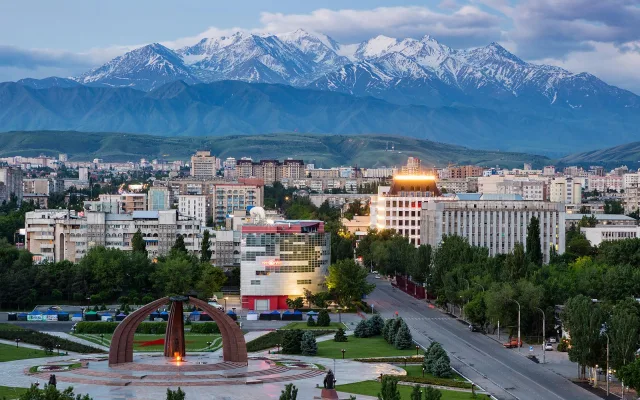
Karakol is a base at the foot of the Tian Shan on the eastern shore of Issyk-Kul: the Dungan Mosque, the Holy Trinity Cathedral, the hot springs of Altyn-Arashan and the red rocks of Jeti-Oguz.
Wiki
Karakol is less interesting in itself than useful as a base: people come not for the streets but for what surrounds them — the Tian Shan, the hot springs of Altyn-Arashan, the red rocks of Jeti-Oguz and the eastern shore of Issyk-Kul. Compact, green and unhurried, it is the ideal place to catch up on sleep, stock up and head into the mountains.
Why come, and how many days to allow
Two days is a sensible minimum for "the town plus one trip into the mountains". The pattern is simple: the first day for Karakol itself (the mosque, the cathedral, the museum, the market, lunch with ashlyan-fu), the second for a short outing to Jeti-Oguz or a proper walk up to Altyn-Arashan. If you want to reach the hot springs and sleep in the valley, add another day — there and back on foot in daylight is hard going.
Karakol is also the logical launch point for longer treks, with Lake Ala-Kul the regional classic, and in winter for skiing.
What is genuinely worth seeing
- The Dungan Mosque — wooden, built between 1907 and 1910 by Chinese craftsmen without a single nail, and from the outside more like a Buddhist pagoda. Small, but genuinely unusual: fifteen minutes, and worth them.
- The Holy Trinity Cathedral — a wooden Orthodox church, another relic of the Russian frontier garrison. Together with the mosque it demonstrates the point of the town: a mixing of cultures on a single street.
- The Przhevalsky Museum — the grave and an exhibition devoted to the explorer of Central Asia, a little outside town by the lake shore. Of most interest to those who follow the history of expeditions.
- The Sunday animal market (mal-bazar) — if you are staying over Saturday night, come early in the morning: livestock and horses being traded, and the real thing rather than anything staged for visitors. One of the most vivid experiences in town, and free.
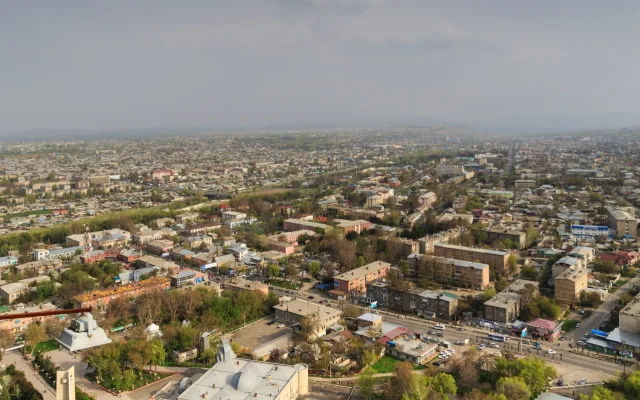
The historic centre itself is single-storey houses with carved window surrounds; it is walkable and takes a couple of hours to cover.
The mountains, which are the point of the whole thing
- Altyn-Arashan — a valley with hot springs. The classic approach is to drive to the village of Ak-Suu and walk up the valley from there, several hours of climbing, or to be driven up the wrecked road in a prepared four-wheel drive. At the top are guest houses and bathing in the springs with the mountains in view.
- Jeti-Oguz (the Seven Bulls) — red rock formations about half an hour away, with an easy path from there to the Valley of Flowers. A good half-day option when you have not the energy for a serious trek.
- Ala-Kul — a turquoise high-altitude lake and a multi-day route for the reasonably fit; often combined with Altyn-Arashan into a loop.
- Horse trips — the region is made for it, and a horse with a guide is easy to arrange through the guest houses, which is convenient for valleys that take a long time on foot.
One practical note: do not head into the mountains blind. Karakol has a tourist information centre (Destination Karakol) and offices of the community-based tourism network CBT, where you can hire guides, arrange transport up the valleys and check on trail conditions and the weather. Mountain weather changes sharply even in summer, and warm clothing and a waterproof are essential.
Getting there and getting around
From Bishkek there are minibuses and shared taxis, and the drive along Issyk-Kul takes most of the day. There are two shores: the southern is more scenic, the northern (via Cholpon-Ata and its petroglyphs) is faster and busier. You can combine them — out along one, back along the other.
Everything within the town is close enough to walk. For the mountains there are local minibuses to the villages (Ak-Suu, Jeti-Oguz) followed by a climb on foot, or a jeep transfer shared among a group to bring the cost down. Arranging the transfer the evening before through your guest house is the simplest way.
Where to stay
Aim for a guest house in the centre — there are plenty, they are cheap and they are geared to trekkers, helping with guides, jeeps, rucksack storage and breakfast. They are also your best source of current route information. There are separate hotels, but for the independent traveller a guest house is more practical.
Food and money
The cooking is Dungan and Kyrgyz. Ashlyan-fu, a cold noodle dish and the local speciality, is a must: cheap and available on every corner. Add lagman, manti, beshbarmak and kumis. Lunch in a chaikhana costs very little; dinner in a restaurant is noticeably more, but still budget by European standards.
Cash is the basis of everything: cards are not accepted everywhere, and in the mountains and villages almost nowhere. Withdraw som from cash machines in town beforehand. Bargaining is appropriate at the market and when hiring transport.
When to go, and what to watch for
- Trekking — from late spring to early autumn; the high passes such as Ala-Kul only open by midsummer, as the snow lies late.
- Skiing — winter; the Karakol resort is regarded as one of the best in Central Asia.
- Altitude — Altyn-Arashan and especially the passes are appreciably higher than the town, and the climb is felt; do not push the pace on the first day.
- Safety — calm by local standards; the main risks are not criminal but alpine, namely weather, river crossings and overestimating yourself. Do not set off on multi-day routes alone without experience.
The classic mistake is to come "for a day to see the town" and leave disappointed. Karakol matters because the mountains begin at its edge; budget your time for them.