Description
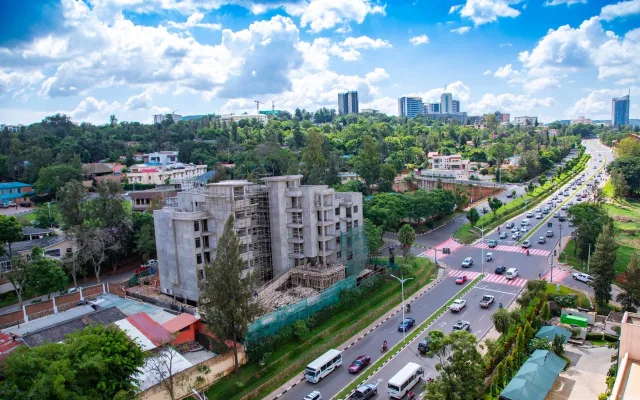
The cleanest capital in Africa — the genocide memorial, modern infrastructure and the starting point for gorilla trekking.
Wiki
Kigali is a rare example of a capital that went through catastrophe and became the most orderly city on the continent. For a backpacker it is a convenient and safe way into Rwanda: a mild climate, clean streets, straightforward logistics, and just a couple of days needed to get a feel for the place before heading for the volcanoes and Lake Kivu.
Why come, and for how long
Two days in Kigali itself is enough: the city is compact in what it asks of you, and the essential sights are few. The real reason to be here is as a base and an interchange. Gorilla treks to Volcanoes National Park start from here, along with the roads to Lake Kivu and south to Butare. The logic is simple: a day or a day and a half for the city, with the genocide memorial as the fixed point, and the rest for trips beyond it.
Kigali is built on hills, so the city is constantly climbing and dropping — bear that in mind when planning walks, because there will be a great deal of uphill.
Getting there and getting around
- Airport to centre. Kigali International is very close to the city, 15-20 minutes away. Take an official taxi from the rank or use an app — the price is fairer that way.
- In the city. Cheap and thoroughly local are the moto-taxis, motorcycles that carry a spare helmet for the passenger. They are fast, but you are on hills and in traffic; for a first ride an app, where the price is fixed in advance, beats haggling in the street. There are ordinary taxis too, and minibuses on fixed routes — the cheapest option, though you need to know where you are going.
- On foot. The centre and the business districts are walkable, but the distances and the changes in height between districts are considerable — combine walking with motos.
- Keep cash in francs (RWF); cards work in hotels and larger establishments, but the market and the motos are cash only.
What is actually worth seeing
The Kigali Genocide Memorial (Gisozi) is not a box to tick but the central point of the whole trip. The multimedia exhibition is unsparing and honest, and there are mass graves in the grounds. Entry is by donation. Allow a couple of hours, and do not schedule anything emotionally heavy afterwards — better in the morning, with room for silence.
The picture is completed by the Camp Kigali Memorial (to the ten Belgian peacekeepers who were killed) and the Hôtel des Mille Collines, the "Hotel Rwanda" itself; you can go in for a coffee by the pool, and although there is no museum, the context is palpable.
For contrast with the heavy subject, the living city:
- Inema Arts Centre — the studios of local artists, where you can catch them at work and buy directly.
- Kimironko Market — the largest market, with kitenge fabrics, baskets and spices. Haggling is expected, and you can have clothes made from your chosen cloth within a day or two.
- Kigali Convention Centre — the recognisable dome, lit in the colours of the flag at night; a good point for an evening walk.
Trips out of the city
- Volcanoes National Park — about two and a half hours away, and the main objective for most travellers. Gorilla permits are expensive (around $1,500) and bought in advance through the RDB — you cannot simply turn up. It is easier to stay in Musanze by the park entrance.
- Lake Kivu — around three hours, with beaches and an unhurried pace at Gisenyi and Kibuye; a good way to decompress after the weight of Kigali.
- Butare (Huye) in the south — an ethnographic museum, one of the strongest in the region.
Food and money
The local cooking is simple and filling: matoke (stewed plantain), brochettes (usually goat), tilapia from the lake, and sides of peas and beans. Rwanda's speciality is the buffet lunch: you pay a fixed sum and help yourself, an excellent way to eat well and cheaply. The coffee is home-grown and genuinely good — Rwanda is an exporter, and the city's cafés do it justice.
Kigali feels inexpensive for food and transport but expensive for the main attraction: the gorillas hit the budget harder than everything else combined.
Practicalities and safety
- Kigali feels very safe even in the evening — by African standards an exception rather than the rule. Ordinary everyday care is enough.
- Plastic bags are banned — they may be confiscated on entry to the country, so repack into cloth or paper.
- The last Saturday of the month is Umuganda, the national community work day: traffic and some businesses stop for a few hours in the morning, so plan journeys for the afternoon.
- Photograph people, especially at memorials and markets, only with permission; the genocide is treated with the utmost seriousness, and flippancy is out of place.
- English is widely used officially, but French and Kinyarwanda are also current — a couple of words in the local language opens doors.
Common mistakes
- Not buying the gorilla permit in advance, and missing the main experience.
- Fitting the memorial in "along the way" — it needs its own quiet slot.
- Underestimating the terrain and the daytime heat — water and motos save you from endless climbs.
- Treating Kigali as the destination: the city is good, but its strength is as a hub for the rest of Rwanda.