 Города и дороги
Description
The second largest island in Thailand, in the Gulf of Thailand: beaches from crowded Chaweng and Lamai to quiet bays such as Bang Por, coconut plantations inland and temples on the rocks.
Wiki
Koh Samui is an island in the Gulf of Thailand of about 230 square kilometres, the second largest in the country. It differs from Phuket in its location (a different sea means a different rainy season) and in its structure, since there is no single resort centre here. A ring road some 50 kilometres long circles the island, and strung along it are beaches of very different character, from noisy Chaweng to the empty bays of the north and west.
The beaches and how they differ
Choosing your beach here matters more than choosing your hotel.
- Chaweng is the main one and the longest, on the east coast. Good sand, deep water, all the nightlife and all the noise.
- Lamai is the second most popular, further south: the same format but quieter and cheaper. Nearby stand the Hin Ta and Hin Yai rocks, of frankly anatomical shape, an obligatory local stop.
- Bophut with its Fisherman's Village is a quarter of wooden shops and restaurants by the water, at its best in the evening; the beach itself is average, with low tides.
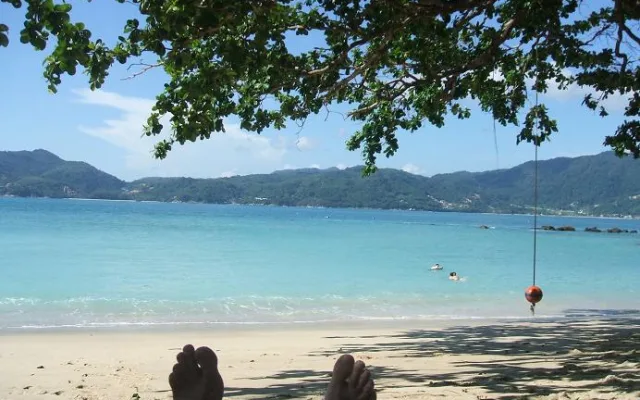
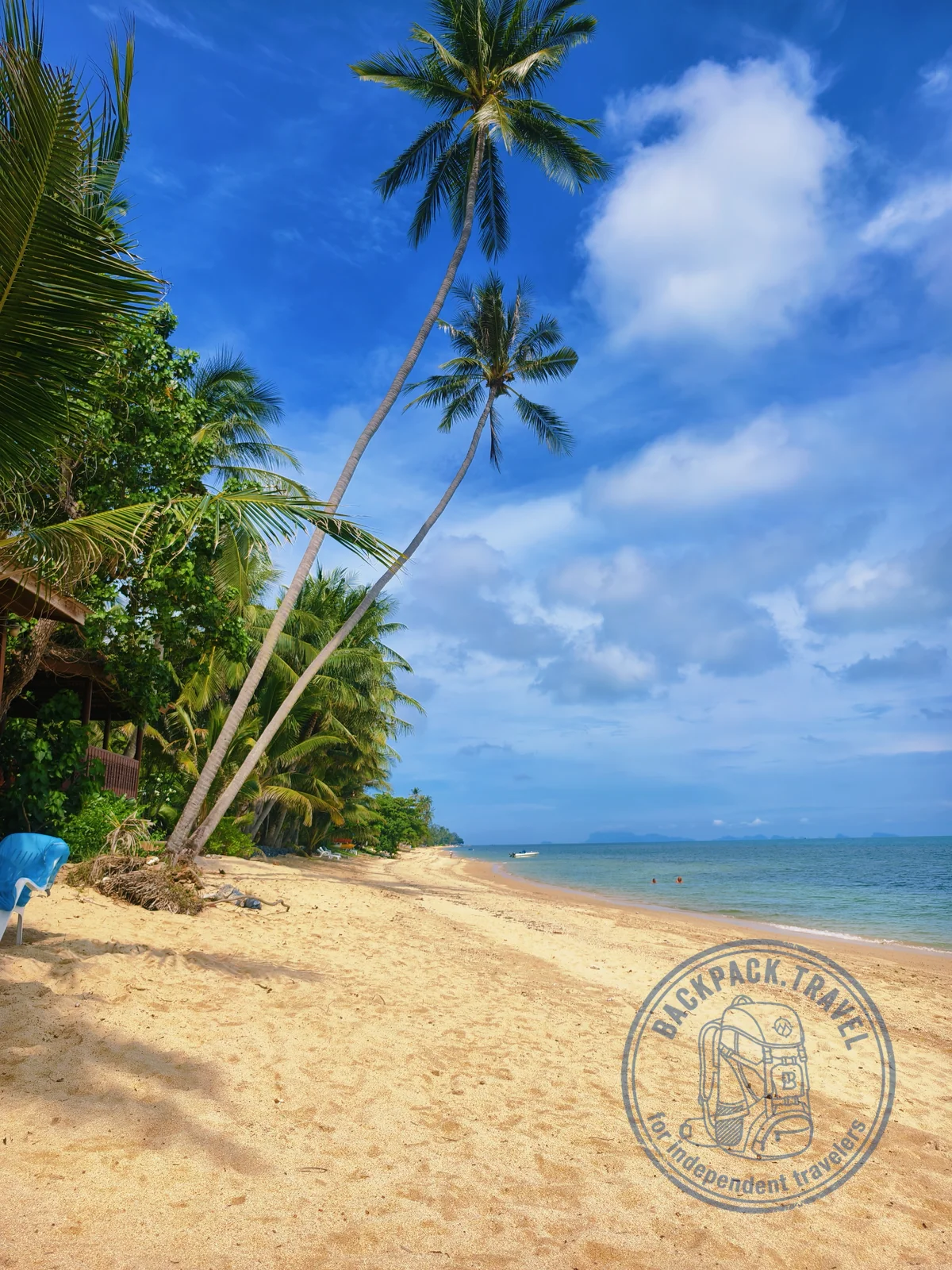
- Maenam and Bang Por (Ban Po) are on the north coast. Quiet, green, little building, and a view across to Pha Ngan. The water is shallow and calm, which is good with children and bad for anyone who wants to swim. Bang Por is the emptiest of them, with a couple of restaurants on the shore and almost nothing else.
- Choeng Mon in the northeast and Lipa Noi and Taling Ngam in the west are quiet and gently shelving, with sunsets and strong low tides.
There is no universal beach: the eastern ones give you a better entry into the water and less quiet, and the northern and western ones the other way round.
What to see besides the sea
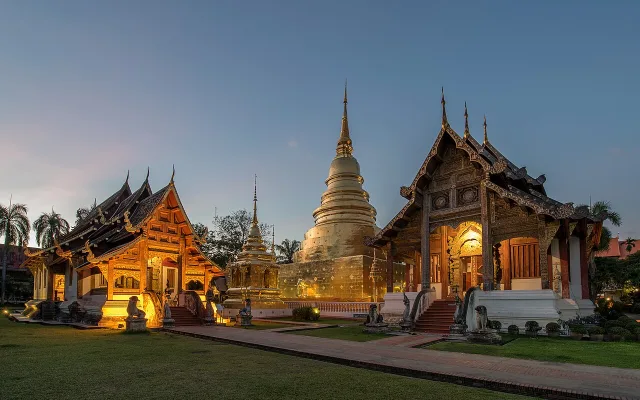
- The Big Buddha (Wat Phra Yai) on the islet of Ko Fan is a gilded statue about 12 metres high, put up in 1972. It is the island's main landmark, though more of a box to tick, with a market and a car park beside it. The neighbouring Wat Plai Laem is brighter and more interesting, a temple on the water with a many-armed Guanyin.
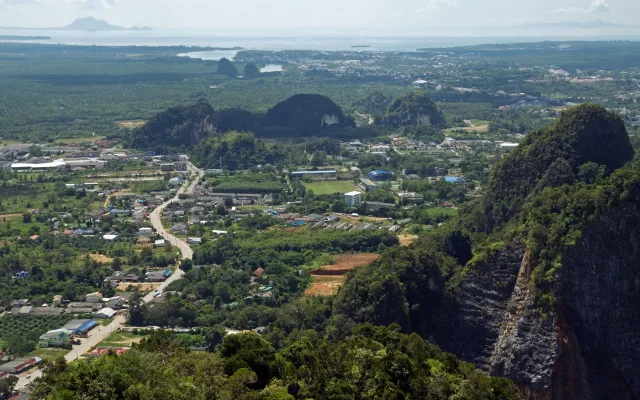
- The Na Muang waterfalls in the centre of the island: the first is about 18 metres high and five minutes from the road, while the second takes a climb through the jungle. In the dry season they can shrink to a trickle. Around them lie coconut plantations and mountain roads with viewpoints that give the best outlook over the coast.
- The Ang Thong marine park is some forty limestone islands west of Samui. There is no scheduled boat service, and the only way in is on a day excursion.
- Pha Ngan and Koh Tao are half an hour to an hour away by ferry: full moon parties and diving respectively, and the water there is clearer.
When to go
Samui does not live by the general Thai calendar.
- February to April is the driest and most predictable period.
- June to September is more often dry here just when it is raining on the Andaman side (Phuket, Krabi), and in summer that makes Samui a sensible alternative.
- October to December is the rainy season, with a peak in November. The sea turns murky and there can be waves on the east coast.
The rains are usually short and heavy, but November is not a month to count on for a beach holiday.
Practicalities
You reach the island by plane or by ferry from the mainland, from the piers around Don Sak near Surat Thani, which is served by buses and trains from Bangkok. The airport is private and has no competition, so tickets are consistently more expensive than for other Thai destinations; the combination of a flight to Surat Thani plus a ferry often works out cheaper but eats up a day.
Getting around is easiest by scooter or car: there is only one ring road and it is hard to get lost, though the turn-offs to the waterfalls can be steep and broken up. The alternative is the songthaews along the ring and taxis, which are noticeably more expensive than on the mainland.
How much time to allow
Three or four days are enough for your own beach and one outing: the Big Buddha, the waterfalls and a circuit of the island. A comfortable minimum is a week, with a day at Ang Thong and a trip over to Pha Ngan. Ten to fourteen days make sense if Samui is the main point of the holiday; in that case it is worth changing coast halfway through, as a couple of days in the north after Chaweng changes your impression of the island a great deal.
Who will not enjoy it
Samui is not a wild island. The ring road is densely built up with a ribbon of hotels, shops and car repair places, and no uninhabited bays are left here. Anyone looking for intimacy and empty beaches will be closer to it on Koh Tao or on the less promoted islands. It is worth being surprised by the prices in advance: flights, taxis and restaurants here cost more than the Thai average. And if you are coming for clear water and coral, the water here is more often on the murky side.
Updated