Description
The birthplace of the Romanov dynasty and Russia's centre of linen weaving, on the Volga. The Ipatiev Monastery, the trading rows and the handsome Susaninskaya Square are the city's main sights.
Wiki
Kostroma is a case where the whole historic centre fits into a couple of hours on foot, yet the reasons to linger still add up to a full weekend. The city stands on the left bank of the Volga, 340 km from Moscow, and slots neatly into a Golden Ring route — the classic circuit of medieval towns north-east of Moscow — between Yaroslavl and Ivanovo.
Getting there
There is essentially no passenger air service of its own; everyone travels overland.
- Train from Moscow — from Yaroslavsky station, taking the better part of a day or a night. The overnight option is convenient: you arrive in the morning and start walking straight away.
- Bus — from Moscow and from the neighbouring Golden Ring towns. From Yaroslavl it is under two hours, and this is the most common way of reaching Kostroma.
- Car — by the road through Yaroslavl or through Ivanovo; parking in the centre is not charged everywhere, but spaces by the trading rows fill up quickly during the day.
- Cruise boat — Kostroma is a standard stop on the Volga cruises, but passengers get little time ashore, usually only for the Ipatiev Monastery.
An important detail: the main station, Kostroma-Novaya, is not in the centre but several kilometres away. Do not try to walk it — take a bus or a taxi, which is inexpensive here.
Getting around
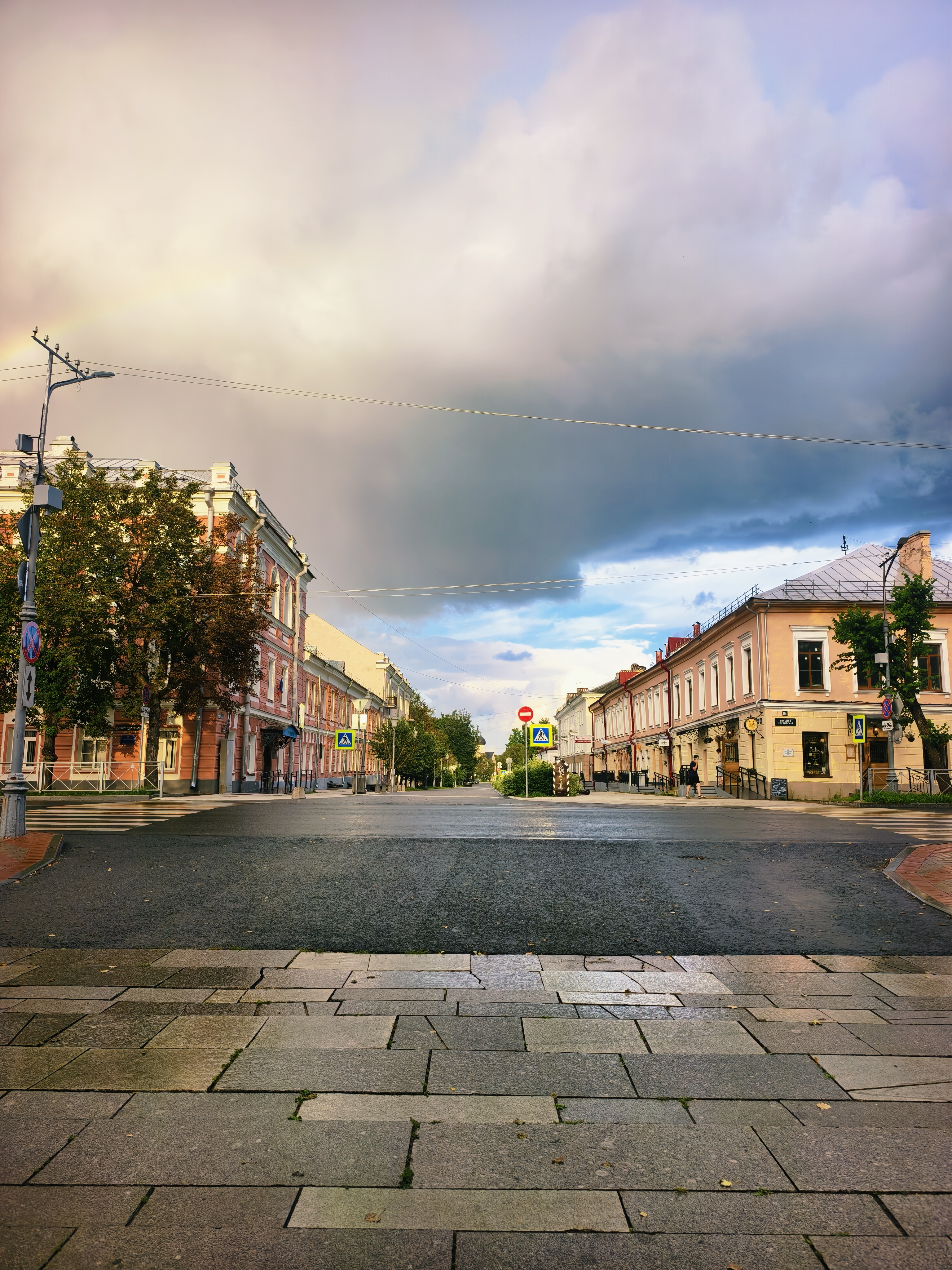
The centre is compact and walkable. From Susaninskaya Square the streets fan out towards the Volga — it is hard to get lost, as any of them will bring you either to the embankment or back to the square.
The only thing beyond walking distance is the Ipatiev Monastery: it lies across the Kostroma River, roughly half an hour to an hour's walk from the centre. City buses go there, or a taxi takes ten minutes. Public transport means buses and shared minibuses; there is no metro and none is planned.
What to see
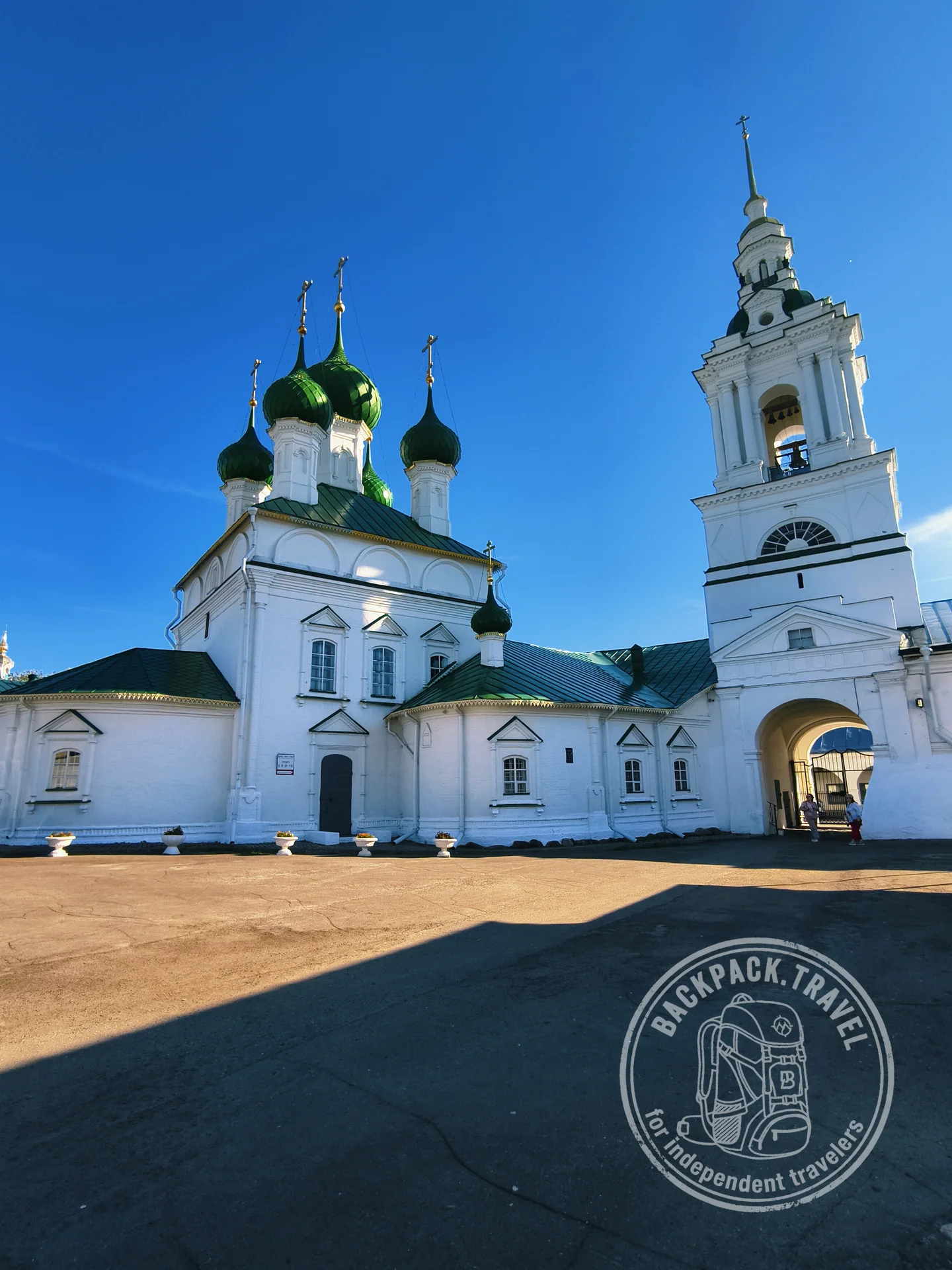
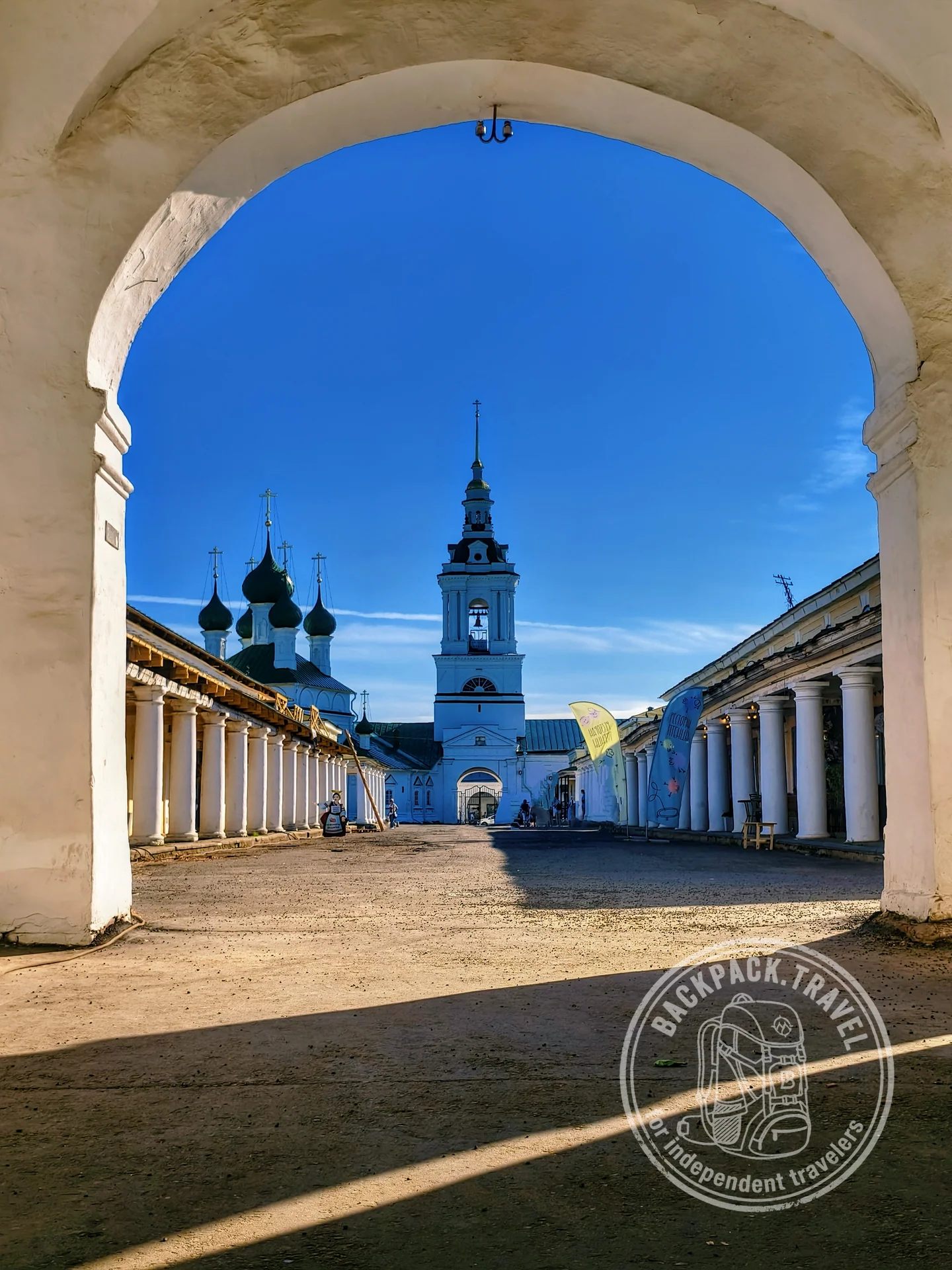
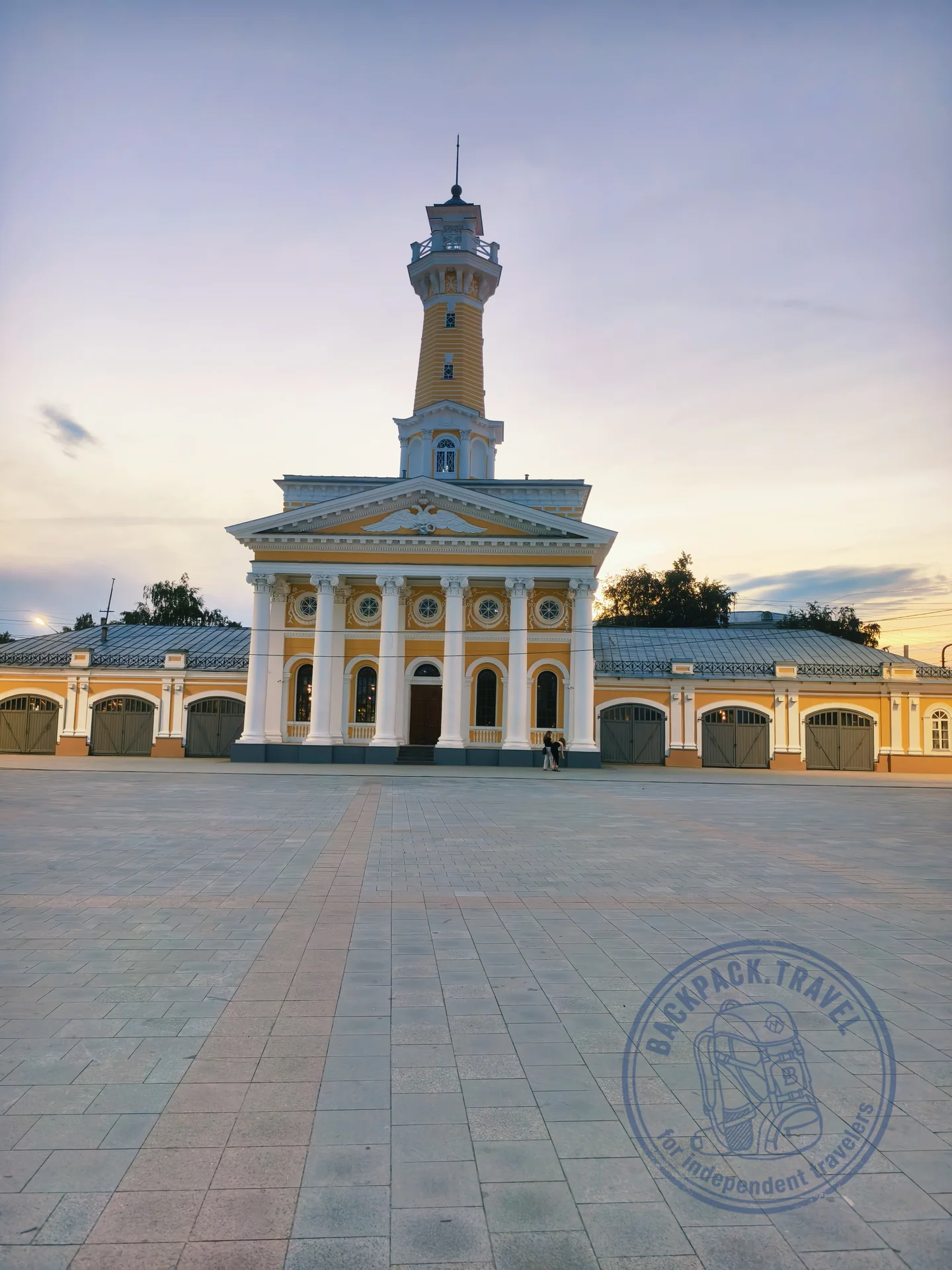
Susaninskaya Square and the trading rows. An ensemble of the late 18th and early 19th centuries, one of the best preserved merchant trading complexes in the country: the Red, Flour and Gingerbread rows, with the Church of the Saviour in the Rows inside. This is still living commerce rather than a stage set — go inside the galleries, where there is cheese, linen and jewellery. Above the square stands the fire watchtower, the city's signature postcard. (The square is named after Ivan Susanin, the peasant of local legend who is said to have led a Polish detachment astray to save the first Romanov tsar.)
The Ipatiev Monastery. The key site: it was from here in 1613 that Mikhail Romanov was called to the throne, founding the dynasty that ruled until 1917. A working monastery plus a museum — the Trinity Cathedral with 17th-century frescoes, and the chambers of the Romanov boyars. Covered clothing is required, and a headscarf for women. Allow an hour and a half to two hours.
The Kostroma Sloboda — a museum of wooden architecture right by the monastery walls. It makes sense to combine the two in one trip: log houses, windmills and wooden churches on the riverbank.
The embankment and the Ostrovsky pavilion — views over the Volga; the 1984 film A Cruel Romance was shot here. An evening walk from the pavilion to the river terminal is the best thing in the city in the warm season.
The Snow Maiden's Mansion — Kostroma is officially considered the home of Snegurochka, the Snow Maiden of Russian folklore who accompanies Father Frost at New Year. Honestly not essential for adults without children, but atmospheric in winter.
The Sumarokovo elk farm — outside the city, reachable only by car or taxi, and a visit is best arranged in advance. You can feed the elk by hand; for many people this is the most memorable part of the trip.
How many days, and when to go
One full day is enough for the centre, the rows and the Ipatiev Monastery. Two days if you are adding the elk farm, the museums (linen and birch bark, cheese, the Romanov museum) or a trip out to Krasnoye-na-Volge, the old jewellery-making centre.
The best time is late May to September: the embankment is in use and the pleasure boats are running. Winter is good around New Year because of the Snow Maiden theme, but the day is short and everything is seen at a run. April and November are the most pointless months: grey, damp and muddy.
Where to stay
Stay within the fan of streets around Susaninskaya Square or nearer the embankment — then you will not need transport at all. The second sensible option is the area by the Ipatiev Monastery, quieter and greener, though you will have to travel to the restaurants. What to avoid is the Zavolzhsky district on the far bank: cheaper, but you become tied to the bridge and the bus.
Food and prices
Noticeably cheaper than Moscow and St Petersburg, roughly on a level with the neighbouring Golden Ring towns. Worth trying:
- Kostroma cheese — the local speciality, sold both in the rows and at the cheese exchange; take some with you, it is the best edible souvenir.
- Volga fish and mushrooms in season — in the cafés on the embankment.
- Elk milk — only at the farm, an acquired taste, but a rare experience.
Among the non-edible: linen (Kostroma is historically the linen capital) and silver from Krasnoye-na-Volge. Prices in the trading rows are fairer than in the souvenir shops by the monastery.
Mistakes to avoid
- Coming for one day from Yaroslavl and trying to cram in the monastery, the sloboda and the centre — it turns into a gallop.
- Not checking the museums' closing days: many shut on Mondays, and some displays also have a sanitarny den, a scheduled monthly cleaning day when they close.
- Setting off for the elk farm on spec, without arranging it beforehand and without a car.
- Expecting an evening scene: after ten at night the city is quiet, so plan dinner in advance.
- Going into the monastery in shorts — you will not be let in.
Safety is as usual for a small Russian city: little crime, but in winter the pavements are slippery, and in summer mosquitoes appear near the water towards evening. Keep cash just in case — at the market and in small shops a card does not always go through.