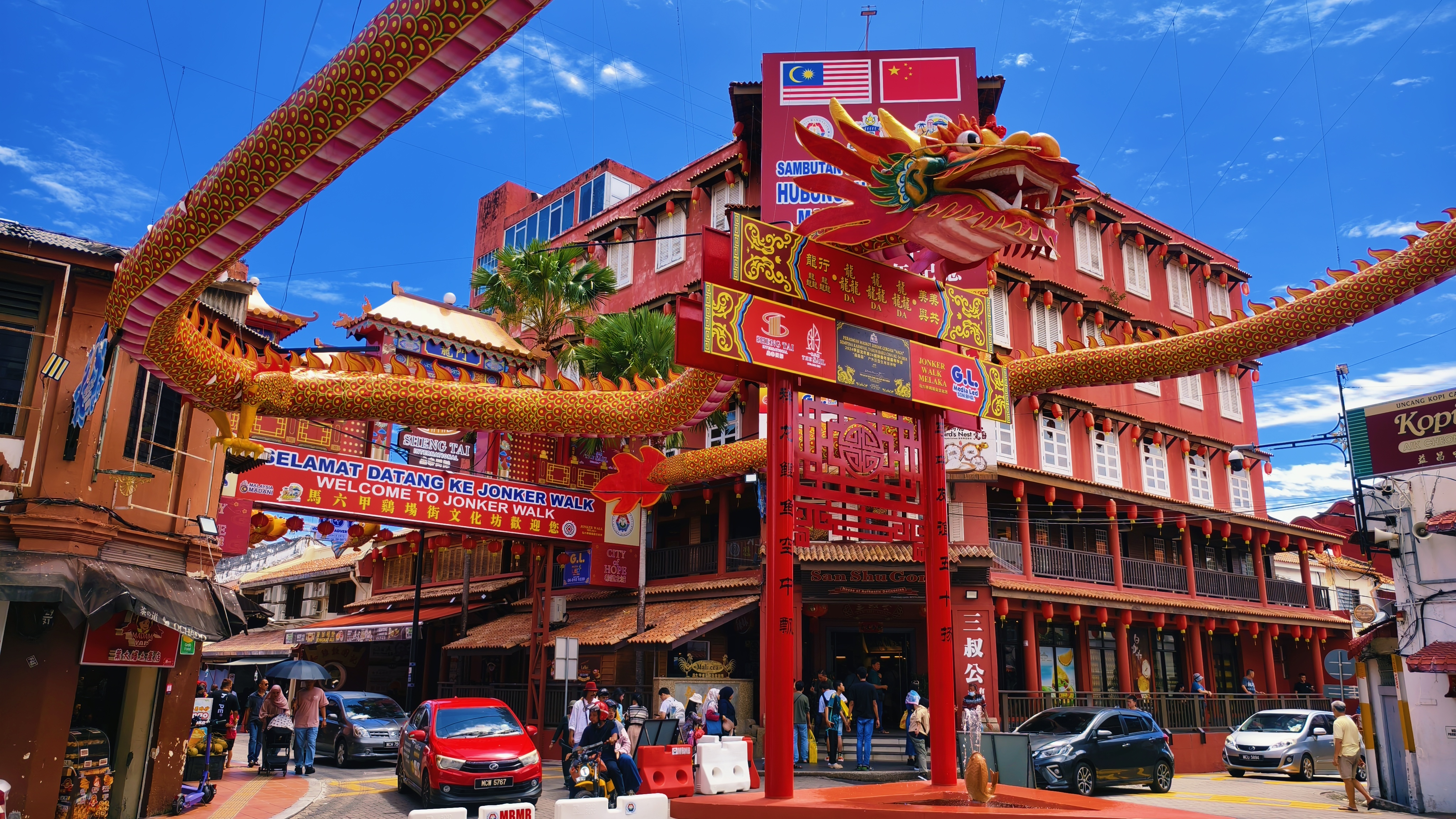
Description
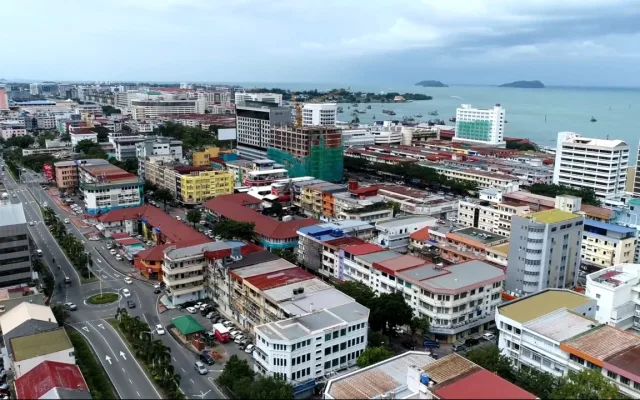
Capital of Sabah — the climb up Mount Kinabalu, the coral islands of the marine park and Borneo wildlife.
Wiki
Kota Kinabalu is the administrative centre of Sabah, the Malaysian state on the northern edge of Borneo, and it sits on the island's west coast facing the South China Sea. The city itself is compact and almost entirely modern; its role is as a launch pad for Southeast Asia's highest peak, for coral islands, and for rainforest where orangutans and proboscis monkeys still live.
Background and history
About half a million people live here, and locals shorten the name to KK. Before the Second World War the settlement was called Jesselton and served as the port capital of British North Borneo. Wartime bombing destroyed almost all of it, so there are essentially no historic quarters left — the look of the place comes from low shophouse rows, the waterfront and modern blocks. The present name dates from 1968 and honours Mount Kinabalu, whose silhouette is visible from the edge of town on a clear day. Sabah is home to dozens of ethnic groups — Dusun, Kadazan, Bajau, Murut — which makes it one of the most varied parts of the country in languages and customs.
The main sights
- Mount Kinabalu (4,095 m) — the highest mountain in Southeast Asia and a UNESCO World Heritage Site. The classic climb takes two days, with a night in a mountain hut and a pre-dawn start for the granite plateaus at sunrise. Places on the route are capped, so permits are booked well ahead, often months in advance.
- Tunku Abdul Rahman Marine Park — a cluster of islands (Gaya, Sapi, Manukan, Mamutik, Sulug) half an hour to an hour by boat from the city jetty. The nearest reefs are good for snorkelling and a beach day.
- Mari Mari Cultural Village — an ethnographic complex with reconstructed houses of five of Sabah's indigenous peoples, plus crafts, fire-making, cooking and traditional dance.
- Sabah State Mosque and the City Mosque, which appears to float on its lagoon under blue and white domes — the two clearest architectural landmarks.
- Signal Hill Observatory — a viewing deck on the ridge above the centre, looking out over the rooftops, the harbour and the open sea.
- Gaya Street market — a busy Sunday bazaar of street food, plants, handicrafts and souvenirs.
Nature and trips out of town
Wildlife is the real reason to come to Sabah. In the east of the state, near Sandakan, the Sepilok Orangutan Rehabilitation Centre is the largest sanctuary of its kind, raising orphaned animals for release back into the forest. From there it is an easy move to the Kinabatangan River, where boat safaris along the banks turn up proboscis monkeys, wild orangutans, pygmy elephants and a long list of birds. Divers head instead for Sipadan and Mabul off the south-east coast, among the finest dive sites anywhere: turtles, sheer reef walls and the famous barracuda tornadoes. Access to Sipadan is controlled by a daily quota.
Food
Sabahan cooking mixes Malay, Chinese and indigenous traditions. Try hinava, raw fish "cooked" in lime juice much like a ceviche; the rich Sabah laksa; and noodle and rice dishes such as ngiu chap and nasi kandar. Markets sell crab, prawns, shellfish and grilled fish alongside tropical fruit, durian included. Dinner by the water at sunset is simply part of the city's rhythm.
Practicalities
Allow roughly four days for a trip that includes the Kinabalu climb and a day among the islands. The international airport connects the city with peninsular Malaysia and neighbouring countries. The climate is equatorial, hot and humid year-round, with rain more likely in the afternoon. Warm clothing is essential for the mountain — temperatures near the summit can drop to around freezing. Getting around the region is easier on an organised tour or with your own vehicle, as many of the wildlife sites are several hours away.